
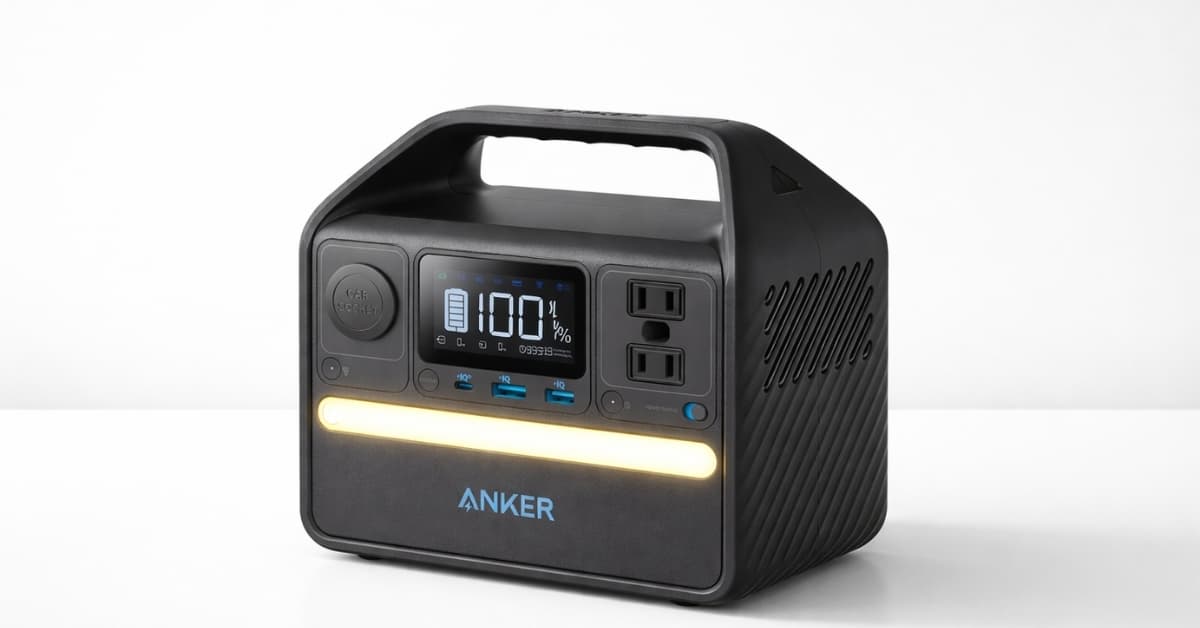
Anker 521 Portable Power Station review covering real performance, pricing, battery life, camping use, and emergency backup so you know if it fits your needs.
Portable power often sounds simple until phones start dropping below 10 percent, laptops shut down mid-task, or a power outage lasts longer than expected.
The Anker 521 Portable Power Station targets those exact moments. This compact 256Wh unit is designed for camping trips, short outages, road travel, and everyday backup needs without adding unnecessary bulk.
With a LiFePO4 battery, pure sine wave AC output, and a price that frequently drops well below competing models, this power station has gained attention across outdoor and emergency prep communities.
The goal here is clarity: what it handles well, where it falls short, and who benefits most from owning one.
Anker 521 Portable Power Station Specs and Core Features
The Anker 521 Portable Power Station uses a 256Wh LiFePO4 battery paired with a 300W continuous output and up to 600W surge capacity. This setup fits small electronics, medical devices, and low-watt appliances while keeping size and weight manageable.
Key specifications
- Battery capacity: 256Wh
- Battery type: LiFePO4 (Lithium Iron Phosphate)
- AC output: 300W continuous / 600W surge
- Weight: about 8.2 lbs
- Warranty: 5 years
According to Battery University and UL safety data, LiFePO4 batteries typically last 2,000+ charge cycles, compared to 500–800 cycles for standard lithium-ion batteries. This directly impacts long-term value and safety.
Design, Portability, and Build Quality
This unit fits easily in a car trunk, RV storage bin, or campsite table. The compact shape and solid top handle make it easy to move with one hand. At just over eight pounds, it stays light enough for travel without feeling fragile.
The casing feels dense and impact-resistant. Vent placement helps manage heat during charging and discharge, which matters during long sessions powering laptops or routers.
Anker backs this design with a five-year warranty, which stands out in a category where one to two years is common.
Ports and Power Output Options
The port layout focuses on everyday use rather than overload.
Available outputs
- 2 × 110V AC outlets (pure sine wave)
- 1 × USB-C Power Delivery port (up to 60W)
- 2 × USB-A ports
- 1 × 12V car outlet
Pure sine wave AC output matters for laptops, CPAP machines, routers, and camera gear. Cheaper modified sine wave units can cause heat buildup or charging issues with sensitive electronics.
The USB-C port supports fast charging for modern laptops and tablets, making this a practical small portable power station for travel.
Charging Methods and Battery Performance
The Anker portable power station 256Wh model supports three charging methods.
Wall Charging
A full recharge typically takes 2.5 to 4.5 hours using a standard wall outlet. This is competitive for a unit in this size range.
Solar Charging
The station accepts 65W to 100W solar input. With a 100W panel under strong sunlight, recharge time usually lands between 6 and 8 hours. This makes it useful for extended camping or off-grid use.
Car Charging
The included car charger adds flexibility during road trips, though charging speed is slower than wall power.
Real-World Use Cases and Performance
Camping and Outdoor Trips
As a portable power station for camping, the Anker 521 handles:
- LED lights for 20+ hours
- Phone charging 15–20 times
- Small fans overnight
- Camera batteries and GPS devices
The weight and size make it better suited for car camping than backpacking.
Emergency Backup at Home
As an Anker power station for emergencies, this unit can:
- Run a Wi-Fi router for 4–6 hours
- Keep phones and tablets charged
- Support CPAP machines without humidifiers
FEMA emergency guidelines emphasize communication access during outages, and a compact power station like this supports that goal effectively.
Remote Work and Travel
For mobile setups, the station typically delivers:
- 2–4 laptop recharges
- Clean power for monitors and routers
- Stable voltage for sensitive electronics
This aligns well with short trips or temporary work locations.
Pricing and Value on Amazon US
Amazon US pricing for the Anker 521 Portable Power Station usually falls into two ranges:
- Regular price: $199–$249
- Sale price: around $129–$149
At sale pricing, cost-per-watt-hour drops to roughly $0.50 per Wh, which is strong for a LiFePO4 portable power station with a long warranty.
Comparable models from Jackery and Goal Zero often cost more while offering shorter battery lifespans.
Limitations and Honest Drawbacks
No compact power station fits every use case.
Key limitations
- Not suitable for high-watt appliances like heaters, hair dryers, microwaves, or coffee makers
- Single USB-C port may feel limiting for users with multiple modern devices
- Slower recharge speed than larger EcoFlow or Delta models
For higher power needs, stepping up to a 500Wh or larger station makes sense.
Multiple Perspectives: Who Should and Shouldn’t Buy It
Good fit for
- Campers and road travelers
- Emergency preparedness kits
- Remote workers with light power needs
- Users prioritizing battery lifespan and safety
Less ideal for
- Full RV setups
- Power-hungry kitchen appliances
- Multi-day heavy off-grid use
This balanced view helps avoid unrealistic expectations.
Final Thoughts on the Anker 521 Portable Power Station
The Anker 521 Portable Power Station delivers dependable performance in a compact form. It focuses on practical power rather than inflated capacity claims. The LiFePO4 battery, clean AC output, and long warranty add real value over time.
This unit works best as a support system, not a replacement for large generators. For camping, travel, and short outages, it covers essential needs without unnecessary complexity.
Exploring the product on Amazon can help compare current pricing, accessories, and alternative models. There are also other power stations worth exploring depending on how much energy storage makes sense for your setup.