
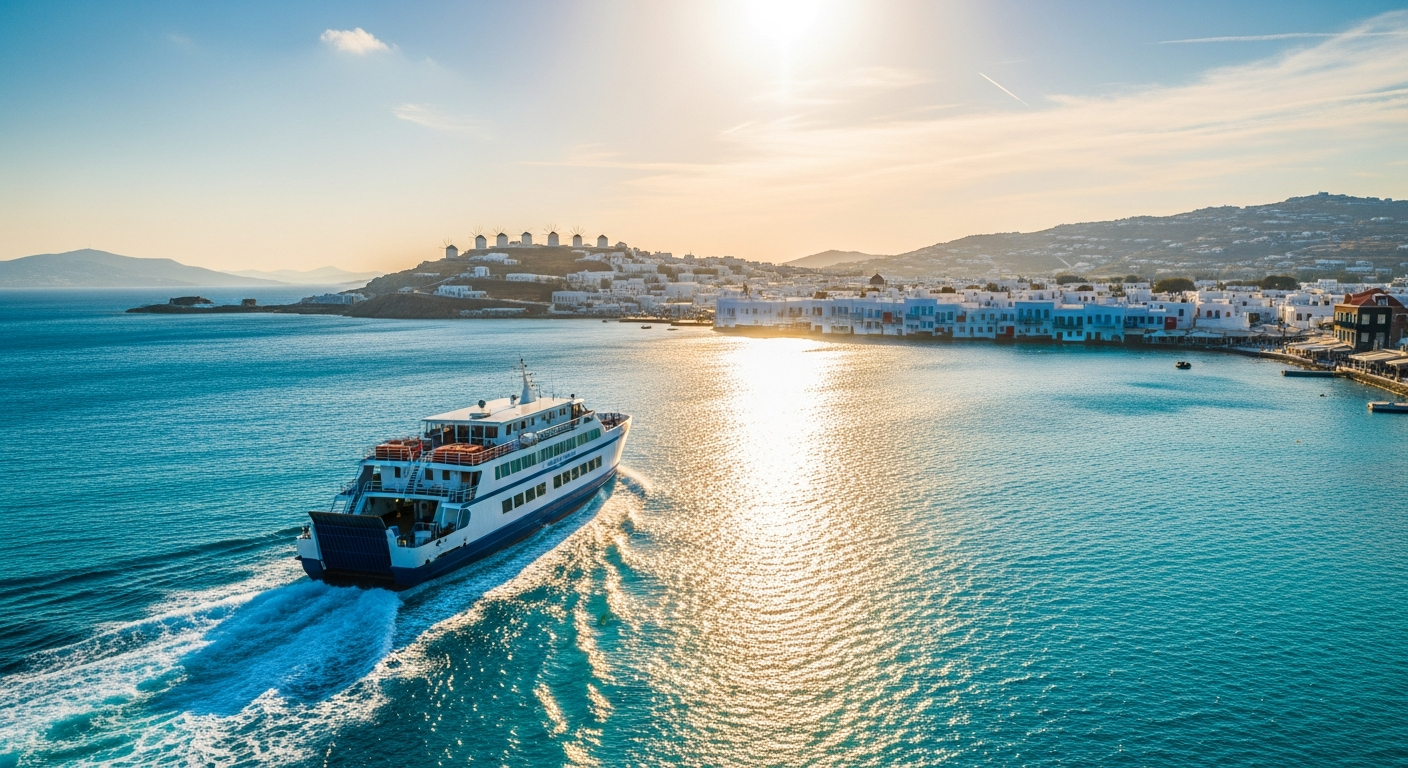
Plan your Athens to Mykonos ferry journey with our comprehensive 2026 guide. Discover ferry types, booking strategies, travel times, and insider tips for seamless island hopping across the Aegean Sea.
Picture this: over 2 million travelers board ferries from Athens to Mykonos each year, yet countless arrive at Piraeus port utterly unprepared for what awaits them. They’ve booked a ticket based on price alone, chosen a departure time without considering their itinerary, and assumed all ferries operate identically. The reality proves far more complex. The gap between expectation and reality lies in understanding which ferry option matches your travel style, budget, and timeline—knowledge that transforms a stressful crossing into a seamless gateway experience.
The Athens to Mykonos ferry route represents far more than simple transportation between two points. It’s your passage across the legendary Aegean Sea toward one of the Mediterranean’s most coveted island destinations, a journey that deserves thoughtful planning rather than last-minute scrambling. Your experience hinges on decisions made long before you step foot on the vessel: which ferry operator to choose, when to book, what to pack, and how to navigate the operational realities that most travel blogs conveniently skip over.
Throughout this guide, you’ll uncover the practical mechanics of this ferry journey, from vessel types and realistic travel durations to seasonal pricing patterns and booking strategies that actually save money. You’ll discover the decision-making framework that separates savvy travelers from disappointed ones, plus reveal hidden considerations that transform your crossing from merely functional to genuinely memorable.
Ferry Vessel Types on the Athens-Mykonos Route
The ferry you select fundamentally shapes your crossing experience. Three primary vessel categories dominate this route, each serving distinct traveler preferences.
High-Speed Catamarans and Hydrofoils
These modern vessels slice through the Aegean in 2.5 to 3.5 hours, appealing to travelers who prioritize time efficiency. They feature sleek designs, contemporary seating arrangements, and rapid acceleration that minimizes your time at sea. However, the speed comes with trade-offs: rougher motion in choppy conditions, premium pricing, and a more utilitarian atmosphere compared to traditional ferries. The cabin experience tends toward functional comfort rather than leisurely maritime ambiance.
Conventional Ferries
Traditional ferries operate on the opposite philosophy. These vessels accommodate journeys spanning 4 to 5 hours or longer, but they offer substantial benefits. Expansive deck spaces allow you to enjoy Aegean breezes and panoramic views throughout your crossing. Wider seating configurations provide genuine comfort, and the overall pace invites relaxation rather than rushed transit. Conventional ferries typically cost considerably less than their high-speed counterparts, making them the choice for budget-conscious travelers willing to invest time for savings.
Onboard Amenities and Comfort Considerations
Regardless of vessel type, most ferries operating this route include comfortable seating options, onboard cafes serving snacks and beverages, and retail shops for forgotten essentials. Larger conventional ferries often feature dedicated lounge areas, children’s play zones, and cabin availability for those seeking enhanced privacy. Ferry size impacts comfort levels differently across seasons—peak summer months mean crowded decks, while off-season travel provides spacious, peaceful environments.
Modern vessels increasingly prioritize fuel efficiency and environmental sustainability compared to older ferry options still operating occasional services. Wheelchair accommodations and family-friendly facilities ensure accessibility across most operators, though confirming specific accessibility features during booking prevents disappointment.
Travel Duration, Schedules, and Seasonal Frequency
The Athens-Mykonos crossing requires strategic planning around operational realities that fluctuate dramatically throughout the year.
Direct Routes Versus Multi-Stop Journeys
Some ferry operators proceed directly from Piraeus to Mykonos without intermediate stops, completing journeys in the timeframes previously mentioned. Others follow indirect routes stopping at islands like Delos or Tinos en route, extending total travel time by 30 minutes to over an hour. These detours rarely add substantial cost, but they do affect arrival timing and require careful itinerary coordination.
Seasonal Schedule Variations
Peak season (June through August) unleashes the ferry schedule’s full capacity. Multiple daily departures occur throughout morning, afternoon, and evening hours, accommodating the seasonal surge. This frequency proves essential—during July particularly, spontaneous ferry bookings often encounter full sailings, requiring advance reservations days ahead.
Off-season winter months (November through March) demonstrate dramatically reduced schedules. Daily departures might shrink from six or eight sailings to just two or three, fundamentally changing travel flexibility. Anyone planning winter Greek island travel must accommodate ferry availability rather than expecting accommodating schedules.
Departure Timing and Itinerary Impact
Morning ferries departing Piraeus around 8-10 AM position you for early afternoon Mykonos arrival and maximum daylight for settling into accommodation. Midday departures create later arrivals, compressing your initial evening on the island. Evening ferries suit night owls but demand hotel check-in coordination or luggage storage arrangements.
Ferryhopper’s live ferry tracking functionality reduces the uncertainty plaguing ferry travel. Rather than wondering whether your vessel departs on schedule, you monitor real-time positioning, preventing missed connection complications during multi-leg journeys.
Pricing Strategy and Budget Optimization
Ferry ticket costs vary wildly based on timing, vessel selection, and seasonal demand—understanding these levers transforms your budget substantially.
Cabin Class and Seating Configurations
Economy seating represents the baseline: a numbered seat in general passenger areas. Business or premium seating upgrades provide reserved cushioned seats with enhanced legroom, amenities lounge access, and priority boarding. Cabin accommodations ranging from shared dormitory-style berths to private staterooms cater to overnight travelers, with pricing scaling dramatically with privacy level. A basic economy ticket might cost €35-45 during shoulder seasons, while a private cabin exceeds €150-200 during peak summer.
Seasonal Price Fluctuations
Early-bird booking windows unlock specific discount percentages for advance planners—booking 2-4 weeks ahead typically secures prices 15-25% lower than last-minute fares. June through August premium rates contrast sharply with shoulder season value opportunities. September and May offer ideal price-to-weather ratios: reasonable costs paired with pleasant sailing conditions and less crowding than summer peak.
Ferryhopper’s Competitive Advantage
Ferryhopper’s competitive pricing model matches direct operator rates with exclusive discounts unavailable when booking ferries individually. The platform aggregates multiple operators’ offerings, enabling genuine price comparison rather than guesswork. Group travel discounts provide bulk booking savings for families and organized tours, making arrangements for four or more travelers substantially cheaper per person.
Use Ferryhopper’s real-time pricing tools to unlock the best ferry fares before they change.
Last-Minute Booking Strategies
Last-minute deals within 48 hours suit flexible travelers willing to book spontaneously. Operators sometimes release discounted inventory to fill otherwise empty sailings, creating genuine bargains for spontaneous adventurers. However, relying on last-minute fares during peak season proves risky—availability frequently evaporates within hours.
Booking Process and Platform Features
Ferryhopper streamlines the traditionally fragmented ferry booking experience into a unified interface.
Multi-Operator Comparison Functionality
The platform displays real-time schedules and prices across 190+ ferry companies simultaneously. Rather than visiting individual operator websites, you input your travel dates and instantly view all available sailings ranked by departure time, price, duration, and vessel type. This comparison reveals pricing disparities sometimes exceeding 50% for identical crossing times, making platform comparison essential rather than optional.
E-Tickets and Digital Boarding
E-ticket generation eliminates paper documentation and streamlines port check-in procedures. Mobile boarding presents your ticket via smartphone screen directly to port staff, removing lost-ticket stress. Arriving 60-90 minutes before departure allows ample time for port navigation and security procedures without frantic rushing.
Payment Methods and Cancellation Policies
Multiple payment methods accommodate international transactions: credit cards, debit cards, and digital wallets. Currency flexibility serves non-Euro travelers by quoting prices in their home currencies. Cancellation and modification policies vary by operator—reviewing specific terms during checkout clarifies refund eligibility and change fee structures before purchase commitment.
Customer Support and Operator Communication
Ferryhopper’s customer support responsiveness addresses booking issues, missed ferries, and operator communication gaps. However, ferry operators frequently modify routes or times on short notice—staying informed requires monitoring both Ferryhopper notifications and direct operator communications, as delays sometimes occur in platform updates.
The Mykonos Experience and What to Expect Upon Arrival
Understanding your destination’s realities prevents arrival disappointment and enables strategic planning.
Port Arrival Logistics
Ferries dock at Mykonos’s main port in Chora (the island’s capital), positioning you within walking distance of the iconic windmills, narrow cobblestone streets, and central town attractions. Port arrival logistics include baggage transport options, taxi availability, and bus connections to peripheral beaches and villages. Most travelers walk to central town in under 15 minutes or arrange accommodation pickup in advance.
Beyond Nightlife: The Complete Mykonos
Mykonos’s reputation for nightlife carries truth—Little Venice’s waterfront bars and Paradise Beach’s club scene attract party-focused travelers. Yet reducing Mykonos to nightlife misses the island’s depth. Picturesque villages like Ano Mera preserve traditional Cycladic architecture. Beaches including Psarou and Kalafati offer serene swimming and water sports. Archaeological sites on nearby Delos represent ancient Greek civilization. Tavernas throughout the island serve authentic Mediterranean cuisine beyond touristy central-town establishments.
Overtourism Realities and Crowd Navigation
Mykonos confronts significant overtourism, particularly July-August when daily visitor influxes from cruise ships and ferries overwhelm infrastructure. Narrow streets become congested, restaurant prices spike, and beach space becomes scarce. Experienced travelers navigate by visiting secondary beaches, dining away from central town, and exploring early mornings before crowds arrive. September and late May offer the same destinations with exponentially fewer visitors.
Accommodation Coordination and Luggage Management
Timing your ferry arrival with hotel check-in requires planning—standard check-in occurs mid-afternoon, but ferries arriving by noon might find rooms unavailable until later. Many hotels offer luggage storage, enabling immediate beach exploration or town wandering before formal check-in. Booking accommodation with early check-in availability or arranging baggage storage eliminates this friction.
Island-Hopping Possibilities
Mykonos serves as an ideal hub for exploring surrounding islands. Ferry connections enable same-day or multi-day trips to Delos (ancient archaeological site), Tinos (quieter, traditional atmosphere), Paros (beach and nightlife alternative), and Naxos (larger island with diverse experiences). Ferryhopper’s multi-leg journey planning facilitates seamless connections across these routes.
Potential Challenges and How to Navigate Them
Foreseeable difficulties rarely derail prepared travelers—awareness enables proactive mitigation.
Schedule Modifications and Operator Changes
Ferry operators frequently modify routes or times in response to weather, mechanical issues, or demand fluctuations. Ferryhopper notifications typically capture major changes, but monitoring operator websites or calling port offices ensures awareness of modifications not yet reflected in booking platforms. Building 1-2 hour buffers between ferry arrivals and critical appointments prevents cascading disruptions.
Peak Season Overcrowding Strategies
July-August overcrowding demands seat reservation strategies—booking specific numbered seats rather than generic “economy” seating secures consistency and comfort. Traveling off-peak hours (early morning or late evening departures) reduces crowd intensity. Business class seating provides guaranteed space and amenities access during peak seasons, justifying premium cost for comfort-prioritizing travelers.
Weather-Related Cancellations and Wind Patterns
Aegean wind patterns occasionally reach intensities triggering ferry cancellations—most commonly during winter months or specific seasonal transitions. These cancellations remain rare on Athens-Mykonos routes due to vessel size and stability, but they occur. Travelers with inflexible schedules should book ferries 1-2 days before critical appointments, enabling rebooking on alternative sailings without disruption.
Port Congestion at Piraeus
Athens’s primary port experiences significant congestion during peak season, occasionally creating delays reaching 30-60 minutes. Arriving 2 hours before departure rather than the minimum 60 minutes provides buffer room for unexpected queues, security procedures, or gate changes without boarding anxiety.
Baggage Handling and Multi-Island Logistics
Ferry baggage allowances typically include one carry-on and checked luggage without excess fees (within reason). Multi-island travelers must coordinate luggage between ferries—some operators provide checked baggage transfer across connected sailings, while others require passenger retrieval and check-in. Clarifying baggage policies during booking prevents port-side complications.
Language Barriers During Unexpected Issues
Most Mykonos port and ferry staff speak English fluently, but mechanical breakdowns or schedule disruptions sometimes involve communication challenges. Travel apps featuring translation capabilities, identifying key phrases in Greek, or requesting English-speaking staff assistance resolves most language complications.
Insider Tips for First-Time Ferry Travelers
Experienced island travelers employ specific strategies elevating ferry journeys from tolerable to genuinely pleasant.
Optimal Boarding Timing at Piraeus
Arriving too early means prolonged waiting in terminal areas; arriving too late creates boarding rush stress. Arriving 90 minutes before departure positions you for check-in without excessive waiting, boarding before crowds intensify, and securing preferred deck seating on conventional ferries. Checking staff directions prevents confusion about gate locations or procedural changes.
Seasickness Prevention for Motion-Sensitive Travelers
Ferry motion sensitivity affects 20-30% of passengers, yet solutions exist. Cabin locations near the vessel’s center experience less motion than bow or stern areas—requesting midship cabins reduces motion perception. Medication timing matters: ginger supplements taken 30 minutes before boarding, or prescription patches applied behind ears, provide prevention without drowsiness. Focusing on the horizon during the journey, eating light meals, and remaining on deck in fresh air rather than enclosed cabins naturally reduces nausea for many travelers.
Maximizing Onboard Time During 3-5 Hour Journeys
Conventional ferry journeys exceed three hours—productive travelers utilize time for reading, laptop work, or planning island itineraries. Others embrace maritime relaxation: observing the Aegean, sketching, or conversing with fellow travelers. Carrying entertainment prevents boredom during high-speed catamaran journeys that compress time.
Pre-Departure Port Preparation
Visiting bathrooms before boarding eliminates mid-journey inconveniences. Purchasing beverages and snacks from port cafes rather than onboard vendors saves money—ferry cafes charge premium prices. Securing shaded seating on conventional ferries requires arriving early; late boarders often face sun exposure on crowded decks.
Packing Considerations for Ferry Travel
Accessible items including sunscreen, medications, phone chargers, and entertainment should remain easily retrievable rather than buried in checked luggage. Weather protection proves essential—Aegean sun intensifies over open water, and sea breezes create surprising coolness even during hot days. Bringing layers, a light jacket, and sunglasses ensures comfort across conditions.
Social Dynamics and Connecting with Fellow Travelers
Ferry journeys naturally create traveler connections—fellow passengers frequently become dinner companions or island-hopping partners. Conversing with other travelers enriches the experience and occasionally yields valuable destination insights or accommodation recommendations. These fleeting connections often enhance travel memories more than solo navigation.
Comparing Athens to Mykonos with Other Popular Greek Ferry Routes
Strategic travelers compare the Athens-Mykonos route against alternatives to confirm optimal selection.
Athens to Santorini: The Trade-Off Analysis
Santorini ferries require 3.5-4.5 hours on conventional vessels or 2-2.5 hours on high-speed catamarans—slightly longer than Mykonos due to greater distance. Pricing typically matches or slightly exceeds Mykonos fares. Santorini’s dramatic caldera scenery and sunset reputation drive comparable demand and pricing. Choosing between these islands hinges on destination preference (Mykonos’s nightlife and beaches versus Santorini’s geological drama and romantic atmosphere) rather than ferry logistics or cost.
Athens to Naxos and Paros: Budget-Conscious Alternatives
Naxos ferries depart Piraeus toward southern Cycladic islands, sometimes reducing costs through longer journey times (5-6 hours). Paros, en route to most southern island destinations, offers even shorter crossing periods (3-4 hours) with proportionally lower fares. These islands provide genuine Cycladic experiences with substantially smaller tourist volumes and lower accommodation costs. Travelers prioritizing budget and authentic experiences often overlook Mykonos entirely in favor of these alternatives.
Ferry Route Reliability and Schedule Consistency
The Athens-Mykonos route operates with exceptional reliability due to high traffic volume, multiple competing operators, and established infrastructure. Weather-related cancellations remain uncommon compared to remote routes serving smaller islands. This reliability matters for travelers with inflexible scheduling constraints.
Value Proposition Across Routes
Cost-per-hour analysis reveals economics: a €40 Mykonos ferry covering 3 hours costs €13.33 hourly, while a €25 Naxos ferry requiring 5.5 hours costs €4.55 hourly. However, this calculation ignores destination value—premium Mykonos experiences justify premium transport costs for many travelers. Shoulder-season Mediterranean routes typically offer the best balance between transport cost and destination appeal.
Strategic Island-Hopping Sequences
Ferryhopper’s multi-leg journey planning enables strategic sequences maximizing experiences while minimizing backtracking. Common routes include Athens → Mykonos → Santorini → Naxos → Athens, following ferry availability and reversing as preferred. Planning three-island trips strategically eliminates redundant ferry journeys and provides comparative island experiences within single vacations.
Your Athens to Mykonos Ferry Journey Awaits: Making the Right Choice
The Athens to Mykonos ferry journey represents one of travel’s most accessible yet nuanced decisions. You’ve now encountered the full spectrum from high-speed catamarans that shave hours off travel time to traditional ferries that transform the journey itself into an experience. The pricing landscape shifts dramatically between seasons, and your booking strategy can mean the difference between a €35 ticket and one costing triple that amount.
What truly separates successful travelers from disappointed ones isn’t luck—it’s preparation. Understanding your ferry vessel options, respecting seasonal scheduling realities, and leveraging platform comparison tools positions you to make decisions aligned with your actual priorities rather than defaulting to convenience. Mykonos awaits with its legendary beaches, vibrant village squares, and storied nightlife, but so do the decisions that shape your journey there.
Whether you’re chasing budget optimization through shoulder-season booking, maximum speed via catamaran, or the most authentic maritime experience aboard a traditional vessel, this route accommodates your vision. The framework you’ve explored throughout this guide transforms ferry selection from guesswork into intentional choice-making. Book strategically by monitoring seasonal pricing patterns and leveraging early-bird discounts. Arrive informed by confirming operator details and weather forecasts before departure. Embrace the Aegean crossing as the gateway moment it truly is—the threshold between mainland Greece and island life.