
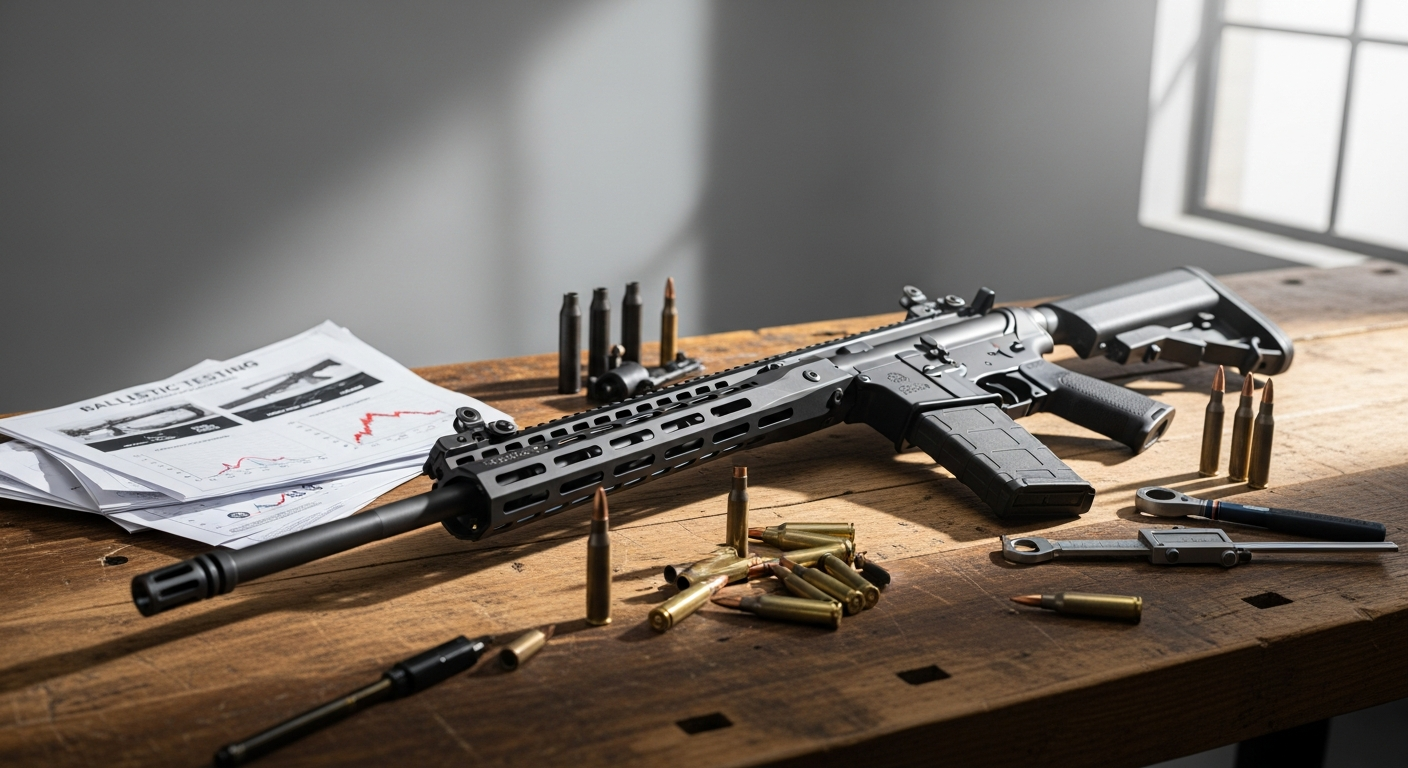
Discover why the Ballistic Advantage Hanson AR-15 Barrel is the top choice for AR builders. Learn about its lightweight design, accuracy specs, material options, and how it delivers premium performance at mid-range prices.
If you’ve spent time in the rifle builder community, you’ve probably heard the name Hanson whispered as the gold standard for barrels that don’t cost a fortune. Building an AR-15 that feels balanced, shoots straight, and won’t drain your bank account is the promise of the Ballistic Advantage Hanson AR-15 Barrel, one of the most sought-after components in the rifle community.
The Hanson barrel series, engineered by Clint Hanson himself, represents a breakthrough in barrel design that refuses to compromise between weight savings, accuracy, and affordability. This isn’t marketing hype—it’s the result of thoughtful engineering that prioritizes what actually matters to shooters: a rifle that handles well, groups tight, and fits the budget.
Check out Ballistic Advantage Hanson barrels and start your precision build today
## The Engineering Behind Hanson’s Smooth Taper Profile
The real magic of the Hanson barrel lives in its distinctive profile. Rather than the traditional government contour with its sudden step down, the Hanson design features a gradual taper that sheds weight strategically without gutting structural integrity. A 16-inch Hanson barrel tips the scales at around 22 ounces—significantly lighter than government profile alternatives—yet maintains the rigidity needed to minimize barrel whip and keep shots grouped.
This smooth taper accomplishes something that abrupt step designs struggle with: it distributes stress evenly along the barrel’s length. The result is a front-end that’s noticeably lighter, shifting the rifle’s balance point rearward and making the gun feel nimble and manageable. That weight savings translates directly to reduced felt recoil and less muzzle rise when you’re shooting, which means faster target reacquisition and better control during rapid strings.
The physics at work here centers on harmonic vibration. Every shot creates vibration patterns in the barrel, and those vibrations directly impact accuracy. By tapering gradually rather than stepping abruptly, the Hanson design distributes these oscillations more uniformly, keeping deflection within tighter tolerances at the muzzle. Real-world shooters consistently report that Hanson barrels deliver that rare combination of being easy to handle and genuinely accurate.
## Material Selection: CMV vs. Stainless Steel Barrels
Ballistic Advantage manufactures Hanson barrels in two primary materials, each with specific strengths depending on your shooting goals. The 4150 Chrome Moly Vanadium (CMV) option delivers superior heat resistance and strength, making it the choice for shooters who plan sustained fire or higher round counts. CMV barrels handle thermal stress better and generally outlast stainless alternatives over the long haul.
The 416R stainless steel alternative serves precision-focused builds where corrosion resistance and aesthetics matter. Stainless barrels naturally resist rust without additional treatment, making them ideal for coastal environments or shooters who value low-maintenance operation. The tradeoff is slightly different thermal characteristics—stainless runs a bit hotter during rapid fire—but for typical shooting applications, this difference remains academic.
Finish treatment amplifies these material advantages. CMV barrels typically receive a QPQ nitride finish, a case-hardening process that creates an exceptionally durable outer layer resistant to corrosion and wear. This finish is nearly impossible to damage with normal handling and becomes increasingly important if you’re shooting outdoors or storing your rifle in variable conditions. Stainless models often feature a bead-blasted finish that combines protection with visual appeal—the slightly textured surface resists glare and looks intentional rather than mass-produced.
The maintenance burden differs between materials. CMV with QPQ nitride requires minimal upkeep beyond standard barrel cleaning and inspection. Stainless barrels demand slightly more attention to prevent corrosion in salt environments but reward you with a finish that degrades gracefully rather than dramatically.
## Caliber Versatility and Twist Rate Options
The Hanson lineup covers the calibers that actually matter to AR shooters. 5.56 NATO configurations serve general-purpose builds and shooters who value compatibility with military ammunition supplies. .223 Wylde chambers appeal to precision shooters and reloaders who want the flexibility of shooting both 5.56 and .223 ammunition while maintaining tighter chamber tolerances for accuracy.
.300 Blackout barrels open entirely different applications—subsonic loads for suppressed shooting and supersonic rounds for hunting and self-defense. The Hanson profile works equally well in this caliber, delivering the same weight savings and handling characteristics. 6.5 Grendel configurations serve shooters chasing extended range performance, with the Hanson’s balance and accuracy making it an attractive option for reaching out to 600+ yards with appropriate optics and ammunition.
The standard 1:8 twist rate available across most configurations handles a remarkable range of bullet weights. In 5.56, that means 55-grain varmint rounds through 77-grain match ammunition all stabilize reliably. This versatility eliminates the guesswork and lets you adapt to ammunition availability or shooting scenarios without worrying about keyholing.
Barrel length variations affect velocity and handling characteristics. A 16-inch barrel represents the sweet spot for most shooters—long enough to fully utilize powder charges in most calibers while short enough to avoid unwieldy length. Matching gas system length to your barrel selection matters more than many builders realize; a 16-inch Hanson with mid-length gas system cycles reliably across a wide spectrum of ammunition weights and velocities.
Explore the complete Hanson barrel caliber lineup and find your perfect match
## The Pinned Low-Profile Gas Block Advantage
One feature that separates Hanson barrels from budget alternatives is the pinned low-profile gas block included on many models. This isn’t a minor convenience—it fundamentally streamlines the build process and eliminates a persistent source of headaches for builders.
Traditional set-screw gas blocks require fussy alignment, precise torque specifications, and constant vigilance against migration under recoil. The pinned design eliminates these concerns entirely. The gas block sits at a specific location on the barrel, pinned permanently in place. Installation becomes straightforward: mount the block, secure the pins, and you’re done. No adjustments, no guesswork, no late-night forum posts wondering if your gas block is positioned correctly.
This design choice delivers practical benefits beyond simplicity. A pinned gas block won’t migrate under recoil stress, ensuring consistent gas regulation throughout the barrel’s life. The low-profile configuration keeps the sightline unobstructed, leaving your rail system flexible for optic placement and attachment options. Builders appreciate that Hanson barrels work seamlessly with free-floating rail systems, providing compatibility with nearly every modern upper receiver configuration.
The gas regulation consistency this setup provides matters significantly. You’re assured that cycling reliability remains stable whether you’re running suppressed loads, full-power ammunition, or anything in between. That predictability translates to confidence in your rifle’s function during critical moments.
## Performance Metrics and Accuracy Guarantees
Ballistic Advantage backs Premium Series Hanson barrels with a sub-MOA guarantee—1-inch groups at 100 yards using match-grade ammunition. That specification sounds impressive on paper, but what matters is whether it translates to real-world performance.
Testing reveals that Hanson barrels consistently meet these claims when paired with proper components and ammunition. The guarantee itself requires match-grade ammunition, typically quality brass-cased loads with premium bullets, which reflects the reality that barrel potential only matters if everything downrange matches its capability. You won’t guarantee 1-inch groups with bulk military ammunition or ammunition pulled from questionable sources.
Velocity consistency directly correlates with accuracy potential. Chronograph testing of Hanson barrels shows impressively tight velocity spreads—the consistency that separates barrels that happen to group well from barrels that are designed to group well. That consistency compounds as distances extend; a 50 fps velocity variation might mean an inch of vertical dispersion at 100 yards and multiplies substantially at 300.
Barrel life before accuracy degradation occurs varies with material and usage patterns. CMV barrels generally outlast stainless by meaningful margins during heavy use, though both materials deliver thousands of rounds before accuracy begins shifting noticeably. Most shooters will never approach a Hanson barrel’s practical service life under normal shooting schedules.
Real-world accuracy expectations deserve honesty. A well-built rifle with a Hanson barrel, quality optics, and proper ammunition absolutely can shoot sub-MOA groups. Factor in environmental conditions, shooter technique consistency, and the actual demands of your shooting application, and Hanson barrels prove competitive with barrels costing substantially more.
## Pricing Strategy and Value Proposition
The Hanson barrel’s price range—typically between $100 and $250+, with a common example being a 16-inch 5.56 Performance Series at around $159.95—represents the intelligent middle ground between cheap barrels that require luck to shoot straight and premium match-grade barrels that demand a second mortgage.
Understanding the value proposition requires perspective. For roughly $160, you’re acquiring a purpose-engineered barrel from a manufacturer with established reputation, manufactured to consistent standards, with real accuracy potential backed by guarantees. That same budget buys you a government profile barrel from a no-name manufacturer or leaves you well short of genuine match-grade offerings.
The cost-per-accuracy calculation reveals Hanson’s positioning. You’re paying for engineering that delivers genuine improvements—the taper profile reduces weight meaningfully, the material selection ensures durability, the pinned gas block eliminates common failure points. None of this feels like cost-cutting that compromises performance.
Budget builders often miss that investing slightly more upfront in a quality barrel eliminates frustration later. A $160 Hanson barrel that shoots consistently beats a $60 barrel that shoots groups that vary with ammunition and environmental conditions. The math works when you calculate aggravation saved and accuracy gained.
Seasonal sales and availability fluctuations do occur. Smart builders watch for promotional windows without manufacturing corners being cut. Long-term perspective justifies the investment; a quality barrel becomes the foundation of a rifle that lasts decades, shoots accurately for thousands of rounds, and functions reliably under demanding conditions.
## Building with Hanson: Installation and Compatibility
Installing a Hanson barrel requires attention to critical fundamentals without demanding special tools or expertise. Upper receiver compatibility centers on barrel thread pattern—5.56 Hanson barrels feature standard 1/2×28 TPI threads compatible with virtually every modern upper and muzzle device.
Headspace verification matters regardless of barrel manufacturer or quality level. Even with a precision barrel, confirming proper headspace with a go-no-go gauge takes minutes and guarantees reliable function. This step isn’t optional—it’s insurance that your build cycles safely and consistently.
Free-floating characteristics appeal to precision-focused builders. A properly fitted rail system with a float that doesn’t touch the barrel unlocks the full accuracy potential of a quality barrel by eliminating mechanical variables that affect shot placement. Drop-in rail systems work with Hanson barrels, though they sacrifice some accuracy potential for ease of installation.
Muzzle device selection affects the complete shooting experience. Flash hiders reduce muzzle flash visible to the shooter and nearby observers. Compensators reduce felt recoil and muzzle rise, particularly beneficial in lightweight rifles where those impulses can feel pronounced. Suppressors transform the shooting experience entirely, reducing report and recoil while requiring appropriate ammunition selection and subsonic load development for optimal results.
Gas tube length matching to barrel length ensures proper cycling across your ammunition selection. A mid-length gas system on a 16-inch barrel represents the practical gold standard for balancing dwell time, recoil management, and ammunition flexibility.
Pairing your barrel with an appropriate bolt carrier group ensures reliable function. Quality components matter throughout an AR—premium barrels deserve equally thought-out supporting components that maximize their potential.
## Real-World Applications and Shooter Profiles
Entry-level builders seeking their first quality barrel component find tremendous value in Hanson barrels. The learning curve flattens when your barrel functions reliably and shoots accurately; you can focus on developing skill rather than troubleshooting equipment.
Competitive shooters operating on realistic budgets consistently choose Hanson barrels for achieving sub-MOA accuracy without premium pricing. The accuracy potential matches barrels costing twice as much, letting shooters invest their budget in optics and ammunition where it matters most.
Hunting rifle builds benefit from Hanson’s caliber options. Whether you’re shooting 5.56 for varmints or stepping up to 6.5 Grendel for serious game, the Hanson profile delivers the balance and accuracy hunters need without burdening their shoulder with unnecessary weight during long days in the field.
Precision rifle enthusiasts in demanding accuracy competitions have discovered that Hanson barrels don’t embarrass themselves against much pricier alternatives. Real match results speak louder than specifications; shooters compete successfully with Hanson barrels at regional and national levels.
Tactical and defensive builds prioritize reliability above all else, and Hanson barrels deliver. The manufacturing consistency and proven track record mean confidence when your rifle must function in critical situations.
Suppressor-ready configurations optimized for silenced shooting leverage the Hanson platform effectively. The consistency and accuracy of the barrel make sound-suppressed shooting genuinely enjoyable rather than frustrating.
Lightweight rifle projects specifically benefit from the Hanson’s taper design, where every ounce matters and the balance point becomes everything. Hanson barrels let builders achieve true lightweight systems without sacrificing accuracy or reliability.
## Quality Control and Durability Concerns
Honest assessment requires acknowledging that Ballistic Advantage faced historical quality control challenges that generated justified community concern. These issues appear to be genuinely addressed in current production; recent user feedback consistently reports improved manufacturing standards and consistency.
Material consistency and rigorous testing now verify barrel quality before they ship. The company’s warranty policies protect your investment, offering clear recourse if a Hanson barrel fails to meet published specifications or exhibits defects.
Longevity testing data supports claims of barrel life extending well into the thousands of rounds before accuracy noticeably degrades. Corrosion resistance varies by material and finish—QPQ nitride CMV barrels resist corrosion exceptionally well even in harsh salt environments, while stainless alternatives require more active protection but degrade more gracefully when exposed.
Community feedback drives continuous improvement at manufacturing facilities. Users reporting issues find responsive manufacturers willing to address problems rather than defending production decisions. That customer service responsiveness builds loyalty and trust within the builder community.
## Comparing Hanson to Competing Barrel Brands
Ballistic Advantage versus Faxon presents a classic comparison—both manufacturers deliver quality barrels at competitive pricing. Faxon barrels emphasize exotic metallurgy and proprietary heat treatment, while Hanson focuses on profile design and proven materials. Performance differences prove negligible for most shooters; the choice comes down to feature preferences and brand trust.
Hanson versus Criterion sits at a different price tier. Criterion barrels cost substantially more but also deliver match-grade accuracy guarantees that Hanson doesn’t claim. For shooters chasing absolute best possible accuracy regardless of cost, Criterion represents the investment. For everyone else, Hanson delivers impressive accuracy at a fraction of the price.
Budget alternatives from lesser-known manufacturers undercut Hanson pricing but sacrifice the engineering and material consistency that make Hanson barrels special. You can definitely find cheaper barrels; whether they shoot accurately and last remains questionable.
Premium match-grade barrels from manufacturers like Bartlein or Krieger command premium pricing because they deliver measurable accuracy improvements through obsessive quality control and hand-finishing. The question becomes whether the accuracy premium justifies the cost increase—for most practical applications, the answer is no.
Brand reputation and community trust rankings consistently place Hanson at the peak of the value tier. Resale value considerations show Hanson barrels hold value in the used market better than budget alternatives, meaning your investment depreciates more slowly if you eventually sell.
## Optimizing Your Hanson Barrel Build
Ammunition selection determines whether your barrel achieves published potential or merely shoots “okay.” Match-grade ammunition with quality brass, premium bullets, and consistent loading delivers the accuracy your barrel is engineered for. Bulk ammunition won’t embarrass a Hanson barrel, but it won’t showcase its capabilities either.
Break-in procedures remain somewhat mythical in the AR community, but running your first few magazines of quality ammunition and cleaning between strings represents reasonable insurance. Whether it actually improves accuracy remains debated, but the ritual harms nothing and costs nothing.
Cleaning and maintenance routines extending barrel life remain straightforward. Regular cleaning after shooting, inspection for corrosion, and protection from environmental extremes keep your barrel functioning predictably throughout its service life.
Scope selection and mounting for optimal accuracy demands matching the optic to the shooting application. Sub-MOA accuracy means nothing if your optic can’t resolve that precision; quality glass with appropriate magnification lets you see what your barrel delivers.
Shooting technique consistency directly impacts whether your group sizes reflect barrel capability or technique inconsistency. Controlled breathing, trigger press discipline, and supported shooting positions unlock accuracy potential. That’s not the barrel’s job—that’s the shooter’s responsibility.
Temperature and environmental factors affect accuracy in subtle but measurable ways. Cold barrels group differently than warm barrels; windy conditions impact bullet drift; environmental temperature affects powder burn rates and bullet velocity. Understanding these variables helps distinguish real accuracy improvements from ammunition and condition variables.
Component upgrades for balanced precision builds extend beyond the barrel to trigger selection, optics quality, ammunition consistency, and shooter skill development. The most common mistake remains over-investing in barrel quality while neglecting other critical components.
## The Bottom Line on Hanson Barrels
The Ballistic Advantage Hanson AR-15 Barrel delivers on its reputation as a lightweight, accurate, and durable component that refuses to compromise on value. It transforms budget builds into genuinely capable rifles through engineering that meets affordability. Whether you’re chasing sub-MOA groups, building a lightweight carbine, or assembling your first serious AR, the Hanson barrel sits at that sweet spot where performance and price finally align.
The smooth taper profile, quality materials, and pinned gas block integration make assembly straightforward and results impressive. You won’t find a better balance of features, accuracy potential, and affordability in this price range. For builders who want a rifle that feels balanced, shoots straight, and won’t empty the wallet, the Hanson barrel is where your build should start.
Start building your next rifle with a Ballistic Advantage Hanson barrel today