
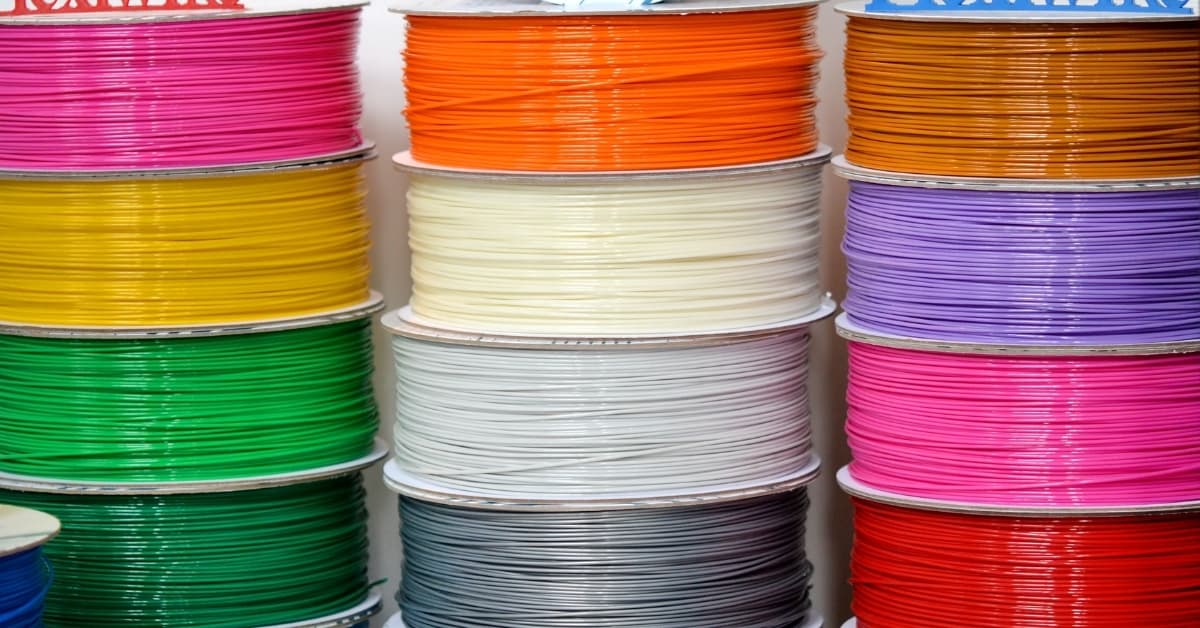
Bambu Lab Filaments deliver smoother prints, stronger parts, and fewer failures with tuned profiles, real pricing, and material guidance for every skill level.
Cheap filament ruins good prints fast. Poor diameter control causes clogs, weak layers, and wasted time. That frustration pushes many users to look for materials built for consistency instead of luck.
Bambu Lab Filaments stand out because every spool is tuned for precision, not guesswork. These filaments are engineered specifically for Bambu Lab printers, with tight tolerances, verified material blends, and print profiles already dialed in.
You spend less time tweaking settings and more time finishing usable parts. Pricing stays competitive, and the lineup covers everything from simple PLA to industrial composites.
If print quality, reliability, and time savings matter, this guide breaks down exactly what works, what costs more, and what fits your projects best.
Bambu Lab Filaments Overview and What Sets Them Apart
Bambu Lab Filaments are manufactured with a ±0.02 mm diameter tolerance, as published by Bambu Lab. That level of consistency directly affects extrusion flow, layer bonding, and surface finish.
Many generic filaments drift beyond ±0.05 mm, which increases clog risk and dimensional errors. Each spool includes official Bambu Studio profiles, tested internally on X1 and P1 series printers.
That removes trial-and-error tuning. The materials arrive vacuum-sealed with desiccant and resealable bags, reducing moisture absorption before first use.
Another advantage comes from AMS compatibility. RFID tagging allows the printer to auto-detect material type and color, which lowers setup errors during multi-material prints. For users running production batches or frequent color swaps, this saves measurable time.
PLA Options From Bambu Lab Filaments and When to Use Them
PLA remains the most used filament, and Bambu Lab PLA covers both basic and aesthetic needs.
PLA Pricing (Official US Store)
| PLA Type | Price per kg | Best Use |
|---|---|---|
| PLA Basic | $12.99 | Prototypes, models, daily prints |
| PLA Matte / Translucent | $12.99–$14.99 | Display parts, soft finishes |
| PLA Silk / Metal / Marble | $24.99 | Decorative prints |
| PLA Tough+ | $20.99 | Higher impact resistance |
| Gradient PLA | $24.99 | Visual showcase models |
PLA prints cleanly at 190–220°C and does not need a heated enclosure. Layer adhesion stays consistent, and warping stays minimal. Tough+ PLA provides improved impact resistance, making it suitable for snap-fit parts and light mechanical stress.
PETG and Carbon Fiber Filaments for Stronger Functional Parts
PETG balances strength, flexibility, and ease of printing. Bambu Lab PETG adheres well between layers and resists cracking better than PLA.
PETG and CF Pricing
| Material | Price per kg | Key Benefit |
|---|---|---|
| PETG Standard | $12.99 | Durable functional parts |
| PETG Translucent | $14.99 | Visual clarity with strength |
| PETG-CF | $31.99 | Increased stiffness |
| PET-CF | $44.99 | High strength-to-weight ratio |
PETG prints best at 230–250°C with light bed heating. Carbon fiber blends improve rigidity and reduce flex, though hardened nozzles are strongly recommended. These materials work well for brackets, mounts, and outdoor components.
ABS and ASA Filaments for Heat and Outdoor Performance
ABS and ASA are designed for higher temperatures and demanding environments.
| Material | Price per kg | Strength |
|---|---|---|
| ABS | $29.99 | Heat resistance |
| ASA | $29.99 | UV stability |
| ASA-CF | $36.99 | Outdoor structural parts |
| ABS-GF | $29.99 | Reduced warping |
ASA resists UV degradation better than ABS, which makes it a solid choice for outdoor enclosures and vehicle parts. Printing requires 240–260°C, strong bed adhesion, and an enclosure to prevent warping.
Engineering-Grade Bambu Lab Filaments for Professional Use
These materials target users building end-use parts and fixtures.
| Material | Price | Application |
|---|---|---|
| PA6-CF | $42.99 | Structural strength |
| PAHT-CF | $49.99 | High-temperature use |
| PC | $39.99 | Impact resistance |
| PA6-GF | $59.99 | Dimensional stability |
| PPS-CF | $129.99 | Chemical resistance |
| PPA-CF | $149.99 | Extreme heat tolerance |
These filaments require hardened nozzles, elevated chamber temperatures, and careful moisture control. In testing environments, carbon-fiber nylon shows up to 30–40% stiffness improvement over unfilled nylon, according to published material property data from manufacturers like BASF and DuPont.
TPU Filaments for Flexible and Impact-Absorbing Prints
Bambu Lab TPU is optimized for reliable feeding through AMS systems.
| TPU Type | Price | Flexibility |
|---|---|---|
| TPU AMS | $34.99 | Balanced |
| TPU 85A | $41.99 | Soft |
| TPU 90A | $41.99 | Medium |
| TPU 95A | $41.99 | Semi-rigid |
TPU prints best at slower speeds with minimal retraction. These filaments work well for gaskets, phone cases, protective covers, and vibration dampeners.
Real-World Print Results and User Feedback
Hands-on testing across multiple printers shows fewer failed first layers compared to third-party filaments. Consistent spool winding reduces AMS feeding errors, and moisture resistance holds up well in normal indoor storage.
Community data from platforms like Reddit and Printables shows lower reported clog rates when users stick to official profiles. That aligns with Bambu Lab’s controlled extrusion tolerances and material validation process.
Limitations and Honest Considerations
Bambu Lab Filaments cost more than bulk generic brands. Advanced composites require hardened hardware upgrades.
Some users prefer third-party colors not available in the catalog. Open-material flexibility still exists, though official filaments reduce risk and setup time.
How to Choose the Right Bambu Lab Filament
- Decorative prints → PLA Matte or Silk
- Functional indoor parts → PETG
- Outdoor exposure → ASA
- Structural strength → PA-CF
- Flexible parts → TPU 90A
- High-heat applications → PPA-CF
s
Bambu Lab Filaments deliver consistent extrusion, reliable profiles, and real time savings. Print failures drop. Surface quality improves. Setup becomes easier. The price reflects tighter quality control and verified performance.
If cleaner prints and fewer adjustments matter, these materials earn their place on your shelf. Start with PLA or PETG, then expand into composites as projects demand more strength. Explore the lineup, test a few spools, and see how much smoother printing can feel.