
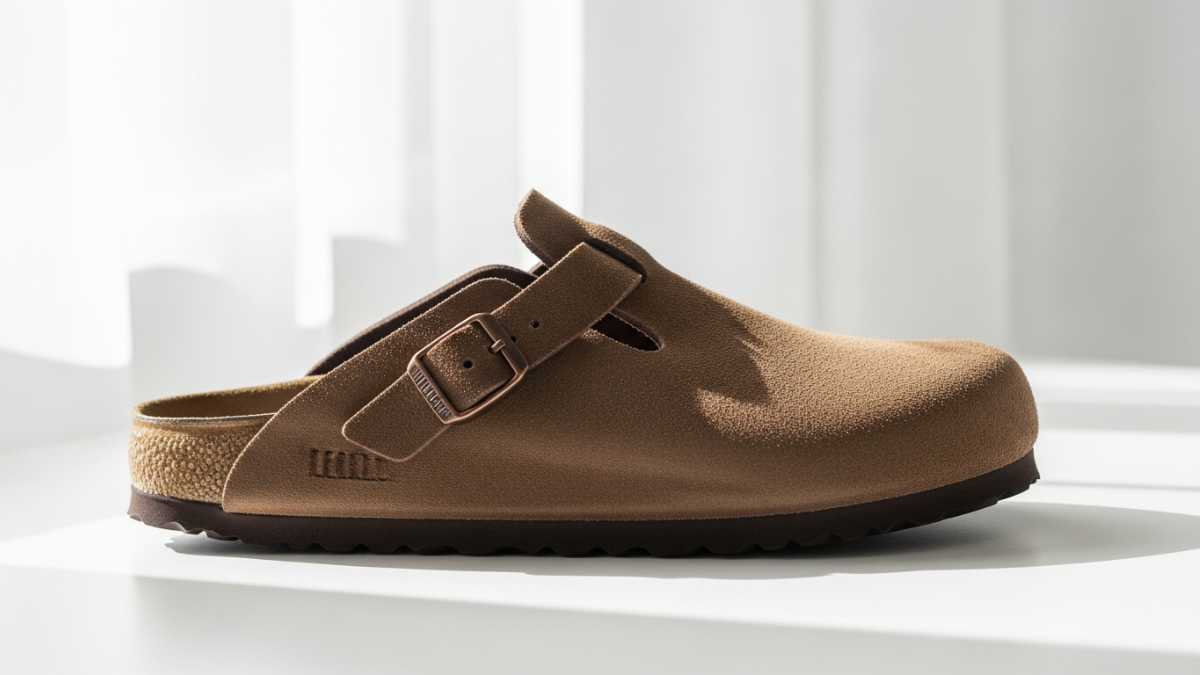
Discover if the Birkenstock Boston Clog delivers on its orthopedic promises. We break down the anatomical footbed, comfort science, and whether this cult-favorite shoe is worth the investment for pain relief and posture improvement.
Nearly 70% of adults experience foot pain at some point in their lives, yet most of us continue wearing shoes that offer minimal support. The disconnect between comfort needs and actual footwear choices reflects a broader cultural acceptance of preventable pain. We’ve normalized shuffling through days with aching arches and sore heels, treating foot discomfort as an inevitable part of life rather than a solvable problem.
The Birkenstock Boston Clog has transcended its functional roots to become a genuine cultural phenomenon, named Shoe of the Year by Lyst in 2022 and championed by celebrities like Kendall Jenner and Kaia Gerber. Yet beneath the fashion credibility lies serious engineering—a cork-latex footbed designed to mimic natural sand imprints, German craftsmanship, and a construction philosophy rooted in biomechanical support. This shoe has managed something rare: it bridges the gap between orthopedic necessity and authentic style.
This article breaks down what actually makes this shoe work from an orthopedic standpoint, explores the break-in reality that catches many buyers off guard, and examines whether the $145–$245 price tag justifies the investment for people dealing with foot and back issues. Discover the Boston Clog and experience the difference quality footwear can make.
The Orthopedic Engineering Behind the Boston Clog’s Cult Status
Cork-latex footbed science: How the anatomically shaped design mimics natural foot contours and promotes proper spinal alignment
The cork-latex footbed isn’t simply cushioning—it’s biomechanical architecture. Birkenstock designed this footbed to replicate the feeling of walking barefoot in sand, where the foot naturally sinks and creates its own support contours. The cork compresses gradually under your weight, molding to the unique topography of your foot over time. This personalized fit addresses the reality that no two feet are identical, and mass-produced insoles can’t account for individual arch heights, heel positions, or toe angles.
When your foot sits in proper anatomical alignment, the effects ripple upward through your kinetic chain. Correct foot positioning naturally aligns your ankles, knees, hips, and spine. This cascading effect improves posture without requiring conscious effort or constant correction. Many users report that this postural improvement reduces or eliminates lower back pain that had plagued them for years, even when that pain didn’t originate in their feet.
EVA sole technology: Lightweight construction that reduces foot fatigue without sacrificing durability
The lightweight EVA (ethylene-vinyl acetate) sole serves a specific purpose—it provides responsive cushioning without adding unnecessary weight that compounds foot fatigue over the course of a day. Traditional heavy soles force your foot and leg muscles to work harder with each step, a cumulative tax that becomes noticeable by afternoon. The EVA sole reduces this muscular burden while maintaining durability through repeated wear and varied terrain.
The material also provides consistent shock absorption, protecting joints from the repetitive impact that accumulates during standing or walking-intensive work. This becomes particularly valuable for people whose jobs require them to be on their feet for extended periods.
Arch support mechanics: Why the footbed’s design addresses common pain points like plantar fasciitis and heel discomfort
Plantar fasciitis—the connective tissue running along the bottom of the foot—becomes inflamed when the arch receives inadequate support. The Boston Clog’s footbed provides targeted arch support that prevents excessive stretching of this tissue. The cork material offers firm but yielding support, creating the balance between stability and comfort that plantar fasciitis sufferers desperately need.
Heel discomfort, whether from heel spurs or general pain, improves when the heel sits in a slightly elevated, supported position. The Boston Clog’s footbed geometry places the heel in optimal alignment, reducing strain on the Achilles tendon and heel structures.
Natural stance promotion: How the shoe encourages biomechanically correct posture throughout the day
When your feet sit in proper alignment, you naturally stand taller and straighter. This isn’t about forcing your body into an unnatural position—it’s about removing the postural distortions that poorly-supported shoes create. The Boston Clog eliminates the constant micro-corrections your body makes to compensate for inadequate arch support, allowing you to stand and walk with efficiency rather than strain.
This natural stance improvement extends beyond comfort. Over time, maintaining correct posture reduces repetitive strain injuries, improves breathing capacity, and even affects confidence and mood—posture research consistently shows that upright positioning influences psychological state.
Comparative advantage: How the Boston Clog’s footbed design differs from standard clog alternatives and mass-market comfort shoes
Many clog designs prioritize style over support, offering little more than a padded insole in a fashionable shape. Standard comfort shoe brands often use generic foam insoles that compress over time, losing their supportive properties within months. The Boston Clog’s cork-latex construction doesn’t compress permanently—it customizes to your foot while maintaining structural integrity for years.
The anatomically shaped design also differs fundamentally from flat insole approaches. Instead of trying to create a one-size-fits-all support curve, Birkenstock’s design assumes that support is personal and evolves as the footbed molds to the individual wearer. This philosophy produces significantly better outcomes than mass-market alternatives.
German manufacturing standards: The role of precision engineering and quality control in orthopedic effectiveness
The Boston Clog is manufactured in Germany, where Birkenstock maintains stringent quality control standards. Precision engineering ensures that each footbed meets exacting specifications for arch height, heel elevation, and cork-latex composition. These standards matter because even small deviations in footbed geometry can reduce orthopedic effectiveness or create pressure points.
German manufacturing also means consistent material quality. The suede and leather used in Boston Clogs meet strict durability and finish standards, contributing to the shoe’s longevity and appearance over multiple seasons.
Real User Experiences: Who Benefits Most From Boston Clogs
Posture improvement testimonials: Stories from desk workers, healthcare professionals, and retail employees
Desk workers—a demographic that faces constant postural strain from sitting—report noticeable improvement in lower back and neck pain when they incorporate Boston Clogs into their routine. The improved standing posture carries over even when they’re seated, as the muscles and fascia remember their optimal alignment.
Healthcare professionals working twelve-hour shifts on their feet consistently report that the Boston Clog is one of the few shoes that doesn’t compromise their comfort by day’s end. Retail employees similarly describe the shoes as transformative for managing foot fatigue during long shifts.
Chronic pain relief patterns: Common conditions improved (lower back pain, foot aches, knee strain)
The most commonly reported improvement involves lower back pain, particularly for people whose pain stemmed from poor spinal alignment rather than specific injury. Foot aches—general soreness across the sole and heel—typically resolve within weeks once the footbed customizes to the wearer’s foot shape. Knee strain often improves as proper foot alignment reduces compensatory stress on the knee joint.
The break-in period reality: Timeline expectations and discomfort management strategies
The cork footbed requires molding to your foot, and this adaptation process creates temporary discomfort. Most users experience noticeable improvement within two to three weeks of regular wear, with substantial comfort gains by week six. However, full customization—where the footbed feels perfectly sculpted to your foot—typically takes two to three months.
During the break-in phase, wearing the shoes for shorter periods and gradually increasing wear time prevents excessive discomfort. Starting with one to two hours daily and building up over several weeks allows the cork to adjust without overwhelming your feet. Pairing the shoes with quality socks and taking breaks when needed also smooths the transition.
Demographic breakdown: Why Gen-Z and millennials are adopting them beyond fashion trends
Younger generations grew up witnessing older family members dealing with chronic foot and back pain, creating awareness about preventive footwear choices. Simultaneously, social media amplified the Boston Clog’s aesthetic appeal, making it aspirational rather than utilitarian. The combination—real orthopedic benefits paired with genuine style credibility—resonates with demographics that prioritize both wellness and aesthetics.
Professional endorsements: Physical therapists and podiatrists who recommend the Boston Clog
Physical therapists regularly recommend the Boston Clog to patients struggling with alignment issues and chronic pain. The shoe’s anatomical design aligns with professional understanding of biomechanical support. Podiatrists similarly acknowledge that while the break-in period requires patience, the long-term benefits justify the investment for many patients.
Long-term wear outcomes: Durability reports and how the footbed evolves over months and years
Users who’ve worn their Boston Clogs for multiple years report that the footbed remains supportive even after thousands of hours of wear. The cork doesn’t degrade the way foam does—it maintains its structural integrity while continuing to customize to subtle changes in the wearer’s foot. Many long-term users describe their clogs as becoming more comfortable over time rather than less, as the personalized molding deepens.
The shoe’s durability means that cost-per-wear calculations become extremely favorable. A shoe worn regularly for three to five years distributes its initial cost across hundreds of days, making the per-day expense minimal.
Navigating the Break-In Phase Without Giving Up
Week-by-week comfort progression: What to expect during the critical adaptation period
Week one typically brings noticeable stiffness and potential soreness in the arch and heel areas as the cork begins its initial adjustment. Week two usually sees discomfort diminishing as the footbed starts conforming to foot contours. By week three, most users report that the shoes feel noticeably more comfortable during wear, though soreness may still appear after extended periods.
Weeks four through six mark the transition where the clogs feel comfortable enough for several hours of continuous wear without significant discomfort. By week eight, most users can wear the shoes all day with minimal or no pain. Full customization—where the footbed feels like an extension of the foot—typically emerges around the three-month mark.
Cork footbed molding process: How the shoe customizes itself to your unique foot shape
The cork compresses under pressure and heat from your foot, gradually filling to match your foot’s exact contours. This isn’t a simple crushing process—the cork actually becomes slightly softer and more pliable as it adapts, conforming to your arch height, heel shape, and pressure distribution patterns. The latex component maintains the cork’s structural integrity while allowing this personalized molding.
This customization process is permanent in the positive sense: once molded, the footbed retains your foot’s imprint, which is why many long-term Boston Clog users report that their shoes become more comfortable over time rather than less.
Strategies to accelerate comfort: Wearing schedules, sock recommendations, and gradual integration
Starting with one to two hours daily and increasing duration weekly prevents overwhelming your feet during the adaptation period. Wearing the shoes during lower-impact activities—sitting at a desk or casual household tasks—before attempting full-day wear allows the cork to adjust gradually.
Quality socks matter more than many expect. Merino wool or other natural fiber socks wick moisture and provide cushioning that eases the break-in process. Thick athletic socks can add excessive bulk, pushing your foot against the shoe’s sides, so medium-weight natural fiber socks typically work best.
Some users find that slightly warming the cork footbed before wearing—by placing the shoes in sunlight or wearing them with heated socks—accelerates the softening and molding process during the early adaptation period.
When discomfort signals a sizing issue: Red flags that indicate poor fit versus normal break-in pain
Normal break-in discomfort centers on the arch, heel, and general foot soreness—the areas directly contacting the cork. This discomfort feels like muscle soreness rather than sharp or shooting pain. Pain that concentrates on the sides of the foot, sharp sensations across the top of the foot, or pinching around the ankle usually indicates a sizing issue rather than normal adaptation.
Blistering on the heel or sides of the foot can occur during break-in but shouldn’t persist beyond the first two weeks with proper sock protection. Continued blistering by week three suggests the shoes are too tight or too loose.
Soft footbed vs. standard footbed: Which option reduces initial discomfort for sensitive feet
The soft footbed variant uses a thinner cork layer with additional cushioning, reducing the stiffness during the break-in period. For people with particularly sensitive feet or those who’ve experienced chronic pain, the soft footbed may feel more approachable initially, though it provides slightly less firm arch support than the standard version.
The standard footbed, while stiffer initially, ultimately provides superior long-term support for people addressing alignment and structural foot issues. The extra discomfort during break-in typically yields better results for chronic pain sufferers.
Shearling-lined variant considerations: Why these versions may require extra patience during break-in
The shearling lining adds bulk inside the shoe, which can make the fit feel tighter initially. Additionally, shearling-lined models tend to run smaller, requiring careful size selection. The combination of tighter fit and extra insulating material means these versions usually require a longer break-in period—often two to three weeks of additional adaptation time compared to standard models.
Style Versatility That Justifies Year-Round Investment
Gender-neutral design appeal: How the Boston Clog transcends traditional footwear categorization
The Boston Clog’s unisex aesthetic means it doesn’t signal masculinity or femininity—it signals intention and wellness consciousness. This design philosophy allows people of any gender to wear the shoe authentically without worrying about gendered footwear conventions. The closed-toe, buckle-strap design reads as functional and modern rather than fitted to a specific gender presentation.
This neutrality actually enhances styling possibilities, as the shoe doesn’t carry gendered style baggage. A person can style the Boston Clog in ways that express their individual aesthetic without the shoe’s design limiting those possibilities.
Seasonal styling frameworks: Outfit combinations for spring, summer, fall, and winter wear
Spring styling works beautifully with cropped pants, wide-leg trousers, or midi skirts paired with light layers. The clog’s compact profile doesn’t overwhelm delicate spring outfits. Summer styling leverages the clog’s functionality with linen pants, shorts, or lightweight dresses—the shoe’s support shines during heat-intensive days when swollen feet demand reliable arch support.
Fall calls for chunky knits, earth-tone layers, and longer pants or skirts that showcase the clog’s profile. The suede or leather finishes in neutral tones complement autumn color palettes naturally. Winter styling pairs the Boston Clog with heavy textures, wool socks visible with cropped pants, and layered silhouettes that create visual balance with the shoe’s solid presence.
The Boston Clog essentially works year-round because its primary design isn’t seasonal—it’s structural. The shoe functions identically across seasons, making seasonal variation a matter of outfit coordination rather than shoe replacement.
Professional settings: Incorporating the clog into workplace wardrobes without sacrificing credibility
In creative industries, the Boston Clog reads as intentional and fashion-aware. In corporate settings, it occupies interesting middle ground—it’s clearly not casual footwear, yet it’s not traditional business shoes either. Styling the clog professionally involves pairing it with tailored pieces: structured trousers, midi skirts, or dresses that ground the shoe’s presence in professional intention.
The key to professional credibility involves styling the overall outfit with awareness. A Boston Clog paired with structured silhouettes and neutral tones feels intentional and professional. The same shoe paired with overly casual pieces can read as sloppy rather than intentional.
Casual-to-elevated transitions: Dressing up or down the same shoe for different occasions
The remarkable feature of the Boston Clog is its flexibility across formality levels. Styled down with jeans and t-shirts, it reads as casual and approachable. Elevated with trousers, structured sweaters, or dresses in rich fabrics, it becomes intentional and fashion-forward. This range means one pair of shoes can legitimately serve multiple styling contexts.
Weekend casual looks benefit from the shoe’s genuine comfort—you’re wearing something genuinely supportive rather than sacrificing foot health for style. Professional or elevated contexts benefit from the shoe’s visual credibility—it reads as chosen rather than default.
Material choices impact aesthetics: Suede versus leather finishes and their styling implications
Suede finishes feel more casual and tactile, working beautifully in relaxed styling contexts. The texture adds visual interest and depth, making suede-finish Boston Clogs feel more approachable. Leather finishes feel more refined and polished, working particularly well in professional or elevated styling contexts. The smooth surface reflects light, creating visual sophistication.
Both materials age beautifully—scuffs and wear develop patina that increases character rather than decreasing visual appeal. This aging process means the shoe’s appearance actually improves in some ways over time.
Color options and trend resilience: Why neutral tones ensure longevity beyond fleeting fashion cycles
Black, tan, and brown represent the primary color options for Boston Clogs, all universally neutral shades that pair with virtually any color palette. These tones have remained fashionable across multiple decades and fashion cycles, making them safe investments unlikely to feel dated within a few seasons.
The neutrality also means the clog doesn’t compete with outfit color schemes—it anchors them. You can style the same shoe with wildly different color combinations and outfits, maximizing wardrobe versatility.
Price Point Analysis: Is the $145–$245 Investment Worth It
Cost-per-wear calculation: How durability and longevity impact actual expense over time
A Boston Clog purchased at $160 worn three times weekly for two years translates to approximately 312 wears and a cost of about 51 cents per wear. Extended to three years of regular wear, that same shoe costs roughly 34 cents per wear. Compare this to trendy shoes purchased at $80 and worn fifty times before replacing them ($1.60 per wear), and the math shifts dramatically in favor of the Boston Clog.
For people working toward multiple pairs for seasonal rotation or different material finishes, the cost-per-wear compounds even further. Someone owning two Boston Clogs and rotating between them could easily exceed 500+ wears per shoe, dropping cost-per-wear below 32 cents.
Premium material justification: What suede and leather construction contribute to the price
Quality suede and leather aren’t cheap materials—they require ethical sourcing, tanning processes that preserve material integrity, and finishing standards that contribute durability. The Boston Clog’s price includes premium material sourcing that mass-market comfort shoes skip, opting for synthetic alternatives that break down faster.
These premium materials also age beautifully, developing patina that increases aesthetic appeal. A five-year-old Boston Clog in high-quality leather often looks intentionally vintage rather than worn-out, which can’t be said for shoes made from synthetic materials.
Comparison to orthopedic shoe alternatives: How Boston Clogs stack against specialized pain-relief footwear
Specialized orthopedic shoes often cost $200–$300 and offer support comparable to the Boston Clog while remaining visually utilitarian. They work effectively for addressing specific pain issues but offer minimal style appeal, limiting their use to home or medical contexts.
The Boston Clog provides nearly identical orthopedic benefit at a comparable or lower price point while offering genuine style credibility that allows year-round, multi-context wear. This versatility fundamentally changes the value proposition.
Resale and secondhand market value: Why these shoes hold their worth
Boston Clogs command strong prices in secondhand markets, typically retaining 50–70% of original purchase price depending on condition. This resale strength means the true cost of ownership is lower than the purchase price suggests. Someone purchasing a Boston Clog at $160, wearing it for several years, and reselling it for $80 has effectively reduced their real cost to $80 over multiple years of use.
This resale resilience reflects genuine demand—people actively seek used Boston Clogs because they know the shoe’s value. Trendy shoes that fall out of favor quickly command minimal resale value.
Material variant pricing: Understanding why shearling-lined and specialty versions command higher prices
Shearling-lined Boston Clogs cost $200–$245 due to the additional shearling material and labor involved in construction. This premium provides year-round insulation, making the shoe functional in colder climates without requiring different footwear. For people in cold regions, the shearling version becomes more versatile than standard versions.
Specialty leather or suede finishes (colored or exotic finishes beyond standard tan, black, or brown) command premiums reflecting their sourcing and finishing complexity. These versions offer aesthetic distinctiveness, justifying their higher price for people prioritizing visual uniqueness.
Long-term health investment perspective: Calculating savings from reduced pain management and medical visits
The indirect financial benefit of chronic pain reduction often exceeds the shoe’s cost. People experiencing plantar fasciitis, lower back pain, or general foot discomfort typically spend money on physical therapy, pain management, and other treatments. A $160 shoe that significantly reduces or eliminates this pain saves hundreds of dollars in medical expenses while improving quality of life.
Additionally, proper foot support prevents future degenerative issues that could require more expensive interventions. Viewing the Boston Clog as preventive health investment rather than pure fashion expense reframes its value proposition significantly.
Start your Boston Clog journey and invest in your foot health and style.
Sizing Inconsistencies and How to Get the Right Fit
Standard sizing versus shearling-lined fit: Why certain variants run differently
Shearling-lined Boston Clogs typically run half to one full size smaller than standard versions due to the insulating material taking up interior space. Someone who wears a size 38 in standard Boston Clogs may need a size 37 or even 36.5 in shearling-lined versions. This sizing discrepancy catches many online shoppers off guard, resulting in returns and reorders.
Standard leather or suede versions run relatively true to size, though individual foot width variations can affect fit. Testing both standard and variant versions before committing helps establish your actual size across different models.
Unisex sizing quirks: How gender-neutral design affects size selection
Birkenstock’s unisex sizing system doesn’t differentiate between men’s and women’s sizes, which means size 38 is size 38 regardless of foot shape. This system works well for people with average foot proportions but can create challenges for people with particularly narrow or wide feet.
The neutral sizing also means that traditional gender-based sizing guidance doesn’t apply. A person typically wearing women’s size 8 might wear size 39 in Boston Clogs, while someone typically in men’s size 8 might wear size 41. Individual foot dimensions matter more than typical gender-based sizing.
Measurement guidelines: Proper techniques for determining your Boston Clog size
Accurate measurement requires placing a ruler vertically along the back of your heel while standing, then measuring to the longest toe. This measurement in centimeters converts to Birkenstock sizing using their official size chart. Online size charts can be unreliable, so checking multiple sources and cross-referencing with user reviews provides better guidance.
Measuring both feet matters—many people have slightly different foot sizes, and proper fit requires accommodating the larger foot. Measuring in the afternoon (when feet swell slightly from daily activity) provides more accurate measurements than morning measurements.
Return policies and try-before-buy options: Strategies for avoiding costly sizing mistakes
Major retailers carrying Boston Clogs typically offer return windows of 30–60 days, providing reasonable opportunity to assess fit during the break-in period. Ordering multiple sizes with intent to return all but the correct size remains the most reliable approach for online shopping, though it requires patience and return shipping costs.
Some retailers offer try-on programs where you pay a deposit and receive shoes with free returns if sizing doesn’t work out. These programs add cost but eliminate the guesswork of ordering purely online.
Width considerations: Whether the clog accommodates narrow or wide feet adequately
The Boston Clog comes in standard and narrow versions, with the standard version accommodating most foot widths. However, people with particularly wide feet may find the standard version uncomfortably snug, especially during the break-in period when the cork hasn’t yet softened.
Narrow-footed individuals sometimes benefit from the narrow version to prevent heel slipping and excessive side-to-side movement. Ordering the width that matches your foot structure provides better comfort during break-in and long-term wear satisfaction.
Regional manufacturing variations: Minor differences in older versus newer production batches
Manufacturing variations occasionally occur between production batches and regions, resulting in subtle differences in cork firmness, footbed height, or strap tightness. Newer models typically feature slightly softer cork than older batches, making newer versions slightly more comfortable initially but potentially offering slightly less firm support long-term.
These variations rarely create significant fit or comfort issues but can explain why your Boston Clogs fit or feel slightly different from someone else’s pair purchased years earlier.
The Cult Following Explained: From Functional Shoe to Fashion Icon
Social media acceleration: How Instagram and TikTok elevated the Boston Clog beyond utility
Instagram influencers and fashion bloggers began styling Boston Clogs in sophisticated, unexpected ways that contradicted their utilitarian reputation. Visual platforms amplified these styling examples, creating awareness that the shoe could work in fashion-forward contexts. TikTok accelerated this cultural shift as younger creators adopted the shoe and demonstrated its versatility through short-form styling content.
The visual nature of social media proved particularly effective for the Boston Clog because the shoe’s design photograph well and tell a story about intentional style. A simple Instagram photo of Boston Clogs paired with tailored clothing communicated fashion authority more effectively than any description could.
Celebrity endorsements impact: Kendall Jenner, Kaia Gerber, and influencer adoption patterns
High-profile celebrities like Kendall Jenner and Kaia Gerber wearing Boston Clogs in public contexts—not as novelty or ironic choices but as genuine style selections—legitimized the shoe for millions of followers. When aspirational figures make certain choices, those choices become desirable to their audiences regardless of the choice’s practical merits.
The celebrity adoption wasn’t manufactured marketing—these individuals genuinely wore Boston Clogs, which created authentic endorsement more powerful than paid advertising. Their audiences noticed and followed suit.
Generational appeal shifts: Why younger consumers embraced what previous generations overlooked
Younger generations grew up witnessing older family members struggle with chronic foot pain and postural issues, creating awareness about preventive health choices. Simultaneously, Gen-Z and millennials developed values emphasizing authenticity, wellness, and intentional consumption rather than trend-chasing.
The Boston Clog appeals to these values perfectly: it’s authentic (designed for actual support rather than fashion), wellness-focused (addressing real biomechanical needs), and intentional (chosen for specific reasons rather than trend adherence). The shoe’s primary appeal to younger demographics stems from alignment with their values rather than pure fashion trend adoption.
Perennial favorite status: What makes a shoe transcend seasonal trends
The Boston Clog’s designation as a “perennial favorite” reflects its resistance to trend cycles. Fashion trends typically peak and fade, but the Boston Clog has remained culturally relevant and commercially strong for years. This longevity stems from the shoe’s fundamental appeal—comfort and support—transcending aesthetic preferences.
Aesthetic trends change, but foot pain remains constant. As long as people experience foot discomfort and seek stylish solutions, the Boston Clog remains relevant. This practical foundation protects it from trend obsolescence.
Wellness movement alignment: How the orthopedic narrative merged with fashion consciousness
The broader wellness movement emphasizing holistic health and preventive medicine created cultural acceptance for footwear marketed on orthopedic benefits. Simultaneously, fashion culture began incorporating wellness values, making health-conscious choices fashionable. The Boston Clog positioned itself at this intersection perfectly.
Marketing the shoe’s orthopedic benefits alongside its aesthetic appeal created a narrative that transcended traditional shoe categories. It wasn’t purely functional or purely fashionable—it was both, appealing to people seeking integration of these values in their consumption choices.
Community and identity: The role of the Boston Clog in broader lifestyle and values expression
Wearing Boston Clogs signals membership in a community valuing intentional consumption, comfort, and aesthetics. The visible adoption of the shoe indicates alignment with wellness consciousness and fashion awareness, creating community identity around a shared choice.
Online communities dedicated to styling Boston Clogs and sharing wearing experiences reinforce this identity aspect. The shoe becomes more than footwear—it becomes a symbol of shared values and aesthetic sensibility.
Maintenance and Longevity: Protecting Your Investment
Suede and leather care protocols: Cleaning, conditioning, and protective treatments
Suede requires regular brushing with a soft-bristled brush to maintain texture and remove surface dirt. Deeper cleaning can be accomplished with specialized suede cleaner applied with a soft cloth. Leather finishes clean with a damp cloth and dry quickly, requiring minimal intervention.
Conditioning treatments applied periodically—roughly every six months for regular wear—maintain material suppleness and protect against drying and cracking. Quality leather and suede conditioners penetrate the material without leaving greasy residue.
Protective spray treatments create water and stain resistance without altering material appearance. Applying protective treatment to new Boston Clogs before wearing them provides the greatest benefit, though treatment can be reapplied periodically.
Footbed preservation: Extending the life of the cork-latex core through proper maintenance
The cork-latex footbed requires minimal maintenance beyond regular cleaning to remove accumulated dirt and sweat. Wiping the footbed with a damp cloth monthly maintains hygiene and prevents buildup that can harbor bacteria.
Avoiding excessive moisture exposure—leaving shoes in damp environments or wearing them in heavy rain repeatedly—prevents cork degradation. Allowing shoes to air-dry completely after exposure to moisture protects the cork from becoming waterlogged.
Seasonal storage tips: Protecting your clogs during off-season months
Storing Boston Clogs in a cool, dry location prevents cork and material degradation. Avoid storing in attics or basements prone to humidity or temperature fluctuation. Neutral temperature basements or closets work well for seasonal storage.
Stuffing shoes with acid-free tissue paper maintains their shape during storage and absorbs excess moisture. Never store in plastic bags or sealed containers that trap moisture—breathable storage allows materials to remain in good condition.
Resoling and repair options: When and how to refresh worn soles
Professional resoling services can replace worn EVA soles, potentially extending shoe life indefinitely. Many people with well-loved Boston Clogs opt for resoling after 2–3 years of heavy wear rather than replacing the entire shoe. Birkenstock and authorized repair services offer resoling, typically costing $40–$80 depending on sole condition.
Beyond sole replacement, suede or leather repairs can address scuffs or damage. Professional cobblers can often repair damage that makes shoes unwearable, restoring them to serviceable condition at a fraction of replacement cost.
Water resistance considerations: Managing moisture exposure and drying techniques
While not waterproof, Boston Clogs can resist light moisture with proper care. Protective sprays enhance water resistance, allowing the shoes to handle light rain or wet conditions without damage. However, heavy water exposure should be avoided when possible.
After exposure to moisture, allow shoes to air-dry naturally at room temperature. Never apply direct heat (hair dryers, radiators, or sunlight) as this can warp materials and cause cracking. Drying typically takes 24–48 hours depending on moisture exposure level.
Warranty coverage: Understanding Birkenstock’s guarantees and what they cover
Birkenstock offers limited warranties covering manufacturing defects but not normal wear or misuse. Warranty coverage typically includes footbed delamination or structural failures but excludes cosmetic wear, material aging, or damage from improper care.
Warranty registration and documentation varies by retailer and region. Checking specific warranty terms with your purchase location ensures you understand what protection applies to your shoes.
Who Should (and Shouldn’t) Buy the Boston Clog
Ideal candidates: Chronic pain sufferers, posture-conscious professionals, style-forward consumers
People experiencing chronic foot pain, plantar fasciitis, heel discomfort, or lower back pain represent ideal candidates for the Boston Clog. The orthopedic benefits address real pain points, making the investment worthwhile despite the break-in period. The shoe’s style credibility adds appeal beyond pure pain relief.
Posture-conscious professionals—people who sit at desks most of the day or stand during work—benefit from the shoes’ postural support during non-working hours. Wearing Boston Clogs during downtime or casual workdays reinforces postural habits that carry into all-day activity.
Style-forward consumers seeking genuine design quality and longevity find in the Boston Clog a shoe that ages beautifully and remains fashionable across multiple seasons. The shoe’s design credibility and cultural status appeal to people valuing intentional, thoughtful fashion choices.
Lifestyle compatibility: Jobs and activities where the clog excels versus struggles
The Boston Clog excels in environments requiring extended standing or walking with minimal high-impact activity. Retail, healthcare, education, and desk-based work with variable standing time all benefit from the shoe’s support. The shoe’s closed-toe design makes it appropriate for professional settings where safety footwear isn’t required.
The clog struggles in environments requiring high-impact activity, running, or climbing. Athletes, construction workers, and people engaging in sports should seek footwear designed for those specific activities. The Boston Clog prioritizes stability and support over athletic performance.
Water-intensive work (swimming, lifeguarding, water sports) requires footwear different from what the Boston Clog provides. The shoe can handle moisture exposure but isn’t designed for prolonged water contact.
Budget-conscious alternatives: When to consider other Birkenstock models or competitors
People with severe budget constraints might consider other Birkenstock models at lower price points. The Arizona sandal, for example, offers similar cork-latex footbed support at $70–$100 while sacrificing some stylistic versatility and seasonal appropriateness.
Non-Birkenstock alternatives like Keen or Merrell offer orthopedic-focused designs at similar or slightly lower price points. However, few alternatives match the Boston Clog’s combination of orthopedic effectiveness and genuine style appeal.
Carefully considering actual needs helps determine whether the Boston Clog’s investment makes sense. Someone seeking purely functional support might find less expensive alternatives adequate. Someone seeking