
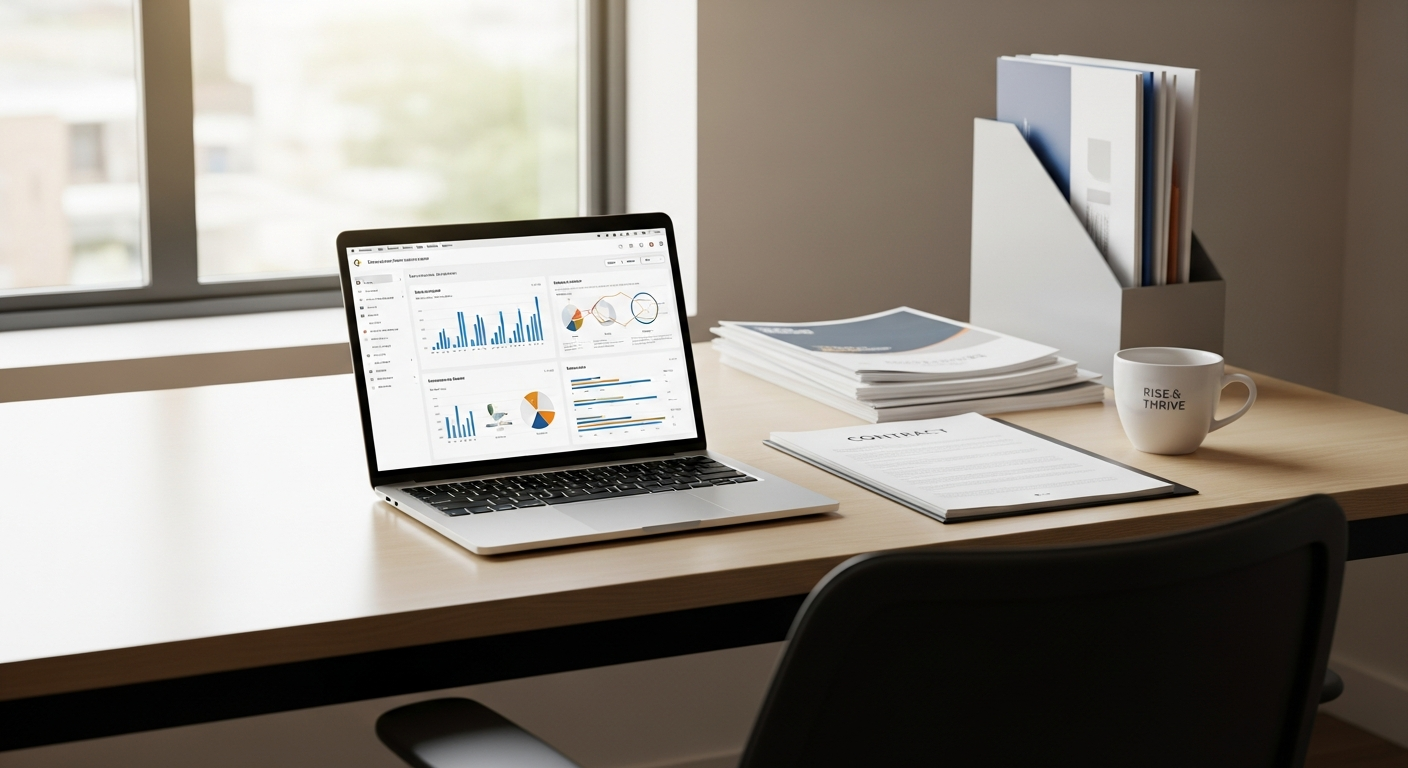
Discover how business laptop rental solutions empower companies to scale operations without capital investment. Explore flexible IT rentals, pricing, and real-world applications for modern enterprises.
Introduction
Nearly 60% of businesses now face unpredictable staffing needs—and traditional equipment ownership simply can't keep pace with rapid market shifts. When demand fluctuates, when projects launch suddenly, or when infrastructure fails unexpectedly, companies bound to fixed asset purchases find themselves either overextended or underequipped. Business laptop rental solutions represent a fundamental shift in how enterprises approach IT infrastructure, moving away from the burden of depreciation and maintenance toward on-demand access to enterprise-grade computing power.
Rather than sinking capital into depreciating assets that sit idle during slow periods, organizations now access the technology they need exactly when they need it. This transformation has reshaped how businesses handle temporary technology requirements, from corporate events and trade shows to disaster recovery scenarios and seasonal workforce expansions. The rental model eliminates the friction between business velocity and IT infrastructure constraints.
Explore enterprise laptop rental options to see how your business can scale technology with demand.
Why Businesses Are Abandoning Equipment Purchases for Rental Models
The economics of laptop ownership have shifted dramatically over the past decade. Organizations are increasingly recognizing that purchasing devices outright locks capital into depreciating assets while creating ongoing overhead that rental models eliminate entirely.
The hidden costs of laptop ownership: depreciation, maintenance, and IT overhead
A laptop purchased for $1,200 loses roughly 15-20% of its value in the first year alone. Beyond depreciation, organizations bear the full weight of maintenance contracts, hardware repairs, operating system updates, security patches, and eventual decommissioning. IT departments must manage inventory tracking, asset lifecycle planning, and replacement schedules—all consuming time and resources. When a device fails, organizations face downtime while replacements arrive. Storage for obsolete equipment becomes another hidden cost, as does the environmental responsibility of proper disposal.
How rental models eliminate capital expenditure while maintaining access to cutting-edge technology
Rental agreements shift these burdens entirely to the service provider. No upfront capital outlay means cash remains available for revenue-generating initiatives. Device replacement, maintenance, and technical support become the rental company's responsibility. Organizations access the latest processor generations, adequate RAM configurations, and reliable SSD storage without waiting for budget cycles or justifying multi-year depreciation schedules. When technology evolves, companies simply transition to newer models on their next rental cycle.
Scalability advantages: rapidly adjust device quantities based on real-time business demands
Business conditions change unpredictably. A new client win might require outfitting an entire team within days. A seasonal surge could demand 40% more computing capacity for three months. A contraction might necessitate returning surplus equipment immediately. Rental models accommodate these fluctuations without penalty. Companies scale up or down based on actual demand, avoiding both the capital waste of unused inventory and the operational chaos of insufficient resources.
Flexibility for fluctuating workforces: seasonal projects, temporary expansions, and contract workers
Contract workers, temporary staff, and project-based teams need computing power during their tenure but shouldn't require permanent infrastructure investment. Rental solutions provide pre-configured devices that deploy instantly, then return when engagements conclude. This flexibility extends to seasonal businesses managing dramatic workforce variations, startup teams ramping capacity as they scale, and organizations managing acquisition integration with overlapping technology ecosystems.
Decoding Laptop Specifications and Performance Tiers for Your Rental Fleet
Rental providers maintain diverse device inventories to accommodate different workload requirements and budget parameters. Understanding specification tiers helps organizations select configurations that match their actual performance needs without overspending for unnecessary capabilities.
Entry-level configurations: Intel Core i5 processors, 8GB RAM for administrative and standard office tasks
Entry-level laptops power the majority of business workflows. Intel Core i5 processors handle email, spreadsheets, document editing, web browsing, and standard database access without strain. Eight gigabytes of RAM supports multi-tasking without performance degradation for typical office applications. These configurations suit administrative roles, customer service operations, and general business functions. Rental rates typically fall in the $50-$75 daily range, making entry-level devices cost-effective for large deployments of general-purpose equipment.
Mid-range powerhouses: Intel Core i7, 16GB RAM, SSD storage for creative professionals and data analysts
Mid-range configurations address demanding workloads that exceed standard office applications. Core i7 processors accelerate video editing, 3D rendering, large spreadsheet calculations, and data processing tasks. Sixteen gigabytes of RAM eliminates memory constraints during complex operations. Solid-state drives dramatically improve responsiveness for professionals working with large files or databases. Graphic designers, video editors, data analysts, and software developers rely on mid-range specifications to maintain productivity. Daily rental rates generally range from $100-$130, providing substantial performance upgrades for teams requiring computational power.
Display options and portability: 13-inch ultrabooks for mobile teams versus 15–17-inch models for productivity-focused workers
Device size directly impacts both usability and workflow. Thirteen-inch ultrabooks prioritize portability for teams working across multiple locations, client sites, or field operations. Lighter weight reduces fatigue during extended mobile work while smaller footprints fit into tight spaces. Fifteen-inch models offer expanded screen real estate beneficial for spreadsheet analysis, video editing, coding, and design work where screen space accelerates productivity. Seventeen-inch models serve data-intensive roles where maximizing visible content directly improves performance. Rental providers typically offer multiple size options within each performance tier, allowing teams to optimize both capability and ergonomics.
Transparent Pricing Structures: Understanding Rental Costs and Hidden Fees
Rental pricing varies based on device specifications, rental duration, quantity, and market conditions. Understanding pricing models and fee structures enables accurate cost comparison with ownership alternatives.
Daily rental rates: $50–$150 depending on specifications and device tier
Daily rates establish the baseline rental cost. Entry-level laptops with Core i5 processors typically rent for $50-$75 daily. Mid-range configurations with Core i7 processors and enhanced RAM command $100-$130 daily rates. Premium workstations for specialized applications may exceed $150 daily. Daily rates work well for short-term needs lasting under one week, though they represent the least economical rental approach for longer commitments.
Weekly and monthly pricing: unlocking economies of scale with discounted effective daily rates
Weekly rental rates typically discount 15-25% from daily pricing, reducing the effective daily cost. Monthly rates provide steeper discounts, often 35-50% below daily rates. A device renting at $100 daily might cost $400-$500 for a week (rather than $700) or $1,200-$1,500 for a month (rather than $3,000). The extended commitment provides rental providers with revenue predictability, which they pass to customers through meaningful savings. Most business scenarios benefit from monthly or weekly rate structures rather than daily pricing.
Long-term rental discounts: multi-month commitments that reduce per-unit costs significantly
Commitments extending three to twelve months attract substantial discounts, sometimes reducing effective daily costs by 60% or more compared to daily rates. Organizations with predictable medium-term needs—such as establishing temporary offices, supporting expansion initiatives, or managing prolonged project staffing—unlock dramatic savings through long-term contracts. These arrangements also provide budget certainty and eliminate renegotiation overhead.
Quantity-based pricing: bulk discounts for large deployments (50+ devices)
Organizations deploying dozens or hundreds of devices access volume discounts reflecting economies of scale. Deploying 50 devices generates quantity discounts that reduce per-unit costs by 10-20%. Deploying 100+ devices may unlock discounts of 20-30% or more. Large corporate events, extensive training programs, and significant office buildouts benefit substantially from bulk pricing negotiations.
Real-World Scenarios Where Laptop Rentals Deliver Maximum ROI
Specific business contexts demonstrate where rental solutions generate the strongest financial and operational advantages over equipment purchases.
Corporate events and trade shows: deploy dozens of pre-configured devices for temporary staff or client demonstrations
Corporate events require rapid technology deployment followed by complete retrieval. Trade shows spanning three to five days need dozens of laptops for demonstrations, staff operations, or visitor access—all delivered, configured, and retrieved within a compressed timeframe. Purchasing equipment for single-use events creates waste and storage burdens. Rental providers handle delivery, setup, technical support, and pickup, freeing event organizers to focus on attendee experience. Conference organizers equip registration stations, demo areas, and staff operations without capital expenditure or post-event equipment management headaches.
Employee training programs: equip training facilities with standardized equipment without long-term capital investment
Training facilities require consistent, reliable hardware to ensure all participants work with identical configurations. Purchasing training equipment locks capital into devices that sit idle between program cycles, deteriorate over time, and become outdated as technology evolves. Rental agreements provide standardized equipment for program duration, guarantee technical support during sessions, and eliminate post-training inventory management. Organizations can refresh equipment regularly, ensuring participants train on current technology rather than aging devices.
Temporary office setups: support remote workers, satellite offices, or project-based teams quickly
New satellite offices, temporary project headquarters, and remote team expansions require computing infrastructure without long-term commitment. Rental solutions deploy pre-configured devices within days, avoiding lengthy procurement cycles. If temporary arrangements become permanent, equipment transitions seamlessly to purchase models. If circumstances change, organizations return equipment without penalty. This flexibility supports business agility—the ability to respond quickly to market opportunities or operational challenges without technology infrastructure constraints.
Disaster recovery and business continuity: rapid equipment deployment when primary infrastructure fails
Natural disasters, cyberattacks, or infrastructure failures can destroy organizational computing capacity. Replacement devices ordered through normal channels may take weeks to arrive. Rental providers maintain available inventory for emergency deployment, restoring operational capacity within hours or days. This rapid response capability minimizes downtime and maintains business continuity during crisis periods. The financial protection provided by avoiding extended outages typically exceeds rental costs by orders of magnitude.
Making the Rental Decision: Your Roadmap Forward
The landscape of business technology has fundamentally shifted. Renting laptops isn't a workaround for companies without capital—it's a strategic advantage for organizations that prioritize agility, cost control, and operational efficiency. Whether managing a temporary surge in demand, launching new initiatives, or recovering from unexpected disruption, rental solutions deliver the flexibility that modern business demands.
The financial case proves compelling. Avoiding depreciation, eliminating maintenance overhead, and accessing cutting-edge hardware without massive upfront investment creates a powerful cost advantage, particularly for short-to-medium-term scenarios. Organizations gain access to diverse device configurations without committing capital to specific models that may become obsolete. Technical support transitions from an internal burden to a vendor responsibility.
Your next step is straightforward. Evaluate upcoming business needs over the next 12 months and identify periods where additional computing capacity would accelerate growth or support strategic initiatives. Reach out to established rental providers and compare their device fleets, pricing structures, support capabilities, and delivery timelines. Request quotes for your specific scenarios and calculate the true cost comparison against purchase alternatives, accounting for depreciation, maintenance, and IT overhead.