
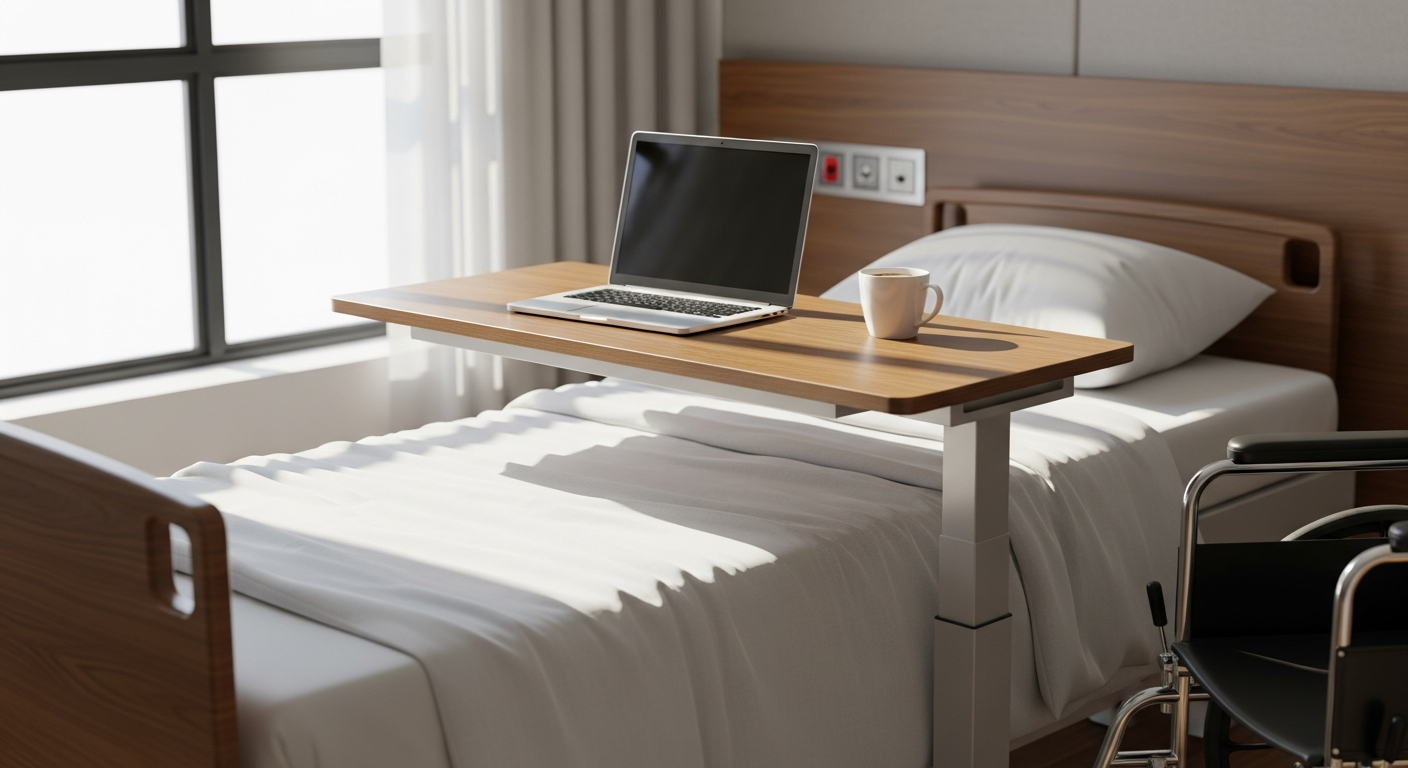
Discover how wheelchair users benefit from the Carex Adjustable Rolling Overbed Table's C-shaped base design, accessibility features, and ergonomic positioning. Learn why this affordable overbed table improves independence and comfort.
Over 2.2 million Americans use wheelchairs daily, and one of their biggest frustrations is finding furniture that actually works with their mobility aids rather than against them. Most standard tables force wheelchair users into awkward positions, create barriers to access, and limit what they can accomplish from their seating position. The constant struggle with furniture designed without accessibility in mind drains both energy and independence.
The Carex Adjustable Rolling Overbed Table enters the picture with a distinctive C-shaped base that eliminates the typical leg obstruction found in conventional tables. Whether you’re managing a temporary recovery or navigating long-term mobility challenges, this table adapts to your lifestyle rather than forcing you to adapt to it.
Why Wheelchair Accessibility Matters in Overbed Table Design
Barriers Created by Standard Table Legs and Fixed Bases
Standard tables with four-point legs or centered pedestals create physical obstacles that wheelchairs cannot navigate. Wheelchair users find themselves positioned awkwardly to the side of the table, unable to get close enough for comfortable eating, working, or engaging in hobbies. This fundamental design flaw forces users to either stretch uncomfortably or position themselves in ways that strain their shoulders, back, and arms.
How Poor Table Design Impacts Independence and Daily Functioning
When furniture doesn’t accommodate wheelchair access, simple daily activities become exhausting obstacles. Eating meals requires twisting or extending arms at uncomfortable angles. Working on a laptop means perching on the edge of a chair rather than settling into a stable position. Reading becomes a struggle when the surface isn’t at the right height or distance. These repeated challenges erode the independence that people with mobility limitations are working to maintain.
The Role of Ergonomic Furniture in Reducing Physical Strain and Fatigue
Properly designed, accessible furniture isn’t a luxury—it’s essential for long-term health. When a table accommodates your wheelchair and adjusts to your natural reaching height, your body uses less energy for everyday tasks. Correct positioning prevents the repetitive strain that accumulates over months and years. Ergonomic furniture reduces shoulder pain, lower back stress, and wrist fatigue that result from compensating for poor table design.
Connection Between Accessible Furniture and Improved Mental Health Outcomes
The psychological impact of struggling with inaccessible furniture extends beyond frustration. Difficulty performing basic activities independently can trigger feelings of helplessness and reduced autonomy. Conversely, furniture that works with your body rather than against it reinforces your capability and control. The ability to work at your own table, prepare your own meals, and engage in hobbies without assistance builds confidence and emotional wellbeing.
The C-Shaped Base: Accessibility Innovation Explained
How the Unique C-Shaped Design Eliminates Leg Obstruction
The C-shaped base of the Carex table represents a straightforward but revolutionary design choice. Rather than legs extending to the floor at the front, the base opens toward the user. This creates a clear entry point for wheelchairs, allowing them to roll directly underneath the table surface. The design doesn’t require compromise—you get full access without sacrificing stability.
Wheelchair Clearance Measurements and What Close Access Truly Means
Close access means your wheelchair can position you directly at the table rather than several inches away. This proximity eliminates the need to stretch your arms forward unnaturally. Your torso remains upright and supported by your chair, while your arms extend naturally to work surfaces. This positioning dramatically improves comfort during extended use and reduces strain on your shoulders and back.
Positioning Flexibility for Different Wheelchair Types and Sizes
Wheelchairs vary significantly in width, turning radius, and seat height. The C-shaped base accommodates this variety because the open design allows multiple approaches and angles. A narrower sports wheelchair positions differently than a wider medical chair, yet both benefit from the accessible base design. Users can adjust their exact position under the table to match their specific chair configuration.
Benefits for Users with Limited Arm Reach or Upper Body Mobility
Individuals with reduced arm mobility or upper body strength gain particular benefit from close table access. When you can position your wheelchair directly under the table surface, reaching distance decreases significantly. A 33-inch-wide tabletop becomes fully accessible without extending your arms to maximum capacity. This makes the difference between independence and requiring assistance for basic activities.
Adjustable Height Range and Ergonomic Positioning
Height Adjustment Spectrum: 28 to 42 Inches and What It Accommodates
The adjustment range from 28 to 42 inches covers the height requirements of most wheelchair users and seated individuals. A 28-inch low setting accommodates shorter users or those with limited reach. The 42-inch maximum works for taller individuals or those seated in higher chairs. This spectrum means one piece of furniture adapts to different users rather than requiring multiple tables.
How Adjustability Prevents Repetitive Strain Injuries
Fixed-height furniture forces your body to compensate when the height doesn’t match your needs. Working at a table that’s too high pulls your shoulders upward and strains your neck. A surface that’s too low causes you to hunch forward. The Carex table’s adjustability eliminates this compensation. Your elbows can rest at a natural 90-degree angle, your shoulders remain relaxed, and your neck stays neutral—the positioning that prevents injury.
Matching Table Height to Wheelchair Seat Height for Optimal Posture
Proper ergonomic positioning begins with matching table height to your wheelchair seat height. An ideal work surface sits approximately 2-3 inches below your elbow when your arms rest at your sides. The Carex table’s broad adjustment range makes achieving this alignment straightforward. Correct positioning improves not just comfort but your ability to maintain focus and productivity during extended use.
Impact of Proper Positioning on Long-Term Musculoskeletal Health
Years of working at incorrectly-positioned tables accumulate into chronic pain, reduced mobility, and increased medical needs. Proper ergonomic positioning protects your skeletal system from preventable wear and tear. By maintaining natural spinal alignment and using your muscles efficiently, you’re investing in your long-term physical health and independence.
Spacious Work Surface for Productivity and Leisure
Tabletop Dimensions: 33 x 16 Inches and Practical Applications
A 33-by-16-inch surface provides genuine workspace rather than a token platform. This size accommodates a laptop with room for a mouse and papers, supports a full meal service with plate and beverage, or holds multiple hobby materials. The dimensions balance functionality with maneuverability—large enough to be useful without becoming unwieldy.
Laptop Work and Remote Employment Accessibility
Remote work requires accessible infrastructure, particularly for wheelchair users. The Carex table’s surface accommodates standard laptops comfortably. Position the table at elbow height, and you have a fully functional office workspace. Smooth-rolling casters let you adjust the table position throughout the day, preventing the static positioning that causes fatigue. Employment accessibility becomes achievable with proper furniture support.
Meal Preparation and Dining Independence
Dining independence means more than eating a meal—it represents control over your nutrition, timing, and social experience. The Carex table accommodates full place settings, allowing you to eat meals at your preferred location rather than being confined to a specific room. You can prepare simple meals on the surface or position it as a dining location.
Weight Capacity: 50 Pounds and What It Supports
The 50-pound weight capacity accommodates typical items: laptops, meal service, reading materials, craft supplies, and personal care items. This isn’t a flimsy surface—it’s engineered to support genuine daily use without wobbling or tipping. The durable ABS plastic tabletop and sturdy polypropylene construction mean the table withstands repeated use and the occasional bump.
Mobility Features That Enhance User Control
Smooth-Rolling Swivel Casters and Maneuverability Benefits
The smooth-rolling swivel casters make the difference between a table you position once and one you adjust throughout the day. Movement should be effortless enough that repositioning the table requires minimal effort. The Carex table achieves this, allowing you to relocate it for different activities, room configurations, or simply to follow natural light throughout the day.
How Easy Movement Reduces Caregiver Dependency
When a table is difficult to move, users often become dependent on others for repositioning. A heavy or poorly-designed table requires caregiver assistance for simple adjustments. The Carex table’s light weight and smooth casters mean you can move it yourself, maintaining control over your environment without requesting help.
Positioning Flexibility for Different Room Layouts and Activities
Flexibility in furniture positioning creates flexibility in living space. Move the table from your bedroom to your living room. Position it next to your favorite window during morning work hours. Reposition it away from a high-traffic area for focused tasks. This adaptability transforms how you use your living space.
Independence Gained Through Self-Directed Table Placement
Self-directed control over your immediate environment builds autonomy. Deciding where your table sits and when to move it represents control over your space and routine. This agency, while seemingly small, contributes significantly to psychological wellbeing and sense of independence.
See how the Carex table’s mobility features can put you in control of your space and independence.
Practical Applications Beyond Bedside Use
Overbed Table Functionality in Living Rooms and Seated Areas
Despite its name, the overbed table works excellently in any room where you spend time seated. Position it in your living room for laptop work, hobby activities, or eating. Its versatility means the name reflects one use case among many.
Use Cases for Post-Surgery Recovery and Rehabilitation
Post-surgery recovery often requires bed rest with accessible workspace nearby. The adjustable height and close wheelchair access make recovery more manageable. Once healing is complete, the table transitions to long-term use rather than ending up in storage.
Long-Term Utility for Chronic Condition Management
Chronic mobility conditions require ongoing support. The Carex table serves people managing long-term conditions by providing consistent, reliable access to work and dining surfaces. Its durability means it adapts to changing needs over years of use.
Cost-Effectiveness Compared to Purchasing Multiple Pieces
Rather than buying a desk for work, a dining table, and bedside surfaces, one versatile Carex table handles multiple roles. This consolidation saves money while improving functionality through dedicated, properly-designed surfaces for key activities.
What Users Love and What They Wish Was Different
Sturdy Construction That Withstands Daily Use and Weight
Users consistently praise the table’s solid feel and reliable performance. The construction doesn’t flex or wobble under typical weight loads. Daily use hasn’t produced quality degradation in reported user experiences—this is furniture built to last.
Exceptional C-Base Access Praised by Wheelchair Users
The C-shaped base receives enthusiastic feedback from wheelchair users who have struggled with inaccessible tables. Users describe the access as genuinely transformative, eliminating the positioning compromises they’ve adapted to with standard furniture.
Smooth Wheel Operation and Responsive Positioning
The casters roll smoothly, making repositioning intuitive rather than frustrating. Users appreciate the responsiveness and ease of movement throughout their space.
Affordable Price Point: $50-$100 for Quality and Features
Accessibility features typically appear on high-end furniture with corresponding price tags. The Carex table delivers professional-grade accessibility at a fraction of specialty furniture costs. Users recognize the exceptional value proposition.
Absence of Wheel Locking Mechanism for Stationary Stability
One limitation that some users wish was different involves wheel stability. When the table is positioned for work or dining, some users prefer locking wheels to prevent unintended movement. Currently, the wheels roll freely even when you want the table stationary. A locking mechanism would address this preference.
Minimum Height May Not Accommodate Extremely Low-Seated Users
The 28-inch minimum height works for most users but doesn’t accommodate those seated in very low chairs or floor-level seating positions. Users with this specific need should verify the measurement against their exact seating height.
Affordability and Value Proposition for Accessibility Needs
Price Range Context: $50-$100 Compared to Specialty Accessibility Furniture
Specialty accessibility furniture routinely costs $300 to $800 for comparable features. The Carex table delivers C-base access, adjustable height, and quality construction at one-quarter to one-tenth of typical specialty pricing. This affordability democratizes access to well-designed, wheelchair-friendly furniture.
Long-Term Value Through Multi-Functional Use Cases
Because one table serves multiple purposes, the per-use cost decreases significantly over time. A table that works for recovery, then transitions to daily work and dining use, spreads its cost across years of service and multiple applications.
ROI Through Independence Gained and Caregiver Time Reduced
The financial return extends beyond the purchase price. Independence in dining, working, and daily activities means reduced caregiver hours and the corresponding cost savings. The table pays for itself through reduced assistance needs.
Accessibility Features Typically Found in Much Pricier Furniture
The C-shaped base, adjustable height, and smooth mobility features appear on furniture costing three times as much or more. Getting professional accessibility design at a budget price represents genuine value.
Making the Right Choice: Is This Overbed Table Right for You?
Assessing Your Specific Accessibility Needs and Limitations
Consider how you spend your time seated and what surfaces you need nearby. Do you work remotely? Do you need dining access? What activities dominate your day? The Carex table excels for users who need accessible work and dining surfaces but may be unnecessary for those with different primary needs.
Evaluating Your Living Space and Furniture Arrangement
Consider your available floor space. The table’s footprint is manageable, but verify it fits your room layout. Think about where you’d position it and how you’d move it between locations.
Considering Height Requirements and Wheelchair Specifications
Compare your wheelchair’s seat height and arm reach with the table’s adjustment range. Verify that the 28-to-42-inch spectrum accommodates your positioning needs. Confirm that your wheelchair’s width allows comfortable access under the C-shaped base.
Determining Primary Use Cases: Work, Dining, Leisure
Prioritize what you need the table for. Primary use cases guide whether this specific table matches your situation. A remote worker needs different positioning than someone primarily using it for dining.
The Bottom Line for Wheelchair Users Seeking Accessible Furniture
The Carex Adjustable Rolling Overbed Table represents a significant shift in how accessibility is approached in home furniture design. Rather than treating wheelchair users as an afterthought, this table puts their needs front and center with a C-shaped base that actually works, height adjustments that matter, and a price tag that doesn’t require compromise.
What makes this table particularly valuable is its versatility beyond recovery scenarios. Whether you’re managing a temporary injury, navigating long-term mobility challenges, or simply seeking furniture that adapts to your needs, this overbed table delivers practical independence. The smooth-rolling casters mean you control your space, the adjustable height means you customize your comfort, and the C-shaped base means you’re not fighting against your own furniture.
If you’ve been struggling with standard tables that don’t accommodate wheelchair access, this is worth serious consideration. At its price point with these accessibility features, you’re getting professional-grade functionality in an affordable package. The construction quality, accessibility innovation, and genuine usability combine to create furniture that genuinely improves daily life.