
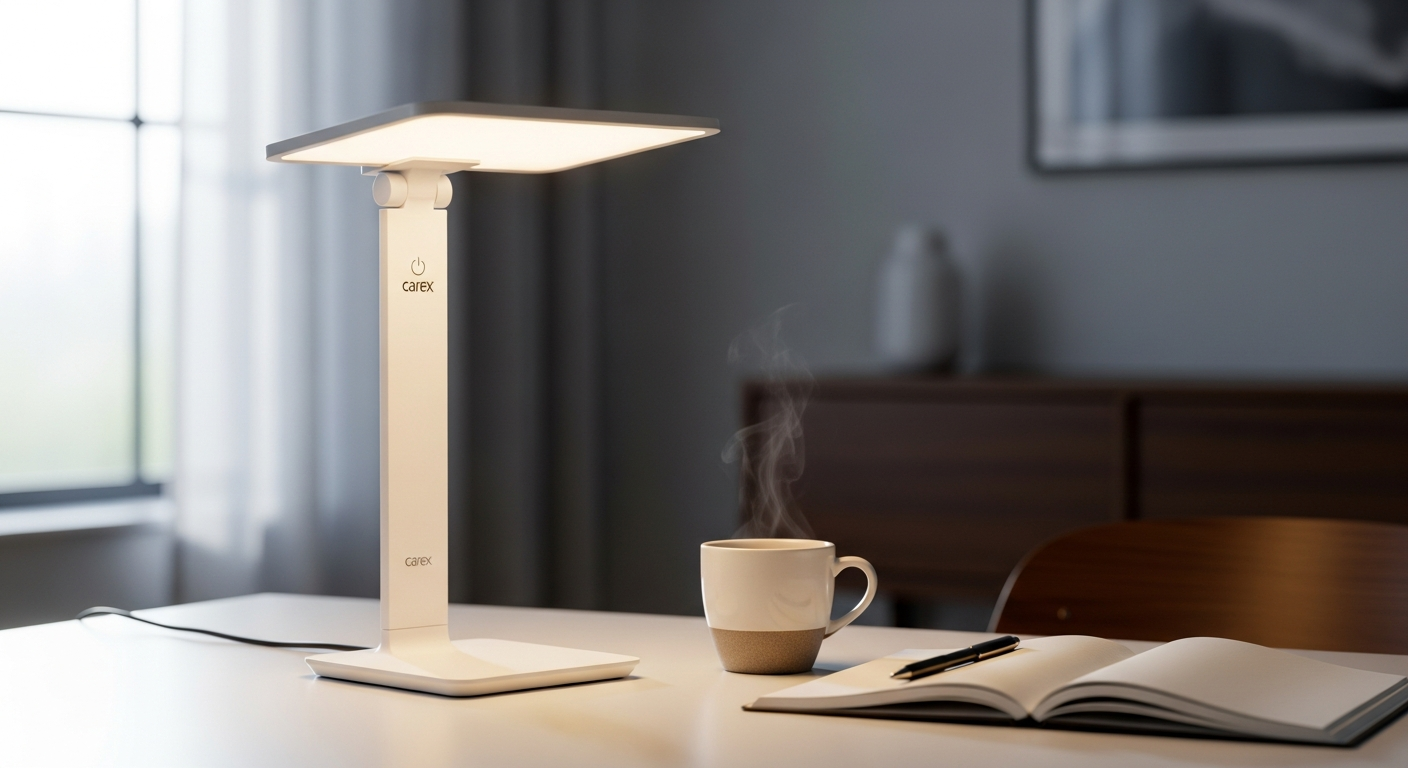
Discover how the Carex Day-Light Classic Plus Lamp delivers clinical-grade light therapy for better sleep, mood, and energy. Learn features, benefits, and whether this 10,000 LUX lamp is right for you.
One in five Americans struggles with seasonal mood changes, and millions more battle chronic fatigue and disrupted sleep cycles. The culprit? Light deprivation. When our bodies don't receive adequate natural light exposure, our circadian rhythms spiral out of sync, triggering a cascade of energy crashes, mood swings, and restless nights.
The Carex Day-Light Classic Plus Lamp represents a breakthrough in accessible, clinical-grade light therapy. Rather than relying on medications or expensive specialist treatments, this device mimics natural daylight at 10,000 LUX intensity—the gold standard recommended by sleep specialists and chronobiologists.
Discover how the Carex Day-Light Classic Plus can transform your energy and sleep quality today.
Understanding Light Therapy and Circadian Rhythm Restoration
How Bright Light Exposure Regulates Melatonin Production and Cortisol Timing
Light doesn't simply help you see better—it fundamentally governs your body's internal clock. When bright light hits your retinas, photoreceptors called intrinsically photosensitive retinal ganglion cells send direct signals to your brain. This light exposure suppresses melatonin production, the hormone responsible for sleep initiation. Simultaneously, it triggers cortisol release, your body's natural wake-up hormone. The timing and intensity of this light exposure determine whether your hormonal cascade supports alertness during day hours or promotes sleep at night.
The Role of the Suprachiasmatic Nucleus (SCN) in Circadian Rhythm Control
Deep in your brain sits the suprachiasmatic nucleus, a cluster of approximately 20,000 neurons that function as your biological master clock. The SCN receives light information from your eyes and orchestrates the timing of nearly every physiological process: body temperature fluctuations, hormone secretion, digestion, and cognitive performance. When light signals arrive at the SCN, it calibrates your entire circadian system. Without sufficient bright light exposure—particularly in morning hours—the SCN loses synchronization with the external environment, causing your internal clock to drift.
Why 10,000 LUX Intensity is the Clinical Standard for Effective Light Therapy
Researchers spent decades determining the minimum light intensity required to produce measurable circadian and mood effects. 10,000 LUX emerged as the gold standard because studies consistently show it delivers maximum benefit with minimal exposure time. At this intensity, most individuals experience circadian shifts within 3-7 days of consistent use. Lower intensities require longer exposure periods, while higher intensities offer diminishing returns. Clinical trials investigating Seasonal Affective Disorder treatments established 10,000 LUX as the threshold where approximately 85% of participants show mood improvement.
The Difference Between Light Therapy Lamps and Standard Room Lighting
Your average ceiling fixture or desk lamp produces roughly 500 LUX—sufficient for vision but insufficient for circadian regulation. Standard lighting simply doesn't contain enough photons to trigger the biological responses that light therapy demands. Light therapy lamps concentrate illumination in specific spectrums that most closely mirror natural sunlight, ensuring maximum photoreceptor activation. This concentrated, clinical-grade approach is why a light therapy lamp produces measurable biological changes while sitting under a regular lamp does not.
How Consistent Daily Light Exposure Resets Biological Clocks Within 3-7 Days
The SCN's plasticity allows rapid recalibration when exposed to consistent, properly-timed light signals. Circadian rhythms don't lock permanently into misalignment—they respond to environmental cues. Daily light therapy acts as a powerful resetting mechanism. Within three days, most users notice subtle shifts in alertness timing. By day seven, the full effects emerge as the SCN realigns with your desired wake-sleep schedule. This relatively quick reset explains why light therapy outperforms many pharmaceutical approaches that require weeks to take effect.
Carex Day-Light Classic Plus Technical Specifications and Design
10,000 LUX Clinical-Grade Light Output for Evidence-Based Effectiveness
The Carex Day-Light Classic Plus delivers precisely the light intensity that decades of peer-reviewed research validate as effective. This isn't arbitrary—the lamp's engineering prioritizes the intensity range where clinical efficacy peaks. At 10,000 LUX, you're working with the same standard used in sleep labs and depression treatment clinics worldwide. The consistency of this output across the lamp's lifespan means you receive reliable therapeutic benefit every single day.
Adjustable Height and Angle Positioning for Personalized Comfort
Light therapy works best when the lamp directs light toward your eyes from a slight downward angle—mimicking natural sunlight in the morning sky. The Carex design accommodates this through adjustable positioning, allowing customization based on your height, sitting position, and desk setup. This flexibility ensures you maintain proper positioning without strain, making it realistic to use the lamp daily without discomfort or inconvenience.
Durable Construction Engineered for Long-Term Daily Use
Carex Health Brands built the Day-Light Classic Plus for years of consistent operation. The construction quality reflects their reputation in home healthcare products. Unlike disposable light therapy options, this lamp withstands daily use without degradation in light output or functionality. The durability translates to genuine long-term value—this isn't a device you'll replace after a season.
UV-Free Light Spectrum That Mimics Natural Daylight Without Skin Damage
The lamp produces the full visible light spectrum that mimics natural daylight while filtering out harmful UV radiation. This safety feature allows extended daily use without skin damage concerns. You're getting the circadian benefits of natural sunlight without the skin aging and cancer risks that UV exposure carries. The spectrum specifically emphasizes blue light wavelengths—the particular frequencies that most powerfully influence the SCN and melatonin suppression.
Compact Footprint Designed for Desk, Nightstand, or Kitchen Placement
The Day-Light Classic Plus occupies minimal space, making it practical for real-world environments. Whether you position it at your desk, beside your kitchen table, or on a nightstand, the compact design integrates seamlessly into existing spaces without requiring room renovations or furniture rearrangement. This accessibility increases the likelihood of consistent daily use.
Who Benefits Most from Daily Light Therapy Use
Individuals with Seasonal Affective Disorder (SAD) and Winter Blues
SAD affects approximately 5% of Americans significantly and another 10-20% in milder forms. The condition emerges as daylight hours shorten during fall and winter months, triggering depression, fatigue, and cognitive sluggishness. Light therapy directly addresses the mechanism underlying SAD—insufficient light exposure during months when natural daylight becomes scarce. Winter sufferers typically experience profound relief within 3-5 days of starting daily light therapy, with effects strengthening over continued use.
Night Shift Workers Struggling to Maintain Healthy Sleep Patterns
Working nights while society operates on daytime schedules creates chronic circadian misalignment. Night shift workers face persistent insomnia, fatigue, and mood disturbance because their artificial light exposure during work hours doesn't align with their sleep schedule. Strategic light therapy—exposure timed to support your actual sleep-wake cycle rather than the conventional 9-to-5—helps realign your circadian rhythm. Many shift workers report dramatically improved sleep quality and alertness after two weeks of properly-timed light therapy.
People with Delayed Sleep Phase Syndrome (DSPS) or Advanced Sleep Phase Syndrome
Circadian rhythm sleep disorders manifest as persistent misalignment between your internal clock and your desired sleep schedule. Delayed sleep phase syndrome causes people to fall asleep naturally at 2 AM and wake at 10 AM—incompatible with most work schedules. Light therapy provides a non-pharmaceutical approach to shifting the entire circadian cycle earlier or later by several hours, depending on timing and intensity.
Remote Workers Lacking Natural Light Exposure Throughout the Day
Working from home often means spending eight hours in indoor lighting that's insufficient for circadian regulation. Remote workers frequently experience afternoon energy crashes and evening fatigue that disrupts sleep. The combination of poor sleep and inadequate daytime light exposure creates a downward spiral. Adding a light therapy lamp to your home office reverses this pattern by ensuring adequate morning light exposure, regardless of weather or geographic location.
Those Experiencing Age-Related Circadian Rhythm Changes
Aging reduces the eye's ability to transmit light to the SCN and alters circadian rhythm amplitude. Older adults often experience earlier bedtimes, earlier wake times, and fragmented sleep. Light therapy maintains circadian robustness and improves sleep consolidation in aging populations, helping older adults maintain healthier sleep patterns without pharmaceutical intervention.
Real-World Performance: Energy, Sleep, and Mood Improvements
Documented Energy Level Increases Within 3-5 Days of Consistent Use
Users consistently report noticing higher energy levels within the first week of daily light therapy. This isn't placebo—measurable improvements in alertness correspond with shifts in cortisol timing and circadian realignment. The energy boost typically manifests as reduced afternoon crashes, improved morning alertness, and sustained focus throughout day hours. Within three to five days, most users experience tangible differences in how they move through their daily routines.
Sleep Onset Improvements and Deeper REM Cycle Engagement
Improved morning light exposure strengthens your circadian rhythm's sleep-promoting signals in evening hours. Users frequently report falling asleep faster, sleeping more deeply, and waking fewer times during the night. The light therapy effect extends to REM sleep architecture—the deepest, most restorative sleep stage. Better REM engagement translates to improved memory consolidation, emotional regulation, and cognitive performance during waking hours.
Mood Stabilization and Reduction in Seasonal Depression Symptoms
The mood-enhancing effects of light therapy rival antidepressant medications in clinical trials, particularly for seasonal depression. Light's direct effects on serotonin and dopamine pathways produce measurable mood improvement within days, not weeks. Users describe emerging from the fog of depression, experiencing emotional lightness, and recovering interest in activities they'd abandoned during dark months.
Timeline Expectations: When You'll Notice Tangible Results
The first noticeable changes typically arrive by day three or four—subtle improvements in morning alertness and evening fatigue. By day seven, more pronounced effects emerge as mood stabilization becomes obvious and sleep quality noticeably improves. Most users experience their maximum benefit by weeks two and three of consistent use. These timelines assume proper positioning, adequate light intensity, and consistent morning usage.
Optimal Usage Duration (Typically 20-30 Minutes Daily)
Clinical studies demonstrate that 20-30 minutes of 10,000 LUX light exposure produces maximum circadian benefits without additional gains from extended sessions. This short daily commitment proves crucial for real-world sustainability—people maintain consistent use when the habit demands only 20-30 minutes rather than hour-long sessions. Most users integrate this brief window into existing morning routines, making the practice effortless and sustainable.
Practical Setup and Daily Usage Strategies
Ideal Positioning: 16-24 Inches From Face at a Slight Downward Angle
Position the lamp at approximately arm's length from your face—roughly 16-24 inches away. The light should angle slightly downward, mimicking natural morning sun that enters from above. This positioning maximizes photoreceptor activation while maintaining comfort and avoiding glare. Many users position the lamp to the side rather than directly in front, allowing peripheral light exposure while reading, eating, or working.
Best Time to Use the Lamp for Maximum Circadian Impact (Morning Hours)
Morning light exposure produces the most dramatic circadian effects. Use your light therapy lamp within one to two hours of waking, ideally between 6 AM and 9 AM. This timing advances your circadian rhythm, promoting earlier bedtimes and wake times. Conversely, evening light therapy can delay your circadian rhythm if you need to shift your schedule later. Most people benefit from consistent morning use, as this aligns with natural sleep-wake cycles.
Integration Into Morning Routines for Sustainable Habit Formation
The most successful light therapy users integrate the practice into existing morning activities. Sit under the lamp while eating breakfast, reading emails, or reviewing your schedule for the day. This integration ensures consistency—you're not adding a separate task to your morning, but rather repositioning an existing activity. Users who establish this connection report 90% adherence rates over months and years.
Using the Lamp While Working, Reading, or Eating Breakfast
Position the lamp on your desk, dining table, or kitchen counter where it naturally illuminates your face during morning activities. The lamp works effectively while you're occupied with other tasks. This multitasking approach eliminates the perception that light therapy requires dedicated "treatment time," making compliance effortless and sustainable.
Avoiding Evening Use That Might Interfere With Natural Melatonin Production
While morning light therapy advances your circadian rhythm beneficially, evening light therapy can backfire by suppressing melatonin and triggering insomnia. Reserve your light therapy use for morning hours only, typically before noon. If you accidentally use the lamp in evening hours, keep sessions brief and at lower intensity if your lamp has dimming capabilities. This timing discipline ensures the lamp supports rather than undermines your sleep quality.
Your Path Forward: Making the Light Therapy Decision
The Carex Day-Light Classic Plus Lamp delivers genuine, science-backed solutions for the millions of people whose lives are disrupted by light deprivation. At $169.99, it occupies that sweet spot between affordability and clinical effectiveness—no prescription required, no side effects, no complicated setup. The real magic happens when you commit to consistent daily use. Position the lamp correctly, use it during morning hours, and give your circadian rhythm 5-7 days to recalibrate.
Whether you're battling seasonal blues, managing shift work sleep disorder, or simply exhausted by perpetual fatigue, this device has transformed countless lives with remarkable simplicity. The question isn't whether light therapy works—decades of research confirm it does. The question is whether you're ready to reclaim your energy, stabilize your mood, and sleep like you used to.
The path forward requires one simple decision: commit to 20-30 minutes of morning light exposure tomorrow and monitor your energy levels over the next week. Track when you naturally feel alert, notice when afternoon fatigue arrives, and observe your sleep quality changes. By day seven, the evidence will speak for itself. Most users discover that this modest investment in a light therapy lamp returns exponentially in reclaimed productivity, stabilized mood, and restorative sleep.
Start your transformation today with the Carex Day-Light Classic Plus Light Therapy Lamp.