
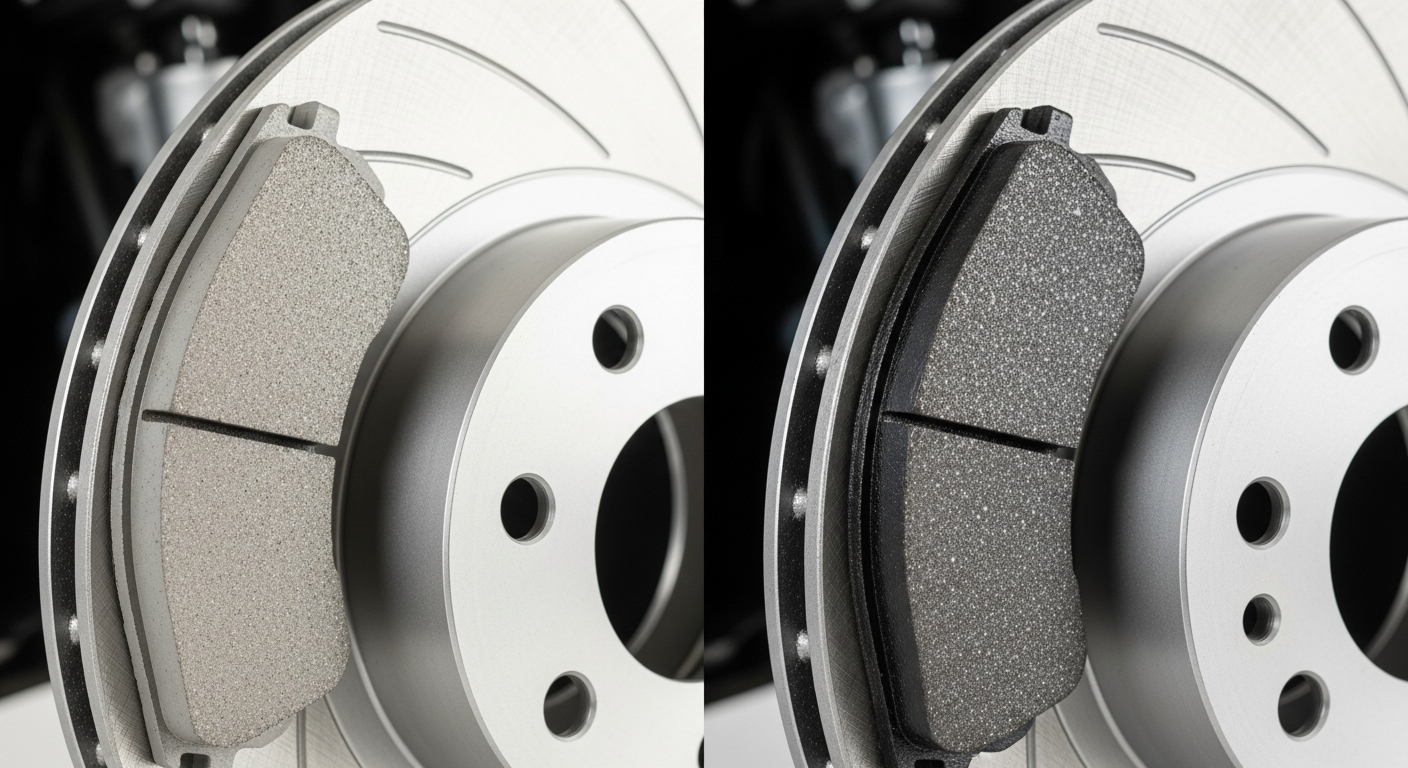
Compare ceramic, semi-metallic, and low-metallic brake pads and discs. Discover performance differences, durability, costs, and which material suits your driving style best.
Your brakes are literally the only thing standing between you and disaster on the road. Studies show that stopping distance can vary by up to 40% depending on brake pad material quality—yet most drivers never consider what's actually stopping their vehicle until something goes wrong. The friction material composition of your brake pads and discs plays a massive role in how effectively your car responds in emergency situations.
Premium brake pads and discs aren't just about safety; they're about understanding the engineering that goes into every stop you make. Whether you're navigating city traffic or tackling mountain roads, the material composition of your braking system directly impacts stopping power, heat dissipation, noise levels, and how long your components will last. Each material choice carries distinct performance characteristics that deserve careful consideration.
Explore premium brake pads and discs from trusted manufacturers today.
Understanding Brake Pad Materials—The Foundation of Stopping Power
Brake pad materials determine everything about your stopping experience. The three dominant compositions—ceramic, semi-metallic, and low-metallic—each approach the fundamental challenge of converting kinetic energy into heat through friction in fundamentally different ways.
Ceramic Brake Pads: Composition, Manufacturing Process, and Friction Coefficient
Ceramic brake pads consist of a complex blend of ceramic compounds, bonding resins, and friction-enhancing additives. The manufacturing process involves precisely mixing these materials, forming them into pads, and curing them at high temperatures to achieve optimal hardness and friction coefficient. The result is a compound engineered to provide consistent friction across a wide temperature range, typically maintaining friction coefficients between 0.35 and 0.45 under normal driving conditions.
Semi-Metallic Brake Pads: Metal Content Percentages and Performance Characteristics
Semi-metallic compositions incorporate significant metal content—typically 30% to 60% by volume—consisting of copper, iron, steel, and other metallic elements bonded with organic resin and friction modifiers. This metal-heavy approach dramatically increases the friction coefficient, often reaching 0.50 to 0.65 under high-temperature conditions. The metallic content facilitates superior heat transfer away from the friction surface, allowing these pads to maintain aggressive braking force even under sustained heavy use.
Low-Metallic Brake Pads: Hybrid Approach and Specific Advantages
Low-metallic pads represent a middle ground, containing approximately 10% to 30% metallic content combined with ceramic and organic materials. This hybrid formula attempts to balance the noise reduction and gentleness of ceramic compounds with the aggressive stopping power of semi-metallic pads. The result is a versatile option suitable for drivers who need decent stopping power without sacrificing comfort.
How Friction Material Affects Stopping Distance and Brake Fade Resistance
The friction coefficient directly determines how quickly your vehicle decelerates. A coefficient of 0.50 means the friction force equals 50% of the wheel's normal load—higher coefficients produce shorter stopping distances. Brake fade occurs when sustained heat causes the friction coefficient to decrease temporarily. Ceramic materials exhibit superior fade resistance, maintaining consistent friction coefficients even after repeated hard braking. Semi-metallic compounds handle extreme heat better than ceramics but can experience more pronounced fade in certain temperature windows.
Temperature Performance Ranges for Each Material Type
Ceramic brake pads typically perform optimally between 200°F and 600°F, with acceptable performance extending to 900°F before significant fade occurs. Semi-metallic pads shine at higher temperatures, maintaining performance up to 1,200°F and beyond, making them ideal for sustained heavy braking. Low-metallic options split the difference, typically performing well up to 800°F.
Noise and Dust Generation Patterns Across Different Compositions
Ceramic pads generate minimal dust and operate nearly silently due to their smooth friction surface. Semi-metallic pads produce considerably more brake dust—that dark coating accumulating on your wheels—and generate audible squealing, particularly during cold starts or light braking. Low-metallic options produce moderate dust and occasional noise, representing a compromise between the two extremes.
Environmental Impact and Recycling Considerations of Brake Pad Materials
Ceramic materials are environmentally benign and fully recyclable without complex processing. Semi-metallic pads pose greater challenges due to their copper and metal content, which requires specialized recycling procedures. The manufacturing process for all brake pad types consumes energy, though ceramic production typically demands less energy than semi-metallic formulations.
Ceramic Brake Pads and Discs—Premium Performance for Daily Driving
Ceramic brake components represent the pinnacle of comfort and reliability for drivers who value a refined braking experience above aggressive stopping force.
Superior Heat Dissipation Properties and Fade Resistance
Ceramic materials naturally dissipate heat efficiently through their molecular structure, preventing the thermal buildup that causes fade. This characteristic makes ceramic pads ideal for repeated braking scenarios—the constant stop-and-go of city driving never pushes ceramic compounds into their fade zone. Your stopping distance remains consistent from the first brake application to the hundredth.
Minimal Dust and Noise Production for Cleaner Wheels and Quieter Cabins
Anyone who's owned a vehicle with semi-metallic brakes knows the constant battle against brake dust accumulation. Ceramic pads eliminate this frustration. Your wheels stay cleaner longer, and your cabin remains peaceful. The nearly silent operation means brake application becomes an imperceptible part of your driving experience rather than an audible event.
Extended Lifespan Compared to Semi-Metallic Alternatives
The gentle friction of ceramic materials means less pad wear per braking cycle. A quality ceramic pad set often delivers 50,000 to 70,000 miles of service, compared to 25,000 to 40,000 miles for semi-metallic compounds. Over your vehicle's lifetime, this translates to fewer replacement cycles and lower total maintenance costs despite the higher initial purchase price.
Ideal for City Driving, Commuting, and Moderate Highway Use
Ceramic pads excel in exactly the environments where most drivers spend their time. City streets, highway commutes, and moderate driving conditions never generate the extreme temperatures that push ceramic pads toward their limits. For 90% of drivers, ceramic represents the optimal choice.
Gentler on Brake Rotors, Reducing Wear on Complementary Components
The smooth friction surface of ceramic pads exerts minimal mechanical stress on rotors. This gentleness means your rotors remain serviceable longer and resist the deep scoring that aggressive semi-metallic pads sometimes cause. The reduced wear on rotors often offsets the higher pad cost.
Price Range and Cost-Per-Mile Analysis
Quality ceramic brake pads typically range from €60 to €150 per axle, while ceramic discs cost €80 to €200 each, depending on vehicle type and manufacturer. With a 60,000-mile lifespan, a €120 pad set costs approximately €0.002 per mile. Compare this to a €40 semi-metallic set lasting 30,000 miles (€0.0013 per mile), and the ceramic advantage becomes clear when factoring in disc replacement frequency and reduced labor costs from fewer service intervals.
Best-in-Class Brands: Bosch, Brembo, and ATE Ceramic Offerings
Bosch ceramic pads deliver reliable everyday performance backed by decades of engineering experience. Brembo's ceramic formulations target drivers seeking premium feel and maximum comfort. ATE ceramics focus on consistent fade resistance and long service life. All three manufacturers have earned their reputations through rigorous testing and real-world validation.
Potential Limitations in Extreme High-Performance or Heavy-Duty Applications
Ceramic pads reach their performance ceiling in sustained hard braking or extreme track conditions. A weekend track day might push ceramic pads beyond their optimal temperature range, risking momentary fade. Similarly, drivers who regularly tow heavy loads may find ceramic pads inadequate for the extreme thermal demands their braking system faces.
Discover high-performance ceramic and semi-metallic brake solutions for your vehicle.
Semi-Metallic Brake Pads and Discs—Aggressive Stopping for Demanding Drivers
For drivers who need maximum stopping force under extreme conditions, semi-metallic brake components deliver uncompromising performance.
Metal Content Composition (Copper, Iron, Steel) and Friction Enhancement
Semi-metallic formulations pack 30% to 60% metallic content into their friction matrix. Copper particles improve heat transfer and electrical conductivity. Iron and steel fragments dramatically increase the friction coefficient, generating aggressive braking force with minimal pad travel. This composition transforms braking into a more forceful, immediate response.
Superior Braking Force and Stopping Power for Towing and Heavy Loads
The high friction coefficient of semi-metallic pads means your vehicle responds immediately to brake input. For drivers towing trailers, hauling heavy cargo, or operating commercial vehicles, this aggressive response prevents brake fade during prolonged descents and maintains stopping power even when pushed hard. The difference between adequate stopping and true safety becomes tangible with semi-metallic components.
High-Temperature Performance for Mountain Driving and Aggressive Use
Semi-metallic pads maintain performance up to 1,200°F, making them the choice for mountain passes where sustained braking generates extreme heat. Track drivers, off-road enthusiasts, and anyone frequently pushing their vehicle's limits benefit from this thermal resilience.
Increased Noise Levels and Brake Dust Accumulation
Semi-metallic pads announce their presence. Cold-start squealing and audible friction sounds accompany braking, particularly in the first few brake applications after sitting overnight. The brake dust—that dark powder coating your wheels—accumulates quickly and requires frequent cleaning to maintain wheel appearance.
Shorter Lifespan Due to Higher Friction Material Wear Rates
The aggressive nature of semi-metallic friction means faster pad wear. A typical semi-metallic set delivers 25,000 to 40,000 miles before replacement becomes necessary. For high-mileage drivers, this translates to more frequent maintenance appointments and higher total cost of ownership.
Cost Advantages Over Ceramic Options
Semi-metallic pads typically cost €30 to €80 per axle, with discs running €40 to €120 each. The lower initial investment appeals to budget-conscious drivers and fleet operators managing multiple vehicles. The lower upfront cost masks the true long-term expense when factoring in replacement frequency.
Ideal Use Cases: Towing Vehicles, Performance Driving, Commercial Applications
Semi-metallic pads belong on vehicles whose primary purpose involves heavy braking demands. Towing rigs, work trucks, performance vehicles, and commercial fleets all benefit from the aggressive stopping power and high-temperature resilience. These applications justify the tradeoffs of increased noise and dust.
Notable Manufacturers and Performance-Grade Specifications
TRW specializes in semi-metallic compounds engineered for commercial and performance applications. Brembo's performance-grade semi-metallic pads target enthusiasts. ATE offers semi-metallic solutions for demanding driving environments. Each manufacturer publishes detailed friction coefficient data and temperature ratings enabling informed comparisons.
Your Brakes Deserve the Right Investment
The choice between ceramic, semi-metallic, and low-metallic brake pads and discs fundamentally shapes how your vehicle performs when it matters most. Premium components from manufacturers like Bosch, Brembo, and ATE deliver measurable advantages in safety, longevity, and driving comfort—but the best option depends entirely on your driving habits, vehicle type, and budget constraints.
Whether you're a daily commuter seeking whisper-quiet ceramic performance or a towing enthusiast needing aggressive semi-metallic stopping power, understanding material composition, thermal characteristics, and real-world performance metrics empowers you to make an informed decision. The €30–€200 price range for quality brake components represents a genuine investment in safety. Your next stop starts with choosing the right brake pads and discs today.
Choose premium brake pads and discs from Motointegrator.es now.