
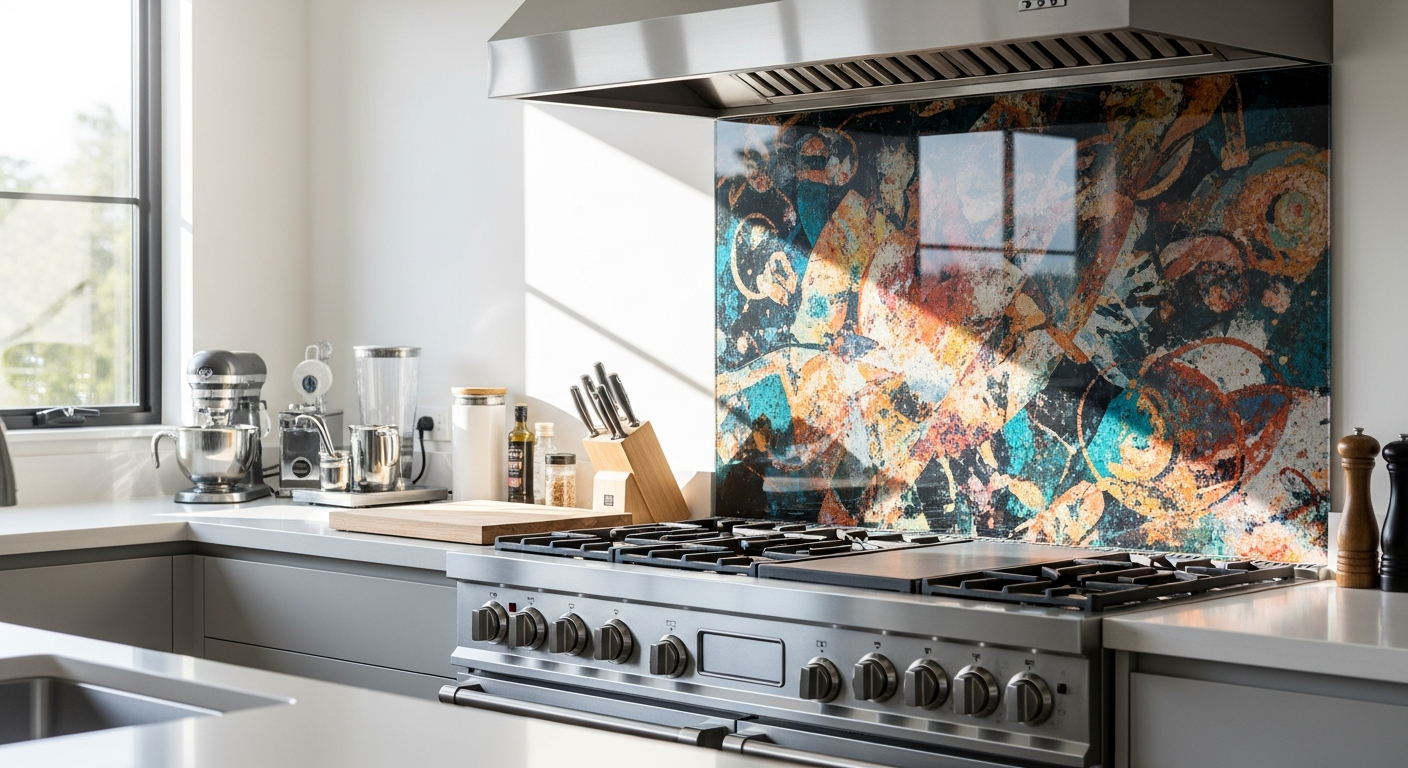
Discover how custom printed toughened glass kitchen splashbacks combine bespoke design with durability. Explore personalization options, materials, and why homeowners are choosing them over traditional tiling in 2026.
Over 73% of homeowners now prioritize personalization when renovating their kitchens, yet most settle for generic backsplash options that feel mass-produced and uninspired. The kitchen backsplash has historically been treated as a purely functional element—something to protect walls from splashes and heat. This perspective misses an enormous opportunity to express your personal style in one of the most-visited rooms in your home.
Custom printed toughened glass splashbacks represent a convergence of functional design and artistic expression. These aren’t off-the-shelf products but bespoke creations manufactured specifically for your kitchen dimensions, design preferences, and lifestyle needs. The difference between a standard tile backsplash and a custom glass panel is like the difference between wearing generic clothing and having a suit tailored to fit you perfectly.
This guide walks you through the technical specifications that ensure durability, explores real-world design possibilities, explains the customization process from start to finish, and helps you evaluate whether this investment aligns with your kitchen goals. Discover how custom printed toughened glass splashbacks can transform your kitchen into a personalized masterpiece.
Why Homeowners Are Ditching Traditional Tiles for Glass Splashbacks
The Limitations of Standard Ceramic and Subway Tiles
Standard ceramic and subway tiles have dominated kitchen design for decades, but their reign as the default choice is ending. These traditional materials force homeowners into predetermined aesthetic boxes—limited color palettes, repetitive patterns, and designs that look virtually identical in homes across the country. If you want something truly unique, you’re essentially compromising between what’s available rather than creating what you actually want.
How Custom Glass Panels Eliminate Grout Lines and Maintenance Headaches
Grout lines represent one of the most frustrating aspects of tiled splashbacks. They trap grease, food particles, and bacteria, creating ongoing maintenance challenges that consume time and effort. Cleaning grout requires specialized products and elbow grease that glass simply doesn’t demand. A custom glass splashback presents an uninterrupted, seamless surface where splashes and splatters wipe away with a single pass of a cloth.
The Aesthetic Evolution: From Functional to Statement Focal Point
Your kitchen splashback occupies prime visual real estate. Rather than treating it as background infrastructure, custom glass transforms this space into a genuine design centerpiece. Whether you’re featuring a breathtaking landscape photograph, abstract artwork, or a bold geometric pattern, your splashback becomes the room’s defining feature—something guests notice and remember.
Hygiene Advantages of Non-Porous Glass Surfaces
Non-porous glass creates a genuinely hygienic kitchen environment that porous tiles simply cannot match. Without grout lines where bacteria can colonize, your splashback remains cleaner with less effort. This matters not just for appearance but for actual food safety and household health.
Long-Term Value Proposition: Durability and Warranty Protection
Quality custom glass splashbacks are manufactured to last decades without fading, discoloration, or deterioration. Most reputable manufacturers back their products with warranties specifically protecting against fading—a promise they can make because the digital printing technology and toughened glass construction are genuinely durable. Over 20+ years, the total cost of ownership often favors custom glass over the repeated maintenance, occasional tile replacement, and grout resealing that traditional backsplashes require.
The Psychological Impact of Personalized Kitchen Spaces
Your kitchen is more than a functional room—it’s where your family gathers, where you create meals, where memories form. When your splashback reflects your actual taste and personality rather than a generic default choice, the entire space feels different. This psychological shift toward a kitchen that genuinely feels like yours contributes measurably to daily living satisfaction.
Understanding the Material Science Behind Toughened Glass
What Makes 6mm Low-Iron Toughened Glass the Industry Standard
The 6mm thickness represents the sweet spot between structural integrity and practical maneuverability. Thinner glass would be less durable; thicker glass becomes unnecessarily expensive and difficult to handle. Low-iron composition matters because standard float glass contains iron oxide, which creates a greenish tint visible at the edges. Low-iron glass remains crystal clear, allowing your printed design to display in accurate, vibrant colors without any visual interference from the substrate itself.
Heat Resistance Specifications and Cooking Temperature Protection
Toughened glass maintains structural integrity at temperatures far exceeding typical kitchen cooking environments. While standard glass would shatter when exposed to thermal shock—the rapid temperature change from cold to hot—toughened glass handles this stress through its internal composition. The tempering process creates residual compressive stress on the glass surface that actually strengthens it against thermal shock and impact.
The Tempering Process That Creates Durability Without Compromising Clarity
Tempering involves heating glass to approximately 620°C and then rapidly cooling it. This process creates a state of internal stress where the outer layers are in compression and the interior is in tension. If the glass ever breaks, it shatters into small, relatively harmless granules rather than dangerous shards—a significant safety advantage in a kitchen environment where impacts happen.
Low-Iron Composition: Why It Matters for Color Accuracy and Light Transmission
When your custom design gets printed onto glass, every color needs to appear exactly as you envisioned it. Standard glass with iron oxide content would cast a subtle green hue across your image, distorting colors and reducing vibrancy. Low-iron glass maintains perfect color accuracy, allowing high-resolution digital prints to display in their true form with maximum brilliance and clarity.
Safety Certifications and Impact Resistance
Properly manufactured toughened glass meets established safety standards that ensure it can withstand typical kitchen impacts without failure. This certification matters both for genuine safety and for insurance purposes—your home insurance company wants to know your kitchen materials meet recognized safety standards.
Lifespan Expectations and How Quality Glass Maintains Integrity Over Decades
Quality toughened glass maintains structural and optical integrity for 30+ years without degradation. The material doesn’t age, doesn’t become brittle, and doesn’t lose transparency. The digital print, when applied using professional-grade technology, bonds to the glass surface in a way that resists fading through UV exposure and doesn’t peel or separate.
Digital Printing Technology That Brings Your Vision to Life
High-Resolution Digital Printing Capabilities and Image Quality Standards
Modern digital printing technology applied to glass achieves resolutions that make printed images virtually indistinguishable from the original source. Professional manufacturers use specialized equipment designed specifically for glass applications, ensuring ink adhesion, color accuracy, and longevity that desktop printers simply cannot achieve.
How Vibrant Colors Remain Fade-Resistant and Long-Lasting
The inks used in professional glass printing are formulated specifically for durability on glass surfaces. They’re not the same inks used in standard printing—they’re engineered to resist UV degradation, resist fading from heat exposure, and maintain vibrancy through decades of use. This explains why manufacturers can confidently offer fade-resistant warranties.
Upload Your Own Artwork: Converting Personal Photos into Splashbacks
One of the most compelling aspects of custom glass splashbacks is the ability to upload your own high-definition images. Whether it’s a family photograph, a landscape from a meaningful vacation, or original artwork you’ve commissioned, your personal images can become your kitchen’s defining feature. This transforms the splashback from a decorative element into something genuinely meaningful.
Design Library Options: Pre-Made Patterns, Abstract Designs, and Curated Collections
For those who prefer guided inspiration over starting from scratch, most manufacturers offer extensive design libraries. These collections include abstract patterns, geometric designs, nature-inspired imagery, and trending aesthetic themes. Browsing these options often sparks creative directions you might not have considered independently.
Color Accuracy and Ensuring Your Digital Design Matches the Final Product
Professional manufacturers provide color-matched proofs and often allow customers to request physical samples before final production. This quality control step ensures that what you approve is exactly what gets manufactured and installed in your kitchen. Get professional color-matched samples to verify your custom splashback design before production.
Finish Options: High Gloss vs. Matte and Their Impact on Aesthetics
The finish you select influences both how your design appears and how light reflects through your kitchen. High gloss finishes create a reflective, polished appearance that amplifies brightness and makes colors appear more vivid. Matte finishes offer a more subtle, sophisticated look that reduces glare and creates a softer visual impact. The right choice depends on your kitchen’s existing aesthetic and your personal preference for how light interacts with the space.
The Customization Journey: From Concept to Installation
Measuring Your Kitchen Space Accurately to Avoid Costly Fitting Issues
Precision measurement forms the foundation of the entire process. An error of even a few millimeters can result in gaps that compromise the visual impact or create installation difficulties. Most manufacturers either provide detailed measurement guides or offer professional surveying services. Investing time in accurate measurement prevents expensive mistakes that would require remounting or replacement.
Accommodating Electrical Outlets, Switches, and Fixture Cutouts
Your custom splashback needs to work within your kitchen’s existing infrastructure. Professional manufacturers account for electrical outlets, light switches, range hoods, and other fixtures, incorporating precise cutouts into your design. This requires careful planning during the initial measurement and design phase to ensure these cutouts look intentional rather than like afterthoughts.
Maximum Panel Sizes Available and How They Minimize Visible Joins
Some manufacturers can produce panels up to 4800mm in length, which means many kitchen splashbacks can be created as single, uninterrupted panels. Single-panel designs look seamless and more polished than multiple panels joined together. However, if your space requires multiple panels, professional installation ensures joins are minimal and aesthetically integrated.
Lead Times for Custom Manufacturing and What Affects Production Schedules
Custom manufacturing isn’t instantaneous. Typical lead times range from several weeks to a couple of months depending on the manufacturer’s current workload and the complexity of your design. Planning your renovation timeline to accommodate these manufacturing schedules prevents frustrating delays. Rush services may be available at additional cost for time-sensitive projects.
Template Tools and Visualization Software for Previewing Your Final Splashback
Many manufacturers provide digital tools that let you visualize your design within a kitchen environment before committing to production. These visualization aids help you confirm color choices, design scale, and overall aesthetic fit before the manufacturing process begins. This technology removes guesswork from the decision-making process.
Working with Design Consultants to Refine Your Concept
Professional manufacturers often employ design consultants who can help translate your vision into production-ready specifications. If you’re uncertain about design direction, struggling with technical requirements, or want expert guidance on what works aesthetically, these consultations provide valuable input that improves your final result.
Design Inspiration: From Personal Photos to Abstract Art
Creating a Splashback from Family Photographs or Meaningful Personal Images
Family photographs printed on your kitchen splashback create an immediate emotional connection to the space. A cherished landscape from a significant vacation, a professional photograph of your children, or a meaningful family moment becomes integrated into your daily kitchen experience. This personalization transforms the splashback from decorative to genuinely meaningful.
Abstract and Geometric Patterns That Complement Modern Kitchen Aesthetics
Abstract designs and geometric patterns offer visual interest without the specificity of photography. Bold geometric shapes, flowing abstract designs, or intricate patterns work particularly well in contemporary or minimalist kitchens where they become primary design statements without competing with other visual elements.
Nature-Inspired Designs: Landscapes, Botanical Elements, and Scenic Photography
Nature-inspired imagery brings organic beauty into your kitchen. Landscape photography, botanical illustrations, forest scenes, or ocean vistas create a sense of connection to the natural world within your everyday cooking space. These designs tend to age well aesthetically—nature imagery rarely feels dated because the natural world itself doesn’t trend.
Monochromatic and Bold Color Schemes Suited to Different Interior Styles
Color schemes dramatically influence how your splashback integrates with your overall kitchen design. Monochromatic designs in blacks, grays, or whites create sophisticated understated elegance. Bold color schemes make dramatic statements and work particularly well in kitchens with neutral cabinetry where the splashback becomes the primary color source.
Coordinating Your Splashback Design with Existing Cabinetry and Countertop Materials
Your splashback exists within a complete kitchen design system. The most successful custom splashbacks complement rather than compete with surrounding elements. If your cabinetry is ornate and detailed, a simpler splashback design prevents visual chaos. If your cabinetry is minimal, a more complex splashback design becomes the appropriate focal point.
Trending Design Themes in 2026 for Kitchens That Feel Current Without Dating Quickly
While pursuing current trends can create aesthetically pleasing immediate results, timeless design often proves more satisfying long-term. Rather than choosing designs purely based on what’s trending now, consider whether a design will feel meaningful and attractive five or ten years from now. Balanced approaches that incorporate subtle trend elements while maintaining timeless foundations tend to age most gracefully.
Installation, Maintenance, and Long-Term Care
Professional Installation Requirements and Why Precision Matters
Installation precision matters enormously for both visual impact and functional performance. Professional installers understand how to ensure your splashback is perfectly level, properly secured, and seamlessly integrated with surrounding surfaces. Poor installation can result in visible gaps, uneven alignment, or inadequate mounting that compromises longevity.
Mounting Systems and Hardware That Ensure Secure, Permanent Placement
Quality custom splashbacks use specialized mounting systems designed specifically for glass panels. These hardware solutions secure the glass firmly while accommodating minor natural movement that occurs in buildings. Proper mounting ensures your splashback remains securely in place through decades of kitchen use without shifting or sagging.
Daily Cleaning Routines: Why Glass Requires Minimal Maintenance Compared to Tile
Daily maintenance of your custom splashback takes seconds. A simple wipe with a microfiber cloth removes splashes, splatters, and dust. No grout line scrubbing, no specialized cleaning products, no accessibility challenges. This simplicity compounds over years—the cumulative time and effort saved versus traditional tile maintenance becomes substantial.
Recommended Cleaning Products and Techniques That Preserve the Printed Surface
While glass is durable, using appropriate cleaning products extends the life of your printed surface. Standard glass cleaners work perfectly fine. Avoid abrasive scrubbers that could potentially scratch the surface, though quality toughened glass resists scratching better than typical window glass. Warm water and mild soap followed by a dry cloth represents the complete maintenance toolkit most splashbacks ever need.
Handling Heat Exposure and Steam Without Compromising Digital Print Quality
Toughened glass handles heat exposure from cooking without any concern. The tempering process specifically prepared the glass for thermal stress. The digital print, applied using professional techniques, bonds to the glass in ways that resist heat and steam exposure. Your splashback will handle the humidity and temperature fluctuations of typical kitchen use without any degradation.
Warranty Coverage: What Protection Comes Standard and What’s Optional
Reputable manufacturers provide standard warranties against fading, manufacturing defects, and glass failure. Optional warranties might extend coverage periods or add specific protections. Understanding what’s included and for how long gives you confidence in your investment and clarifies what recourse exists if problems develop.
Investment Considerations and Cost Factors
Pricing Variables: Size, Complexity, Finishes, and Additional Features
Custom splashback pricing varies significantly based on several factors. Larger panels cost more than smaller ones. Complex custom designs requiring precise cutouts cost more than simple solid-color designs. Special finishes like matte versus high gloss or optional features like LED backlighting add to the base cost. Understanding these variables helps you anticipate pricing before requesting formal quotes.
Comparing Total Cost of Ownership: Glass vs. Traditional Tiling Over 20+ Years
While custom glass splashbacks often cost more upfront than traditional tile, the long-term cost analysis often favors glass. Traditional tile requires periodic grout resealing, occasional tile replacement, and considerable maintenance effort over decades. Custom glass requires essentially no maintenance and rarely needs any attention beyond basic cleaning. When you factor in the cumulative cost of tile maintenance and the value of time saved, glass often proves more economical.
Budget-Friendly Design Strategies That Deliver Impact Without Maximum Complexity
If budget constraints exist, several design strategies maximize visual impact while minimizing cost. A single bold design element often achieves more impact than complex multi-layered designs. Solid-color backgrounds with focused design elements reduce print complexity. Pre-designed patterns from the manufacturer’s library cost less than custom photography or commissioned artwork.
Optional Add-Ons Like LED Backlighting or Special Finishes and Their Cost Implications
Optional features like LED backlighting, special matte finishes, or premium design consulting all add cost. These enhancements create genuinely compelling results but aren’t necessary for a spectacular splashback. Prioritize based on your budget and what enhancements genuinely enhance your kitchen experience.
ROI Perspective: How Custom Splashbacks Influence Kitchen Valuations for Resale
While custom splashbacks aren’t designed with resale value as the primary motivation, they do positively influence potential buyers’ perception of your kitchen. A thoughtfully designed, high-quality custom splashback signals that the homeowner invested in quality and paid attention to design details. For homes on the market, this positive impression contributes to overall kitchen appeal and can influence purchasing decisions.
Potential Challenges and How to Navigate Them
Measurement Precision: The Importance of Professional Surveying
Measurement errors represent the primary challenge in custom splashback projects. Off-by-a-few-millimeters mistakes can create fitting problems that require expensive solutions. Whenever possible, utilize professional surveying services rather than attempting measurements yourself. The modest cost of professional measurement provides insurance against costly errors.
Lead Time Planning: Accounting for Manufacturing Schedules in Your Renovation Timeline
Manufacturing timelines can surprise unprepared homeowners. When planning your kitchen renovation, confirm lead times with your chosen manufacturer and build adequate buffer time into your schedule. Last-minute rushing often results in compromised decisions or expensive expedited manufacturing fees.
Supplier Selection: Identifying Reputable Manufacturers with Proven Track Records
Not all custom splashback manufacturers operate at equal quality levels. Thoroughly research potential suppliers by reviewing customer testimonials, examining portfolios, and verifying warranty terms. Selecting an established manufacturer with strong reputation significantly reduces risk of quality problems or unsupportive customer service.
Warranty Limitations and What Isn’t Covered Under Standard Protection
Warranty terms vary among manufacturers. Understand specifically what’s covered—fading, manufacturing defects, glass failure—and what isn’t. Accidental damage, improper installation, or using non-recommended cleaning products might void coverage. Reading warranty terms before committing prevents disappointment if problems develop.
Balancing Customization Complexity with Practical Kitchen Functionality
The most spectacular design doesn’t matter if it creates practical functionality problems. Complex cutouts for fixtures or appliances need to be positioned carefully to maintain both aesthetics and function. During the design phase, prioritize functionality alongside aesthetics. A beautiful design that creates installation complications or functionality issues isn’t actually beautiful.
Your Kitchen Deserves More Than Generic Solutions
Your kitchen splashback occupies prime visual real estate in one of the most-used rooms in your home. Settling for standard tiles means accepting someone else’s design vision instead of creating something that genuinely reflects who you are. Custom printed toughened glass splashbacks shatter that compromise entirely—they’re durable enough to withstand daily kitchen demands, beautiful enough to become a conversation starter, and flexible enough to accommodate whatever design speaks to you.
The technical specifications—6mm low-iron toughened glass, high-resolution digital printing, seamless customization—exist for one reason: to deliver a splashback that performs flawlessly while looking extraordinary. Whether you’re uploading a cherished family photograph, commissioning original artwork, or selecting from curated design collections, you’re investing in a kitchen surface that works as hard as it looks stunning.
The path forward is straightforward: gather your kitchen measurements, clarify your design direction, and connect with manufacturers who can translate your vision into reality. Request samples, review their portfolio, and ask about warranty coverage. The initial investment might exceed traditional tiling, but the durability, maintenance simplicity, and genuine personalization make it a decision you’ll appreciate every single day. Begin your custom splashback journey today and transform your kitchen into a truly personalized space.