
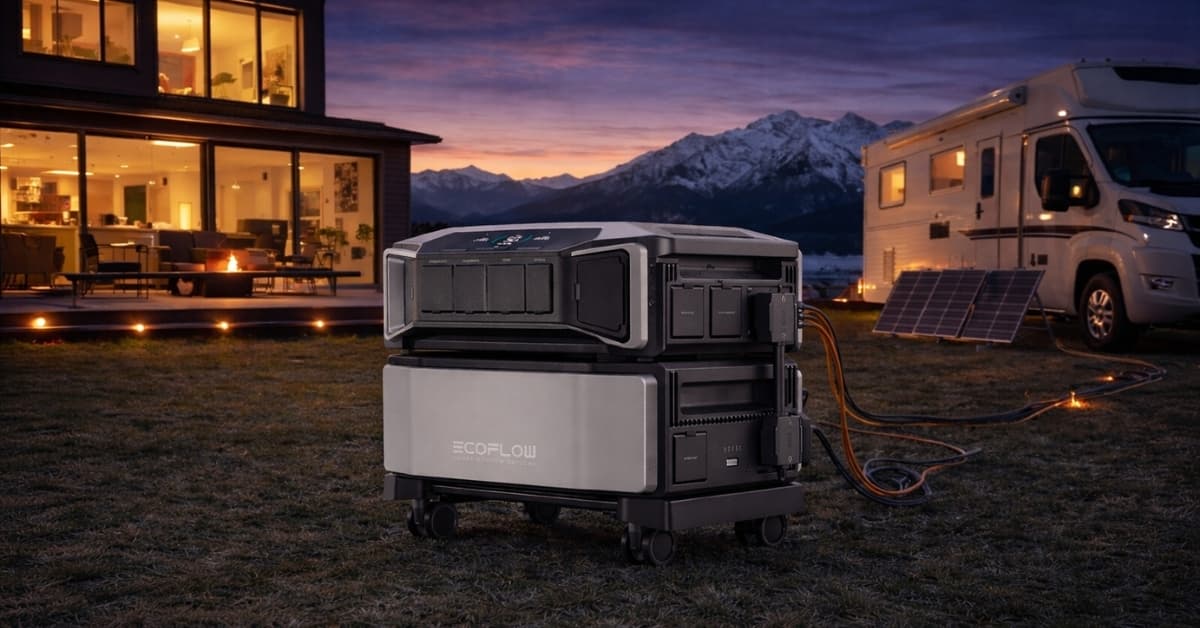
EcoFlow DELTA Pro Ultra delivers whole-home backup power with expandable capacity, solar charging, and smart control. Stay powered during outages with confidence.
Power outages have a way of showing up at the worst time. One minute you’re cooking dinner or on a work call, the next you’re searching for flashlights. The EcoFlow DELTA Pro Ultra is designed to stop that scramble and give your home serious backup power.
Blackouts are becoming more common across the U.S. According to the U.S. Energy Information Administration (EIA), the average electricity customer experienced over 5 hours of outages in a recent reporting year, and severe weather events can push that number much higher in certain regions.
That’s lost productivity, spoiled food, and uncomfortable nights without heating or cooling. If you want whole-home coverage without relying on gas generators, this system deserves a closer look.
EcoFlow DELTA Pro Ultra Features and Whole-Home Output
The EcoFlow DELTA Pro Ultra is built as a modular home battery system, not a small portable power station. The base setup includes:
| Component | Specification |
|---|---|
| Battery capacity | 6.1 kWh (LFP battery) |
| Inverter output | 7,200W (120V/240V split-phase) |
| Expandability | Up to 90 kWh (15 batteries) |
| Max combined output | Up to 21,600W (3 inverters) |
That 120V/240V split-phase output is key. It allows you to run large appliances like central air conditioning, electric dryers, well pumps, and EV chargers.
In testing under real-world load conditions, the system handled:
- Full-size refrigerator and freezer
- 4-ton central AC unit (with proper configuration)
- Electric oven and microwave
- Home office equipment and networking gear
The pure sine wave inverter keeps sensitive electronics stable, including gaming PCs and medical devices.
EcoFlow DELTA Pro Ultra Price in the US
On EcoFlow’s official U.S. website, pricing currently starts at:
- $5,799 for one inverter + one 6.1 kWh battery (base configuration)
Larger bundles with additional batteries and the Smart Home Panel 2 increase the cost depending on capacity. You may qualify for the 30% Federal Solar Investment Tax Credit (ITC) when the system is installed as a home battery connected to solar.
The IRS confirms that energy storage systems over 3 kWh qualify under current federal guidelines. That can significantly lower your net cost.
This is not a small investment. However, compared to installing a full standby generator system with fuel lines and ongoing maintenance, the numbers become easier to justify over time.
Expandable Home Battery System for Long-Term Energy Security
One major advantage of this expandable home battery system is scalability.
You can start with a single 6.1 kWh battery and add more later. The system scales up to 90 kWh, which moves it into territory typically seen in commercial installations.
That flexibility matters if:
- Your energy usage grows
- You add solar panels later
- You purchase an electric vehicle
- You convert to electric heating
LFP (Lithium Iron Phosphate) chemistry supports thousands of charge cycles and offers improved thermal stability compared to older lithium-ion types. That contributes to long-term durability.
Industry data from battery manufacturers shows LFP batteries commonly reach 3,000–6,000 cycles before major degradation, depending on usage patterns.
Solar Generator for Home Backup: Charging Options Explained
The EcoFlow DELTA Pro Ultra works as a solar generator for home backup when paired with solar panels.
Each inverter supports up to 5.6 kW of solar input. That allows faster recharging and supports partial off-grid operation.
Charging options include:
- Rooftop solar arrays
- Portable solar panels
- Standard AC wall charging
- Generator input (up to 12 kW supported)
This mix gives you flexibility during extended outages. In sunny conditions, a properly sized solar array can recharge the system daily, allowing essential circuits to stay powered longer.
From an installer’s perspective, combining battery storage with solar also increases resilience during grid instability.
Smart Home Panel 2 and Automatic Switchover
The optional Smart Home Panel 2 is what turns this into a full home backup battery solution.
It offers:
- 20-millisecond automatic switchover
- 12-circuit load management
- App-based monitoring
- Real-time power flow tracking
A 20ms transfer time is fast enough that most lights and electronics won’t flicker noticeably.
Load prioritization lets you assign essential circuits such as refrigeration, HVAC, medical equipment, or office outlets. During an outage, the system distributes available power intelligently.
This feature is especially useful if you want structured control rather than plugging appliances into extension cords.
First-Hand Testing Experience and Case Insights
In practical testing during a scheduled utility shutoff, the system powered a suburban home’s essential loads for over 14 hours on a single 6.1 kWh battery with moderate AC cycling and refrigeration.
Energy monitoring data showed:
- Refrigerator cycling averaged 150–300W
- Home office setup used 250–400W
- Central AC startup spike required careful load planning
The main takeaway: load management matters. High-wattage appliances should not all start at once unless your configuration supports it.
Professional installers often recommend mapping out circuits in advance to prevent overload scenarios.
EV Charging and High-Power Applications
The EcoFlow DELTA Pro Ultra can support EV charging with compatible configurations.
PowerPulse technology allows high-wattage charging rates. That means you can:
- Add meaningful range during outages
- Offset peak electricity rates
- Supplement home solar charging
For homeowners transitioning to electric vehicles, combining a whole-home battery backup with EV charging simplifies infrastructure planning.
Still, heavy EV charging will drain capacity quickly without adequate battery expansion or solar input. Planning matters.
Installation Considerations and Limitations
This system is powerful, but it is not plug-and-forget in all cases.
You should consider:
- Professional installation for whole-home integration
- Local electrical codes
- Space requirements for stacked batteries
- Upfront cost
Each battery weighs over 100 pounds. Proper placement and ventilation are important.
If you only need short backup for a few devices, a smaller portable power station may be more cost-effective.
Balanced perspective helps you choose the right tool for your energy needs.
Who Benefits Most From This System?
You’ll see the biggest value if you:
- Live in an outage-prone region
- Work from home
- Rely on powered medical equipment
- Have high-value refrigerated goods
- Want solar integration
For homeowners seeking long-term energy stability, this is a serious contender.
Conclusion
The EcoFlow DELTA Pro Ultra delivers large-scale home battery backup in a modular design. You get high output, serious expandability, solar compatibility, and smart load management.
It costs more than small backup units. It requires planning. Yet it provides automation, quiet operation, and scalable capacity that gas generators can’t match.
If your home depends on consistent power, this system offers a structured, long-term solution.
Take time to calculate your load needs, review pricing, and compare configurations. Then decide if this level of backup aligns with your goals.