
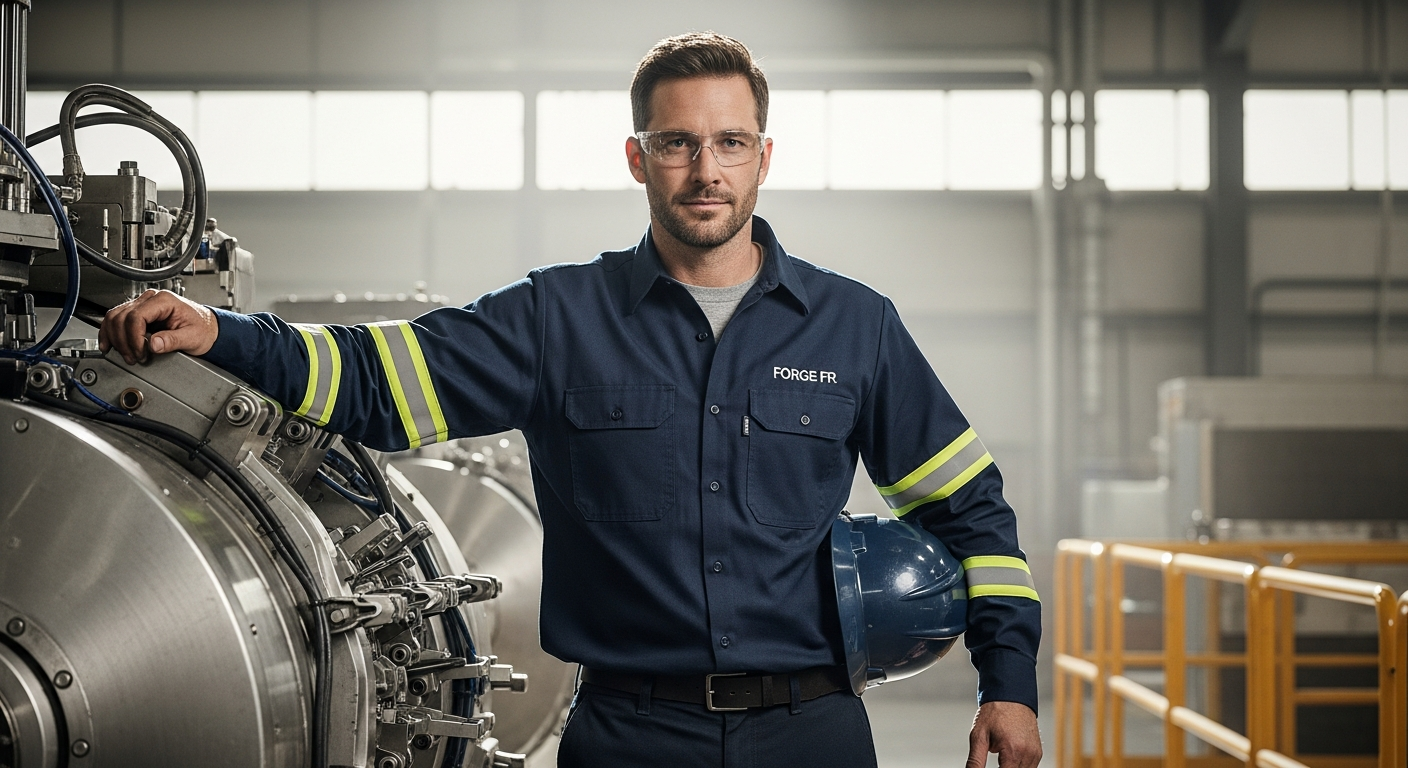
Discover why the Forge FR Flame Resistant Work Shirt is essential for hazardous work environments. Learn about arc ratings, compliance standards, bulk pricing, and how to outfit your team with trusted FR protection.
Workers in high-risk industries face an uncomfortable truth: standard work clothing offers zero protection against arc flash incidents and thermal hazards. Every year, thousands of electrical workers, welders, and oil and gas professionals sustain serious burns from flash events that could have been prevented with proper flame-resistant apparel.
The Forge FR Flame Resistant Work Shirt is designed specifically for professionals working in extreme conditions, combining military-grade protection with everyday comfort. This shirt has earned its reputation through consistent performance in the most demanding work environments, where seconds matter and protection is non-negotiable.
Explore Forge FR Flame Resistant Work Shirts at Bulk FR today.
Understanding Arc Ratings and Flame-Resistant Fabric Technology
ATPV and HRC/CAT Ratings Explained
Arc ratings serve as the technical foundation for understanding FR clothing protection. ATPV (Arc Thermal Performance Value) measures the maximum heat energy a fabric can withstand before a second-degree burn occurs on the skin beneath it. HRC (Hazard Risk Category) and CAT (Category) ratings follow a tiered system that matches clothing to specific job tasks. These metrics aren't abstract numbers—they directly correlate to real-world scenarios your team encounters daily. A shirt with a higher ATPV rating provides greater protection against longer-duration arc events, while lower ratings work for environments with brief, lower-intensity exposures.
Self-Extinguishing Fabric Properties
The Forge FR shirt's fabric doesn't burn—it extinguishes. When exposed to flames, the material stops burning rather than continuing to fuel the fire. This property comes from the inherent characteristics of the 88% cotton and 12% nylon blend, engineered to prevent flame spread. The fabric doesn't melt or drip, which means workers avoid secondary injuries from molten material. This self-extinguishing behavior is passive; it requires no chemical treatments that might wash away over time. The protection remains consistent through countless washing cycles.
Arc Flash Protection Mechanisms
Arc flash events release tremendous thermal energy in milliseconds. The Forge FR shirt operates on multiple protection principles simultaneously. The outer layer absorbs and disperses the thermal energy, preventing it from concentrating on any single point. The fabric's density slows heat transfer to the skin beneath. The nylon component contributes structural integrity that resists tearing from the force of the arc event. Together, these mechanisms create a comprehensive defense system that dramatically reduces burn severity when incidents occur.
Fabric Composition Breakdown
The 88% cotton and 12% nylon blend represents an intentional balance between protection and practicality. Cotton provides excellent flame resistance and comfort during extended wear. The nylon component adds durability and strength, preventing the shirt from tearing during physical work. This combination means workers get protection without excessive bulk or restriction. The blend breathes better than heavier synthetic FR fabrics, reducing heat stress during long shifts in warm environments.
Thermal Hazard Resistance Levels
Different work environments present different thermal challenges. Electrical work with arc flash hazards requires higher ATPV ratings than welding operations with spatter and open flames. The Forge FR shirt's specifications allow it to handle temperatures and thermal exposures well beyond casual workplace environments. Understanding the specific hazards your team faces helps determine which arc rating level matches your needs. Overspecifying protection costs more money unnecessarily; underspecifying creates genuine safety gaps.
Durability of FR Fabric
A critical misconception about FR clothing is that protective properties degrade with washing. Quality flame-resistant fabrics maintain their inherent protection indefinitely. The Forge FR shirt's cotton-nylon blend doesn't lose its flame-resistant characteristics through normal laundering. The fabric remains protective through dozens of wash cycles, making long-term ownership economical. This durability means your investment continues protecting workers throughout the shirt's usable lifespan, not just the first few wears.
Compliance Standards That Keep Workers Safe
OSHA Requirements for FR Clothing
OSHA mandates flame-resistant clothing for specific job categories and work environments. Electrical workers, welders, and oil and gas professionals fall within these requirements. The regulations aren't suggestions—they're enforceable standards with penalty provisions for non-compliance. OSHA requires that FR apparel be appropriate for the specific hazards present at the worksite. Choosing clothing that meets or exceeds these requirements protects your company from regulatory violations and demonstrates due diligence in worker protection.
NFPA 2112 Certification
NFPA 2112 sets the standard for FR clothing used in flash fire environments. This certification covers garments worn by workers in chemical processing facilities, oil refineries, and other locations where flash fires present serious hazards. Certification requires that clothing meet specific performance criteria for thermal protection, flame resistance, and overall garment design. The Forge FR shirt's NFPA 2112 compliance means it has undergone rigorous testing and meets standardized protection benchmarks. This certification provides objective verification that the shirt delivers the protection it promises.
NFPA 70E Guidelines
NFPA 70E focuses on electrical safety and arc flash hazard assessment. This standard requires employers to identify arc flash hazards and select appropriate PPE based on incident energy calculations. The standard's tiered approach means different job tasks require different protection levels. Proper FR clothing selection reduces the severity of injuries if arc flash incidents occur. NFPA 70E compliance isn't just about wearing FR clothing—it's about wearing the right level of protection for each specific task and environment.
Industry-Specific Compliance Needs
Electrical utilities face arc flash hazards from high-voltage equipment. Oil and gas operations deal with flammable atmospheres and thermal exposures. Welding shops encounter open flames and molten metal spatter. Manufacturing facilities may present multiple hazard types simultaneously. Each industry has established best practices and regulatory requirements that shape appropriate FR clothing selection. Understanding your specific industry's compliance landscape ensures you choose apparel that addresses your actual hazards rather than generic protection.
Certification Verification
When purchasing FR clothing, verification of certifications protects your company. Legitimate manufacturers provide documentation proving that garments meet claimed standards. The Forge FR shirt's certifications should be verifiable through official NFPA and OSHA channels. Counterfeit or misrepresented FR clothing creates liability without providing actual protection. Taking time to confirm certifications during the procurement process prevents costly mistakes later.
Legal Liability Reduction
Documented compliance with safety standards significantly reduces legal liability if injuries occur. When an incident happens and your company can demonstrate that workers wore properly certified FR apparel, appropriate to the hazards present, you've established a strong defense against negligence claims. This documentation protects both your company and demonstrates good faith in worker protection to regulatory agencies. The cost of proper FR apparel is substantially less than the cost of litigation and settlements following preventable injuries.
Bulk Purchasing Strategy for Maximum Cost Savings
Per-Unit Pricing Breakdown
Individual FR shirts typically range from $50 to $150+, depending on arc rating, fabric weight, and specific features. Entry-level shirts provide adequate protection for lower-hazard environments and cost less per unit. Higher ATPV ratings command premium prices reflecting enhanced protection capabilities. Understanding what features drive costs helps you make informed purchasing decisions. A shirt costing $20 more per unit might last significantly longer, ultimately reducing cost per wear.
Wholesale Pricing Advantages
Bulk FR's wholesale model fundamentally changes the economics of FR clothing procurement. Buying through retail channels means paying markups at every level of distribution. Wholesale purchasing eliminates these intermediaries, reducing per-unit costs significantly. For a team of 20 workers needing five shirts each, wholesale savings can total hundreds of dollars compared to retail channels. These savings scale with team size, making bulk purchasing increasingly economical as your safety apparel needs grow.
Volume Discount Tiers
Most suppliers offer tiered pricing based on order quantity. Small orders might qualify for modest discounts. Medium-sized team outfits generate more substantial savings. Company-wide safety apparel programs produce the greatest per-unit reductions. Understanding the discount structure helps you plan procurement strategies. Occasionally, ordering slightly larger quantities to reach the next discount tier produces better long-term value than smaller purchases at higher unit prices.
Budget Allocation for Safety Apparel
Treating FR clothing as a line item within annual safety budgets creates predictability and enables better planning. Unlike reactive injury expenses, planned FR apparel procurement allows you to spread costs across fiscal periods. Most companies find that budgeting 5-10% of their annual safety equipment spending for FR apparel adequately maintains current inventory while replacing worn items. This approach prevents budget surprises and ensures consistent protection across your workforce.
Long-Term Value Proposition
Cheaper non-FR workwear might seem economical until you consider lifespan and protection. Standard clothing provides no arc flash or thermal protection. FR apparel like the Forge shirt maintains its protective properties for years through hundreds of wash cycles. When you calculate cost per wear over the shirt's usable life, properly selected FR clothing becomes competitive with cheaper alternatives while providing irreplaceable protection. The durability of quality construction extends the value proposition substantially.
ROI Calculation
Return on investment in FR apparel extends far beyond material costs. A single serious burn injury can result in workers' compensation claims exceeding $100,000, plus lost productivity, training replacement workers, and potential OSHA penalties. An FR shirt costing $75 per worker prevents injuries that cost your company hundreds of times that amount. Insurance premium reductions from demonstrating strong safety protocols further improve the ROI. Most companies find that FR apparel investments pay for themselves through injury prevention alone.
Real-World Performance Across High-Risk Industries
Electrical Utility Applications
Electrical workers face arc flash hazards from equipment malfunctions and human error during maintenance and repair tasks. The Forge FR shirt's arc rating protects against the thermal energy released during these incidents. Workers in utility companies report confidence knowing they have protection during routine but high-hazard tasks. The shirt's comfort allows workers to focus on their job rather than uncomfortable protective gear. Real-world electrical industry adoption of FR apparel has significantly reduced serious burn injuries in this sector.
Oil and Gas Sector Reliability
Refinery workers, drilling crews, and pipeline maintenance technicians encounter thermal hazards from flammable materials and high-temperature equipment. The Forge FR shirt provides consistent protection across these diverse hazards. Oil and gas companies increasingly mandate FR apparel for all workers in operational areas, recognizing the protection value. The durability of quality construction withstands the harsh conditions of these environments—salt spray, chemical exposure, extreme temperatures—while maintaining protection.
Welding Shop Durability
Welding generates open flames, molten metal spatter, and intense radiant heat. FR clothing must resist spark penetration and thermal damage from proximity to heat sources. The Forge FR shirt's fabric resists spatter damage that would create holes in standard clothing, which could allow heat to reach the skin. Welding shops using proper FR apparel report fewer burn injuries despite the inherently hazardous nature of the work. Workers perform complex tasks requiring full range of motion, and the shirt's design accommodates this without sacrificing protection.
Manufacturing Environment Testing
Manufacturing facilities often present multiple hazard types—electrical equipment, thermal processes, chemical exposure, and mechanical hazards. The Forge FR shirt provides baseline protection across these varied threats. Manufacturing companies report that standardizing on quality FR apparel simplifies safety compliance and ensures consistent protection across departments. The versatility of the shirt makes it suitable for different manufacturing processes without requiring multiple specialized garments.
Worker Testimonials and Feedback
Professionals who wear the Forge FR shirt regularly highlight the balance between protection and comfort as the standout feature. Workers appreciate that the shirt doesn't restrict movement during demanding physical work. The moisture-wicking properties prevent the discomfort of sweat saturation during long shifts. Feedback from actual users in hazardous environments confirms that the shirt performs as specified while remaining practical for daily wear. This real-world validation from the people depending on the protection is compelling evidence of the shirt's effectiveness.
Incident Prevention Case Studies
Industries using proper FR apparel consistently report reductions in serious burn injuries. When arc flash incidents occur with workers wearing appropriate FR clothing, injuries are markedly less severe. Workers who would have suffered third-degree burns across large body areas instead sustain minor burns or avoid injury entirely. These case studies provide concrete evidence that FR apparel investment directly prevents serious harm. Reviewing these real-world examples helps justify safety expenditures to skeptical stakeholders.
Construction Quality and Durability Features
Stitching Specifications
Industrial-grade stitching uses heavy-duty thread and reinforced seams designed to withstand the stresses of demanding work environments. The Forge FR shirt employs construction standards exceeding casual workwear. Double-stitched seams in critical areas prevent separation and garment failure. Quality stitching maintains the shirt's integrity through hundreds of wear cycles and multiple laundry cycles. Examining the stitching quality provides immediate insight into overall garment durability—loose or uneven stitching signals manufacturing shortcuts.
Button and Snap Engineering
Buttons and snaps represent potential failure points in work clothing. The Forge FR shirt uses robust fasteners engineered to withstand repeated use and thermal exposure. Industrial-strength snaps resist accidental separation during physical work. Heavy-duty buttons maintain their integrity through countless fastening cycles. Some FR shirts feature snaps instead of buttons, providing faster dressing and reduced failure risk in emergency situations. Quality fastener selection demonstrates attention to durability throughout the garment.
Seam Reinforcement
High-stress areas receive additional reinforcement to prevent separation and maintain garment integrity. Shoulders, underarms, and sides experience particular stress during physical work. The Forge FR shirt's seams in these areas are specifically reinforced to resist tearing. Reinforced seams also provide additional thermal protection by creating thicker barriers at stress points. This targeted durability enhancement extends the shirt's useful life significantly compared to garments with uniform construction throughout.
Collar and Cuff Construction
Collars and cuffs endure constant friction from worker movement and repetitive contact with the skin. Quality construction prevents these areas from fraying or degrading during normal wear. Reinforced collar and cuff construction also maintains proper fit through repeated laundering. The fit remains comfortable and secure throughout the shirt's lifespan rather than gradually becoming loose and ineffective. Well-constructed collars maintain their shape and functionality even after extensive use.
Pocket Durability
Pockets provide functional storage for tools, documents, and other items workers carry. Reinforced pocket construction prevents tearing under the weight and friction of regular use. Quality pockets maintain their structural integrity even when subjected to rough handling and heavy loads. Durable pockets prevent frustration during the workday when gear falls out during critical tasks. Reinforced pocket construction also prevents holes that could compromise thermal protection at these locations.
Longevity in Harsh Conditions
Quality construction directly translates to extended service life in harsh industrial environments. A shirt built to withstand demanding conditions remains protective and functional long after cheaper alternatives have degraded. The total cost of ownership favors durable construction when you account for replacement frequency and the consistency of protection. Workers appreciate equipment that remains reliable throughout its lifespan without requiring frequent replacement.
Browse Bulk FR's complete selection of Forge FR Flame Resistant Work Shirts.
Sizing, Fit, and Comfort Considerations for Your Team
Accurate Sizing Guidelines
Proper fit is essential for both comfort and protection. The Forge FR shirt is available in standard sizes to accommodate different body types. Measurement guidelines help ensure workers select sizes that provide adequate room for movement without excessive bulk. Chest, sleeve length, and overall length measurements provide objective sizing reference points. Allowing workers to try on before committing to large orders prevents sizing mistakes that would require costly replacements.
Mobility and Range of Motion
Physical work demands full range of motion without restriction. The Forge FR shirt's design balances protection with functionality, allowing workers to perform complex tasks without constraint. Properly fitted shirts provide mobility for overhead work, bending, and lateral movement. Comfortable fit reduces worker resistance to wearing required safety apparel, ensuring consistent compliance with safety protocols. Testing for adequate mobility during the selection process identifies potential issues before widespread rollout.
Layering Compatibility
Many workers wear base layers under FR apparel in cold conditions. The Forge FR shirt accommodates standard base layers without excessive bulk or restriction. Some workers layer FR shirts during extended cold-weather exposure. Compatibility with other protective gear ensures workers can dress appropriately for environmental conditions while maintaining FR protection. Understanding layering options helps workers adapt their clothing to seasonal variations.
Break-In Period Expectations
FR fabrics feel different from standard clothing initially. Workers accustomed to conventional workwear may notice the difference in fabric weight and texture. Most workers adjust within a few days of regular use as they become familiar with the material. The break-in period shouldn't involve discomfort—if a shirt feels genuinely uncomfortable after several days of wear, sizing or fit adjustments may be needed. Communication with workers about reasonable expectations prevents misinterpretation of normal adjustment as inadequate quality.
Customization Options
Standard sizes accommodate most workers, but some individuals require specialized options. Extended sizes and custom modifications address unusual body types or specific job requirements. Consulting with the manufacturer about customization options ensures that no team member lacks appropriate protection due to sizing limitations. Addressing customization needs during initial procurement prevents gaps in safety coverage.
Replacement Schedule
Determining replacement frequency depends on wear patterns, care quality, and manufacturing standards. High-wear environments may require replacement every 1-2 years, while lower-use situations might support 2-3 year intervals. Establishing a tracking system helps identify when individual shirts approach replacement. Rotating inventory ensures that all workers have functional, protective apparel at all times. Planning replacement schedules prevents sudden gaps when multiple shirts reach end-of-life simultaneously.
Maintenance and Care to Preserve Protection
Proper Washing Procedures
FR fabric maintains its protective properties through normal laundering with appropriate procedures. Water temperature and detergent selection matter—standard hot water and harsh detergents can damage some fabrics. Most FR clothing, including the Forge shirt, tolerates warm water and standard detergents well. Manufacturer guidelines specify optimal washing conditions for your particular garment. Following these guidelines preserves fabric integrity and protection throughout the garment's lifespan.
Drying Recommendations
Tumble drying at standard temperatures generally works for the Forge FR shirt without degrading FR properties. Some FR fabrics require lower temperatures to prevent damage. Air drying provides a gentler alternative that extends fabric life, particularly when high-temperature exposure could stress the material. Proper drying prevents shrinkage and maintains the fit throughout the garment's service life. Understanding these specifics prevents accidental damage during routine laundry.
Storage Best Practices
Storing FR shirts properly between uses maintains their condition and protection. Cool, dry storage prevents moisture accumulation and mildew growth. Organization systems that track inventory and rotation ensure that older garments see regular use rather than deteriorating in storage. Proper storage also prevents contamination from chemicals or substances that might compromise protective properties.
Inspection Protocols
Regular inspection identifies damage or degradation before it becomes a safety issue. Visual checks for tears, holes, or fraying catch damage early. Functional testing of seams and fasteners confirms structural integrity. Inspection protocols should occur during laundering or regular inventory rotation, making it part of routine handling. Documentation of inspections creates records demonstrating diligent safety management.
Lifespan Expectations
Quality FR shirts like the Forge model typically maintain full protective properties through hundreds of wash cycles—generally 3-5 years of regular use. The specific lifespan depends on care quality, frequency of use, and environmental exposure. Some shirts may serve effectively beyond these estimates, while others in particularly harsh conditions might require earlier replacement. Establishing realistic expectations helps with budget planning and replacement timing.
Replacement Triggers
Visible damage, persistent odors despite laundering, or loss of fit are clear signals that replacement is warranted. Deterioration in flame-resistant properties doesn't occur suddenly in most cases—garments gradually reach end-of-life. Documented inspection protocols identify these triggers before protection becomes questionable. Proactive replacement prevents workers from relying on degraded protection in hazardous situations.
Implementation Strategy for Outfitting Your Team
Inventory Assessment
Determining your team's needs starts with understanding how many shirts each worker requires. A reasonable rotation includes 3-5 shirts per worker, allowing for laundering cycles while maintaining availability. Different departments and roles may have different requirements. A comprehensive inventory assessment prevents underestimating needs or purchasing excessive quantities. Consider seasonal variations and growth projections when calculating required inventory.
Phased Rollout Planning
Large organizations may implement FR apparel across departments strategically rather than company-wide simultaneously. Phased rollouts allow you to manage budget constraints and build momentum for broader implementation. Starting with highest-risk departments establishes early wins and demonstrates commitment. Phased approaches also provide opportunities to refine processes and address issues before full-scale implementation.
Training and Compliance
Workers need to understand why FR clothing matters and how to use and care for it properly. Training covers the hazards they face, how FR apparel protects them, and the care procedures that preserve protection. Initial training during rollout should be followed by periodic refreshers. Documentation of training completion demonstrates due diligence and supports compliance with OSHA requirements. Engaged workers who understand the why behind safety requirements comply more consistently.
Budget Forecasting
Projecting annual costs enables better budget planning and prevents surprises. Calculate the cost of initial outfitting plus annual replacement requirements. Include accounting for growth in workforce or expansion into additional departments. Budget forecasting also helps justify expenditures to finance teams and establish reliable funding for ongoing compliance. Multi-year projections show the long-term cost trajectory and ROI potential.
Supplier Relationship Management
Establishing a reliable relationship with Bulk FR ensures consistent availability and competitive pricing. Regular communication about your needs, future plans, and feedback helps them serve you better. Discussing bulk ordering schedules and volume commitments can unlock additional discounts. Strong supplier relationships also provide access to product improvements and new options matching your evolving needs.
Documentation and Tracking
Maintain records of who received protective equipment, when, and replacement schedules. Documentation demonstrates compliance with safety regulations and provides evidence of due diligence. Tracking systems also prevent loss or misuse of company equipment. Replacement reminders based on documented dates ensure workers receive new apparel when needed.
Making the Business Case for Forge FR Shirts
Injury Prevention Statistics
Data consistently shows that proper FR apparel reduces burn injury severity by 50% or more. Workers wearing appropriate FR clothing at the time of arc flash incidents experience significantly less extensive injuries. These statistics provide compelling business justification for safety investments. Comparing injury rates before and after FR apparel implementation demonstrates measurable risk reduction.
Workers' Compensation Savings
Serious burn injuries drive workers' compensation costs dramatically higher than minor injuries. A single third-degree burn case might cost $100,000+ in medical care, disability, and lost time. Preventing even one serious injury annually justifies FR apparel investment many times over. Insurance companies recognize these risk reductions and often provide premium discounts to companies demonstrating strong safety protocols including proper FR apparel.
Productivity Gains
Confident, protected workers perform better and experience fewer stress-related health issues. Workers know their employer values their safety when equipped with quality protective gear. This confidence translates to better focus and fewer distractions during work. Reduced injury rates directly decrease sick days, workers' compensation claims, and training requirements for replacements. The productivity gains from a safer workforce partially offset the cost of FR apparel investments.
Regulatory Compliance Assurance
OSHA penalties for non-compliance with FR clothing requirements can reach $15,000+ per violation. Demonstrating consistent compliance with documented FR apparel programs prevents regulatory fines. Audits and inspections routinely check for appropriate protective equipment. Compliance assurance protects your company's reputation and operational continuity.
Employee Retention Impact
Workers appreciate employers who invest in their safety. This investment demonstrates that the company values their wellbeing beyond minimum legal requirements. Improved safety culture and reduced injury rates increase job satisfaction and retention. Replacing experienced workers is costly in terms of training and productivity loss. The employee retention benefits of strong safety programs contribute significantly to overall ROI.
Reputation and Client Confidence
Large clients and government contracts often require evidence of strong safety programs. Demonstrating proper FR apparel use supports bids for significant contracts. Safety reputation affects insurance quotes, client relationships, and industry standing. Companies known for strong safety cultures attract better workers and win more contracts. The reputation benefits extend far beyond immediate safety benefits.
Protecting Your Workforce Starts With the Right Gear
The Forge FR Flame Resistant Work Shirt represents more than just another piece of safety equipment—it's a commitment to your team's wellbeing and your company's operational integrity. When you combine arc-rated protection, compliance with OSHA and NFPA standards, and the durability that industrial work demands, you're making a decision that pays dividends in prevented injuries, reduced liability, and worker confidence.
The wholesale pricing model from Bulk FR transforms the economics of FR apparel procurement. You're not choosing between protection and budget constraints; you're getting both. Your team works in hazardous conditions and deserves protection that matches the risks they face.
Start with an honest assessment of your current safety gaps. Calculate the bulk pricing for your team size based on current headcount and anticipated growth. Consider the financial impact of preventing even a single serious injury—the math strongly favors investment in quality FR apparel. Review the compliance requirements specific to your industry and the particular hazards your workers encounter daily.
Contact Bulk FR to build a comprehensive FR apparel strategy tailored to your team's needs.