
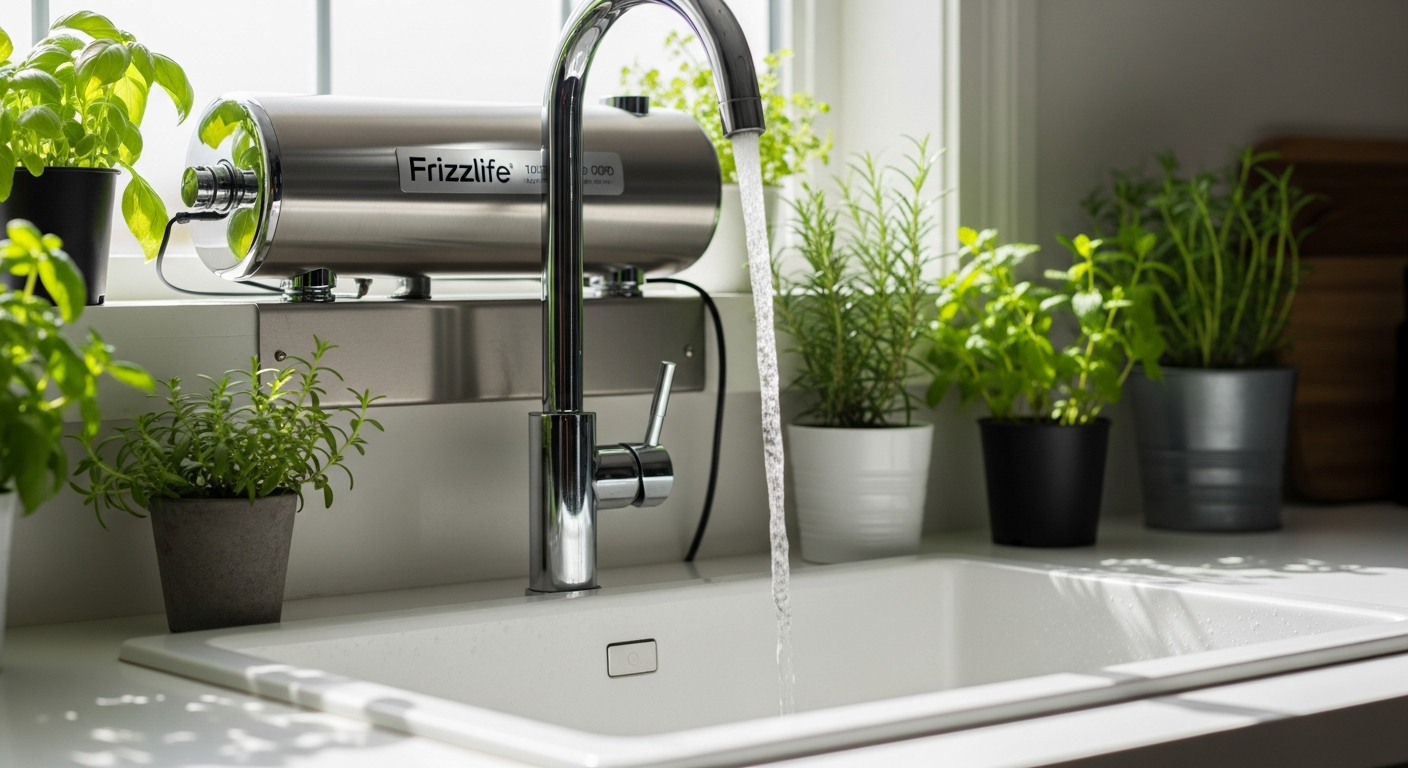
Need powerful water filtration without losing cabinet space? The Frizzlife 1000 GPD tankless RO system delivers fast purification, cleaner taste, and a compact under-sink design for modern kitchens.
Finding space for a traditional reverse osmosis system can be difficult in smaller kitchens. Many older RO setups rely on bulky storage tanks that consume most of the available cabinet space under the sink, making storage even more limited.
The Frizzlife PD1000-TAM4 approaches water filtration differently.
Instead of relying on a large storage tank, this tankless reverse osmosis system delivers purified water on demand while maintaining a much smaller footprint. For apartment kitchens, condos, and compact modern homes, that design alone makes it stand out from many traditional filtration systems.
What Makes the Tankless Design Different?
Traditional reverse osmosis systems store filtered water inside a pressurized tank. While effective, those tanks often take up most of the under-sink cabinet area.
The Frizzlife 1000 GPD system removes that requirement entirely.
Its tankless setup offers several advantages:
- More usable cabinet space
- Faster water flow
- Reduced waiting time
- Cleaner system design
- Lower risk of stagnant stored water
The 1000 gallons-per-day capacity also allows the system to produce water quickly, reducing the slow dispensing commonly associated with older RO systems.
For households that regularly fill bottles, cookware, or coffee machines, this faster output becomes especially noticeable.
Understanding the Multi-Stage Filtration Process
The Frizzlife system uses multiple filtration stages to improve water quality.
These stages typically include:
- Sediment filtration
- Carbon filtration
- Reverse osmosis membrane filtration
- Mineral remineralization
The reverse osmosis membrane removes many dissolved solids and contaminants, while the remineralization stage adds beneficial minerals back into the water for improved taste.
This balance helps avoid the flat flavor some people associate with basic RO systems.
The built-in TDS monitor also gives real-time water quality readings, allowing users to track filtration performance more easily.
Compact Kitchens Benefit the Most
One of the strongest selling points of this system is space efficiency.
Because there is no large storage tank, the system fits more comfortably into tighter cabinet layouts. That makes it appealing for:
- Small apartments
- Condo kitchens
- Minimalist kitchen designs
- Homes with limited storage
Many homeowners prefer keeping extra room under the sink for cleaning products, bins, or kitchen storage rather than dedicating the entire area to water filtration equipment.
Installation and Setup
The system is designed for relatively straightforward installation.
Most setups involve:
- Connecting to the cold water line
- Installing the faucet connection
- Routing the drain line
- Positioning the compact filtration unit
The process is generally simpler than many large tank-based systems because there are fewer bulky components involved.
The system also operates without requiring a large external water storage tank, helping reduce clutter beneath the sink.
Maintenance and Filter Replacement
Like any reverse osmosis system, regular filter replacement is necessary to maintain water quality.
Typical replacement intervals include:
- Sediment and carbon filters every 6–12 months
- RO membrane approximately every 24 months
Replacement costs vary depending on filter type and household usage, but many users appreciate that the filter replacement process is relatively simple and designed for DIY maintenance.
Routine maintenance helps maintain water pressure, taste quality, and filtration performance over time.
Water Quality Improvements Users Often Notice
Many users report immediate taste improvements after switching from unfiltered tap water.
Commonly mentioned benefits include:
- Reduced chlorine taste
- Cleaner-smelling water
- Improved clarity
- Better-tasting coffee and tea
- Reduced reliance on bottled water
The system is also designed to reduce dissolved solids and certain contaminants commonly found in municipal water supplies.
For households focused on hydration and cooking quality, these improvements can become noticeable fairly quickly.
Pricing and Long-Term Value
The Frizzlife PD1000-TAM4 sits in the premium range of home water filtration systems.
However, the long-term value often becomes easier to justify when compared to:
- Repeated bottled water purchases
- Smaller pitcher filters
- Frequent bottled water deliveries
The combination of high filtration output, compact design, and reduced bottled water dependence makes it attractive for households planning long-term use.
Potential Drawbacks to Consider
While the system offers strong advantages, there are still a few things buyers should consider.
Some users mention:
- Higher upfront pricing
- Regular filter replacement costs
- Minor installation learning curve
- Typical RO wastewater production
These are fairly common trade-offs for most reverse osmosis systems rather than issues unique to Frizzlife specifically.
Proper installation and routine maintenance are important for long-term performance.
Is the Frizzlife 1000 GPD Tankless RO System Worth It?
The Frizzlife 1000 GPD tankless RO system stands out because it solves one of the biggest frustrations associated with traditional reverse osmosis setups: wasted space.
Its compact design, fast filtration speed, remineralization stage, and strong water purification performance make it especially appealing for modern kitchens where space matters as much as water quality.
For homeowners looking to improve drinking water without sacrificing cabinet storage, the Frizzlife system offers a cleaner and more space-efficient alternative to older tank-based filtration systems.