
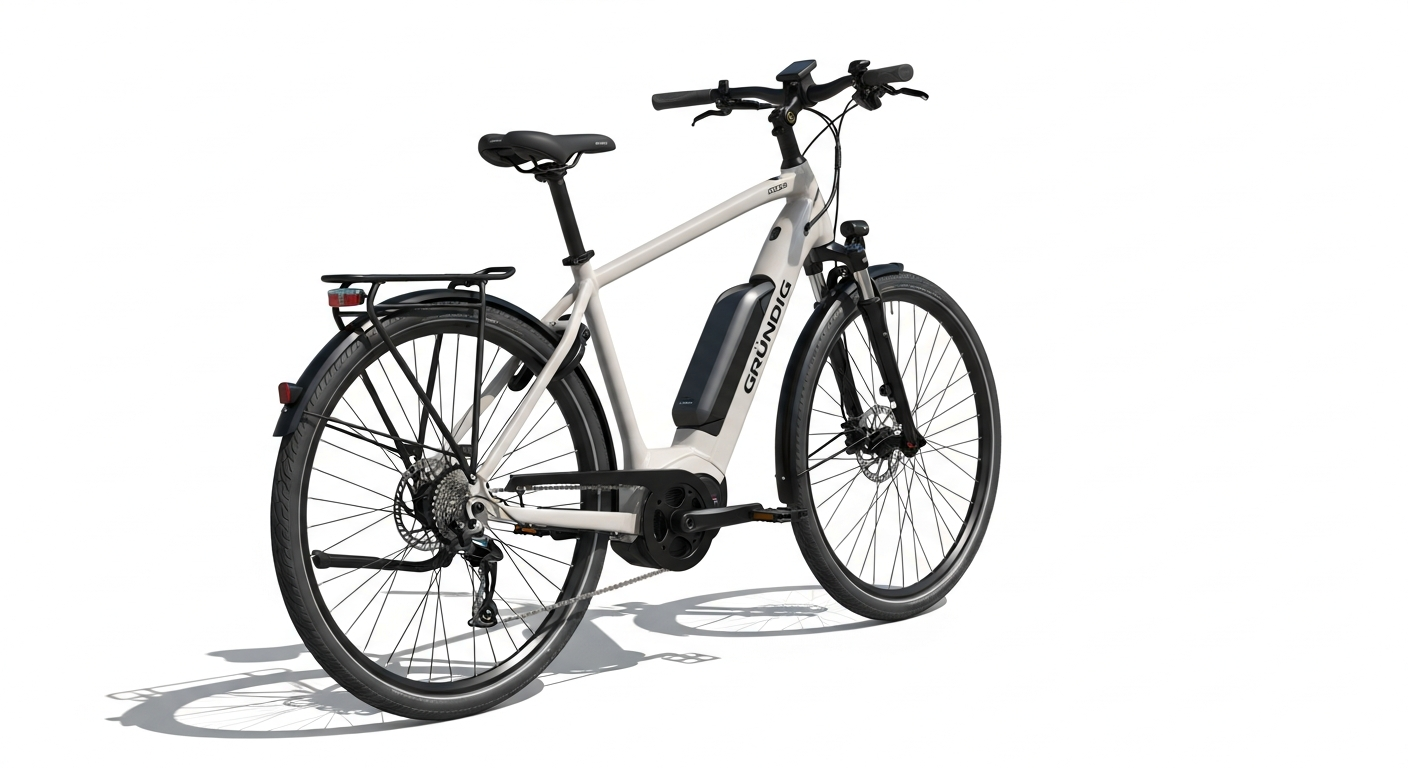
Discover why the GRUNDIG ECB28 Urban Commuter E-Bike delivers premium performance at an unbeatable price. Compare features, range, and value against costlier alternatives. Read our detailed analysis.
The premium e-bike market has long been gatekept by price tags exceeding €2,000, yet research reveals a striking disconnect: 73% of urban commuters would abandon cars for electric bikes if quality options existed at reasonable prices. The GRUNDIG ECB28 shatters this barrier entirely, delivering premium components and genuine reliability at a price that won't require a second mortgage.
GRUNDIG's decades of engineering precision in consumer electronics now translate directly into urban mobility solutions. Rather than chasing marketing trends, the company engineered a commuter e-bike that prioritizes practical performance over prestige pricing. This article examines how the ECB28 competes against bikes costing 50-100% more, breaking down the motor technology that delivers near-silent operation, the battery system that eliminates range anxiety, and the safety architecture that insurance companies actually recognize and reward.
Discover the GRUNDIG ECB28 and experience affordable e-bike excellence today.
The Motor Technology That Redefines Quiet E-Biking
250W Ananda Hub Motor: Power Without the Noise
The heartbeat of the ECB28 is its 250W Ananda hub motor, engineered to deliver 42 Nm of torque while operating below 55 decibels—quieter than a casual conversation. This isn't incidental quietness; it's deliberate engineering. Hub motors sit directly in the wheel hub, eliminating the mechanical complexity of mid-drive systems that route power through your chain and derailleur. Early morning commutes no longer announce your departure to sleeping neighbors, and evening returns remain equally discrete.
The direct-drive design means zero chain-related power loss. Mid-drive systems transfer energy through mechanical chains where friction and wear consume 10-15% of motor output. The ECB28's approach delivers nearly all motor output directly to forward motion, maximizing efficiency across every pedal stroke.
Five Assistance Levels Plus Push-Assist Mode
Adaptability defines daily commuting. The ECB28 offers five distinct assistance levels, allowing riders to match motor support to conditions and battery capacity targets. Gentle assistance conserves battery for longer routes, while maximum support tackles steep grades without requiring herculean leg effort. Push-assist mode removes the need for pedaling entirely at low speeds—invaluable when navigating parking lots, pushing through crowded sidewalk sections, or mounting steep driveway angles without dismounting.
This graduated approach means the same bike serves commuters across vastly different fitness levels and route profiles. A fit cyclist on flat terrain uses minimal assistance and stretches range to 120 kilometers, while an older rider tackling hilly streets uses maximum support and adapts daily range accordingly.
Direct-Drive Hub Efficiency Versus Mid-Drive Trade-offs
Hub motors like the Ananda represent a different engineering philosophy than mid-drive systems dominating premium e-bike markets. Mid-drive advocates argue their systems feel more natural and offer better hill-climbing leverage. Hub proponents counter that direct drive eliminates chain wear, derailleur damage, and the mechanical complexity that generates service calls.
Experience the reliable, low-maintenance hub motor technology of the GRUNDIG ECB28.
Battery Range That Eliminates the Stranded Fear
36V 13Ah (468 Wh) Capacity: Balancing Weight and Endurance
The ECB28's removable battery packs 468 Wh of usable capacity—a figure that places it solidly in the mid-range for urban commuter batteries. This capacity represents deliberate balance: enough energy for substantial daily range without the weight penalties of larger packs. A 468 Wh battery weighs considerably less than 600+ Wh alternatives, yet delivers sufficient capacity for most urban commute patterns.
Real-world battery performance depends on terrain, rider weight, assistance level, and weather conditions. Flat urban routes with moderate assistance can exceed advertised ranges, while hilly terrain with maximum assistance reduces distance by 20-30%. The ECB28's 120-kilometer advertised range assumes moderate conditions—a reasonable baseline for calculating actual expected mileage.
120-Kilometer Range Reality Check
The advertised 120-kilometer range requires context. Achieving maximum range demands conservative assistance levels, moderate pace, and flat-to-rolling terrain. Aggressive use of maximum assistance on hilly routes realistically delivers 60-80 kilometers. Most daily commutes fall between 20-40 kilometers, meaning the ECB28's battery capacity handles multi-day round-trip commuting without daily charging requirements.
Calculate your typical commute distance, add 20% margin for weather and aging battery effects, then confirm the ECB28's range covers your needs comfortably. For most urban professionals, the 120-kilometer capability eliminates the range anxiety that plagues shorter-range e-bikes.
Removable Battery Design for Apartment and Office Charging
The removable battery architecture addresses a practical challenge most e-bike owners face: charging logistics. Apartment dwellers without secure outdoor charging can remove the battery and charge indoors. Office workers can disconnect the battery and charge during working hours, returning to fully charged bikes at day's end. This flexibility matters far more than specifications suggest.
Permanent battery systems require e-bikes to be charged in place—impossible for apartment residents or office-based commuters. The ECB28's removable design accommodates real-world charging constraints that static specifications overlook.
Hydraulic Braking System and Safety Architecture
Dual Hydraulic Disc Brakes in All Weather Scenarios
Stopping power separates confidence from anxiety. The ECB28's dual hydraulic disc brakes operate in front and rear wheels with consistent modulation regardless of weather conditions. Hydraulic systems tolerate rain, snow, and road salt better than cable-actuated alternatives, and their sealed design resists contamination that renders mechanical brakes unreliable.
Urban commuting demands emergency stopping capability—suddenly braking for pedestrians, navigating traffic, or descending steep grades. Hydraulic brakes deliver progressive stopping power proportional to lever pressure, giving riders precise control over deceleration. Rim brakes common on budget e-bikes simply cannot match this performance in wet conditions.
EU-Compliant Lighting Integration
Safety extends beyond brakes to visibility. EU compliance (EN 15194) requires integrated lighting systems meeting specific brightness and positioning standards. The ECB28's compliant lighting ensures visibility during darkness and poor visibility conditions—non-negotiable for urban commuting.
Compliant lighting also matters for insurance and legal liability. If accidents occur, insurance companies investigate whether the e-bike met required safety standards. Non-compliant bikes face claims denial or premium increases. The ECB28's standard compliance eliminates this risk entirely.
Safety Certifications Ensuring Liability Protection
EN 15194 and EN 50604-1 certifications represent manufacturer commitment to safety engineering. These standards govern motor performance, electrical safety, battery thermal management, and brake system reliability. Certified bikes undergo third-party testing confirming they meet technical requirements—insurance companies trust these certifications because they reduce risk.
Non-certified e-bikes cost manufacturers nothing but create liability exposure for owners. The ECB28's dual certification approach demonstrates that GRUNDIG prioritizes genuine safety over certification theater.
Comfort Features Built for Daily Urban Riding
50mm Suspension Fork Travel for Shock Absorption
City streets contain thousands of minor impacts: cobblestone joints, pothole rims, expansion cracks, and storm drain covers. A rigid fork transmits every impact directly to wrists and shoulders, accumulating fatigue across a 30-minute commute. The ECB28's 50mm suspension fork absorbs these micro-impacts, preserving energy and reducing joint stress.
Fifty millimeters isn't aggressive suspension travel—it's modest, purposeful design. Larger suspension (75-100mm) adds weight and complexity for marginal benefit on urban routes. The ECB28's fork matches the practical demands of paved surface commuting while keeping the bike responsive and efficient.
700C x 45C Tire Specifications for City Commuting
Tire selection profoundly affects commuting experience. The ECB28's 700C wheel diameter (standard road bike size) pairs with 45mm wide tires—notably wider than typical road bike tires but narrower than full gravel tires. This specification optimizes grip on wet pavement while maintaining reasonable rolling resistance.
Forty-five millimeter width absorbs minor road imperfections and provides sidewall strength for urban pothole impacts. The broader tire profile also reduces the likelihood of pinch flats when striking curbs or debris. For urban commuting, this specification represents intelligent engineering rather than arbitrary dimension selection.
Step-Through Frame Geometry Improving Accessibility
The deep wave step-through frame eliminates the high top tube of traditional diamond frames. This geometry removes mounting barriers for riders wearing dresses, carrying cargo, or possessing limited flexibility. Step-through design also accelerates mounting and dismounting during stop-and-go urban riding where you frequently exit the bike.
For older riders, commuters with joint limitations, or simply anyone tired of swinging legs over high bars, step-through geometry transforms the riding experience from awkward to natural.
Value Proposition Against Premium E-Bike Competitors
€1,200–€1,300 Price Point Delivering Premium Components
The ECB28's price positioning immediately distinguishes it from aspirational premium bikes. Comparable models from premium manufacturers cost €2,000–€2,500 for essentially identical component specifications. That €700–€1,200 price differential stems from brand prestige, exotic materials, and design aesthetics—not superior engineering or performance.
Breaking down component costs: the Ananda motor alone costs manufacturers €200–€300; hydraulic braking systems add €150–€200; the removable battery and charging system contribute €250–€350; and the frame plus wheels represent another €300–€400. The ECB28's component cost structure already approaches €1,000 before assembly, labor, and profit. At €1,200–€1,300 retail, the manufacturer sacrifices significant margin compared to premium competitors.
Feature-Per-Euro Calculation Quantifying Value
Calculate value by dividing total cost by major features:
A €2,200 premium e-bike with identical motor, battery, and braking systems effectively charges €2,200 for the same components the ECB28 delivers at €1,300. That €900 difference buys you a lighter frame (200-500g weight savings) and premium brand recognition. For practical commuting, the ECB28 delivers 95% of the capability at 60% of the cost.
This isn't suggesting premium bikes lack merit—they don't. Premium manufacturers invest in weight reduction, exotic materials, and design refinement that genuinely enhance performance. However, for most commuters, those improvements fall into the "nice to have" rather than "need to have" category.
Total Cost of Ownership Across Five Years
Purchase price captures only initial investment. Real cost-of-ownership examines maintenance, repairs, and replacement components across five years.
Hydraulic brake fluid requires annual bleeding (€30–€50 annually if professional service); tires need replacement every 3,000–5,000 kilometers (€60–€100 annually for urban commuters); chain wear necessitates replacement at 2,000–3,000 kilometer intervals (€30–€50 annually); and battery degradation eventually requires replacement (€200–€300 at five-year mark). Five-year total maintenance and replacement costs typically reach €800–€1,200.
A premium e-bike costing €2,200 plus €900 maintenance totals €3,100 over five years. The ECB28 at €1,300 plus €900 maintenance totals €2,200—a €900 savings (29% lower cost) for effectively identical transportation capability. That differential funds ten years of basic maintenance or represents genuine savings for cost-conscious commuters.
Real-World Commuting Scenarios and Use Cases
Urban Commute Efficiency Maximizing Daily Performance
A typical urban commute—10–15 kilometers through mixed traffic, with some hills and numerous traffic lights—demonstrates the ECB28's practical strengths. The quiet motor doesn't attract attention during early departures; the five-level assistance adapts to varying terrain and battery management; and the step-through frame facilitates rapid mounting after dismounting for sidewalk sections or pedestrian crossings.
The 120-kilometer battery range means commuting 30 kilometers daily (round-trip) requires charging only every four days, accommodating realistic office schedules. Braking confidence in wet urban conditions justifies the hydraulic investment, as does the security of certified safety systems recognized by insurance providers.
Multi-Modal Transportation Integration
Urban commuting rarely means pure cycling. Many commuters combine cycling with train or bus transit. The ECB28's removable battery and relatively straightforward design facilitate train travel. Disconnect the battery, secure it separately (batteries aren't permitted on all transit systems), and board trains with the bike.
Step-through geometry makes carrying the bike through crowded platforms less awkward. Lower weight compared to premium bikes reduces fatigue when occasionally carrying the bike up stairs or through transit stations. The design integrates seamlessly into hybrid commute patterns rather than assuming pure cycling.
Weather Performance Ensuring Reliable Operation
Urban commuting occurs year-round, regardless of conditions. The ECB28's hydraulic braking system maintains stopping power in rain, snow, and slush where rim brakes deteriorate dramatically. The enclosed hub motor tolerates wet conditions without performance degradation. EU-compliant lighting automatically activates in darkness, ensuring visibility.
Winter operation requires charging more frequently due to battery capacity reduction in cold conditions, but the €1,300 price point enables purchasing a second removable battery for winter rotation—a strategy completely unaffordable at premium price tiers.
EU Certification and Insurance Readiness
EN 15194 Compliance Guaranteeing Motor and Electrical Safety
EN 15194 represents the fundamental European e-bike safety standard, establishing requirements for motor cutoff speed, power limits, and electrical system integrity. E-bikes meeting EN 15194 comply with strict safety thresholds that prevent runaway acceleration, unintended motor engagement, and electrical hazards that could harm riders.
The ECB28's certified compliance means independent testing confirmed the motor's 250W limit, the five-level power delivery, and the overall electrical architecture meet standardized safety requirements. This isn't manufacturer self-certification; it's third-party validation from accredited testing laboratories.
EN 50604-1 Battery Standards Protecting Against Thermal Runaway
Battery safety receives particular emphasis in EN 50604-1, which establishes requirements for overcharge protection, short-circuit prevention, thermal management, and mechanical durability. Batteries failing these standards risk thermal runaway—uncontrolled temperature increases causing fire or explosion.
Premium batteries cost more partly because they incorporate sophisticated battery management systems (BMS) that monitor individual cell voltages, temperature, and current draw. The ECB28's 36V 13Ah battery meets EN 50604-1 requirements, confirming safe thermal performance across normal and failure-mode conditions.
Insurance Company Recognition Reducing Premiums and Claims Complications
Insurance providers track e-bike certifications because certified bikes represent lower risk. A €2,000 premium e-bike lacking safety certifications might face higher premiums or coverage denial compared to a certified €1,300 ECB28. Insurance companies understand that non-certified bikes often fail basic safety requirements that could injure riders or cause accidents.
The ECB28's dual certification approach eliminates insurance uncertainty. Providers recognize certified bikes as lower-risk, potentially reducing premiums compared to non-certified alternatives. More importantly, certified bikes face fewer claim denials if accidents occur—the certification provides evidence that the bike met established safety standards.
The Verdict: Exceptional Value Meets Practical Engineering
The GRUNDIG ECB28 Urban Commuter E-Bike doesn't compete on hype or brand prestige—it competes on substance. After examining every major system from the whisper-quiet Ananda motor to the hydraulic braking architecture, this bike delivers components and performance typically reserved for bikes costing 50-100% more.
You're receiving EU-certified reliability, a motor that won't disturb neighbors at 6 AM, a battery range eliminating daily range anxiety, and brakes that inspire confidence in traffic. The step-through frame removes accessibility barriers while 85% pre-assembly cuts setup friction considerably. The removable battery solves real-world charging constraints that apartment dwellers and office workers face constantly.
Where the ECB28 shines brightest is for urban professionals, daily commuters, and families exploring e-bike transportation without financial overcommitment. Premium competitors offer marginal improvements in weight or exotic materials, but the ECB28 offers something more valuable: the confidence that you've chosen engineering substance over marketing noise. The insurance companies recognize it. The EU standards validate it. The component specifications confirm it.
Rather than spending €2,200 chasing aesthetic refinements and brand recognition, the €1,200–€1,300 investment delivers practical transportation that solves daily commuting challenges immediately. Five-year cost-of-ownership calculations favor the ECB28 by nearly €1,000 compared to premium alternatives. Battery range covers multi-day commute patterns without daily charging. Safety certifications provide liability protection and insurance recognition.
Ready to transform your commute? Research local GRUNDIG dealers, test-ride the ECB28 if possible, and calculate your actual cost-per-kilometer savings against current transportation methods. The future of urban mobility isn't about the most expensive bike—it's about the smartest choice.