
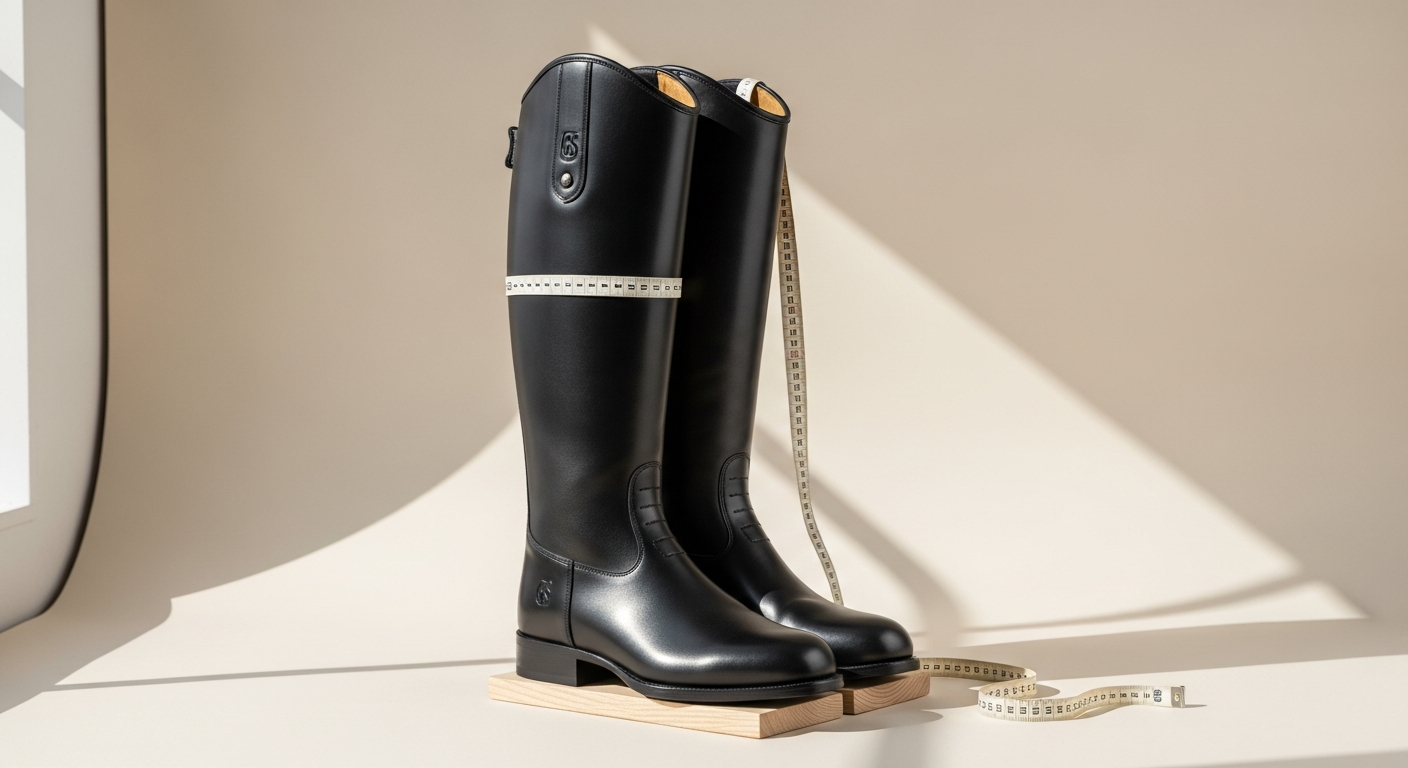
Find your perfect fit with our comprehensive guide to GS Equestrian Adult Tall Riding Boots. Explore sizing options, calf widths, and fit tips for optimal comfort and performance in the saddle.
UK equestrian boot sizing operates on a different scale than everyday footwear. Equestrian manufacturers follow specific standards that account for the unique demands of riding—including heel placement, arch support, and ankle mobility. A UK size 5 riding boot won’t necessarily match a UK size 5 street shoe, so direct comparisons can mislead. GS Equestrian designs their sizing specifically for the riding position, meaning the measurements reflect how the boot performs in the saddle rather than during casual wear.
Detailed breakdown of each size (3, 4, 5, 6, 7, 8) and typical foot length measurements
GS Equestrian offers six distinct sizes to accommodate different foot lengths. UK size 3 typically suits foot lengths around 210-220mm, while size 4 fits approximately 220-230mm. Moving up the scale, size 5 aligns with 230-240mm, size 6 with 240-250mm, size 7 with 250-260mm, and size 8 accommodates 260-270mm foot lengths. These measurements provide a foundation for your decision, but individual variation always exists depending on foot shape and width distribution.
Why GS Equestrian recommends sizing up or down based on your current riding boots
If you already own riding boots, comparing them to your new purchase offers practical guidance. GS Equestrian suggests measuring the insole length of your current boots and matching that measurement to their sizing chart. Some riders find they need to go half a size up or down depending on how their previous boots fit. This comparative approach reduces guesswork and accounts for personal fitting preferences that pure measurement alone cannot capture.
The importance of measuring your foot length in millimeters for accuracy
Precision matters when ordering online without trying boots on. Measuring in millimeters—rather than relying on general shoe size—gives you concrete data. Use a soft measuring tape or ruler on a piece of paper with your foot in a standing position. Mark your heel and the tip of your longest toe, then measure the distance between these points. Recording measurements in millimeters eliminates ambiguity and aligns perfectly with GS Equestrian’s sizing documentation.
How heel height and toe box width vary slightly across the size range
Beyond foot length, heel construction and toe box proportions shift subtly across sizes. Smaller sizes (3-4) feature slightly higher heels relative to foot length, while larger sizes (7-8) show proportionally lower heels. The toe box widens progressively as sizes increase, affecting how your toes sit during riding. Understanding these variations helps you anticipate how the boot will feel once you’re in the saddle.
Common sizing mistakes riders make when ordering tall boots online
Many riders assume their street shoe size translates directly to equestrian boots—a costly error. Others measure only their foot length while ignoring calf circumference, then struggle with fit around the leg. Some measure their feet in the evening when swelling occurs, leading to oversized boots. Finally, riders occasionally ignore GS Equestrian’s specific recommendations about sizing up or down, instead choosing purely based on their existing shoe size.
Comparison of GS Equestrian sizing to other major equestrian brands
GS Equestrian sizing aligns reasonably well with brands like Dublin and Ovation, though minor variations exist. If you’ve worn Toggi or Harry Hall boots previously, you might find GS Equestrian sizing runs slightly different. The safest approach involves measuring your foot directly rather than assuming consistency across brands. Each manufacturer interprets heel height, calf rise, and overall proportions with subtle differences that compound when comparing sizes.
The Four Calf Width Options: Finding Your Perfect Match
Slim calf width: ideal measurements, rider body types, and styling considerations
The slim calf option suits riders with calf circumferences between approximately 28-31cm. This width typically fits petite riders, younger equestrians with naturally slender builds, or anyone whose leg proportions tend toward the narrower end of the spectrum. Slim boots create an elegant, refined silhouette that particularly complements dressage and hunter-jumper disciplines. The streamlined appearance enhances leg line without sacrificing the close-contact support these boots provide.
Standard calf width: the most popular option and why it suits average leg proportions
Standard calf width represents GS Equestrian’s most popular choice, designed for calf circumferences around 31-34cm. This width accommodates the majority of adult riders with average leg proportions. The standard option balances comfort and aesthetics effectively—it’s snug enough to provide precise leg communication while remaining comfortable during extended riding sessions. Most riders experience minimal break-in challenges with standard width, as the leather softens to conform to typical leg shapes.
Wide calf width: measurements, comfort benefits, and who should choose this option
Wide calf width fits circumferences approximately 34-37cm, serving riders with more substantial leg muscle or fuller calf shapes. This option eliminates the pinching sensation that occurs when calf measurements exceed standard dimensions. Riders who’ve struggled with boots cutting into their legs or restricting circulation will appreciate the additional room. Wide boots remain supportive and controlled—the extra space doesn’t mean loose or unstable fit.
Extra-wide calf width: specifications, availability across sizes, and fit advantages
Extra-wide calf width accommodates circumferences of 37cm and above, ensuring even riders with significantly fuller calves enjoy a comfortable, secure fit. GS Equestrian offers this width across most sizes, though availability can vary slightly. Extra-wide boots eliminate the frustration of searching endlessly for boots that actually accommodate your leg shape. The engineering remains identical to other widths—only the calf circumference adjusts—so performance characteristics remain unchanged.
How to measure your calf circumference accurately at the widest point
Accurate calf measurement requires finding the fullest part of your calf muscle. Sit comfortably with your leg relaxed, or stand with weight evenly distributed. Wrap a soft measuring tape around the thickest section of your calf, keeping the tape parallel to the ground and neither too tight nor too loose. You should fit one finger between the tape and your leg. Record this measurement in both centimeters and inches for flexibility when consulting GS Equestrian’s sizing information.
The difference between calf width and calf height in tall boot design
Calf width refers to circumference—how snugly the boot fits around your leg at its widest point. Calf height, by contrast, describes how far up the leg the boot extends. GS Equestrian’s tall boots feature consistent height across all width options; only the circumference changes. Understanding this distinction prevents confusion when reviewing product descriptions and ensures you’re making calf width decisions based on actual circumference rather than confusing height with width.
Why choosing the correct calf width prevents pinching, slipping, and circulation issues
An oversized calf width results in slipping and instability—your leg moves inside the boot, compromising your security and communication with your horse. Conversely, boots too tight in the calf create pinching sensations, restrict circulation, and cause discomfort that worsens throughout your ride. Selecting the correct width means your leg stays stable, the boot molds to your shape without constriction, and you can ride for hours without developing numbness or soreness.
Real Leather Construction & Break-In Timeline
Premium leather sourcing and tanning process used by GS Equestrian
GS Equestrian sources genuine leather that undergoes professional tanning to achieve both durability and suppleness. The tanning process creates leather that responds to conditioning and breaks in gracefully over time. This sourcing philosophy means your boots improve with age and care rather than deteriorating. The leather develops character and deepens in color, creating boots that become genuinely personalized through use.
Initial stiffness expectations and typical break-in period (number of hours/rides)
Fresh GS Equestrian boots feel firm and structured—this isn’t a defect; it’s intentional engineering. The leather intentionally resists molding initially to maintain support during the break-in phase. Expect approximately 10-15 rides before the boots reach comfortable wearing status, though complete softening extends to 20-30 rides. Some riders experience faster break-in, particularly those with consistent riding schedules. The duration depends on riding frequency, intensity, and your individual leather sensitivity.
How the supple leather upper softens and molds to your leg over time
The leather gradually yields as you ride, conforming to your specific leg shape and proportions. This molding process creates a custom fit that no amount of adjustment achieves initially. The contoured ankle design facilitates this adaptation, directing softening in ways that enhance support rather than compromise it. After complete break-in, your boots fit so precisely that they feel like natural extensions of your legs.
The contoured ankle design and how it provides support during the break-in phase
The contoured ankle isn’t merely aesthetic—it’s functional engineering. This design element stabilizes your ankle while the leather softens around it, preventing the wobbly sensation some riders experience with poorly-designed boots. The contour distributes pressure evenly rather than concentrating force on specific points, making the break-in period more comfortable and supporting proper leg position development.
Recommended break-in strategies: gradual wear, conditioning products, and stretching techniques
Start your break-in journey with shorter rides and gradually extend duration as comfort increases. Apply leather conditioner after every 3-4 rides to accelerate softening while maintaining leather health. Wearing your boots around the house for brief periods without riding can also help them adjust to your leg shape before mounted use. Some riders use leather stretching spray on specific pressure points, though this should be applied sparingly to avoid over-softening critical support areas.
Signs your boots are breaking in properly versus fitting incorrectly
Proper break-in produces mild discomfort that decreases with each ride, alongside visible creasing where your leg bends naturally. Incorrect fit, by contrast, creates persistent pain, red marks that don’t fade quickly, or blistering. Your boots should feel snug but not painful; any sharp pinching or circulation restriction indicates fit issues rather than normal break-in challenges. Boots breaking in properly will feel noticeably more comfortable after 5-10 rides.
Long-term leather care to maintain comfort and extend boot lifespan
Regular conditioning—every 4-6 weeks during riding season—keeps leather supple and prevents cracking. Clean off mud and sweat after each ride before they dry into the leather. Store boots in a cool, dry location away from direct heat or sunlight. Use boot trees or stuff them with newspaper to maintain shape during storage. Professional leather care services can restore aging boots, extending their lifespan beyond what home maintenance alone achieves.
Performance Features for Training & Competition Riding
Structured upper design for maintaining correct leg position in the saddle
The GS Equestrian boot’s structured upper creates a stable platform for your leg alignment. This engineering prevents your leg from swinging forward or back as you move with your horse’s motion, supporting the independent leg position that separates effective riders from struggling ones. The structure isn’t restrictive; rather, it guides your leg into biomechanically sound positioning naturally.
Ankle support and how it prevents fatigue during extended riding sessions
The contoured ankle design provides lateral stability that prevents ankle fatigue during hours in the saddle. This support allows your lower leg to remain stable without muscular compensation, meaning you can ride longer without developing the aching that comes from unstable footwear. Even during intense training sessions or competitive events, your ankles stay supported and fatigue-free.
Close-contact feel and why it matters for communication with your horse
Real leather construction combined with a fitted ankle and contoured design creates exceptional feel between your leg and your horse’s side. This close contact enables subtle weight shifts, leg pressure variations, and position adjustments that your horse responds to immediately. The communication channel between rider and horse remains clear and responsive throughout your ride.
Leg protection benefits for both schooling and competitive environments
Tall boots protect your legs from brush, branches, and other trail hazards during schooling. In competitive environments, this protection becomes psychological as well—you ride with confidence knowing your legs are shielded. The structured leather also prevents minor impacts that might otherwise distract you mid-ride.
Classic lace-front detail: aesthetic appeal and functional adjustment capability
The lace-front isn’t purely decorative. These laces enable fine-tuned fit adjustments across the foot and lower leg, allowing you to customize compression and support to your preferences. You can tighten around the ankle for maximum support or loosen slightly for comfort depending on your riding intensity. This adjustability extends across riding activities, from casual schooling to competitive events.
Durability specifications and how these boots withstand daily training wear
GS Equestrian engineers these boots for serious use, not occasional riding. The real leather, reinforced stress points, and quality stitching withstand daily training wear that would degrade inferior boots within months. Riders regularly report multiple seasons of reliable performance from these boots with proper care.
Suitability across disciplines (dressage, jumping, eventing, and general riding)
The versatile design makes GS Equestrian boots appropriate across disciplines. Dressage riders appreciate the elegant aesthetic and precise leg support. Jumpers benefit from the ankle stability and close contact feel. Event riders rely on the durability and consistent performance across multiple phases. Casual trail riders value the protection and comfort during extended hours. Few boots genuinely excel across this spectrum; these do.
Find your perfect fit with GS Equestrian Adult Tall Riding Boots today
Calf Width Measurement Guide: DIY Instructions
Step-by-step process for measuring your calf circumference at home
Begin in a comfortable sitting position or standing position with weight evenly distributed. Locate the widest point of your calf muscle—this typically sits approximately halfway between your knee and ankle. Wrap a soft measuring tape around this widest section, ensuring the tape lies flat against your skin and parallel to the ground. The tape should feel snug but not restrictive; aim for the tension where you can comfortably fit one finger between tape and leg.
Best time of day to measure (morning vs. evening for accuracy)
Measure your calf in the morning before extended standing or activity, when swelling is minimal. Evening measurements often show inflated circumferences due to accumulated fluid from standing and activity throughout the day. Morning measurements provide consistency with how your boots will fit most of the time during riding. If you ride in evenings, consider taking measurements at that time instead, as your calf measurement will be more similar to how it feels during your actual riding sessions.
Tools you’ll need: soft measuring tape, pen, and paper
Gather a soft fabric measuring tape rather than a rigid ruler. A hard measuring tape won’t conform to your leg’s shape and will yield inaccurate readings. Have a pen and paper available to record measurements immediately—don’t rely on memory. Taking photos of your measurement can also serve as backup documentation when placing your order.
Measuring at the widest point of your calf muscle
The critical step involves identifying your calf’s widest point accurately. This location typically sits 4-6 inches below your knee, though individual variation exists. Run your fingers down your calf to find where it bulges most prominently. This is your measurement point. Measuring higher or lower than the widest point will produce inaccurate results that don’t reflect how boots will actually fit.
Recording measurements in both centimeters and inches
Measure in centimeters for primary reference, as GS Equestrian’s sizing often utilizes metric measurements. Record the inch equivalent as well for flexibility if you encounter sizing charts using imperial measurements. Having both values prevents conversion errors and provides flexibility when consulting various resources.
How to account for tight breeches or riding tights in your measurement
Measure with bare legs or in thin socks—don’t measure over thick breeches. Riding breeches add compression that reduces your apparent calf circumference. However, consider whether you typically ride in standard breeches or thicker riding tights when making your final width selection. If you usually ride in thermal tights during winter, your calf measurement might be slightly larger when wearing them, potentially affecting boot comfort during cold months.
Comparison chart: matching your measurements to GS Equestrian calf width categories
Once you’ve recorded your calf circumference, reference GS Equestrian’s official sizing chart:
- Slim: approximately 28-31cm
- Standard: approximately 31-34cm
- Wide: approximately 34-37cm
- Extra-wide: 37cm and above
If your measurement falls between categories, choose the larger width to avoid restrictive fit. It’s better to have slightly loose boots that break in comfortably than to squeeze into boots that never feel right.
Value Proposition: Why These Boots Deliver Premium Quality at Accessible Prices
Price range breakdown (£64.99-£99.99) and typical discount availability
GS Equestrian prices these boots between £64.99 and £99.99, with frequent discounts bringing costs toward the lower end of this range. Seasonal sales, particularly during off-season periods, offer substantial savings. The price variation reflects sizing complexity and market demand; less common calf widths or sizes might command higher prices. Despite these variations, the entire range remains remarkably affordable compared to competing tall boot brands.
Construction quality justification: real leather, hand-finished details, and durability testing
The real leather construction accounts for a significant portion of the cost—quality leather sourcing, tanning, and preparation represent substantial investments. Hand-finished details like lace-front edging and ankle contouring require skilled labor. GS Equestrian conducts durability testing to ensure boots withstand extended use. These elements justify the pricing; you’re purchasing genuine construction rather than synthetic imitation.
Cost comparison to competing tall boot brands at similar price points
Brands like Toggi and Harry Hall occupy similar price territory but often skimp on leather quality or sizing range. Premium brands like Dubarry charge significantly more while offering limited additional performance benefits for most riders. GS Equestrian achieves the sweet spot between affordability and quality that larger manufacturers can’t match.
Longevity factor: how many seasons these boots typically last with proper care
Properly maintained GS Equestrian boots reliably serve riders for 3-5 riding seasons, with some owners reporting even longer lifespans. This longevity means the per-season cost becomes genuinely minimal. Dividing the purchase price across multiple years of use reveals remarkable value—essentially pennies per riding day when calculated over the boot’s lifespan.
Investment perspective for new riders versus experienced equestrians
New riders benefit from the affordability, allowing them to invest in proper fitting boots without significant financial risk. Experienced riders appreciate the value proposition, recognizing that quality doesn’t require premium pricing. Both demographics find these boots justify their investment through performance and durability.
Seasonal sales patterns and best times to purchase
Spring and summer typically bring sales as retailers clear winter inventory. End-of-season clearance events in late summer and early fall offer additional savings opportunities. Black Friday and Boxing Day sales provide predictable discount periods. Conversely, late summer and early fall—peak riding season—typically feature full pricing.
Return on investment: performance benefits relative to cost
The improved riding experience these boots provide transcends monetary calculation. Better leg stability, enhanced communication, proper position maintenance—these benefits compound across hundreds of riding hours. A rider in properly-fitted boots experiences faster skill development and greater confidence than one struggling with unsuitable footwear. The performance return far exceeds the modest financial investment.
Maintenance & Care: Protecting Your Investment
Essential cleaning routine after each ride (mud, sweat, salt removal)
Remove mud immediately after riding before it dries and hardens. Use a soft brush or damp cloth to wipe away surface debris. Pay particular attention to seams and crevices where salt from sweat accumulates. Salt draws moisture from leather and causes discoloration, so removing it prevents permanent damage. A quick 5-minute cleaning routine after each ride prevents lengthy restoration work later.
Leather conditioning frequency and recommended products
Apply leather conditioner every 4-6 weeks during riding season, more frequently if you ride intensively or in particularly dusty conditions. Quality conditioners penetrate the leather and maintain suppleness without creating excessive softness. Mink oil and specialized equestrian leather conditioners work effectively; avoid furniture polish and other unsuitable products that leave residue and degrade leather.
Proper storage techniques to prevent creasing and damage
Store boots upright or use boot trees that maintain their shape during off-season months. Never fold boots or store them lying on their sides, as this creates permanent creases. Keep them in a cool, dry location away from direct heat, sunlight, or damp environments. Storing boots near a heater or in humid tack rooms accelerates aging and leather degradation.
Polishing methods for maintaining the sleek aesthetic
Regular polishing maintains the elegant appearance and creates a protective layer. Use quality equestrian boot polish in shades matching your boot color. Apply with a soft cloth using circular motions, then buff with a clean cloth for shine. This polishing process takes 10 minutes but dramatically enhances appearance and protects leather from environmental damage.
Dealing with common issues: scuffs, salt stains, and water marks
Minor scuffs typically disappear with conditioning and polishing. Salt stains respond to gentle cleaning with a damp cloth followed by conditioning. Water marks sometimes fade with time and conditioning, though stubborn marks might require professional restoration. Prevention through regular cleaning prevents most issues from becoming permanent problems.
Professional restoration options if damage occurs
Cobbler shops specializing in equestrian equipment can restore significant damage—re-stitching seams, replacing worn heel sections, or refinishing scratched leather. Professional restoration costs significantly less than replacement boots, making it worthwhile for cherished or otherwise irreplaceable pairs. Many professional restorers can extend boot lifespan by years through expert intervention.
Preventative measures for extending boot lifespan beyond typical wear
Rotating between multiple pairs of boots spreads wear across several pairs, extending each pair’s lifespan. Storing boots with newspaper inside to absorb moisture prevents internal degradation. Using boot protectors on the heel and toe—areas that experience most wear—prevents damage before it reaches the leather. These preventative approaches keep boots performing for additional seasons beyond expected timelines.
Limitations & Considerations Before You Buy
Single height option availability and who this might not suit
GS Equestrian’s tall boots feature one consistent height across all size and width options. Riders with unusually short or tall legs might find this height doesn’t align with their proportions. Those with very short legs might find boots extending too far up their leg, while extremely tall riders might prefer additional height. Measuring from your heel to the point where you want boot coverage ensures this height option suits your proportions.
Restrictiveness during off-horse activities (walking, standing for extended periods)
Tall boots intentionally restrict ankle motion to enhance riding stability—this same restriction makes walking uncomfortable and awkward. Wearing these boots to barn chores or social events feels restrictive compared to flexible footwear. While riders generally accept this trade-off for improved riding performance, those seeking boots suitable for off-horse activities should consider alternatives.
Heat and breathability challenges in warm weather conditions
Real leather tall boots retain heat, making them uncomfortable during hot weather riding. Horses get sweaty, riders get sweaty, and leather doesn’t breathe effectively in high-temperature conditions. Summer riding in tall boots requires accepting some heat discomfort. Riders in warm climates might prefer alternatives for hot-season riding or accept this limitation as the cost of year-round tall boot use.
Maintenance commitment required compared to synthetic alternatives
These boots demand regular conditioning, cleaning, and careful storage that synthetic alternatives don’t require. Riders seeking low-maintenance footwear will find the conditioning schedule burdensome. However, the improved performance and durability justify this maintenance investment for serious riders.
Calf width availability variations across different UK sizes
While GS Equestrian offers four calf widths, availability occasionally varies by specific size. Smaller sizes (3-4) sometimes have limited extra-wide options, while larger sizes (7-8) show similar limitations at the slim end. Checking availability in your specific size-width combination before ordering prevents disappointment. Special ordering options exist for unavailable combinations, though these might extend delivery timelines.
Potential for initial discomfort during the break-in period
Expecting complete comfort immediately after opening the box leads to disappointment. The break-in period involves some discomfort—nothing severe, but noticeable enough to require patience. Riders with low tolerance for initial discomfort should understand this reality before purchasing.
Resale value and market demand for used GS Equestrian boots
Used GS Equestrian boots retain decent resale value due to the brand’s reputation and quality construction. However, condition significantly affects value—well-maintained boots sell readily while neglected ones struggle to find buyers. These boots aren’t investments in the financial sense; resale typically returns 40-60% of original cost at best.
Rider Testimonials: Real Experiences with Fit & Comfort
New rider perspectives: confidence gained from proper boot fit
New riders consistently report that finding GS Equestrian boots in correct calf widths transformed their riding experience. Beginners who previously struggled with unstable leg position suddenly found themselves sitting deeper, steadier, and more effectively. One new rider noted that switching from generic “one-width” boots to properly-fitted GS Equestrian boots felt like upgrading to riding with one leg instead of two awkwardly flailing limbs.
Experienced rider feedback: how these boots compare to premium alternatives
Seasoned riders appreciate that GS Equestrian boots perform comparably to brands costing twice as much. Several competitive riders reported that after using expensive European brands, they were surprised to discover that GS Equestrian boots offered similar support and longevity at fraction of the cost. These testimonials emphasize that you’re not sacrificing performance by choosing affordability.
Specific calf width success stories (slim, standard, wide, extra-wide)
A slim-calf rider noted she’d searched for years for properly-fitting boots before discovering GS Equestrian’s slim width option. Wide-calf riders expressed relief at finally finding boots that didn’t pinch, restrict circulation, or require constant adjustment. Extra-wide options dramatically improved experiences for larger-framed riders who’d previously squeezed into inappropriate widths. Each width option generated testimonials from riders whose boot searches finally ended.
Long-term wearer reviews: durability and comfort after multiple seasons
Riders who’ve owned GS Equestrian boots for 3-5 seasons report the boots improving with age as leather softens and molds further to their legs. These long-term users emphasize that proper conditioning maintenance becomes second nature, and the investment continually pays dividends. Several reported wearing their boots through multiple show seasons and intensive daily schooling with no quality degradation.
Competitive rider experiences: performance in shows and events
Competitive riders praised the confidence that comes from proper-fitting boots during high-stakes events. Several reported that secure boot fit eliminated distracting discomfort, allowing complete focus on riding and communication with their horses. Show riders particularly appreciated the aesthetic appeal—the sleek design competes favorably with premium brands in the competition arena.
Common praise points across rider demographics
Across all rider experience levels and disciplines, consistent praise emerged around calf width options, build quality, price point, and aesthetic appeal. The most frequent comment: “These boots feel custom-made for my legs” from riders accustomed to compromises with other brands.
Honest critiques and how riders adapted to any initial challenges
Some riders acknowledged the break-in period required patience, though they emphasized that discomfort resolved quickly. A few mentioned regretting their initial calf width selection, though most noted they’d simply measured incorrectly initially. These honest critiques actually strengthen the testimony because they acknowledge realistic challenges rather than presenting unrealistic perfection.
Making Your Final Decision: Checklist & Next Steps
Pre-purchase checklist: measurements, sizing confirmation, and budget alignment
Before ordering, confirm you’ve measured your foot length in millimeters and recorded it alongside GS Equestrian’s sizing chart. Measure your calf circumference at the widest point using the methodology previously outlined. Verify your budget accommodates the purchase price range. Double-check that your selected size and calf width combination is in stock. Review the return policy and familiarize yourself with GS Equestrian’s customer service contact information.
Sizing verification process before adding to cart
Visit GS Equestrian’s official sizing charts one final time and manually cross-reference your measurements against their specifications. If your measurements fall between categories, select the larger option. Take a screenshot or photo of the sizing chart for future reference. Create a note file documenting your selected size and calf width for reference if you need to contact customer service.
Ordering timeline considerations (delivery, break-in period before events)
Consider delivery timelines when placing your order, particularly if you have upcoming events. Allow at least 2-3 weeks for the break-in period before expecting boots to perform optimally. Ordering early enough to complete break-in before major competitions prevents using boots in unsuitable condition. Standard delivery typically takes 5-10 business days; expedited options exist if your timeline is compressed.
What to expect upon arrival: initial inspection and first-wear preparation
Upon arrival, inspect boots for any damage sustained during shipping and verify you received the correct size and calf width. The boots will feel stiff and structured—this is normal. Before your first ride, wear them around your home for 20-30 minutes to begin initial softening. Inspect the laces, heel, and overall construction to confirm quality matches expectations.
Break-in schedule recommendations for your first 10 rides
Ride 1-2: 20-30 minute sessions to let leather begin conforming to your leg shape. Rides 3-5: 45-60 minute sessions as comfort increases. Rides 6-8: Progress toward 90-minute sessions if available. Rides 9-10: Resume normal riding duration. Apply leather conditioner after rides 3 and 7 to accelerate break-in. This schedule ensures progressive adaptation without pushing too aggressively and causing unnecessary discomfort.
Troubleshooting guide: what to do if the fit isn’t quite right
If boots pinch significantly or create red marks that don’t fade, contact GS Equestrian’s customer service immediately—you might need a different calf width. If boots feel loose around the ankle, tightening the laces might resolve the issue before assuming incorrect sizing. If comfort doesn’t improve noticeably by ride 5, revisit your sizing measurements and contact customer service with detailed information about where the boots feel problematic.
Customer service contact information and return policy overview
GS Equestrian maintains accessible customer service channels for sizing questions and concerns. Their return policy typically allows returns within specified windows if boots genuinely don’t fit after proper measurement. Document your measurements and any communication with customer service regarding fit concerns. Most return issues resolve easily when sizing measurements were documented before ordering.
Your Path to Confident, Comfortable Riding Starts Here
The GS Equestrian Adult Tall Riding Boots represent far more than just a budget-friendly option—they’re a thoughtfully engineered solution designed for riders who refuse to compromise on fit or performance. With four calf width options and meticulous UK sizing, these boots acknowledge a simple truth: every rider deserves boots that feel like they were made specifically for them. That’s precisely what sets them apart.
I’ve walked you through the sizing system, calf width measurements, break-in expectations, and everything in between because getting this right matters. A properly fitted boot doesn’t just feel better; it transforms your riding experience. You’ll sit deeper in the saddle, maintain better leg position, and ride with genuine confidence—whether you’re schooling at home or stepping into the competition arena.
The real investment here isn’t the £64.99 to £99.99 price tag. It’s the time you spend measuring correctly, selecting your calf width with precision, and committing to the break-in process. Once you’ve done that work upfront, you’re looking at boots that will serve you reliably for years. Take those measurements today, cross-reference them with the calf width guide, and order with certainty. Your future self—the one sitting beautifully in the saddle—will thank you.
Discover your ideal GS Equestrian boots and elevate your riding today