
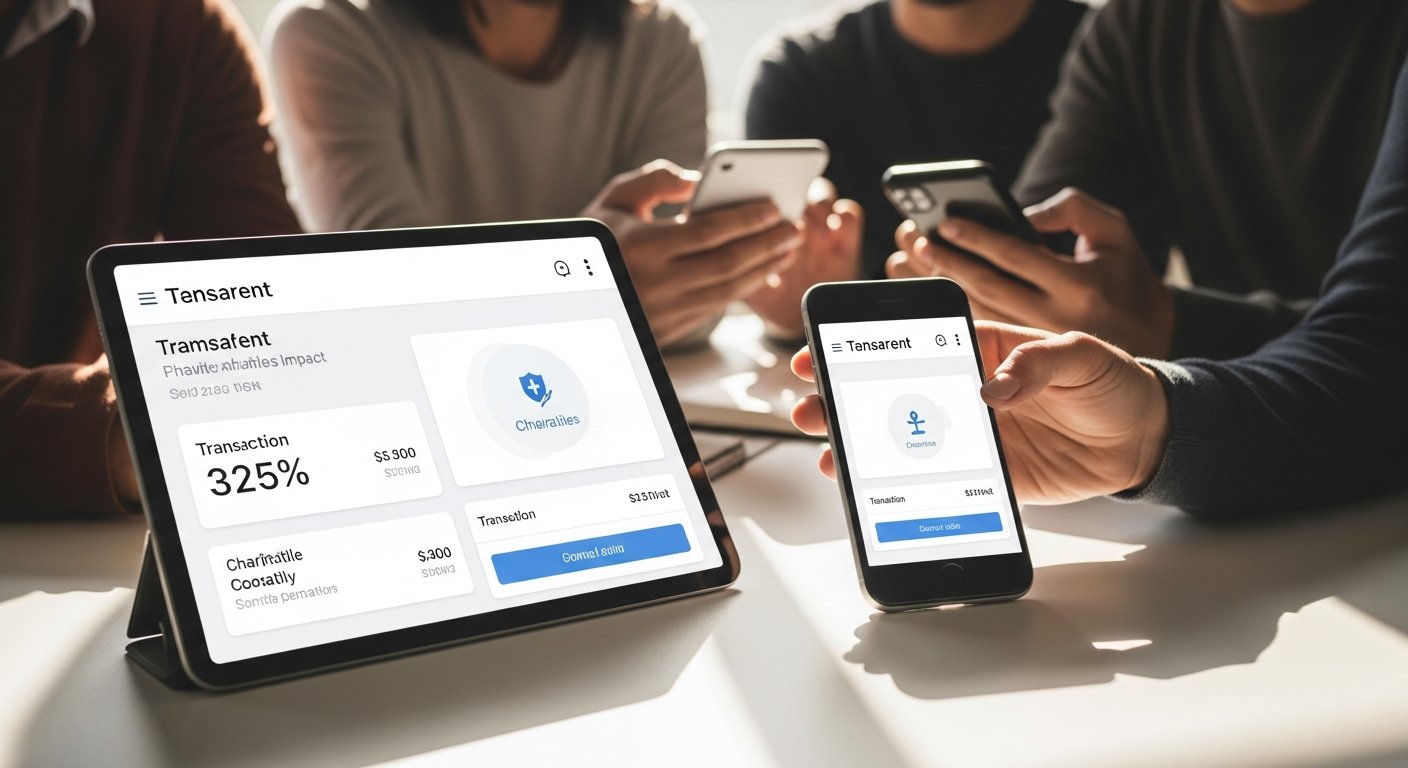
Discover how HelpCard Digital Donation Platform transforms charitable giving with transparent, cashless donations and controlled spending. Learn how donors track impact and recipients access essential aid securely.
Every day, someone in extreme poverty faces an impossible choice: buy medicine or buy food. Over 1.7 billion people worldwide live in conditions where this decision defines survival, yet the charitable systems meant to help them often operate in darkness. Donors transfer money through layers of intermediaries, hoping their contribution reaches someone in need, while recipients lose autonomy and dignity in the process. Traditional charity has a transparency problem that no amount of good intentions can solve.
HelpCard Digital Donation Platform breaks this pattern by eliminating the middleman and creating a direct, accountable connection between giver and receiver. Through a secure mobile app and partnerships with trusted payment processors like Stripe, Apple Pay, and Google Pay, every transaction is protected, traceable, and instantly delivered. The platform's controlled spending mechanism ensures funds go toward genuine needs—food, shelter, medicine—while maintaining recipient dignity through guardrails rather than restrictions. Discover how HelpCard is transforming charitable giving through technology and transparency.
This article walks you through the mechanics of HelpCard's controlled spending system, the mobile experience that makes giving frictionless, and the real costs involved. You'll understand why donors are choosing this platform and what limitations matter before you get started.
How HelpCard's Controlled Spending Mechanism Protects Both Donors and Recipients
The core innovation behind HelpCard rests on a simple principle: trust is built through structure, not surveillance. When you donate through the platform, your money doesn't sit in an account awaiting vague use. Instead, it loads onto a physical or digital HelpCard tied to an approved merchant network.
Approved merchant network ensures funds go toward essential items (food, shelter, pharmacy)
Recipients can use their HelpCard at grocery stores, pharmacies, housing assistance providers, and other essential service vendors. The platform curates this network carefully, ensuring every transaction supports genuine survival needs. A family facing food insecurity can walk into a participating grocery store and purchase what they need without bureaucratic delay. A patient requiring medication can access a pharmacy with dignity intact. This isn't charity as control—it's charity as enablement.
Cash withdrawal restrictions prevent misuse while maintaining recipient dignity
HelpCard prevents cash withdrawals entirely. This removes the temptation and opportunity for funds to be diverted toward non-essential purchases or substances. Simultaneously, it protects recipients from exploitation or theft. The restriction exists not to punish people experiencing poverty, but to honor the intent behind every donation and preserve the safety of vulnerable populations.
Real-time spending visibility allows donors to confirm funds are used appropriately
You don't have to wonder. After you donate, the transaction history shows exactly where and when your contribution was spent. A donor can see that their $50 was used at a local grocery store on Tuesday morning, or that their $100 supported pharmacy purchases for essential medications. This transparency transforms the act of giving from an act of faith into an act of verification.
Blockchain-style transparency creates an audit trail for every transaction
Each donation creates an immutable record. The platform maintains detailed logs showing the donor, recipient, amount, merchant, date, and items purchased (within privacy limits). This audit trail protects everyone involved—donors gain confidence, recipients demonstrate responsible use, and the platform itself maintains accountability to its mission.
Recipients retain autonomy within guardrails designed for responsible aid distribution
Controlled spending doesn't mean recipients become puppets. Within the approved merchant network, they choose what to buy, when to buy it, and from which vendors. A person experiencing homelessness can select which shelter program works with their schedule. A parent can choose between food options based on family preferences and dietary needs. The guardrails ensure responsible aid distribution while respecting human agency.
The Mobile App Experience: Scanning, Donating, and Tracking Impact in Real Time
Friction kills spontaneous generosity. A potential donor sees someone in need but doesn't carry cash, doesn't know the right charity, and the moment passes. HelpCard removes these barriers entirely.
iOS mobile app enables quick QR code scanning for instant donations
The HelpCard app (currently available for iOS) turns charitable giving into a two-second action. Recipients can display a unique QR code—printed on cards, posted on social media, or shared digitally. A donor opens the app, scans the code, and the recipient's profile appears instantly. All that stands between intention and impact is a single tap.
One-tap contribution process reduces friction for spontaneous giving
After scanning, the donor selects an amount and confirms payment through their preferred method—Stripe, Apple Pay, or Google Pay. No registration requirements. No lengthy forms. The funds transfer immediately to the recipient's HelpCard. Spontaneous compassion becomes instantaneous action.
Detailed transaction history provides donors with complete spending records
The app maintains a comprehensive record of every donation you've made and how it was spent. Scroll through your contribution history and watch your impact unfold. You see the dates, amounts, merchants, and categories of purchases. This isn't passive receipt of a tax-deductible donation—it's active witnessing of how your money changed someone's immediate circumstances.
Reward milestones unlock perks as donors contribute more to the community
HelpCard gamifies generosity responsibly. As you donate more, you unlock milestones and perks. These rewards recognize your commitment to accountable giving without turning charity into a transaction. The system incentivizes sustained engagement while keeping the focus on recipient benefit rather than donor recognition.
Push notifications keep donors informed about recipient updates and impact metrics
You remain connected to your impact after the transaction completes. Notifications alert you to recipient updates, community milestones, and platform news. This ongoing connection transforms one-time giving into sustained engagement with a cause and community.
Why the 1-2% Transaction Fee Matters (And Why It's Worth It)
Every donation incurs a 1-2% transaction fee. For a $100 donation, you contribute between $98-$99 to the recipient. This might sting initially—why should the vulnerable lose even a percentage to processing?
Stripe, Apple Pay, and Google Pay integration requires processing costs
HelpCard partners with leading payment processors specifically because they provide security and trust. These companies don't process transactions for free. Stripe charges interchange fees, Apple Pay requires authentication infrastructure, and Google Pay demands fraud protection systems. These aren't luxuries—they're necessities in secure digital transactions.
Fee structure remains transparent—donors always see exact deduction amounts
HelpCard doesn't hide fees in fine print or surprise you at checkout. The app displays the exact amount that will reach the recipient before you confirm the donation. You make an informed decision: "My $100 will deliver $99 to this person." Transparency allows donors to understand and accept the true cost of accountability.
HelpCard's 1-2% ensures 98%+ of donations reach recipients directly
Consider traditional nonprofit overhead. Administrative costs, fundraising expenses, staff salaries, and facility expenses often consume 20-40% of donations at conventional charities. HelpCard's 1-2% fee means over 98% of your contribution reaches the intended recipient. The math becomes obvious—controlled spending and digital processing are far more efficient than traditional nonprofit infrastructure.
Fee sustainability allows platform to scale and support more vulnerable populations
Fees aren't profits extracted from the poor. They fund the technology, security, partnerships, and operations that make accountable giving possible. As HelpCard scales, transaction fees generate resources to expand the approved merchant network, add customer support, enhance security, and reach more vulnerable populations. The fee structure enables growth that benefits everyone using the platform.
Start giving with confidence on HelpCard—where transparency meets impact.
Building Trust Through Transparent Charitable Giving
Trust cannot be manufactured through marketing alone. It emerges from consistent, verifiable behavior over time. HelpCard builds trust through structural transparency.
Complete visibility into how funds are allocated across recipient categories
The platform publishes aggregate data showing how donations flow across categories—food assistance, shelter support, pharmacy access, and others. You can see community-wide patterns: how much was donated this month toward emergency food, what percentage went to housing support. This macro-level transparency complements individual transaction visibility.
Partnership with established NGOs and trusted charities strengthens credibility
HelpCard doesn't operate in isolation. The platform partners with recognized nonprofits and NGOs, allowing trusted organizations to redirect resources toward long-term support while HelpCard handles immediate needs. These partnerships amplify credibility—established charities wouldn't associate with a platform lacking integrity.
Secure payment processing removes concerns about data breaches or fraud
Payment processors like Stripe maintain enterprise-grade security. Your payment information is encrypted, tokenized, and never stored on HelpCard servers. The platform itself focuses on transaction records while delegating payment security to specialists. This separation reduces attack surface and protects donor financial information.
Impact reporting shows donors exactly which communities benefited from their gifts
Beyond individual transactions, HelpCard reports on community-level impact. Which neighborhoods received the most assistance? Which vendors served the most recipients? How many people transitioned from homelessness to stable housing? Impact reporting demonstrates that the platform serves a genuine mission, not just process transactions.
Real-World Use Cases: Who Benefits Most from HelpCard's Platform
Theory matters, but impact lives in specifics.
Emergency food assistance for families facing sudden financial hardship
A job loss, unexpected medical expense, or family emergency can plunge working families into food insecurity overnight. HelpCard enables rapid, dignified assistance. Rather than navigating food bank bureaucracy, recipients can purchase groceries immediately through approved vendors. Donors see their contribution translate directly into meals on tables.
Shelter support for individuals transitioning out of homelessness
Exiting homelessness requires stable housing and basic supplies. HelpCard partners with shelter providers and housing assistance programs, enabling donors to support people during critical transition periods. A person can use their HelpCard for temporary shelter while applying for permanent housing, purchase bedding from approved retailers, or access storage for belongings. The controlled spending ensures funds support housing stability rather than enabling substance dependency.
Pharmacy access for patients unable to afford essential medications
Medication non-adherence due to cost creates cascading health crises. HelpCard connects patients with pharmacy partners, enabling instant access to prescriptions. A diabetic patient can refill insulin. An individual managing mental health conditions can access medications. Donors contribute directly to health stability without bureaucratic delays.
Micro-donations from corporate employees supporting local communities
Corporate giving programs often struggle with impact transparency. HelpCard enables employees to donate small amounts during lunch breaks—$5, $10, $20—and watch their contributions reach specific individuals in their community. Companies gain employee satisfaction data, communities receive immediate support, and recipients get dignity-preserving assistance.
Institutional giving where nonprofits need rapid, transparent fund deployment
Established nonprofits can use HelpCard as a rapid-response mechanism during crises. When disaster strikes, organizations can instantly provide HelpCards to affected populations rather than waiting for traditional fund distribution channels. Donors receive real-time visibility into impact. Recipients access support without delay.
The Future of Accountable Giving Starts Here
HelpCard Digital Donation Platform represents a fundamental shift in how we approach charitable giving. By combining transparent technology, controlled spending safeguards, and instant fund transfers, the platform addresses the core tension that has plagued traditional charity for decades. The 1-2% transaction fee is minimal compared to traditional nonprofit overhead, and the controlled spending mechanism maintains dignity while preventing misuse.
The global poverty crisis demands more than good intentions. It demands systems that respect recipient autonomy, protect donor intent, and create verifiable impact. HelpCard delivers all three through technology designed specifically for accountability.
If you're tired of wondering whether your donations create impact, HelpCard deserves your attention. The platform proves that modern giving doesn't require sacrifice of transparency or speed. Start your journey toward accountable giving—scan a QR code, make your first donation, and witness transparency in action today.