
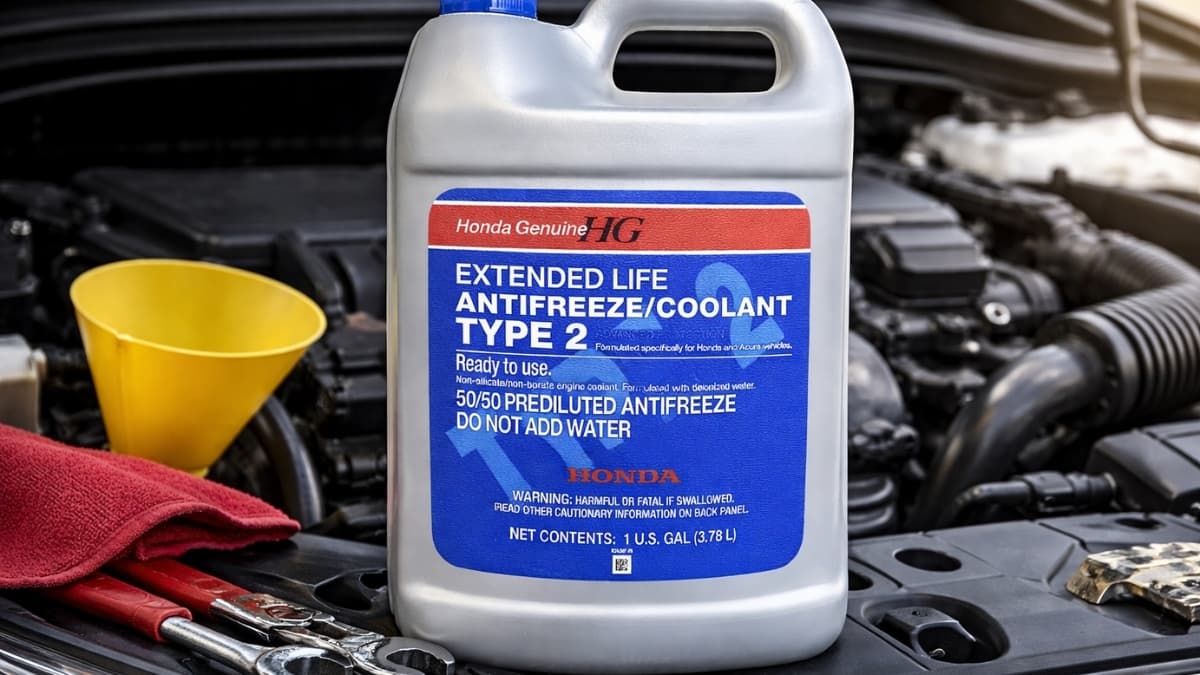
Honda Genuine Extended Life Antifreeze/Coolant Type 2 guide with real specs, pricing, compatibility tips, and maintenance insights for Honda and Acura owners.
When checking your fluid levels before a long drive, choosing the correct coolant can make all the difference in engine performance and longevity.
Honda Genuine Extended Life Antifreeze/Coolant Type 2 provides dependable protection across a wide range of conditions, safeguarding your engine from freezing, boiling, and corrosion.
This factory-approved fluid is engineered to work with Honda and Acura cooling systems, giving you confidence in heat transfer and component protection every time you open the hood.
Here’s a detailed, user-friendly guide that breaks down what this OEM coolant offers and how it compares to other options.
What Is Honda Genuine Extended Life Antifreeze/Coolant Type 2?
Honda Genuine Extended Life Antifreeze/Coolant Type 2 is the factory-specified cooling fluid for many modern Honda and Acura vehicles.
It comes pre-mixed in a 50/50 blend, so installation is straightforward with no additional dilution required.
This blue coolant is formulated specifically for the metallurgy of Honda engines, offering temperature protection from cold starts to hot highway use.
It is commonly referred to in part catalogs as Type 2 coolant and is easily distinguishable from aftermarket options.
This OEM Honda coolant Honda coolant Type 2 replaces older part numbers such as #08CLA-P99-0F0A8 and OL999-9011, unifying coolant specs for a variety of models.
It is engineered to provide excellent protection against freezing, overheating, and internal corrosion — a critical aspect for maintaining long-term system integrity.
Why Use OEM Honda Extended Life Coolant?
Designed for Honda and Acura Engines
When comparing coolant options, Honda extended life coolant stands apart because it’s tailored to the specific needs of Honda cooling systems.
Generic coolants may have additives that don’t interact well with aluminum components found in Honda radiators, cylinder heads, and water pumps.
OEM fluids avoid problematic inhibitors such as silicates, which can form deposits and impair heat transfer over time.
Pre-Mixed for Convenience
Unlike concentrate coolants that require careful mixing, this Honda coolant 50/50 pre-mixed solution is ready to pour. That eliminates guesswork and helps ensure proper performance during installation.
It’s especially helpful if you’re performing your own maintenance at home and want to avoid dilution errors.
Corrosion and Scale Protection
The extended life formulation includes corrosion inhibitors that protect both metallic and non-metallic components in the cooling system. Over time, deposits and corrosion can restrict flow and reduce heat transfer efficiency.
Keeping the system clean and protected helps reduce risk of overheating and potential engine damage.
Technical Specifications and Performance
Honda’s coolant formulation achieves its protective qualities through a specific balance of ethylene glycol and deionized water. This Honda radiator fluid is engineered to handle typical driving conditions in diverse climates.
Key performance parameters include:
- Freeze protection down to approximately -34°F
- Boil protection up to about 228°F when under cap pressure
- Safe for aluminum components
- Pre-diluted 50/50 blend for consistent performance
These robust numbers mean the coolant performs well in extreme weather — from sub-zero winter start-ups to high-temperature summer traffic.
The extended life design also supports long service intervals, helping reduce maintenance frequency.
Vehicle Compatibility and Fitment
This coolant fits a wide range of Honda and Acura cars, trucks, and SUVs. Models built in the last decade typically specify this fluid in the owner’s manual.
Still, it’s important to check your vehicle’s documentation before purchasing. Some newer Hondas may call for a Type 3 coolant, so using the right spec is key to avoiding compatibility issues.
One important rule: never mix Honda Type 2 with other coolant chemistries. Combining different inhibitor packages can reduce effectiveness or cause reactions that accelerate corrosion.
Stick to the recommended fluid type for your application.
For vehicles under warranty, using the specified coolant helps maintain compliance with service requirements.
Following factory recommendations can protect your coverage and help avoid disputes over coolant-related failures.
Maintenance Schedule and Best Practices
Honda’s extended service intervals are one of the strong points of using this coolant. The initial change interval is often up to 10 years or 120,000 miles — significantly longer than many aftermarket coolants.
Many conventional coolants require service at much shorter intervals (often every 2–5 years), so the extended schedule can reduce both labor and fluid costs over time.
Best practices for coolant maintenance:
- Flush the cooling system completely before installing fresh coolant.
- Inspect hoses, clamps, and the radiator cap for wear.
- Check for leaks during routine oil changes.
- Store unused coolant sealed and out of reach of children and pets.
- Dispose of used coolant at an approved facility.
A full system flush is preferable to topping up old fluid.
Leaves behind fewer contaminants, helps prevent cross-contamination with incompatible chemistries, and ensures that your fresh coolant operates in the cleanest environment possible.
Cost and Where to Buy
On sites that carry OEM Honda parts, a 1-gallon container of Honda Genuine Extended Life Antifreeze/Coolant Type 2 is typically priced around $17–$22 before tax and shipping.
Pricing may vary slightly between sellers and platforms. On Amazon US, equivalent listings for this coolant generally fall into this range as well, depending on seller and availability.
Retailers that stock this fluid include:
- Authorized Honda dealerships
- Major automotive parts stores
- Online marketplaces like Amazon US
- Specialty performance retailers
Most Honda cooling systems require one gallon for a full fill or service. That means a single container will cover most routine flush and fill procedures.
Shopping around for reputable sellers helps avoid inflated prices and ensures you receive genuine OEM fluid rather than aftermarket substitutes.
Common Questions and Objections
“Is this coolant worth the premium?”
Compared with generic coolants, OEM fluids often cost a bit more. Based on typical pricing, the difference can be a few dollars per gallon.
Many technicians argue that the upfront cost is offset by fewer coolant changes and reduced risk of corrosion issues.
Over a typical ownership span, that can translate to savings in maintenance and repair costs.
“Can I use a universal coolant instead?”
Universal coolants claim broad compatibility, but their inhibitor packages may not match Honda’s engineering requirements.
In practice, universal fluids can shorten service life or interact poorly with aluminum components.
For Honda antifreeze coolant review posts on forums, many owners report better peace of mind and fewer system problems when sticking with OEM fluid.
“What if my vehicle calls for Type 3?”
Always follow the specific coolant type listed in your owner’s manual. Using Type 2 in a system that requires Type 3 could degrade performance and potentially affect warranty coverage.
Real-World Insights and Case Notes
Many Honda owners note a marked difference in coolant longevity when switching from generic to OEM fluids.
In community forums, drivers with over 100,000 miles report original factory coolant still performing well at first scheduled service intervals, illustrating the value of extended life formulations.
Independent shops also report fewer corrosion complaints on vehicles maintained with factory-specified coolant versus mixed or aftermarket fluids.
According to industry data on coolant performance, quality pre-mixed formulations tend to offer more consistent freeze and boil protection over time.
Coolants using advanced inhibitor technologies, like the formulation in this Honda product, can help reduce the rate of scale buildup — a common concern in older cooling systems.
For home mechanics handling routine maintenance, using the correct coolant reduces the guesswork and future troubleshooting. That can save time on diagnostics and help avoid unnecessary part replacements down the road.
Final Thoughts
Choosing Honda Genuine Extended Life Antifreeze/Coolant Type 2 helps keep your cooling system performing as designed.
Its engineered formulation works with Honda and Acura engines to provide long-lasting protection, strong temperature resistance, and corrosion control suited to modern automotive needs.
The pre-mixed convenience and extended change intervals simplify maintenance, and many owners find it delivers reliable performance year after year.
If you’re maintaining a Honda or Acura vehicle and want to support optimal cooling system health, exploring OEM coolant options on Amazon US is a practical next step.
With competitive pricing and broad availability online, you can secure the right fluid for your vehicle and move forward with confidence.