
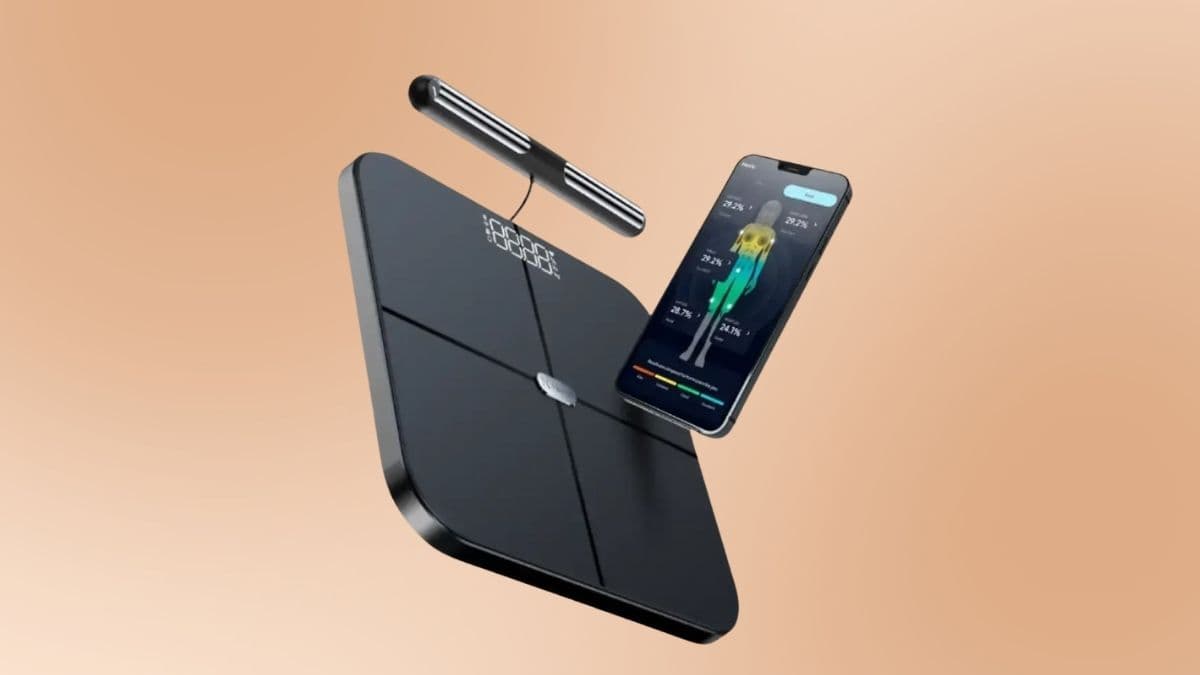
Comparing the Hume Body Pod with other smart scales? See which option gives you better body composition detail, clearer health insights, and more useful guidance for your wellness goals.
Smart scales are no longer just weight trackers. You can now get body fat estimates, muscle metrics, and trend tracking in seconds. But the real difference across devices is not the number of metrics. It is how accurate those metrics are, and whether the app helps you understand what to do next.
If you want deeper body composition insight, the Hume Body Pod stands out as a more advanced option than most mainstream smart scales. Still, that does not automatically make it the best choice for you. Your goals, budget, and expectations for accuracy should drive the decision.
The Evolution of Body Composition Tracking
Most smart scales started with a simple promise: step on, sync, and track weight.
Now, many models offer body fat percentage, BMI, water percentage, and basic muscle estimates. That shift reflects what many people want today: more context than weight alone.
But more data does not always mean better data. Standard consumer scales often rely on single-frequency bioelectrical impedance analysis (BIA). Your readings can swing based on hydration, timing, recent meals, and recovery status.
If you do not know how to interpret those fluctuations, the numbers can distract you instead of helping you.
How the Hume Body Pod Works
The Hume Body Pod uses multi-frequency BIA, which delivers more consistent and detailed readings than the single-frequency systems found in most smart scales. By sending multiple signals through the body, it improves tissue assessment across varying conditions.
A key advantage is its ability to distinguish between visceral fat and subcutaneous fat. This matters because visceral fat is closely linked to metabolic risk, while many smart scales only provide a general body fat estimate.
The Pod also integrates with the Hume Health ecosystem, placing each scan into a broader context through trend analysis and app-based interpretation. Adjustments for factors like hydration and inflammation help reduce common BIA-related fluctuations.
Hume vs. Other Smart Scales: What Actually Changes for You
You will notice differences in three main areas: depth of metrics, consistency, and guidance.
What you typically get with most smart scales
- Weight and BMI
- Body fat percentage estimate
- Basic muscle mass estimate
- Water percentage estimate
- App trend charts that show change over time
What the Hume Body Pod emphasizes
- Visceral fat insight, not just total body fat
- Muscle quality signals, not only muscle quantity
- Metabolic age-style context that is easier to understand at a glance
- A system built around interpretation, not just reporting
If you are choosing between Hume and a typical smart scale, ask yourself one question: do you want a logbook, or do you want a system that tries to explain the “why” behind the change?
Beyond Metrics: How Useful the Insights Feel Day to Day
With many smart scales, you get numbers that look precise but behave inconsistently. You might see body fat jump up overnight or muscle mass drop after a hard workout. That can happen even when your body composition has not meaningfully changed.
The Hume approach is built to help you make sense of those shifts. If your readings change during high-stress or poor-recovery periods, the system is designed to frame that data within a broader context. That matters because you do not just want measurement. You want interpretation that helps you respond calmly and consistently.
You may also find value if you are trying to preserve muscle during weight loss. Seeing changes in composition can keep you motivated when scale weight stalls. For you, that can be the difference between staying consistent and quitting early.
Integration With Your Health Tracking Setup
Most smart scales connect to Apple Health or Google Fit, but the experience varies. Some devices mainly export weight and a few basics. Others provide fuller syncing, but still leave you to interpret what the numbers mean.
The Hume system is more “ecosystem-first.” If you like having your sleep, recovery, and activity inform how you read body composition, you may prefer that style. If you want a simple scale that quietly logs your weight and fat estimate, a mainstream competitor may be enough.
Who Should Choose the Hume Body Pod?
You are more likely to benefit from Hume if you care about precision and coaching-style interpretation.
Hume may be a strong fit if
- You are actively recomposing (losing fat while maintaining or gaining muscle)
- You want more insight into visceral fat trends
- You feel frustrated by inconsistent smart scale readings
- You want guidance that helps you respond to changes, not just observe them
A typical smart scale may be enough if
- You mainly want weight tracking and simple trend lines
- You do not need detailed composition categories
- You prefer a lower-cost device with basic app features
Making Your Decision
Start with your use case. If you will not act on detailed metrics, you may not need a premium system. But if you are using body composition to guide training, nutrition, and recovery choices, accuracy and interpretation matter more.
Your best choice is the device that supports consistent behavior. If a basic scale keeps you steady and focused, it is doing its job. If you need deeper insight, clearer context, and more advanced composition tracking, the Hume Body Pod is built for that role.
The question is not which scale has more features. It is which one gives you information you will actually use.