
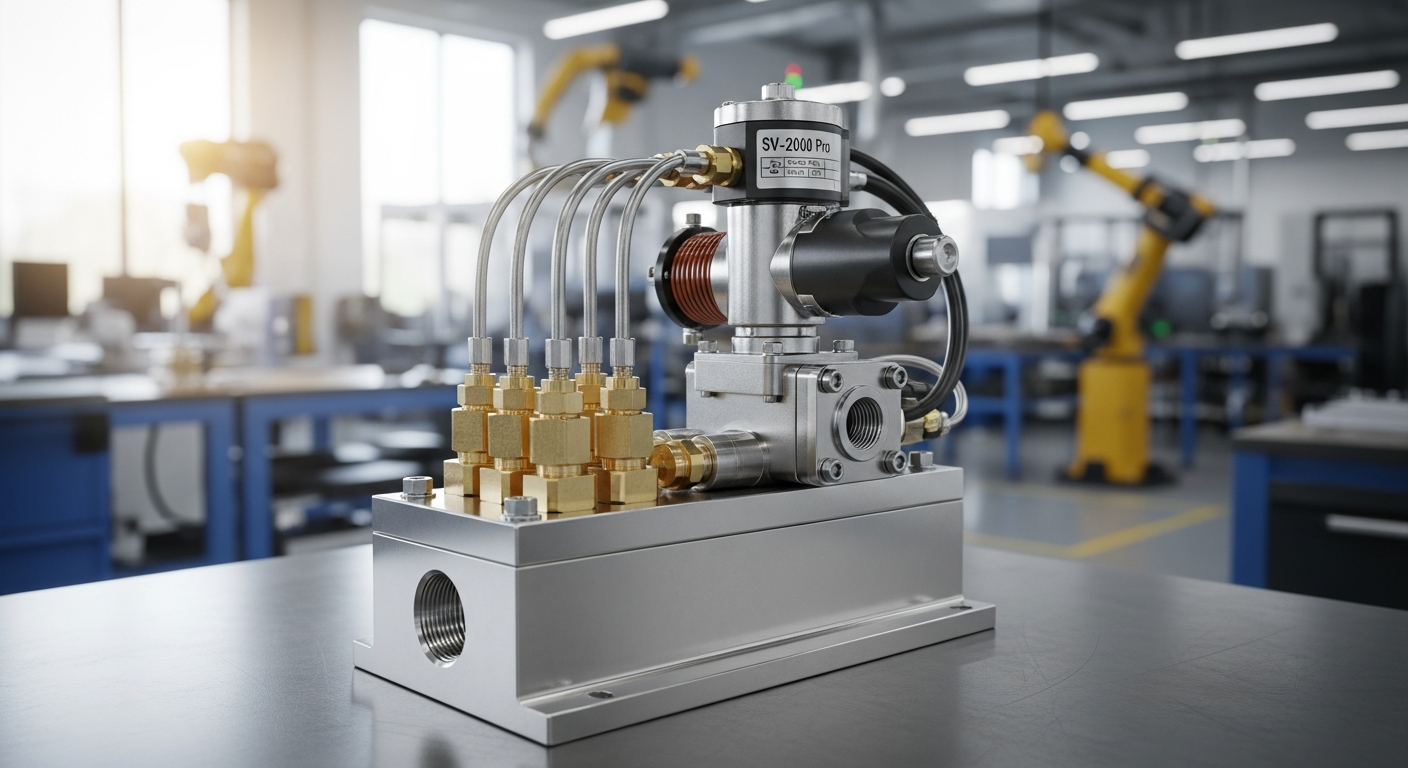
Discover how Tameson industrial solenoid valves deliver millisecond-speed control for automated systems. Explore valve types, specifications, and real-world applications across manufacturing and beyond.
Milliseconds matter in modern manufacturing. When a single delayed valve response can halt an entire production line or compromise product quality, the margin for error shrinks to nearly zero. This is where industrial solenoid valves become the unsung heroes of automation—and Tameson's reputation in this space speaks volumes.
Tameson built its foundation on fluid control components, specifically solenoid valves, starting as a specialized distributor focused on these critical devices. Over time, the company evolved into a comprehensive industrial supplier, yet solenoid valves remain their flagship category. Their expertise stems from decades of understanding what engineers and manufacturers actually need: speed, reliability, and precision in every valve they specify.
The Speed Advantage—Why Milliseconds Transform Manufacturing Outcomes
Industrial production environments operate on razor-thin schedules. A valve that responds in 50 milliseconds versus one that takes 200 milliseconds isn't just different—it fundamentally changes what your system can accomplish. Tameson's solenoid valves deliver near-instantaneous switching capability that enables synchronized multi-step processes across automated production floors.
The rapid response times (typically 5-50ms depending on the valve type) are critical for high-speed production environments where timing synchronization directly influences product quality and throughput. Precision opening and closing mechanisms eliminate flow overshoot and system shock, preventing the pressure spikes and flow instabilities that degrade component lifespan and product consistency.
Real-world impact manifests across multiple dimensions: reduced cycle times that compound throughout each shift, improved product consistency through precise fluid control, and enhanced safety in automated assembly operations where predictable valve behavior prevents accidents. When you operate hundreds of cycles per hour, the cumulative effect of millisecond improvements translates into measurable competitive advantage.
Decoding Solenoid Valve Types for Your Specific Application
Not all solenoid valves serve identical purposes. Understanding the distinctions between valve architectures prevents expensive specification errors and ensures your system performs as intended.
2-Way Valves: Foundational On/Off Control
Two-way valves provide basic on/off control for simple fluid blocking and release scenarios. These valves work with a single inlet and outlet, making them ideal for applications where you simply need to start or stop flow. Think of them as the fundamental building block—reliable, straightforward, and cost-effective for straightforward control requirements.
3-Way Valves: Directional Flow Management
Three-way valves enable directional flow control by routing media between multiple ports. This architecture allows you to redirect fluid paths without system complexity, making 3-way valves essential for applications requiring flow reversal or multi-directional control without adding external plumbing.
Proportional Valves: Variable Output Control
Proportional valves deliver fine-tuned flow adjustment for applications requiring variable output rather than binary on/off states. These valves accept analog control signals, allowing your system to modulate flow rates smoothly across a range rather than simply opening or closing fully.
Pneumatic Solenoid Valves: Compressed Air Optimization
Pneumatic solenoid valves are optimized for compressed air systems in automation and control circuits. Their design reflects the specific characteristics of pneumatic media, ensuring reliable performance in the pressurized air environments common across manufacturing facilities.
Coaxial Solenoid Valves: High-Pressure Capability
Coaxial valve designs handle extreme pressure environments, rated up to 64 bar for demanding industrial applications. Their compact architecture and reinforced construction make them indispensable in high-pressure hydraulic systems where standard valves would fail.
Hydraulic Solenoid Valves: Heavy-Duty Machinery Control
Hydraulic solenoid valves are purpose-built for the intense demands of heavy-duty machinery, construction equipment, and vehicle braking systems. These valves operate in high-pressure hydraulic environments where precision and durability determine operational success.
Material Specifications and Connection Standards That Impact Performance and Longevity
The materials and connection methods you select influence not only initial performance but long-term reliability and system compatibility. These specifications deserve careful attention.
Brass Construction for Standard Applications
Brass offers a cost-effective option for standard applications with moderate pressure requirements. This traditional material balances affordability with adequate durability for typical industrial environments.
Stainless Steel for Demanding Environments
Stainless steel variants deliver superior corrosion resistance, making them essential for food processing, pharmaceutical, and marine environments where standard materials would degrade rapidly. The investment in stainless steel pays dividends through extended service life and contamination prevention.
Plastic Body Options for Specialized Requirements
Plastic body valves provide lightweight construction and chemical resistance for specialized fluid media and cost-sensitive applications. These materials expand the valve's suitability to applications where metallic components would corrode or contaminate fluid systems.
Connection Types: Threaded, Flanged, and Push-In
Threaded ports work with traditional piping systems, flanged designs enable permanent installations with bolted connections, and push-in connectors facilitate rapid assembly without tools. Your application's integration requirements should guide this specification.
Media Compatibility and System Integrity
Ensuring valve materials won't degrade or contaminate your fluid system prevents failures that ripple throughout your entire operation. Brass valves interact differently with certain hydraulic fluids than stainless steel variants, so material selection extends beyond mere construction preference.
Real-World Applications Where Tameson Solenoid Valves Deliver Results
Understanding how solenoid valves solve problems across industries clarifies their value in your own operations.
Automated assembly lines depend on synchronized multi-station control with zero tolerance for timing drift. Solenoid valves provide the millisecond-precise coordination that keeps complex production sequences operating flawlessly. Medical device manufacturing demands sterile fluid handling with precision dosing and contamination prevention—requirements that Tameson's specialized valve selections address directly.
Irrigation and agricultural systems rely on solenoid valves for reliable water distribution with minimal maintenance requirements. The robustness of these valves ensures consistent performance across seasons and varying environmental conditions. Fuel injection systems require millisecond-precise fuel delivery for engine performance and emissions control, with solenoid valve response times directly influencing combustion efficiency and environmental compliance.
Inkjet printing technology depends on micro-droplet ejection control to enable high-resolution output, where valve precision determines print quality and reliability. Fire suppression systems demand rapid valve actuation for emergency response and life safety—applications where reliability isn't negotiable and milliseconds determine outcomes.
Building a Complete Fluid Control System with Tameson Accessories and Support
Solenoid valves don't operate in isolation. A complete fluid control solution incorporates supporting components and expert guidance.
Replacement coils maintain electromagnetic performance and extend valve lifespan, ensuring your investment continues delivering value across years of operation. Connectors and wiring solutions establish reliable electrical integration with control systems, preventing the communication failures that disable automated processes.
Timer modules add programmable sequencing without requiring complex external controllers, simplifying system architecture while expanding functional capability. Tameson's technical documentation provides pressure ratings, flow curves, and compatibility specifications that inform intelligent selection decisions. Beyond catalogs, Tameson's expert support team helps engineers navigate complex specification decisions, reducing selection time and preventing costly mistakes.
Navigating Specifications and Price Points to Match Your Budget and Requirements
Technical specifications can overwhelm the unprepared, yet understanding these parameters proves essential for informed purchasing decisions.
Pressure ratings fundamentally impact valve selection and system design—operating a valve beyond its rated pressure causes failure, while oversizing for pressure capacity wastes budget and adds unnecessary complexity. Flow rate specifications determine whether your chosen valve can handle your application's volume demands without creating bottlenecks that degrade system performance.
Duty cycle ratings distinguish between continuous operation and intermittent cycling, with implications for longevity and maintenance intervals. Entry-level Tameson solenoid valve models start under $100 for basic applications, while premium high-pressure variants exceed $300 for specialized industrial demands.
Total cost of ownership extends beyond the initial purchase price. Reliability, maintenance needs, and system downtime risk compound across your operational timeline. A valve costing slightly more upfront but delivering superior reliability and longer service intervals often represents superior value than a bargain option that fails frequently.
Overcoming Technical Selection Challenges and Common Implementation Pitfalls
Solenoid valve selection requires more than browsing a product catalog. The complexity factor exists because applications vary dramatically in their specific requirements, and mismatches between valve characteristics and application demands cause expensive failures.
Pressure drop calculations ensure your chosen valve won't bottleneck system performance by restricting flow excessively. Coil voltage compatibility demands matching electromagnetic specifications to your control system infrastructure—a 24V solenoid won't operate on a 110V power supply. Response time verification confirms actual switching speeds meet your process timing requirements, preventing the subtle performance degradation that accumulates when valve response doesn't align with system sequencing.
Environmental sealing prevents contamination and ensures reliability in harsh industrial settings. Valves operating in dusty, wet, or temperature-extreme environments require protective measures that standard indoor applications don't demand.
Moving Forward: Choosing Solenoid Valves That Accelerate Your Automation Goals
Tameson's solenoid valves represent far more than commodity components—they're precision instruments engineered to solve specific automation challenges with speed and reliability that directly impact your bottom line. From the rapid-fire switching demands of assembly line synchronization to the high-pressure demands of hydraulic machinery, their catalog addresses the full spectrum of industrial fluid control needs.
The key to successful implementation lies in matching the right valve type, material, and specification to your exact application requirements. Whether you're optimizing an existing system or designing a new automation solution from scratch, the technical depth available through Tameson's product range and expert support removes the guesswork from selection.
Your next step is straightforward: audit your current fluid control systems for bottlenecks or reliability issues, then consult Tameson's technical resources to identify whether a valve upgrade or replacement could streamline operations. The milliseconds you save compound across every cycle, every shift, and every production run—transforming incremental efficiency gains into measurable competitive advantage.