
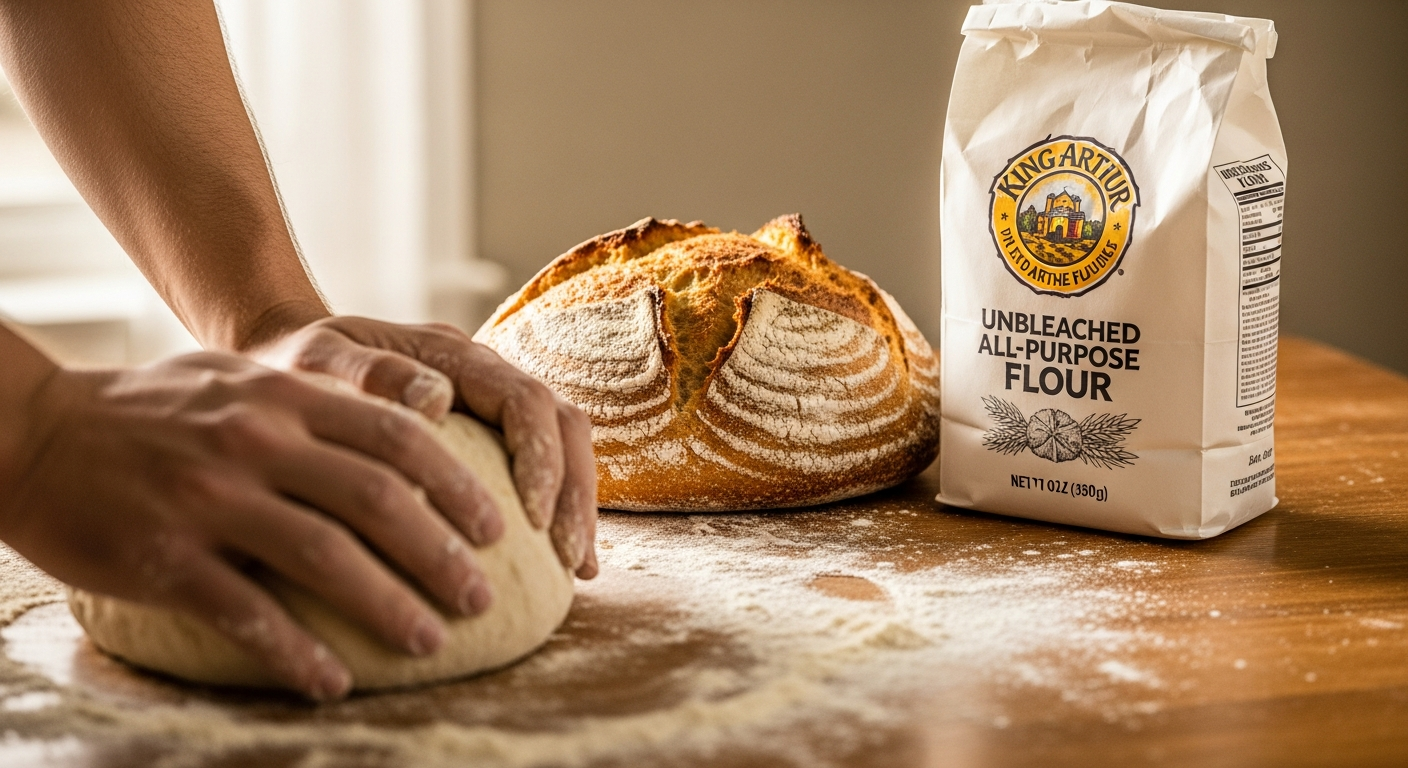
Discover why King Arthur Unbleached All-Purpose Flour is the preferred choice for artisan bread bakers. Learn about its protein content, sourcing, and how it delivers superior crust and crumb structure.
Over 85% of award-winning bread bakers credit their flour choice as the single most critical factor in achieving that coveted golden crust and open crumb structure. This isn't hyperbole—the flour you select fundamentally shapes every stage of dough development, from initial mixing through final baking. King Arthur Unbleached All-Purpose Flour has earned its reputation through decades of consistent performance in both commercial bakeries and home kitchens, becoming the benchmark against which many bakers measure all other options.
Unlike chemically bleached competitors, this flour retains its natural properties—delivering strength without compromise. The sourcing story matters too: milled from 100% USA wheat and Non-GMO Project Verified, it appeals to bakers who care about transparency and ingredient integrity. Discover why King Arthur Unbleached All-Purpose Flour has become the choice of serious home bakers everywhere.
In this guide, you'll learn about its unique protein profile, how it compares to commodity alternatives, the sourcing story behind it, and practical techniques for adjusting your recipes to maximize its potential. Whether you're scaling up from casual baking or perfecting your sourdough technique, this flour deserves a place in your pantry.
The Protein Advantage: Why Higher Protein Content Matters for Bread Structure
Building Stronger Gluten Networks
High protein content—approximately 12.7%—creates stronger gluten networks compared to standard all-purpose flours. This elevated protein level gives bakers the mechanical advantage they need when developing dough by hand or machine. The extra protein strands interlock more readily, forming the elastic matrix that traps fermentation gases and builds structure from the mixing stage onward.
Impact on Rise, Elasticity, and Loaf Volume
Protein development directly impacts rise, elasticity, and final loaf volume in yeast breads. When your dough contains more protein, the gluten can stretch further before tearing, accommodating greater gas expansion during bulk fermentation and final proofing. Bakers report noticeably higher oven spring—that dramatic last burst of expansion when heat sets the crust—when working with King Arthur flour compared to lower-protein alternatives.
Balancing Strength with Versatility
The balance between protein strength and versatility allows for both robust artisan breads and tender pastries. This dual capability sets King Arthur apart from specialized bread flours, which often produce dense, tough cakes. Home bakers appreciate the ability to use a single flour for crusty sourdough on Monday and delicate chocolate chip cookies on Wednesday without sacrificing results in either application.
Unbleached Flour and Natural Milling: Understanding the Sourcing Difference
Retaining Natural Flavor Compounds
Unbleached flour retains natural carotenoid pigments that develop flavor during fermentation. These compounds, which chemical bleaching would destroy, contribute subtle complexity to your finished bread. The difference becomes apparent in extended fermentation schedules, where the flour's natural enzymatic activity gradually deepens the flavor profile beyond what bleached alternatives can achieve.
Preserving Enzymatic Activity
Chemical-free processing preserves enzyme activity, supporting better dough development and browning. Bleached flours undergo oxidation that can damage some of these beneficial enzymes, reducing the flour's ability to support fermentation and crust development. With King Arthur's unbleached approach, those enzymes remain functional, helping drive consistent fermentation speed and superior golden-brown color development.
Sourcing Transparency and Quality Assurance
100% USA wheat sourcing and Non-GMO Project Verification appeal to quality-conscious bakers. Knowing exactly where your flour originates provides both peace of mind and consistency—wheat grown in consistent climates and soil conditions produces more predictable baking results. The Non-GMO verification adds another layer of transparency for bakers who prioritize ingredient sourcing.
Hydration Adjustments: Mastering King Arthur's Thirsty Reputation
Why King Arthur Flour Absorbs More Water
Understanding why King Arthur flour absorbs more water than commodity brands—the "thirsty factor"—helps prevent frustration when converting recipes. The higher protein content and the preservation of natural bran particles both contribute to increased water absorption. Where a recipe written for standard all-purpose flour might call for 60% hydration, the same dough made with King Arthur often needs 65% or higher to achieve the proper consistency.
Converting Recipes from Other Flour Brands
Practical hydration adjustment strategies for converting recipes from other flour brands start with small increments. Add an extra 2-3% water initially, mix thoroughly, and assess the dough after 10 minutes of rest. The dough should feel slightly tacky but not sticky—you should be able to handle it without excessive flour dusting. Some bakers keep detailed notes comparing their favorite recipes side by side, documenting the exact hydration percentages needed for each flour brand.
Optimal Water Ratios for Different Bread Types
How to identify optimal water ratios for different bread types—lean doughs versus enriched breads—requires understanding the role of fats and eggs. Lean doughs like ciabatta and focaccia tend to need higher hydration levels to achieve open crumb structure. Enriched doughs like brioche, which contain butter and eggs, already have fat distributing throughout the dough, so they may not require the same hydration boost. Start your flour comparison today and find the perfect hydration ratio for your recipes.
Real-World Performance: What Artisan Bakers Report
Consistent Rise and Predictable Fermentation
Consistent rise and predictable fermentation timelines across multiple baking sessions emerge as the most frequently cited advantage among experienced bakers. Rather than adjusting fermentation time by 15-20 minutes because the flour batch behaves differently, bakers working with King Arthur report remarkable consistency. This predictability becomes invaluable when you're managing multiple loaves or maintaining a regular baking schedule.
Superior Crust Development and Color
Superior crust development and color without chemical additives or dough conditioners reflects the flour's natural enzymatic power. The golden-brown crust that develops on King Arthur loaves owes nothing to bleach or conditioners—it's purely the result of the flour's natural sugars reacting with heat during the Maillard reaction. Professional bakers note that they can achieve the same visual results with King Arthur that they previously needed additives to accomplish.
Crumb Structure Feedback from Artisan Applications
Crumb structure feedback from bakers working with sourdough, ciabatta, and whole grain blends highlights the flour's adaptability. Sourdough bakers praise the open, irregular crumb structure with good chew. Ciabatta makers appreciate the flour's ability to support high-hydration, open-structured dough. Bakers experimenting with whole grain blends report that King Arthur's strength allows them to incorporate 20-30% whole grains while still achieving excellent rise and structure.
Building Your Bread Recipes Around King Arthur Flour
Adjusting Hydration Percentages
Adjusting hydration percentages when converting from other flour brands to King Arthur requires a systematic approach. Start by reviewing your original recipe's hydration calculation: divide the water weight by the flour weight and multiply by 100. Then increase that percentage by 3-5 points and mix a test batch. Keep records of these experiments so you develop a personal reference guide for your favorite bread styles.
Fermentation Timing Modifications
Fermentation timing modifications due to the flour's enzymatic activity and protein strength may mean slightly shorter bulk fermentation periods, particularly during warmer months. The flour's natural enzymes work efficiently, breaking down starches and proteins at a faster rate than some commodity flours. Some bakers find they need to reduce bulk fermentation by 15-20 minutes to prevent overproofing, while others extend final proof slightly to build additional strength before scoring.
Salt and Yeast Ratios
Salt and yeast ratios that complement the flour's natural flavor development should acknowledge the flour's already-robust enzymatic profile. You don't necessarily need more yeast to achieve good fermentation. In fact, some bakers reduce yeast quantities by 10-15% and extend cold retard periods to develop deeper flavor without the risk of overproofing. Salt quantities can remain standard, but applying it at the typical point in mixing (after initial autolyse) ensures proper gluten development without inhibiting fermentation.
The Value Proposition: Investment vs. Results
Price Comparison and Bulk Options
Price comparison across retailers and bulk purchasing options for regular bakers shows that King Arthur typically ranges from $4 to $7 per 5-pound bag, depending on your location and retailer. Purchasing larger quantities or through subscription services sometimes yields modest discounts. For bakers producing bread weekly, buying multiple bags at once to take advantage of sales becomes a practical strategy.
Cost Per Loaf Analysis
Cost per loaf analysis when accounting for improved success rates and reduced waste reveals the true value. If standard flour costs $0.40 per pound and King Arthur costs $0.80 per pound, a single loaf using 500 grams of flour represents an ingredient cost difference of roughly $0.20-$0.25. However, if that King Arthur loaf turns out successfully 95% of the time while your previous flour succeeded 75% of the time, the improved reliability translates to fewer failed batches and less wasted flour, sugar, salt, water, and time.
Quality Consistency Benefits
Quality consistency that reduces troubleshooting time and failed batches adds value beyond the per-pound price. When you use consistent flour, your attention shifts from diagnosing flour-related problems to refining technique and timing. This accelerates your learning curve and means you spend more time creating successful breads and less time experimenting with variables you can't control.
Beyond Basic Bread: Exploring King Arthur's Versatility
Performance in Enriched Doughs
Performance in enriched doughs—brioche, challah, cinnamon rolls—challenges the assumption that high-protein flour is bread-only. The protein strength actually benefits enriched doughs by supporting the weight of butter and eggs without collapsing. Bakers report that King Arthur creates brioche with superior structure and a finer crumb than lower-protein flours, where the enrichment can sometimes create a slightly greasy texture.
Tender Cake and Cookie Results
Tender cake and cookie results that defy expectations demonstrate King Arthur's true all-purpose nature. The flour's milling creates fine particles despite its higher protein content, allowing cakes to achieve desirable tenderness. Cookie doughs mixed with King Arthur spread appropriately without running excessively, producing edges with good chew and centers with tender crumb.
Blending Strategies with Specialty Flours
Blending strategies—combining King Arthur with specialty flours for specific applications—unlock additional possibilities. Mix King Arthur with rye flour for hearty, flavorful bread that rises predictably. Combine it with whole wheat flour at a 70-30 ratio to achieve good structure while introducing nuttier flavor. For sourdough with added whole grains, use King Arthur as your base flour and trust its strength to carry the dough despite the added fiber.
Your Artisan Bread Journey Starts with the Right Flour
The path to consistently excellent bread isn't complicated—it begins with selecting an ingredient you can trust. King Arthur Unbleached All-Purpose Flour delivers the protein strength, natural enzymatic activity, and sourcing transparency that serious bakers demand. Yes, you'll need to adjust your hydration and fermentation timing. Yes, it costs more than commodity alternatives. But the moment you pull a perfectly browned, open-crumbed loaf from your oven, you'll understand why professional bakers have championed this flour for generations.
Run a side-by-side comparison in your own kitchen and document the differences in dough handling, fermentation speed, crust color, and crumb structure. For anyone serious about bread—whether you're a weekend hobbyist or building toward a home-based baking business—King Arthur Unbleached All-Purpose Flour belongs on your ingredient list. Order King Arthur Unbleached All-Purpose Flour now and transform your baking results.