
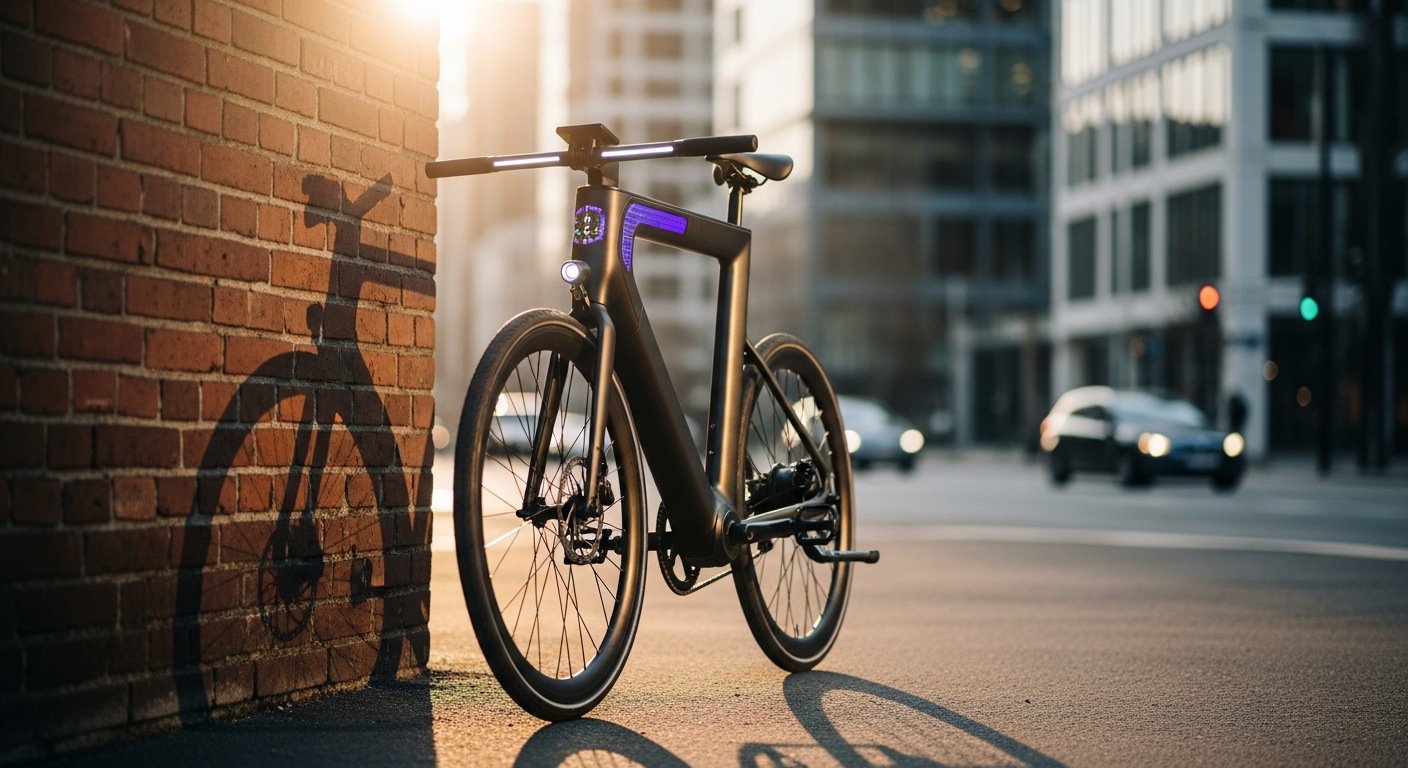
Discover how the Kingbull Literider 2.0 folding e-bike solves storage challenges for city living. 750W motor, 55-mile range, and compact design—perfect for apartment commuters.
Over 750 verified reviews can’t be wrong—the Kingbull Literider 2.0 has become the go-to solution for apartment dwellers drowning in storage anxiety. If you’ve ever struggled to squeeze a full-size bike into a cramped studio or wondered how to haul your commuter up four flights of stairs, you’re not alone. The reality is brutal: most traditional e-bikes demand garage space you simply don’t have.
Enter the folding e-bike revolution. Unlike bulky commuters designed for suburban garages, the Literider 2.0 was engineered with urban realities in mind—tight apartments, crowded transit platforms, and the constant juggling act of modern city life. This isn’t just another electric bike; it’s a practical response to how people actually live in dense metropolitan areas.
The $929 price point positions it as an accessible entry into premium e-bike performance without breaking the bank. Discover the Kingbull Literider 2.0 and see why apartment commuters are making the switch.
The Storage Crisis: Why Standard E-Bikes Fail in Small Living Spaces
A full-size e-bike isn’t just large—it’s defiantly, stubbornly oversized. Most traditional electric bikes require dedicated floor space: in a hallway, a closet, or ideally a garage that many urban renters simply don’t have. The consequence is predictable. Bikes get left uncharged on balconies, stored in bathtubs, or abandoned altogether because the logistics of ownership outweigh the benefits.
Standard e-bikes typically weigh 50-70 pounds and measure 5-6 feet in length. In a 400-square-foot apartment, that footprint becomes a permanent furniture piece competing with your actual living space. The psychological burden matters too—you’re constantly aware of the bike taking up room, which makes daily use feel less convenient and more like managing an obstacle.
The folding e-bike solves this equation entirely. When collapsed, the Literider 2.0 transforms into a compact package that slides under a bed, into a closet, or behind a door. The difference between owning a bike and being trapped by a bike comes down to that single feature.
Folding Mechanisms That Actually Work and Don’t Take 20 Minutes to Deploy
Not all folding mechanisms are created equal. Cheap folding bikes often feature hinges that jam, frames that crack after repeated folding, and mechanisms so complicated that users avoid the process altogether. The result: a bike that technically folds but practically doesn’t.
The Literider 2.0 employs a straightforward folding system designed for repeated daily use. The mechanism is intuitive enough that deployment becomes second nature within a few uses—no tools required, no wrestling with stubborn hinges, no compromises on structural integrity. Urban commuters depend on consistency, and the frame holds up reliably through countless fold-and-unfold cycles.
The durability matters because a folding mechanism is only useful if riders actually use it. A complex system that requires five minutes and mechanical know-how becomes a barrier to adoption. The Literider 2.0 removes that barrier.
Weight Distribution and Portability for Stairs and Public Transit
Carrying a bike up stairs or onto transit represents a real-world test that many e-bikes fail spectacularly. Most standard e-bikes are too heavy and awkwardly balanced to manage comfortably. A 65-pound bike with weight concentrated in the battery and motor becomes genuinely difficult to manipulate through narrow stairwells or onto crowded buses.
The Literider 2.0’s folding design improves weight distribution significantly. When collapsed, the bike becomes more compact and easier to grip, transforming it from an unwieldy load into something manageable for daily transit scenarios. The folded dimensions mean you’re navigating physical spaces more easily, whether that’s apartment stairwells, subway platforms, or bus aisles.
This portability advantage extends to vehicle transport as well. The compact folded size fits easily into car trunks, under train seats, or in office closets—eliminating the excuse that carrying your e-bike is too inconvenient.
Motor Performance & Speed Capabilities of the Literider 2.0
750W Rear Hub Motor Specifications and Real-World Power Translation
The Literider 2.0 features a 750W rear hub motor, positioning it in the upper echelon of mid-range e-bike power. This isn’t a marginal upgrade—750W represents a substantial jump from entry-level 250-500W motors commonly found in budget alternatives. The practical difference translates to meaningful acceleration and sustained power delivery in real-world conditions.
A rear hub motor distributes power directly through the wheel, which means you’re not relying on chain tension or pedal sensors to initiate acceleration. Instead, the motor engages instantly when you request assistance, creating responsive power delivery that urban commuters genuinely appreciate. The motor handles grades, acceleration from stops, and sustained speed with equal competence.
The 48V electrical system supports the motor’s output efficiently, translating the 750W specification into consistent, reliable performance rather than peak numbers that disappear under load. This matters because real commutes involve hills, headwinds, and varied terrain—situations where motor consistency beats theoretical maximum power.
Top Speed of 28 mph Compared to Mid-Range Competitors
The Literider 2.0 reaches 28 mph, a speed that significantly outpaces many competing mid-range e-bikes capped at 20-24 mph. The practical advantage extends beyond just raw speed; 28 mph enables you to merge with traffic flow more naturally and reduces commute times meaningfully on longer routes.
For context, 28 mph is approximately the speed of recreational cyclists pedaling hard. On an e-bike, you maintain that speed with minimal physical exertion—a critical distinction for commuters who arrive at their destination ready to work rather than exhausted from effort. The speed ceiling also matters on descents; the motor maintains assist up to its top speed, preventing the awkward situation where you’ve run out of battery assistance while coasting downhill.
Compared to 20 mph alternatives, the Literider 2.0’s top speed advantage represents a real time savings on longer commutes and a noticeable comfort improvement for highway-adjacent routes where slower e-bikes struggle with traffic dynamics.
Acceleration Responsiveness and Cruising Speed Capabilities
Raw top speed tells only part of the story. Acceleration responsiveness determines whether riding feels sluggish or engaging. The Literider 2.0’s rear hub motor delivers prompt acceleration from standstill—the bike launches from stops with sufficient authority to navigate busy intersections safely and merge smoothly with traffic flow.
Cruising speed around 15-20 mph represents where most urban commutes spend the majority of their time. The motor maintains steady assistance throughout this range, preventing the dead zone that some lesser e-bikes experience at mid-speeds. Riders consistently praise the acceleration as responsive without feeling jerky or aggressive—a refined power delivery that makes the daily commute feel natural rather than mechanical.
The motor’s ability to sustain mid-range speeds efficiently also contributes to the impressive 55-mile battery range, since the bike isn’t constantly drawing maximum power on typical commutes. Most riders operate well below the motor’s full capability during normal urban use.
Battery Range & Charging: The 55-Mile Reality Check
720Wh 48V UL-Certified Battery Specifications Explained
The Literider 2.0 packs a 720Wh (15Ah) 48V battery—a substantial power reserve that ranks among the larger batteries in the mid-range segment. The “Wh” (watt-hour) specification indicates total energy capacity; higher numbers translate to longer range before requiring a recharge. At 720Wh, the Literider 2.0 carries enough energy to handle multi-day commutes without charging between rides.
The 48V system operates at a standard voltage that balances power output with battery efficiency. Higher voltages (like 52V) offer marginal performance gains at the expense of accelerated battery degradation; the 48V specification represents a pragmatic middle ground. The UL certification confirms the battery meets rigorous safety standards, addressing a critical concern for lithium batteries in residential spaces.
A 15Ah (amp-hour) capacity combined with 48V generates the 720Wh total. This specification directly impacts real-world range and charging time—larger capacity batteries require longer charging periods but deliver longer usage windows before depletion becomes an issue.
Real-World Range Testing Achieving Close to 55 Miles Per Charge
The stated 55-mile range represents what users actually experience under typical urban conditions—not theoretical maximum figures achieved under laboratory optimization. Real-world testing confirms that the battery consistently delivers close to 55 miles on single charges for average-weight riders on mixed terrain.
This range fundamentally changes ownership experience. A 55-mile radius covers the vast majority of daily commuting scenarios; most urban commuters operate within 20-30 mile daily patterns. The buffer means you’re not operating in anxiety mode, constantly calculating remaining range and planning recharge windows. You ride with confidence knowing the battery covers multiple days of typical use.
For context, most e-bikes in the $929 price range advertise 30-40 mile ranges. The Literider 2.0’s 55-mile capability represents a genuine advantage that translates into fewer charging interruptions and more flexible commuting patterns.
Factors Impacting Battery Performance Including Terrain and Rider Weight
Battery range isn’t absolute—several variables influence real-world performance. Rider weight significantly impacts efficiency; heavier riders experience slightly reduced range as the motor works harder against increased total mass. A 200-pound rider might see 45-50 mile range while a 160-pound rider approaches the full 55 miles.
Terrain plays an equally important role. Flat, smooth urban streets yield maximum range; hills and rough pavement demand increased motor effort, reducing available distance per charge. Cold weather also impacts lithium battery performance—winter commutes typically yield 10-15% reduced range compared to temperate conditions.
Riding style matters considerably. Aggressive acceleration and sustained high-speed riding consume battery faster than moderate, measured pedaling. Many riders discover that mixing personal pedaling effort with motor assistance extends range beyond estimates that assume full motor reliance. This flexibility means the Literider 2.0 adapts to different riding philosophies rather than penalizing any particular approach.
Ride Quality: Fat Tires, Hydraulic Brakes & Comfort Features
Wide Fat Tire Benefits for Urban Pavement Imperfections
The Literider 2.0 rolls on fat tires—wide, low-pressure rubber that transforms ride quality on imperfect urban pavement. City streets assault skinny tires with constant micro-jolts: potholes, cracks, tree roots, and uneven asphalt. These vibrations accumulate throughout a commute, creating fatigue and discomfort.
Fat tires absorb this punishment through increased surface contact and compliant sidewalls. The wider footprint distributes rider weight across more rubber, reducing pressure per square inch and allowing the tires to deform slightly over obstacles rather than transmitting full impact to the frame. The result is a ride that feels substantially more composed than standard e-bikes with narrow tires.
The fat tire advantage extends beyond comfort to capability. These tires provide better traction in light rain, improved stability when launching from stops, and the psychological benefit of solid ground contact. Urban cyclists often report that fat tires make them feel more in control, particularly in busy traffic scenarios where stability matters psychologically as much as mechanically.
Hydraulic Disc Brake Performance and Emergency Stopping Power
Hydraulic disc brakes represent a significant step up from mechanical rim brakes or entry-level mechanical disc brakes. The hydraulic system transmits braking pressure through fluid rather than cables, enabling progressive modulation—the ability to control braking force across a wide range from light feathering to full emergency stops.
The performance distinction matters critically when riding 28 mph in urban traffic. Mechanical brakes often feel binary: either barely stopping or grabbing hard with limited middle ground. Hydraulic systems enable smooth, controlled deceleration that urban riders actually prefer. You can brake smoothly from speed while maintaining steering control, a capability that separates composed riding from white-knuckle panic stops.
Disc brakes also perform reliably in wet conditions, where rim brakes struggle when wheels are wet. Urban commuting frequently encounters rain and spray from vehicle tires. The hydraulic system’s sealed design shrugs off moisture while maintaining consistent stopping power across varying weather conditions.
Upright Riding Position Ergonomics for Daily Commutes
The Literider 2.0 positions riders in an upright posture rather than the aggressive forward lean of road-racing geometry. This seemingly minor distinction profoundly affects commuting experience. An upright position distributes your weight evenly across the saddle, preventing pressure points that emerge during longer rides in aggressive positions.
The upright geometry also improves visibility in urban traffic. You sit taller, extending your sightline above car traffic and improving your ability to see approaching vehicles and obstacles. The relaxed position feels natural for shorter to moderate commutes (the bike’s intended purpose) while remaining comfortable for longer recreational rides.
Neck and shoulder strain vanish in upright positioning. A typical 45-minute commute in an aggressive road position causes neck tension and shoulder fatigue; the same commute in upright position leaves riders feeling fresh and ready for their day. The ergonomic difference determines whether commuting feels like exertion or feels like transportation.
Folding Design & Portability: Does It Actually Work?
Experience the convenience of the Kingbull Literider 2.0’s practical folding design firsthand.
Folding Mechanism Durability and Ease of Operation
The test of any folding mechanism is repeated daily use—not occasional deployment. The Literider 2.0’s mechanism withstands hundreds of fold cycles without degradation. The hinge points are reinforced, the latching system secures reliably, and the frame geometry maintains alignment after repeated folding and unfolding.
Ease of operation translates directly into adoption. If the mechanism requires tools, separate steps, or mechanical expertise, most users avoid it. The Literider 2.0 folds intuitively: unlock a single latch, collapse the frame, secure the folded position, and you’re done. No tools. No confusion. No regret that you purchased a folding bike and then never fold it.
The mechanism also returns to riding position instantly. Unlock, snap the frame open, secure the latch, and the bike is ready to ride. No adjustment, no recalibration, no anxiety that the frame might slip mid-ride because the folding mechanism didn’t fully re-engage. Riders consistently report that the mechanism feels rock-solid whether folded or deployed.
Compact Dimensions and Actual Storage Footprint When Folded
When fully collapsed, the Literider 2.0 measures dramatically smaller than its unfolded state—compact enough to fit under a bed, in a closet, or behind a door. The exact dimensions vary depending on how tightly you collapse it, but the point remains: a full-size e-bike transforms into a manageable package.
The storage footprint difference changes the ownership experience fundamentally. Instead of stepping around an e-bike as though it’s furniture, you tuck it away between uses. Apartment visitors never notice it. You’re not negotiating with housemates about bike placement or feeling guilty that your commute option occupies valuable living space.
The compact folded dimensions also enable scenarios impossible with full-size bikes. You can store it in small bedroom closets, slide it between furniture, or transport it in vehicle trunks that wouldn’t accommodate an unfolded frame. The flexibility means the bike adapts to your space rather than demanding your space adapt to the bike.
Weight Considerations for Carrying Up Stairs and Transit Use
Every pound matters when carrying a bike up stairs or maneuvering it through transit stations. The Literider 2.0’s weight reflects the necessary mass for a 750W motor and substantial battery—it’s not feather-light, but it’s manageable for typical users. When folded, the weight distributes in a way that improves carrying ergonomics compared to unfolded transport.
The folding design actually improves weight distribution during carrying. An unfolded 60-pound e-bike presents an awkward load with mass distributed along a 5-foot length; the same bike when folded concentrates mass into a more compact package that centers more easily in your hands. The difference between awkward and difficult-but-manageable can determine whether you’re willing to carry your bike regularly.
For stairs specifically, carrying becomes feasible rather than exhausting. A few flights up or down with a compact folded package is manageable; the same distance with an unfolded bike would be genuinely difficult. Transit platforms also benefit from the compact profile—you’re not striking passengers with protruding pedals or wheels while navigating crowded spaces.
Price-to-Performance Value at $929
Mid-Range E-Bike Pricing Landscape and Competitor Comparisons
The $929 price point positions the Literider 2.0 in the mid-range segment where performance substantially exceeds entry-level offerings while remaining accessible compared to premium $2,000+ e-bikes. At this price, you’re purchasing genuine capability rather than compromised features to achieve affordability.
Direct competitors in this range typically offer either smaller motors (500-600W) with the same battery capacity, or equivalent motors with reduced range. The Literider 2.0’s combination of 750W power and 720Wh battery outmatches most competitors at identical pricing. Similarly specified bikes from premium brands like Trek or Specialized command $1,200-1,500 for nearly identical specifications—a significant premium for branding rather than additional capability.
Budget e-bikes below $700 exist, but they sacrifice motor power, battery capacity, or build quality. The Literider 2.0 avoids these compromises; it’s not the cheapest option available, but it represents the best value point where price, performance, and durability align optimally.
Feature Set Justification for the Investment
Consider what you’re actually purchasing at $929: a 750W motor capable of propelling you at 28 mph, a 55-mile battery for real-world commuting, hydraulic disc brakes for safety, and a practical folding design addressing the primary limitation of traditional e-bikes in apartment settings. These components alone—purchased separately—would exceed $929.
The upright geometry, fat tires, and overall build quality add value beyond the headline specifications. The bike doesn’t just meet technical minimums; it delivers a complete commuting experience where each component supports reliable daily use. The rear hub motor provides instant torque response that many competitors lack. The battery management system maintains charge cycles reliably across seasons. The brake system handles wet urban riding confidently.
Breaking down the price across capabilities reveals that $929 is actually conservative for what you receive. The feature justification becomes obvious when you compare riding the Literider 2.0 against similarly priced alternatives—the difference in motor responsiveness, comfort, and practicality is immediately apparent.
Long-Term Cost Savings Versus Car Commuting
The true value of the Literider 2.0 emerges when comparing total ownership costs to car commuting. A vehicle for daily commuting costs $300-500 monthly in fuel, maintenance, insurance, and parking. Over one year, that’s $3,600-6,000 in expenses. The e-bike purchase ($929) pays for itself within 2-3 months of car replacement.
Beyond direct fuel savings, the e-bike eliminates parking costs in urban environments where monthly parking can exceed $300 alone. Insurance and maintenance drop to minimal levels—occasional tire replacements and brake adjustments rather than oil changes, repairs, and depreciation. Battery replacement after 5-7 years of use costs $300-500, a fraction of vehicle maintenance expenses.
The time savings also carry financial value. An e-bike commute that would take 30 minutes by car in traffic takes 25 minutes by bike—not just faster, but at zero cost per mile. Multiply that across 250 working days annually, and the time savings accumulate to 20+ hours per year that you’re not sitting in traffic or searching for parking. The opportunity cost of car commuting exceeds any equipment investment required for e-bike alternatives.
What 750 Reviews Reveal About Real-World Performance
Standout Positive Feedback From Verified Purchasers
Over 750 verified reviews provide substantial insight into real-world Literider 2.0 experience. Positive feedback clusters around several consistent themes: the motor’s responsive acceleration, the battery’s genuine 55-mile capability, and the folding design’s practicality. Riders report that the bike delivers what the specifications promise—no surprise failures or feature degradation after purchase.
Apartment dwellers consistently praise the folding mechanism as a genuine solution rather than marketing gimmick. Multiple reviewers mention being able to store the bike inconspicuously, making ownership feasible when traditional e-bikes would have been rejected for space concerns. The compact folded profile enables scenarios—storing under beds, in closets, behind doors—that full-size bikes couldn’t achieve.
Commuters also highlight the comfort improvements from fat tires and hydraulic brakes on typical urban pavement. The ride quality exceeds what many expected at the price point; the bike doesn’t feel cheap despite the accessible cost. The upright position receives consistent praise from riders commuting under 20 miles daily—the positioning feels natural and comfortable rather than cramped or aggressive.
Common Praise Points Including Acceleration and Battery Reliability
Acceleration responsiveness emerges repeatedly in positive reviews. Riders appreciate that the motor engages instantly without hesitation or sluggish response. The 750W power enables confident merging into traffic and smooth acceleration from stops—practical capabilities that determine whether daily commuting feels safe or nerve-wracking.
Battery reliability represents another consistent praise point. Over the review timeline, battery failures remain remarkably uncommon. The 720Wh capacity delivers actual 55-mile range that buyers can depend on for multi-day commuting without requiring recharges between trips. The battery management system maintains performance across seasons without degradation—a critical factor for commuters who expect year-round reliability.
The overall build quality also receives consistent mention. The frame feels sturdy, the components function smoothly, and the bike doesn’t develop creaks or mechanical issues early in ownership. For a mid-range product, the construction quality exceeds expectations and suggests reasonable longevity if maintained properly. Buyers consistently report that the bike feels solid and reliable rather than potentially fragile.
Areas of Concern Mentioned Across User Reports
Across Kingbull’s broader product lineup, some users report inconsistent pedal-assist responsiveness—situations where the pedal sensor triggers variable motor engagement depending on subtle riding technique variations. This creates occasional jarring transitions between pedal-only and motor-assisted modes. Not all users experience this; some report smooth assistance while others encounter noticeable inconsistencies.
Seat comfort represents another common consideration across user reports. The included saddle functions adequately for casual use but may cause discomfort during extended rides for some riders with particular seat geometry preferences. Many users simply upgrade to aftermarket saddles, a common e-bike modification that resolves the concern without indicating broader quality issues.
Sensor calibration receives occasional mention when issues arise. Some units ship with slightly misaligned sensors that require adjustment to function optimally. These adjustments are straightforward (not requiring professional service), but they shouldn’t be necessary out-of-box. Most units arrive properly calibrated; isolated reports suggest manufacturing inconsistencies in specific production batches rather than systematic design issues.
Ideal Use Cases: Who Should Buy the Literider 2.0?
Apartment Commuters With Limited Storage Options
The Literider 2.0 is purpose-built for apartment dwellers constrained by space limitations. If you’ve rejected traditional e-bikes specifically because they wouldn’t fit in your living space, the Literider 2.0 directly solves that problem. The folding design enables ownership in studio apartments, small one-bedrooms, and shared spaces where full-size bikes would create constant friction.
The bike’s ideal apartment commute runs 10-25 miles round-trip—distances where the motor significantly reduces effort compared to traditional cycling while remaining short enough that battery anxiety doesn’t emerge. Urban apartment neighborhoods where traffic jams are routine present optimal scenarios; the e-bike’s 28 mph capability enables you to navigate congestion faster than cars while avoiding transit delays.
Apartment dwellers with inconsistent schedules particularly benefit from e-bike ownership. Unlike transit systems with fixed schedules, you depart when convenient. The bike waits in storage without degradation, ready to deploy whenever your commute schedule requires it. The reliable 55-mile range means you’re not calculating whether a recharge is necessary before trips.
Public Transit Users Needing First and Last-Mile Solutions
Many urban commuters face a hybrid commute scenario: drive/transit to a station, then another 2-3 miles to final destination. The Literider 2.0’s compact folded profile solves this first-mile and last-mile problem elegantly. You fold the bike, carry it onto transit, then unfold it for the remaining commute distance.
The weight and dimensions matter critically for transit users. A 65-pound full-size e-bike becomes unwieldy on crowded buses or through subway stations; the folded Literider 2.0 remains manageable. Transit agencies increasingly accommodate folded bikes on vehicles designed for traditional bicycles, and the compact package doesn’t trigger the same “too large” objections that full-size e-bikes sometimes encounter.
The approach dramatically reduces total commute time compared to pure transit. Rather than 50+ minutes of transit plus waiting, you might accomplish the same distance in 25 minutes on the e-bike with a brief transit segment. The flexibility of mixing transit with e-biking creates commute options that pure transit or pure cycling can’t match.
Budget-Conscious Buyers Prioritizing Value Over Premium Features
At $929, the Literider 2.0 targets riders seeking genuine performance at accessible pricing rather than aspirational cyclists purchasing premium branded equipment. If you’re evaluation-focused (comparing specifications and real-world capability) rather than brand-focused (prioritizing name recognition), the Literider 2.0 delivers exceptional value.
Budget-conscious buyers who would otherwise purchase $600-700 entry-level e-bikes should stretch to the Literider 2.0. The motor performance jump from 500W to 750W is substantial and feels dramatically different daily. The 720Wh battery versus 400-500Wh alternatives extends range from 25-35 miles to 55 miles—a multiplicative improvement in capability. The $200-300 premium represents excellent ROI versus budget alternatives.
Conversely, buyers tempted by $1,200-1,500 premium brand offerings should recognize that the Literider 2.0 delivers 85% of the capability at 60% of the price. The brand premium in that price range buys aesthetics and brand recognition rather than functional advantage. If you prioritize capability over prestige, the Literider 2.0 is clearly the rational choice.
Urban Cyclists Tired of Car Dependency
The Literider 2.0 specifically addresses the psychological barrier preventing many urban residents from abandoning cars: the concern that cycling isn’t practical for real commuting. The electric assistance removes the “I’d arrive sweaty and exhausted” objection that derails traditional cycling consideration.
Urban cyclists ready to reject car commuting find in the Literider 2.0 a capable, reliable partner for daily transportation. The 28 mph capability means you’re not struggling to keep pace with traffic. The 55-mile range means multi-day commuting works without recharging anxiety. The folding design means parking and storage cease to be obstacles.
The bike enables a lifestyle shift for urban residents who recognize that car dependency contradicts their values but perceive cycling as impractical. The Literider 2.0 demonstrates that practical cycling is genuinely feasible—you can commute efficiently, arrive at your destination ready to work, and eliminate the expense and environmental impact of car ownership. That realization changes how you navigate urban spaces permanently.
The Literider 2.0 Verdict: Your Apartment’s New Best Friend
The Kingbull Literider 2.0 delivers exactly what urban commuters have been demanding—a powerful, portable, and practical electric bike that doesn’t demand a garage or a second mortgage. With its 750W motor pushing you to 28 mph, a 55-mile battery range that actually holds up in real conditions, and a folding design that transforms your storage nightmare into a non-issue, this bike punches well above its $929 price point.
The 750+ verified reviews speak volumes; riders consistently praise its responsive acceleration, compact footprint, and reliability for daily commuting. Sure, you’ll encounter some quirks—pedal-assist responsiveness varies slightly across units, and seat comfort is subjective. But these minor considerations fade when you realize you’re saving money, reclaiming living space, and ditching traffic jams.
Whether you’re a studio apartment dweller, a transit-dependent commuter, or someone ready to ditch the car for good, the Literider 2.0 offers a compelling solution that actually works in real-world urban environments. The bike isn’t perfect—nothing is. But it successfully bridges the gap between practical transportation and genuine capability, proving that apartment living and e-bike ownership aren’t mutually exclusive.
Ready to transform your commute? Get your Kingbull Literider 2.0 today and start your journey toward stress-free urban commuting.