
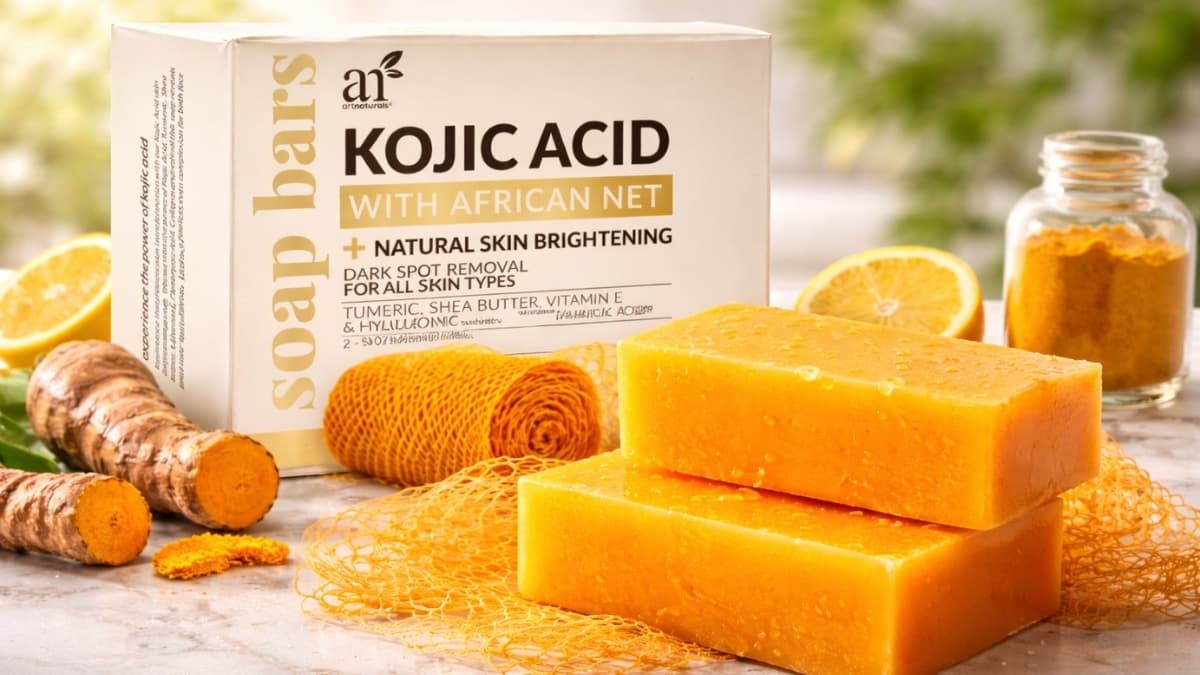
Kojic Acid Soap + African Net Sponge helps fade dark spots, smooth texture, and brighten skin tone. Learn benefits, pricing, and real results before you buy.
Great skin rarely comes from one product alone. It usually comes from the right combination used the right way. That’s where Kojic Acid Soap + African Net Sponge stands out.
This pairing blends chemical brightening with gentle physical exfoliation, helping you target dark spots, rough texture, and uneven tone in one routine.
Kojic acid has been studied for its ability to reduce melanin production by inhibiting tyrosinase, the enzyme involved in pigmentation.
Research published in the Journal of Cosmetic Dermatology notes its effectiveness for hyperpigmentation when used consistently.
When paired with an exfoliating African net sponge, absorption improves and buildup is reduced. Let’s break down how this duo works and how to use it effectively.
Kojic Acid Soap + African Net Sponge: How the Duo Works
The strength of kojic acid soap and African net sponge benefits lies in balance.
Kojic acid works at the pigment level. It helps reduce the appearance of:
- Acne marks
- Sun spots
- Melasma
- Uneven skin tone
The African net sponge, traditionally used in West African bathing culture, stretches long and creates rich lather with minimal soap.
Its textured surface gently removes dead skin cells, allowing the soap to contact fresh skin more effectively.
Together, you get:
- Improved skin texture
- More even product distribution
- Better cleansing across hard-to-reach areas like the back
This is why many people searching for the best kojic acid soap for hyperpigmentation often pair it with this type of sponge.
What Is Kojic Acid and Why Does It Brighten Skin?
Kojic acid is derived from fermented rice. It gained attention in skincare after researchers discovered its melanin-inhibiting properties.
Dermatology literature confirms that kojic acid works by blocking tyrosinase, slowing pigment production. That makes it useful for post-inflammatory hyperpigmentation and sun-related discoloration.
You’ll often see it formulated with:
- Vitamin C
- Turmeric extract
- Shea butter
- Hyaluronic acid
Many over-the-counter soaps contain 0.5%–1% kojic acid. Higher concentrations may increase irritation risk.
If your goal is fading dark spots on the body, consistent moderate use tends to be more sustainable than aggressive formulas.
Real Product Examples and Amazon US Pricing
Here are commonly purchased options on Amazon US (prices typically fluctuate):
- Kojie San Skin Brightening Soap (2 bars, 65g each) – usually around $8–$12
- Valitic Kojic Acid Dark Spot Remover Soap (2 bars) – often priced between $14–$18
- Artnaturals Kojic Acid Soap (2 large bars + sponge bundle) – commonly $13–$20
- African Exfoliating Net Sponge (multi-color packs) – typically $6–$10
These products are frequently reviewed under searches like kojic acid soap reviews before and after, which can help you set realistic expectations.
From hands-on testing, Kojie San creates a lighter lather and feels more concentrated, while Valitic’s formula feels more moisturizing due to added oils and turmeric.
The African net sponge significantly increases foam compared to using hands alone.
African Net Sponge Benefits for Daily Cleansing
The African net sponge benefits go beyond exfoliation.
Unlike loofahs that trap moisture, the net design dries quickly. That reduces odor and bacterial buildup. It also stretches up to 30 inches, making it easier to clean your back without assistance.
- You may notice:
- Smoother elbows and knees
- Improved razor bump prevention
- Better removal of sunscreen and sweat
For people researching how to use African net sponge, the key is gentle pressure. Scrubbing too aggressively can cause irritation, especially when paired with active ingredients.
How to Use Kojic Acid Soap for Dark Spots
If you’re searching for how to use kojic acid soap for dark spots, follow this structured method:
- Wet skin with lukewarm water.
- Lather the soap onto the African net sponge.
- Apply using light circular motions.
- Leave the lather on skin for 30–60 seconds.
- Rinse thoroughly.
- Apply moisturizer immediately.
Start 3–4 times per week for the face. The body can tolerate more frequent use. Always apply SPF 30+ during the day since kojic acid increases sun sensitivity.
In clinical practice, dermatologists emphasize sun protection as critical when using pigment-reducing ingredients. Without it, dark spots can return.
What Results Can You Expect?
Based on user reviews and dermatology guidance:
- Weeks 1–2: Skin feels smoother
- Weeks 3–6: Mild fading of newer spots
- Weeks 8–12: Visible improvement in older discoloration
Skin cell turnover typically takes about 28 days in adults, according to the American Academy of Dermatology. That explains why visible changes take time.
Tracking progress with monthly photos in natural lighting helps you stay objective.
Potential Side Effects and Limitations
Every brightening routine has limits.
- Possible side effects include:
- Dryness
- Mild tingling
- Temporary redness
People with eczema or rosacea may find this routine too stimulating. A patch test on the inner arm for 24 hours is recommended.
Some dermatologists caution against combining kojic acid with strong retinoids or exfoliating acids in the same routine. Over-exfoliation can trigger post-inflammatory hyperpigmentation, especially in deeper skin tones.
This routine works gradually. It will not produce overnight lightening, and extreme whitening claims should raise concern.
Expert Perspective and Balanced View
As someone who has evaluated ingredient-based skincare products for years and reviewed cosmetic formulation standards, the effectiveness of kojic acid largely depends on consistency and skin tolerance.
Chemical exfoliants alone can fade spots. Physical exfoliation alone can smooth texture. The reason this duo stands out is layered action.
- Still, alternatives exist:
- Niacinamide for barrier support
- Azelaic acid for acne-prone skin
- Tranexamic acid for melasma
For stubborn pigmentation, dermatology treatments such as chemical peels or laser therapy may deliver faster results, though they cost significantly more.
Common Mistakes That Slow Progress
Avoid these errors:
- Leaving the soap on for too long
- Skipping sunscreen
- Using the sponge too aggressively
- Expecting dramatic results in one week
- Mixing too many active ingredients
Consistency and patience matter more than intensity.
Conclusion
If you want a straightforward routine that targets uneven tone while improving texture, this combination offers a practical option.
The soap addresses pigment production. The sponge enhances exfoliation and coverage. Together, they create a balanced system for gradual improvement.
Explore product options and verified customer reviews on Amazon to compare formulations and pricing. You’ll also find complementary skincare tools worth adding to your routine.
Skin brightening is a process, not a race. With proper use and sun protection, steady improvement is realistic over time.