
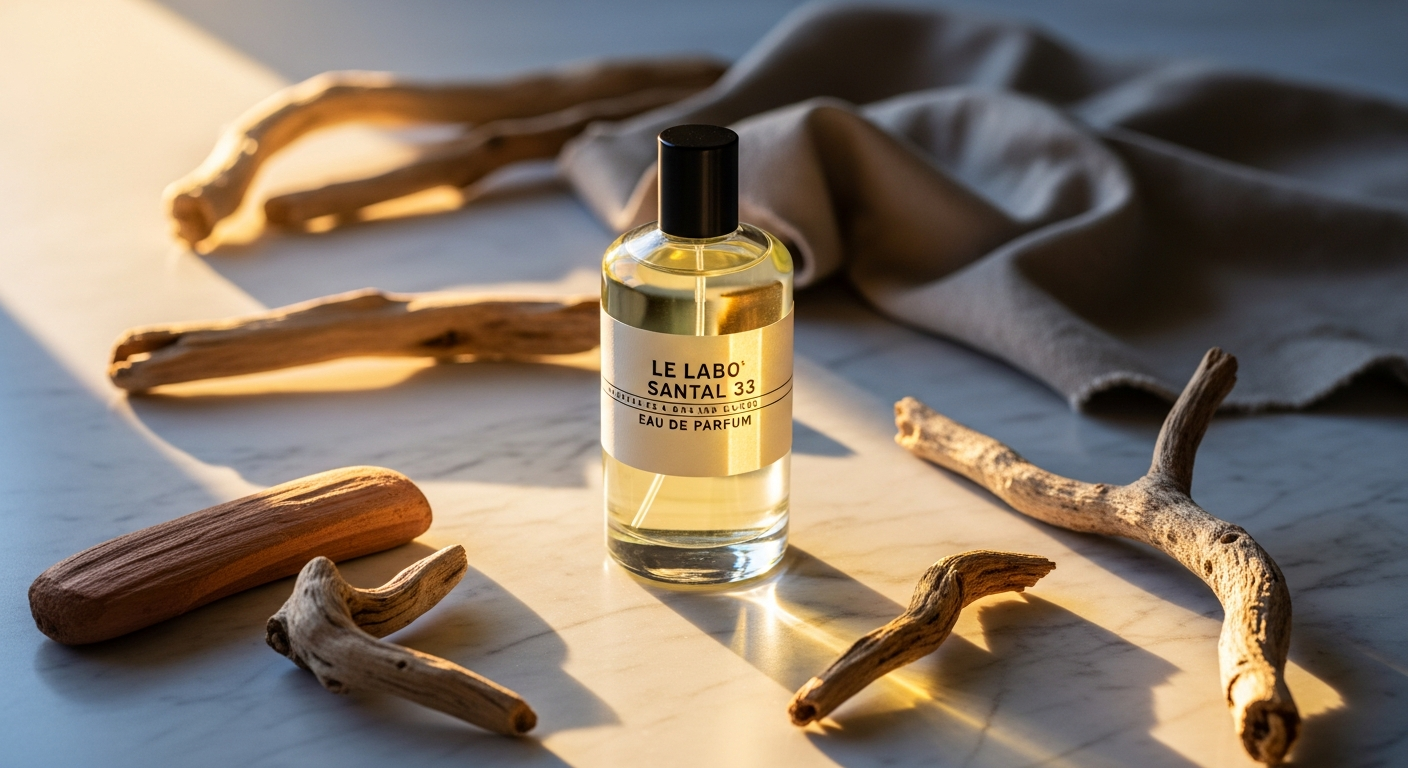
Discover why Le Labo Santal 33 Eau de Parfum is the ultimate unisex fragrance for 2026. Explore its woody notes, longevity, versatility, and why it transcends traditional fragrance categories.
The fragrance industry has long been divided by gender marketing—until Le Labo Santal 33 arrived. This woody powerhouse has shattered conventional boundaries, proving that the best scents aren't defined by who wears them. The market's insistence on categorizing fragrances as "masculine" or "feminine" has always felt arbitrary, yet few fragrances have successfully transcended these divisions with genuine credibility.
Le Labo Santal 33 isn't just another fragrance; it's a statement piece that refuses to be boxed in. Since its launch, this Eau de Parfum has become the gold standard for those seeking a scent that works equally well on anyone—regardless of gender. The fragrance doesn't compromise between masculine and feminine aesthetics; instead, it occupies a space entirely its own, where woody depth and leathery complexity simply exist as beautiful scent, unburdened by labels.
Throughout this guide, I'll break down why Santal 33 has earned its cult status among fragrance enthusiasts and everyday wearers alike. You'll discover the science behind its impressive longevity, understand the complex interplay of its woody and leathery notes, and learn whether this investment-level fragrance truly delivers on its premium price tag.
Beyond Gender: How Santal 33 Redefined Unisex Fragrance
The evolution of unisex fragrance marketing and why traditional gendered scents are becoming obsolete
For decades, the fragrance industry operated on a simple formula: floral and fruity notes for women, woody and aromatic notes for men. This division wasn't rooted in any scientific principle—it was pure marketing machinery. Santal 33 arrived at a cultural moment when consumers were already questioning these arbitrary divisions, and the fragrance proved that authenticity could thrive without pandering to manufactured gender norms.
The shift toward unisex fragrance has accelerated significantly in recent years, driven by younger consumers who view gender-neutral products as the default rather than the exception. Traditional gendered marketing now feels dated, clinging to outdated assumptions about who should smell like what. Santal 33 understood this shift instinctively, positioning itself as a fragrance for anyone with the confidence to wear something genuinely distinctive.
How Le Labo positioned Santal 33 as a fragrance for everyone, not a compromise between masculine and feminine
Le Labo's genius wasn't in splitting the difference between two gender categories—it was in ignoring the categories altogether. The brand didn't create a "unisex" fragrance by softening traditionally masculine notes or adding unexpected florals. Instead, Santal 33 was built from the ground up as a complete aromatic statement, one that simply happens to work beautifully on all bodies and identities.
This positioning required confidence. Rather than hedging its bets with broad appeal, Santal 33 leaned fully into its distinctive character. The woody, leathery, slightly smoky profile commands attention precisely because it doesn't apologize for its strength. This uncompromising approach paradoxically broadened its appeal—people recognized authenticity when they encountered it.
The psychology of scent perception and why woody, leathery aromas appeal across gender lines
The human olfactory system processes scent through deep emotional and memory centers in the brain, operating independently of social conditioning. Research has shown that people's actual scent preferences—when stripped of marketing language—don't align neatly along gender lines. Woody and leathery notes trigger associations with confidence, sophistication, and authenticity across all demographics.
Sandalwood, cedar, leather, and spice stimulate neural pathways connected to comfort, strength, and complexity. These aren't masculine or feminine associations—they're human ones. Santal 33 taps into this psychological truth, which explains why it resonates equally with corporate executives, artists, athletes, and everyone in between.
Real-world wearing patterns: men, women, and non-binary individuals who claim Santal 33 as their signature
Walk into any fragrance community online or offline, and you'll find Santal 33 wearers across the entire spectrum. Women cite its woody depth as an antidote to the ubiquitous fruity-floral landscape. Men appreciate its sophisticated character and refusal to announce itself aggressively. Non-binary wearers embrace it precisely because it doesn't require translation or explanation through gendered language.
The consistency of this pattern across demographics reveals something crucial: Santal 33's appeal isn't manufactured; it's genuinely universal. These aren't niche audiences finding a workaround fragrance. They're individuals who have chosen their signature scent based on merit, and that scent happens to challenge industrial categories that never made sense in the first place.
The Aromatic Architecture: Deconstructing Santal 33's Woody Profile
Australian sandalwood as the foundation: what makes this specific wood prized in perfumery
Sandalwood serves as Santal 33's beating heart, and not all sandalwood is created equal. Australian sandalwood carries particular esteem in perfumery circles due to its warm, smooth, and slightly sweet character. The wood's density and resin content allow it to diffuse slowly and deliberately, creating a lasting foundation that never feels sharp or aggressive.
What makes Australian sandalwood exceptional is its maturity. The trees grow in arid conditions, developing a complex resin composition that takes decades to fully mature. This translates to a more nuanced aromatic profile compared to younger or lower-grade sandalwood. In Santal 33, this foundation wood delivers warmth and depth without overwhelming the other elements in the composition.
Cedarwood's role in creating depth and the smoky, slightly campfire-like character
Cedarwood transforms Santal 33 from a simple woody fragrance into something with genuine dimension. Cedar adds a drier, slightly resinous quality that plays beautifully against the sandalwood's smoothness. The interaction between these two woods creates the fragrance's signature smoky, almost campfire-like character—one of its most distinctive and memorable qualities.
This smokiness isn't harsh or acrid. Instead, it evokes the memory of a distant fire, the kind you'd encounter on an autumn evening or during a camping trip. Cedar also contributes subtle woody spice and a mild astringency that keeps the composition from feeling overly sweet or cloying. The wood works as both a supporting actor and a mood setter.
Supporting notes breakdown: cardamom's spice, iris's subtle powder, violet's delicate florality
Cardamom enters the composition as a spicy accent, adding warmth and a slight peppery quality that prevents the woody base from feeling monotonous. This spice creates complexity and makes the fragrance feel more dynamic on the skin. The cardamom doesn't announce itself loudly—instead, it weaves through the composition, adding subtle layers of interest as the fragrance develops over time.
Iris brings a delicate powdery quality, a touch of floral sophistication without femininity. Iris root (orris) carries its own woody, earthy character, making it a natural fit in this composition. The violet adds tender floral notes that humanize the woody profile, preventing Santal 33 from feeling austere or cold. Together, these middle notes create a bridge between the woody base and the leathery accents, ensuring smooth transitions throughout the fragrance's development.
The leather and ambrox base: how these create the fragrance's distinctive rugged-yet-refined duality
Leather notes represent some of the most sophisticated elements in modern perfumery, and Santal 33 handles them masterfully. Rather than a literal leather smell, the composition contains leathery accords that suggest sophistication, wear, and character. These notes reinforce the fragrance's refined ruggedness—the sense that this is something aged, experienced, and genuinely complex.
Ambrox, a synthetic musk, anchors the composition with warmth and sensuality. Musk notes in fragrances create a skin-like quality, making the scent feel more intimate and personal. Ambrox specifically adds a slightly animalic, amber-like warmth that enhances both longevity and the fragrance's overall depth. The combination of leather and ambrox creates the impression of someone who has lived—someone confident, individualistic, and utterly comfortable in their own skin.
Longevity & Sillage: Why Eau de Parfum Concentration Matters
Understanding fragrance concentrations: Eau de Parfum (15-20% fragrance oils) versus Eau de Toilette and Cologne
Fragrance concentrations determine everything about how a scent performs on your body. Eau de Parfum (EDP) contains 15-20% fragrance oils, making it the sweet spot for longevity without the intensity of pure parfum. Eau de Toilette typically contains 5-15% fragrance oils and performs adequately for 4-6 hours. Cologne offers even lighter concentrations and shorter wear time. Eau de Parfum represents the ideal balance for most consumers—strong enough to last a full day without requiring reapplication, yet not so intense that it becomes overwhelming.
Santal 33 arrives as an Eau de Parfum, which means you're receiving the maximum fragrance concentration short of pure perfume. This choice reflects Le Labo's commitment to quality and performance. The higher concentration ensures that the woody and leathery notes don't fade prematurely, and that the fragrance's character remains stable throughout the day.
Real-world longevity testing: how long Santal 33 actually lasts on skin throughout the day
In practice, Santal 33's longevity is genuinely impressive. Most users report noticeable scent presence on skin for 8-12 hours with a single application. The woody and musky base notes provide exceptional staying power, meaning the fragrance doesn't transform into a barely perceptible whisper by midday. The longevity varies based on skin chemistry—those with oily skin typically experience longer wear times—but across demographics, Santal 33 consistently performs beyond expectations for an Eau de Parfum.
A single spray in the morning remains detectable at 6 PM and even into the evening. By hour 12, the fragrance settles closer to the skin, becoming less projected but still perceptible to the wearer. This longevity matters when calculating cost-per-wear, as it means fewer daily applications are necessary compared to lighter concentrations.
Sillage explained: the projection and presence of Santal 33 in a room
Sillage refers to the trail or halo of fragrance that extends from the wearer into the surrounding space. Santal 33 possesses moderate-to-good sillage, especially within the first few hours of application. The woody and spicy notes project confidently, creating an aromatic presence that extends roughly one to two meters in normal conditions. This level of projection makes the fragrance noticeable without being obnoxious or overwhelming to those nearby.
The sillage gradually decreases as the fragrance settles, transitioning from room-filling to skin scent over the course of several hours. This evolution is intentional and desirable—it allows the fragrance to make an initial impression without demanding constant attention throughout the day. The sillage performance is one reason Santal 33 works in professional settings; it announces its presence without assaulting the senses.
Application techniques to maximize performance and fragrance longevity
Proper application technique significantly impacts how long Santal 33 performs. Spray on pulse points—wrists, neck, behind ears, inner elbows—where body heat naturally amplifies fragrance projection. Avoid rubbing your wrists together, as this friction breaks down fragrance molecules and shortens longevity. Instead, allow the spray to dry naturally on the skin.
Moisturized skin holds fragrance longer than dry skin, so applying fragrance immediately after showering, when skin is still slightly damp, enhances performance. Some users layer their fragrance by applying an unscented moisturizer first, creating a base that helps the scent grip to skin. For maximum impact, apply two to three spritzes rather than a single application. Temperature matters too—warmer weather amplifies sillage while cooler conditions create a more intimate, closer-to-skin experience.
Versatility Across Seasons & Occasions: When to Wear Santal 33
Why Santal 33 shines in cooler months: autumn and winter wearing patterns
Santal 33's woody, leathery character reaches its full potential in cooler weather. The spice, sandalwood, and cedar notes feel particularly appropriate during autumn and winter, when heavier, more complex fragrances dominate. The fragrance's smoky quality resonates with the season's aesthetic—think woodsmoke, leather jackets, and the comfort of warm lighting on cold evenings.
That said, Santal 33 performs capably year-round. In warmer months, it becomes a slightly more ethereal version of itself, with the spice and leather notes softening somewhat while the woody base remains grounded. The fragrance never feels out of place in summer; it simply shifts from "perfect fit" to "very versatile choice." Spring and autumn represent the ideal seasons, when the fragrance's full character emerges without any sense of heaviness.
Professional settings: boardroom to creative industries—where Santal 33 fits
Santal 33 excels in professional environments across sectors. In corporate settings, the fragrance projects sophistication and confidence without the stuffiness of traditional business fragrances. The woody, slightly smoky character suggests someone who is self-assured, thoughtful, and individualistic—qualities most professional environments reward. The moderate sillage means colleagues notice the fragrance without feeling assaulted, and the complex character suggests depth and substance.
Creative industries represent Santal 33's natural habitat. The fragrance appeals to designers, artists, musicians, and anyone working in fields that value individuality and distinctive taste. The scent becomes part of the wearer's personal brand—a signal of someone with refined judgment and authentic style. Whether in a design studio, creative agency, or artistic workspace, Santal 33 feels entirely at home.
Casual wear: how this fragrance works for everyday, off-duty moments
Beyond professional contexts, Santal 33 works beautifully for everyday casual moments. Coffee shop visits, weekend errands, casual social gatherings—the fragrance enhances these moments without feeling overdressed or pretentious. The woody, leathery character feels as comfortable in jeans and a sweater as it does in business attire. This versatility is a defining strength; few fragrances transition so seamlessly from board meetings to grocery shopping.
The familiarity Santal 33 develops on your skin over time means it eventually feels like a natural extension of yourself. Rather than a fragrance you "wear," it becomes part of your presence—something that announces your taste and personality without requiring explanation or apology.
Evening and special occasions: does Santal 33 elevate formal events?
Santal 33 works for formal occasions, though with some considerations. The fragrance's character is sophisticated enough for evening wear and special events, but it lacks the dramatic intensity some might seek for black-tie occasions. The woody, leathery profile feels more "refined and confident" than "bold and dramatic." For those who prefer understated elegance at formal events, Santal 33 is exceptional. For those seeking a fragrance that commands room-filling presence at parties, alternatives with greater projection might better suit your needs.
That said, the fragrance's versatility means it excels at smart-casual evening events, dinner dates, and gatherings where standing out through pure presence matters less than appearing thoughtful and distinctive. The scent's ability to work at any time of day or night is one of its strongest assets.
The Price-to-Value Equation: Is Santal 33 Worth the Investment?
Breaking down the cost: what you're paying for in a luxury niche fragrance
Santal 33's premium pricing reflects several factors beyond marketing. First, you're paying for genuine quality ingredients—particularly the Australian sandalwood and high-grade cedarwood that form the fragrance's foundation. These materials cost considerably more than synthetic alternatives, and Le Labo refuses to compromise on ingredient quality. Second, you're paying for artisanal craftsmanship and the meticulous blending process required to create such a complex composition.
Third, you're investing in the Eau de Parfum concentration itself. The higher percentage of fragrance oils costs more to produce but delivers tangible benefits in longevity and performance. Finally, you're supporting a brand that maintains strict quality control and refuses to mass-produce its fragrances. Le Labo's commitment to maintaining character and quality across every bottle justifies a premium price point compared to mass-market alternatives.
Price comparison across bottle sizes (15ml, 50ml, 100ml) and cost-per-milliliter analysis
Santal 33 is available in three primary sizes: 15ml ($99), 50ml ($165-180), and 100ml ($300+). Calculating cost-per-milliliter reveals important patterns. The 15ml size costs approximately $6.60 per milliliter, the 50ml costs roughly $3.30-3.60 per milliliter, and the 100ml brings the cost down to approximately $3.00 per milliliter. The larger bottle offers the best value per milliliter, but requires a greater initial investment.
For fragrance newcomers uncertain about long-term compatibility with Santal 33, the 15ml size provides a reasonable testing ground despite its premium per-milliliter cost. For committed wearers confident in their choice, the 100ml bottle represents better long-term value. The 50ml strikes a middle ground—enough product to justify the lower cost-per-milliliter while requiring less initial investment than the larger bottle.
Longevity ROI: calculating the actual cost per wear over time
This is where Santal 33's true value emerges. Assume a 100ml bottle at $300, which provides approximately 1,000 sprays (assuming 10 sprays per milliliter). If you wear the fragrance three times weekly, that bottle lasts roughly six years. Divided across 936 wearings (3 times weekly for 6 years), the cost-per-wear drops to approximately $0.32.
Compare this to cheaper fragrances with shorter longevity. A $50 Eau de Toilette lasting 4-5 hours requires daily reapplication, pushing actual cost-per-wear much higher. Over that same six-year period, you'd spend significantly more on replacement bottles while receiving an inferior experience. Santal 33's exceptional longevity means you're genuinely paying less per actual wearing than most cheaper alternatives.
Budget alternatives: other woody fragrances that offer similar vibes at lower price points
Those seeking a woody, leathery fragrance without the premium price point have options, though none perfectly replicate Santal 33's character. Creed Royal Oud ($330) offers similar woody depth but with heavier oud notes. Tom Ford Ombré Leather ($90-150) captures leather and warmth but with less woody complexity. Heeley Sel Marin ($170) delivers woody coastal sophistication at a slightly lower price. Maison Margiela Beach Walk ($130) offers woody, slightly smoky character but with a more casual, beachy sensibility.
Cerruti 1881 Pour Homme ($40-60) presents woody character at budget pricing, though with noticeably shorter longevity and less complexity. Penhaligon's Elisium ($190) provides woody, slightly sweet character at comparable pricing. None of these fragrances perfectly replicate Santal 33's specific combination of characteristics, which partially explains its sustained premium pricing and cult status.
The Verdict: Making Your Santal 33 Decision
Le Labo Santal 33 Eau de Parfum has earned its cult status through an uncompromising commitment to quality, character, and genuine versatility. This fragrance doesn't whisper—it speaks with confidence, whether you're navigating urban streets or seeking refuge in quieter moments. The woody, leathery composition delivers real longevity, the unisex appeal genuinely transcends marketing categories, and the Eau de Parfum concentration ensures your investment lasts through entire days and multiple wearings.
That said, this fragrance demands commitment. The premium price point requires honest consideration of your fragrance lifestyle, and the polarizing character means sampling before purchasing isn't just recommended—it's essential. If you gravitate toward distinctive, complex scents that make a statement without apology, Santal 33 deserves a spot in your collection. The real question isn't whether Santal 33 is worth the money—the numbers and longevity speak for themselves. The question is whether you're ready for a fragrance that refuses to fade into the background.