
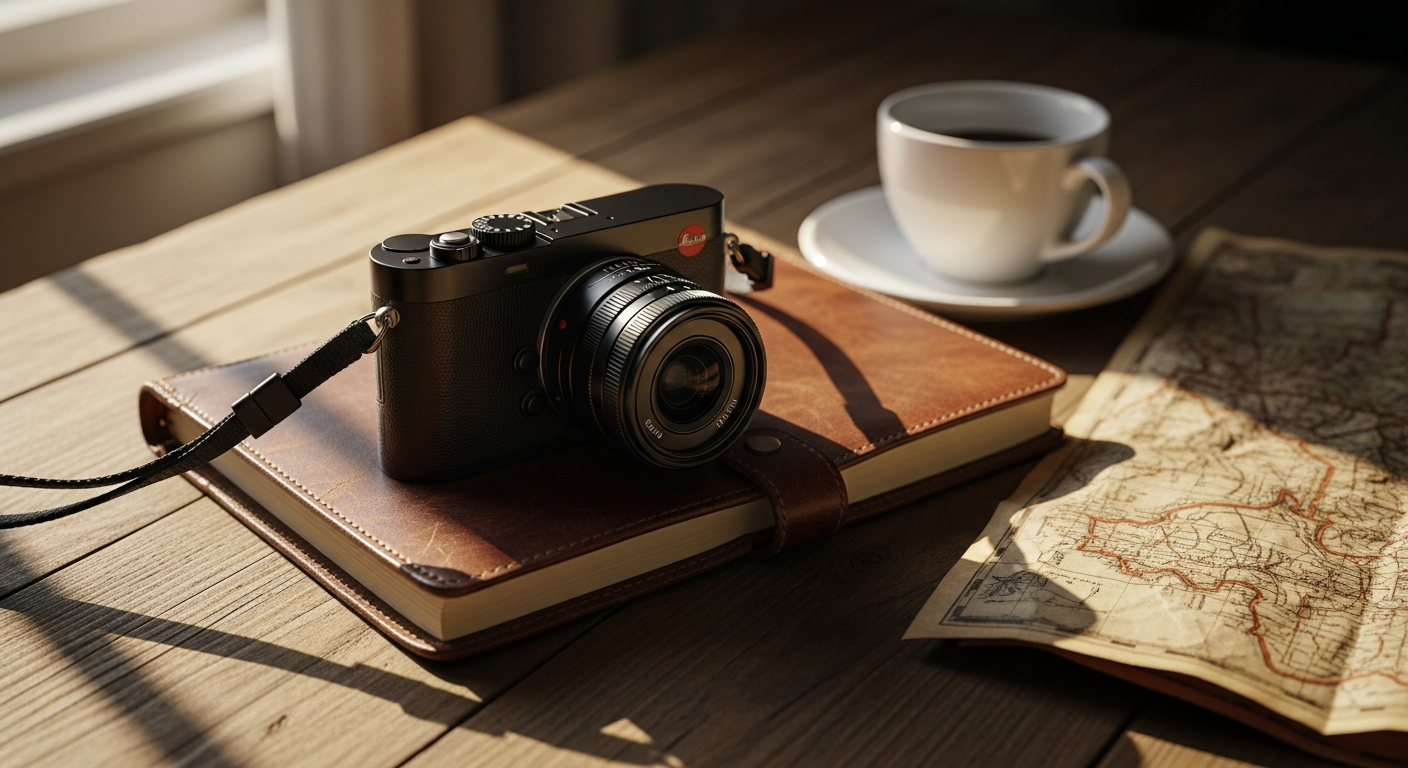
Discover why the Leica Q3 premium full-frame compact camera dominates travel and street photography. Explore its 60MP sensor, 28mm lens, and professional-grade features.
The Case for Fixed Focal Length: Why One Lens Does Everything
Forced intentionality: How a single 28mm focal length encourages deliberate composition and creative thinking
Street photographers and travel enthusiasts spend thousands of dollars annually on camera gear—yet many still struggle to find a single device that delivers both exceptional image quality and genuine portability. A fixed 28mm focal length might seem restrictive at first glance, but it functions as a creative constraint that sharpens decision-making. Rather than zooming in and out, photographers using the Q3 must physically move, reposition themselves, and genuinely engage with their subject matter. This forced movement creates better compositions because it demands awareness of depth, foreground, and background elements. The photographer becomes more intentional with every frame, thinking through the narrative before pressing the shutter.
The Leica Q3 has become the go-to solution for professionals who refuse to compromise, combining a full-frame 60.3MP sensor with a legendary fixed 28mm lens in a package small enough to slip into a crossbody bag. This article examines how the Q3 solves real-world problems for photographers who live their craft on the streets, in unfamiliar cities, and across continents.
Explore the Leica Q3 and discover why it's the ultimate compact camera for serious photographers.
Versatility within constraints: Using pixel-binning to shoot at 60MP, 36MP, or 18MP for different cropping flexibility
What makes the Q3 particularly clever is its pixel-binning technology, which allows photographers to shoot at three different resolutions without changing lenses or equipment. The full 60.3MP capture mode delivers exceptional detail for large prints and aggressive cropping in post-production. When working faster or managing files on assignment, photographers can step down to 36MP or 18MP, still maintaining remarkable quality while reducing file size and processing demands. This flexibility transforms the fixed lens into a tool with surprising versatility—you're not locked into one perspective, you're simply choosing how much information to capture.
Macro capabilities: Minimum focusing distance of 17cm enables intimate close-up work without additional lenses
The 28mm Summilux lens includes macro functionality with a minimum focusing distance of just 17 centimeters. Street and travel photographers often encounter fascinating details—weathered textures, intricate street art, candid expressions—that demand close-up capture. The Q3 handles these moments without requiring supplementary macro lenses or extension tubes. This seamless integration of close-focus capability into the primary lens simplifies the shooting experience further, allowing photographers to transition from environmental portraits to intimate details without changing equipment.
Speed and simplicity: Eliminating lens changes reduces weight, complexity, and decision fatigue during long shooting sessions
A camera system with multiple lenses introduces operational friction. Each lens change consumes time, creates opportunities for sensor dust, and demands decisions about which lens suits the moment. The Q3 eliminates this entirely. During eight-hour days photographing across a city, one lens remains constant. The physical weight savings compound over hours of shoulder carrying, and the psychological relief of not managing multiple focal lengths shouldn't be underestimated. Decision fatigue decreases when the equipment itself imposes clarity—you're working with what you have, concentrating on composition and light instead of gear management.
The 28mm sweet spot: Why this focal length has remained a favorite for street, documentary, and travel photographers for decades
The 28mm focal length occupies a unique position in photographic history. Wide enough to capture environmental context and situational awareness, yet tight enough to compress subjects meaningfully, it has defined an aesthetic in street and documentary work. Henri Cartier-Bresson, one of photography's most influential figures, favored this focal length. Contemporary street photographers from Tokyo to New York return repeatedly to 28mm because it balances the storytelling capacity of wide-angle perspective with the compositional tightness that prevents sprawling, unfocused frames. The focal length itself has proven longevity—it remains relevant across decades because it matches how experienced photographers naturally see and compose.
Optical excellence: The Summilux ASPH lens delivers razor-sharp results even at f/1.7, with signature Leica bokeh
The fixed Summilux ASPH lens represents optical excellence refined across years of Leica engineering. Even at its widest aperture of f/1.7, sharpness extends across the frame with minimal falloff. This performance matters for street work where stopping action and managing depth of field require fast glass. The bokeh—the quality of out-of-focus rendering—carries that distinctive Leica signature: smooth, creamy, and non-distracting, supporting the primary subject rather than dominating the image. Photographers appreciate lenses that render beautifully at all apertures, and the Summilux accomplishes this consistently.
Full-Frame Sensor Performance in Compact Form
60.3MP BSI CMOS technology: What makes this sensor exceptional for detail retention and shadow recovery
The 60.3MP full-frame Back-Side Illuminated CMOS sensor represents the technical heart of the Q3's appeal. BSI technology places the light-gathering photodiodes on the sensor's rear surface, reducing obstruction and improving light collection efficiency. This architecture translates to superior shadow detail and cleaner high-ISO performance. The 60-megapixel resolution isn't simply a spec—it provides tangible benefits for photographers who demand detail, whether printing large format or cropping significantly in post-production. The sensor captures information across a wide dynamic range, allowing recovery of detail in both blown highlights and crushed shadows that might be lost on lower-resolution sensors.
Cropping flexibility: How the high megapixel count allows photographers to reframe shots in post-production without quality loss
Travel and street photography often present moments that benefit from reframing. Perhaps the 28mm perspective feels slightly too wide after the fact, or the subject sits awkwardly in the frame. With 60.3 megapixels of capture, photographers gain cropping flexibility that earlier iterations simply couldn't offer. Cropping to effectively 35mm or even 50mm equivalent focal lengths remains feasible without perceivable quality degradation. This digital flexibility provides insurance—the ability to rescue frames that compositional circumstances compromised. Experienced Q3 users frequently shoot knowing they have latitude to reframe and reconsider framing in the editing suite.
ISO 50-100,000 range: Real-world low-light performance for evening street scenes and dimly-lit interiors
Street photography doesn't wait for optimal light. Evening shoots in urban environments, interior cafe photography, and museum work all demand capable high-ISO performance. The Q3's native ISO range extends from 50 to 100,000, enabling handheld shooting in situations that would require tripods on less capable sensors. The base ISO of 50 provides additional flexibility for bright daylight, allowing slower shutter speeds at wider apertures when desired. At ISO 100,000, noise remains controlled enough for professional work, particularly when shooting at 36MP or 18MP resolution where pixel-level noise becomes less visible.
Dynamic range capabilities: Handling high-contrast scenarios common in travel photography
Travel photography frequently presents high-contrast situations: sunny exteriors adjacent to shadowed building interiors, backlit subjects against bright skies, midday sun creating harsh shadows. The Q3 sensor handles these dynamic range challenges with grace, retaining detail in both shadow and highlight regions that lesser sensors would compromise. This becomes apparent when processing RAW files in Lightroom—the recovery slider can often rescue detail that appeared blown or crushed in the initial capture.
Color science and rendering: Leica's signature aesthetic and how it translates to RAW files
Leica cameras carry a distinctive color rendering character, often described as "film-like" by users. This aesthetic emerges from careful sensor tuning and lens design. Even shooting RAW—where the sensor data itself carries no in-camera processing—the Q3's color rendering feels cohesive and intentional. Greens carry natural saturation, skin tones render warmly, and the overall palette leans slightly toward warmth rather than clinical coolness. Photographers working in color appreciate this signature rendering, which often requires minimal color grading to achieve a polished aesthetic.
Pixel-binning advantages: The practical benefits of shooting at 36MP or 18MP for faster processing and file management
While 60MP captures maximum information, practical shooting often benefits from stepping down. Shooting at 36MP reduces file size by forty percent while retaining exceptional quality for most applications. At 18MP, files become genuinely portable for travel assignments with inconsistent storage and backup capabilities. The pixel-binning process—combining adjacent pixels for reduced resolution—maintains image quality because the information from multiple photosites combines intelligently rather than simply discarding data. Photographers managing multiple shoots across continents often work at 36MP as a practical compromise between image quality and file management efficiency.
Tilting Screen and Viewfinder: A Game-Changer for Composition
First-ever tilting LCD on a Leica digital camera: How this changes the shooting experience
The Q3 introduces the first tilting LCD screen in Leica's digital camera history, addressing a longstanding limitation. Previous Q-series models required awkward positioning for waist-level or overhead compositions. The tilting mechanism—a 3-inch, 1.84-megapixel touchscreen—enables shooting from almost any angle without contorting the camera or photographer. Street work benefits substantially from this flexibility: capturing children at eye level from a child's perspective, shooting overhead street scenes without raising the camera above head height, or composing from waist level during crowded moments when a raised camera attracts attention. The touchscreen functionality adds modern usability to the mechanical simplicity of the fixed lens.
3-inch, 1.84m-dot touchscreen: Usability benefits for waist-level and overhead compositions
The screen's 1.84-megapixel OLED panel provides sharp image review and comfortable compositional work. Touchscreen functionality allows intuitive menu navigation and autofocus point selection, reducing reliance on physical buttons for every adjustment. For travel photographers managing extensive shoots, the ability to quickly review images and adjust settings without digging through menu hierarchies streamlines the workflow. The tilting mechanism itself feels solid—Leica engineered this addition with typical precision, avoiding the flimsy articulation found on some competing cameras.
5.76m-dot OLED viewfinder: Why electronic viewfinders matter for street and travel work
The 5.76-megapixel OLED electronic viewfinder provides a clear, high-resolution view that approaches optical clarity. Unlike optical viewfinders that show a direct optical image, electronic viewfinders display the actual sensor capture in real-time. This means exposure preview, white balance preview, and focus confirmation appear before capture—no surprises during review. For travel photography, the electronic viewfinder enables accurate composition assessment in varying light conditions. Street photographers appreciate the magnification options and the ability to zoom within the viewfinder for precise focus confirmation.
Hybrid autofocus system: PDAF + contrast AF with DFD technology for improved subject tracking
The Q3 combines Phase Detection autofocus (PDAF) with contrast-based autofocus and Depth From Defocus (DFD) technology. This hybrid approach accelerates focus acquisition while improving reliability compared to previous Q-series iterations. The PDAF sensors provide quick subject acquisition, while contrast AF fine-tunes precision. For street work, this combination delivers responsiveness that keeps pace with spontaneous moments. The autofocus system's claimed improvements represent a genuine enhancement over the Q2, though not without limitations in specific scenarios.
Autofocus reliability: Strengths in stills photography versus limitations in video work
For static and moderately moving subjects, the autofocus performs reliably. Street photographers capturing people walking, sitting in cafes, or interacting find the Q3 responsive and accurate. However, the autofocus shows inconsistency with continuous tracking during video or extremely fast-moving subjects. High-speed action, dynamic wildlife, or tracking moving vehicles may result in focus hunting. This limitation primarily affects hybrid creators attempting simultaneous stills and video work. For pure stills photography, the autofocus reliability aligns with professional expectations, though manual focus remains an option for situations demanding certainty.
Manual focus integration: How the tactile focus ring complements modern autofocus capabilities
Despite advanced autofocus capabilities, the Q3 retains a responsive manual focus ring. Street photographers often prefer manual focus for specific situations—precise subject placement, focusing through obstacles, or simply preferring manual control. The focus ring operates smoothly with appropriate resistance, providing the tactile feedback that characterizes premium Leica cameras. This duality—reliable autofocus for spontaneity, manual focus for deliberation—gives photographers genuine control over their focusing approach rather than forcing dependence on automation.
Weather Sealing and Build Quality for Demanding Environments
IP52 dust and water resistance: What this rating means for real-world durability
An IP52 dust and water resistance rating indicates the Q3 withstands minor dust exposure and water splashes without compromising functionality. This rating permits use in light rain, around ocean spray, or dusty environments without fear of immediate failure. The rating doesn't mean the camera is fully waterproof—submersion would damage it—but rather that casual weather and environmental exposure poses minimal risk. Travel photographers encounter varied conditions: humidity near beaches, dust in desert regions, occasional rain during extended assignments. The IP52 rating provides confidence to work without excessive protective barriers while remaining practical about limitations.
All-metal construction: Premium materials that justify the investment and feel in hand
The Q3's chassis consists of machined aluminum and magnesium alloy components, contributing substantial weight and distinctive tactile quality. Unlike plastic-bodied cameras, the Q3 conveys purposefulness through its construction. The all-metal design dissipates heat during extended use, provides rigidity that prevents flex or creep in mechanical tolerances, and simply feels like equipment worth caring for. The premium materials justify a portion of the luxury pricing—this isn't mere marketing, but rather engineering choice with practical consequences for durability and longevity.
Minimalist dial-based controls: Tactile, intuitive interface that works without menus
The Q3 preserves Leica's philosophy of mechanical, tactile controls. ISO, shutter speed, and exposure compensation use physical dials rather than relying exclusively on digital menus. This design approach aligns the camera's philosophy—intentional, mechanical engagement with settings rather than hidden electronic menus. Experienced photographers quickly develop muscle memory for dial adjustments, enabling rapid setting changes without removing the camera from the eye or consulting menus. The minimalist control philosophy differentiates the Q3 from feature-heavy cameras emphasizing digital interfaces.
Durability across climates: From humid tropical locations to dusty urban streets
The combination of weather sealing, all-metal construction, and quality mechanical components enables the Q3 to function reliably across diverse climates. Photographers have documented Q3 use in humid Southeast Asian locations, dusty Middle Eastern environments, and extreme temperature variations without failure. The camera's heritage—Leica's reputation for precision engineering—manifests in real-world durability. Anecdotal reports from working professionals consistently indicate reliable operation across years and continents of use.
Wireless charging handgrip: Optional accessory that adds convenience for extended trips
An optional handgrip featuring wireless charging capabilities addresses power management during travel. The handgrip improves ergonomics while simultaneously functioning as a charging dock via Qi wireless charging. For photographers managing multiple days between reliable power sources, this accessory enables battery management without dedicated chargers, reducing travel load and complexity.
Longevity and resale value: Why Leica cameras hold their worth in the used market
Leica cameras historically retain value better than most camera equipment. The Q3, being the latest generation and already established in the market, shows strong resale pricing. This characteristic emerges from the brand's desirability, build quality, and longevity. A five-year-old Q3 will likely command seventy to eighty percent of its original purchase price in the used market—substantially better retention than most electronics. For photographers reconsidering equipment needs in the future, this resale value characteristic partially offsets the initial investment, particularly compared to rapidly depreciating alternatives.
Video Capabilities: A Secondary Strength for Hybrid Creators
8K 30p, 4K 60p, Full HD 120p: Recording specifications for different project needs
The Q3 handles various video recording formats. Eight-kilohertz recording at 30 frames per second provides future-proofing for high-resolution delivery, though file sizes become substantial. Four-kilohertz recording at 60 frames per second serves standard commercial and professional work. Full HD at 120 frames per second enables slow-motion capabilities for creative storytelling. These specifications position the Q3 as capable for hybrid creators managing both stills and motion projects, though it ranks as a secondary strength compared to dedicated cinema cameras.
Apple ProRes 422HQ support: Professional codec options for 1080p workflows
ProRes 422HQ codec support for 1080p recording provides professional color grading flexibility. Rather than compressed H.264 recording, which limits post-production adjustment latitude, ProRes offers sufficient data rate for sophisticated color work. Hybrid professionals appreciate this option, which enables grading workflows similar to cinema production despite the compact form factor.
Autofocus inconsistencies in video: Understanding the limitations with fast-moving subjects
The hybrid autofocus system, while improved for stills, exhibits inconsistency during continuous video tracking. Fast-moving subjects or situations demanding continuous focus adjustment may result in focus hunting or momentary loss of lock. Documentary creators shooting primarily video might prefer dedicated cinema cameras. However, photographers capturing occasional video alongside stills work generally accept these limitations as reasonable compromise for the camera's primary strengths.
Rolling shutter considerations: When electronic shutter artifacts become noticeable
Electronic shutters, while enabling silent operation and rapid continuous shooting, introduce rolling shutter distortion when panning or capturing quick camera movements. The Q3's electronic shutter can show noticeable skewing or distortion during rapid pans or fast movement at high frame rates. This limitation affects cinema-style workflow more than documentary photography, where such artifacts might remain invisible.
Continuous shooting at 15fps: Stills burst capabilities for decisive moment capture
The electronic shutter enables fifteen frames per second continuous shooting, permitting rapid capture of decisive moments. Street photographers can sequence captures during crucial seconds, selecting the optimal moment during post-production. This capability proves valuable for environmental portraiture or capturing peak action, though not competitive with sports-focused cameras emphasizing burst speed.
Hybrid creator potential: How the Q3 serves photographers expanding into motion work
For photographers establishing themselves in hybrid stills-and-motion work, the Q3 offers capable video features without overwhelming complexity. The compact form factor, fixed focal length, and stills-optimized interface appeal to photographers whose primary identity centers on still capture, with video as a secondary consideration. Pure video creators would prefer dedicated cinema cameras, but photographers managing projects combining both mediums find the Q3 versatile enough for real-world deliverables.
The Investment Perspective: Value Proposition at $6,000+
Premium pricing justification: What separates the Q3 from mid-range full-frame alternatives
The $5,995 to $6,295 price range positions the Q3 as luxury equipment. This pricing substantially exceeds mid-range mirrorless cameras offering broader functionality. The justification rests on several factors: full-frame sensor technology, fixed premium optics, weather sealing, exceptional build quality, and the intangible Leica brand heritage. A photographer purchasing comparable image quality from a mirrorless system would require multiple lenses, additional accessories, and substantially greater overall investment. The Q3 concentrates that capability into a single, portable package specifically optimized for intentional image-making.
Cost-per-use analysis: How daily carry and frequent use amortize the initial expense
A camera used daily amortizes its cost differently than occasional equipment. A professional using the Q3 five days weekly for five years distributes the $6,000 investment across roughly 1,300 shooting days, translating to approximately $4.60 per use day. Over a decade of consistent professional work, the per-use cost becomes negligible. This calculus differs substantially from occasional users purchasing the same camera and using it a handful of times annually. For photographers whose profession or serious passion justifies daily carry, the premium pricing becomes more defensible.
Resale value retention: Leica's track record for holding value over time
Leica equipment retains value more effectively than most photographic equipment. A Q3 purchased at full retail in 2024 will likely command $4,500 to $5,000 in the used market five years later. This retention—significantly better than most technology—effectively reduces the true cost of ownership. A photographer considering purchase might view the Q3 as a $4,000 investment rather than $6,000, accounting for predictable resale value.
Comparison to mirrorless systems: Why an all-in-one fixed-lens approach costs differently
Building equivalent capability through a mirrorless system would require purchasing a body ($2,500), a premium 28mm lens ($1,500), and potentially additional optics ($1,000-2,000), reaching $5,000-5,500 before specialized accessories. However, this flexibility enables use with multiple focal lengths, addressing different shooting situations. The Q3 concentrates capability into one focal length but delivers superior integration and optimization. The pricing comparison depends on individual shooting styles—flexibility-focused photographers might prefer mirrorless systems, while those committed to 28mm perspective find the Q3's dedicated engineering more compelling.
Accessibility barriers: Acknowledging that the Q3 remains luxury equipment
The substantial pricing necessarily excludes many photographers. Full-time professionals with established income and photographers with disposable income can justify the investment. Students, emerging professionals, and hobbyists often find the Q3 financially inaccessible, limiting the potential user base. This accessibility barrier shapes the Q3's market position—not a mass-market camera, but rather premium equipment for established practitioners who've determined that their photographic practice justifies luxury investment.
Long-term ownership satisfaction: Why Q3 owners consistently report high satisfaction ratings
User surveys and reviews consistently indicate high satisfaction among Q3 owners. This satisfaction emerges from several factors: image quality that exceeds expectations, build quality that improves with use and familiarity, the distinctive aesthetic and intentional design philosophy, and the intangible pleasure of carrying premium equipment. Photographers rarely express regret after purchasing the Q3, even acknowledging its premium pricing and fixed focal length limitations. This satisfaction consistency—rare for luxury equipment—suggests that owners feel the investment genuinely delivered intended value.
Real-World Workflow: From Capture to Delivery
USB-C connectivity: Fast file transfer and charging capabilities
The Q3 incorporates modern USB-C connectivity, enabling rapid file transfer to computers and providing charging capabilities. This connection standard aligns with contemporary technology expectations, reducing the need for proprietary cables or adapters. A photographer downloading images directly to a laptop streamlines the workflow, reducing handling of memory cards and enabling immediate image review and backup during travel.
Wi-Fi and Bluetooth: Wireless transfer options for mobile editing and sharing
Wireless connectivity via Wi-Fi and Bluetooth enables transfer of images directly to smartphones or tablets, facilitating mobile editing and sharing. Travel photographers occasionally need to deliver images quickly—a client request for a specific frame, social media documentation of location, or proof of concept sharing. The wireless options facilitate this workflow without physical cable connections or requiring permanent tethering.
RAW processing workflow: Leveraging the high-resolution sensor in Lightroom or Capture One
The Q3's 60-megapixel RAW files contain tremendous information supporting sophisticated processing. Lightroom and Capture One both handle Q3 RAW files with full compatibility, enabling detailed color grading, shadow recovery, and highlight management. The high resolution permits cropping latitude during processing—a photographer can capture at 28mm and reframe to 35mm or 50mm effective focal length without perceptible quality loss. The RAW files support the philosophy of intentional capture and considered post-processing rather than in-camera processing dependence.
Color grading advantages: How the Leica sensor responds to color science adjustments
The Q3's sensor color science responds gracefully to sophisticated color grading. Photographers working with LUTs (look-up tables) or custom color adjustments find the sensor amenable to precise toning. The slightly warm color rendering provides good starting point for various aesthetic directions—from warm, film-emulating palettes to cool, minimalist treatments. The sensor's shadow detail and highlight separation provide genuine grading flexibility.
File management: Strategies for handling 60MP files on travel assignments
Sixty-megapixel files demand thoughtful file management during extended travel. A photographer shooting 500 frames daily generates roughly 100 gigabytes of data weekly. Practical strategies include shooting at 36MP for routine work, employing rapid offsite backup (cloud storage or portable drives), and organizing images immediately rather than accumulating massive backlogs. Modern travel photography often involves portable SSD storage devices, providing secure backup without requiring constant cloud connectivity—valuable given international connectivity variations.
Integration with mobile devices: Smartphone companion features for location tagging and remote control
Smartphone integration via dedicated Leica applications enables remote camera control and automatic location tagging via the phone's GPS. While not essential for street photography, these features enhance workflow for travel assignments where precise location documentation matters. Remote control enables self-portraits or camera placement in inaccessible locations, and automatic geotagging reduces post-processing organization work.
The Philosophical Angle: Intentional Photography in a Distracted World
Simplification through limitation: How constraints breed creativity and focus
The Q3's fixed focal length initially appears limiting—in reality, it functions as creative constraint that sharpens photographic thinking. Constraints force deliberate composition because photographers must commit to framing through movement rather than zooming. Contemporary photography frequently emphasizes equipment flexibility and options; the Q3 inverts this philosophy. By removing focal length choice, photographers concentrate energy on light, composition, and subject interaction. Paradoxically, constraint breeds freedom—freedom from decision fatigue and from wondering whether a different focal length might work better.
Mindful composition: Slowing down the shooting process to be more deliberate
Digital photography enables endless capture—shooting hundreds of frames without considering whether each has genuine photographic merit. The Q3's philosophy encourages different practice: deliberate composition, thoughtful framing, and restraint in capture. Street photographers using the Q3 frequently shoot fewer frames than those using zoom lenses, yet maintain higher keeper rates. The discipline of single focal length encourages genuine seeing rather than documentation impulse.
The Leica philosophy: Understanding the brand's heritage and why it attracts thoughtful photographers
Leica's heritage extends to the inception of rangefinder photography and the decisive moment philosophy articulated by Cartier-Bresson. The brand consistently attracted photographers prioritizing aesthetic and meaning-making over technical specification accumulation. The Q3 carries this heritage—it attracts photographers interested in craft, intentionality, and distinctive visual language rather than those seeking maximum capabilities. Understanding this philosophical lineage helps explain the Q3's appeal beyond mere specifications.
Escape from gear obsession: Why owning one exceptional tool beats chasing the latest specs
Photography obsessives frequently chase equipment upgrades, perpetually seeking marginal improvements. Owning the Q3 represents philosophical escape from this cycle—the commitment to one exceptional tool over years eliminates upgrade obsession. Photographers report surprising liberation from constantly researching new cameras and lenses, instead concentrating on photographic practice itself. This psychological benefit, while intangible, represents genuine value for photographers fatigued by gear culture.
Community and culture: The Q3 owner community and shared values around photography
Q3 owners constitute a distinctive community valuing similar photographic philosophy. Online forums, photography collectives, and travel photography groups include substantial Q3 populations sharing not merely equipment, but photographic values. This community aspect provides intangible value—shared understanding of intentional practice, discussion of single focal length methodology, and mutual appreciation for the equipment's distinctive aesthetic. Purchasing the Q3 connects photographers to this broader community of similarly minded practitioners.
Mastery through repetition: Getting intimately familiar with one focal length over years
Photographic mastery develops through repetition and familiarity. Using one focal length across years develops intuitive understanding—knowing instinctively how close to approach a subject, understanding depth relationships, anticipating compositional options. This mastery grows exponentially with time, whereas photographers switching focal lengths repeatedly remain perpetual beginners with each lens. Q3 photographers frequently develop distinctive visual languages precisely because the repeated focal length becomes so familiar that compositional decisions become intuitive rather than deliberate.
The Verdict: Who Should Buy the Leica Q3
Street photographers: Why the Q3 is the preferred choice for urban documentation
Street photographers represent the Q3's primary constituency. The 28mm focal length, compact size, responsive autofocus, and fixed-lens philosophy align perfectly with street work philosophy. The weather sealing enables work in varied urban conditions, while the build quality and intuitive controls support countless shooting hours. Street photographers using the Q3 consistently report that the camera simply disappears—becoming such familiar equipment that compositional focus supersedes equipment consciousness.
Travel photographers: Portability, durability, and image quality for assignment work
Travel photographers managing multi-country assignments value the Q3's portability, durability, and integrated capability. Carrying single, weather-sealed, full-frame camera eliminates anxiety about equipment fragility in unfamiliar environments. The compact size permits carrying day's worth of shoots without excessive burden, while the build quality survives varied handling inherent to travel work. Assignment photographers appreciate delivering full-resolution 60MP files without requiring multiple lenses or backup systems.
Documentary creators: The fixed lens and compact size for unobtrusive observation
Documentary photographers prioritizing unobtrusive observation appreciate the Q3's compact form factor. The small size and quiet operation enable observation without calling attention to the camera. The fixed focal length encourages positioning and proximity work that deepens connection with subjects. Documentary photographers report that the Q3's simplicity removes barriers between observation intention and execution.
Hybrid professionals: Those transitioning between stills and video production
Photographers expanding into video production alongside stills work find the Q3 capable of handling both mediums. The video specifications prove sufficient for professional deliverables, while maintaining the stills-optimization that defines the camera's primary identity. Those whose professional identity centers on still capture with occasional motion requirements appreciate the integrated capability without sacrificing stills excellence.
Leica enthusiasts: Upgrading from Q2 or other rangefinder systems
Photographers already invested in Leica philosophy and equipment naturally gravitate toward the Q3. The improvements over Q2—tilting screen, enhanced autofocus, 60MP sensor—address previous limitations while maintaining the Q-series character. Those already using rangefinders, M-series cameras, or other Leica bodies find the Q3 coherent with existing equipment philosophy and operation.
Photographers prioritizing experience over specs: Those valuing tactile controls and intentional design
Beyond technical specifications, the Q3 appeals to photographers prioritizing experience. The tactile physical controls, the mechanical engagement with settings, the distinctive aesthetic, and the simplified shooting approach constitute genuine value. Photographers increasingly disillusioned with menu-driven interfaces and specification maximalism appreciate the Q3's explicit philosophy emphasizing experience over capability enumeration.
Who should reconsider: Budget-conscious buyers, zoom-dependent shooters, and video-first creators
The Q3 isn't appropriate for all photographers. Budget-conscious photographers will find more capable equipment at lower prices despite inferior build quality. Photographers dependent on focal length flexibility—wildlife, sports, detail documentation—will find the fixed lens genuinely limiting regardless of its quality. Video-first creators prioritizing motion work will discover that dedicated cinema cameras serve their needs better than a stills-optimized hybrid. Acknowledging these scenarios honestly prevents purchases driven by brand allure rather than genuine photographic need.
The Leica Q3 Ownership Experience
The Leica Q3 transcends typical camera specifications—it's a statement about how you approach photography. This premium full-frame compact camera demands intentionality, rewards mastery, and delivers results that justify its substantial investment. Whether you're documenting street scenes in Tokyo, capturing travel moments across continents, or building a portfolio of documentary work, the Q3's fixed 28mm lens, exceptional sensor, and weather-sealed construction become invisible partners in your creative process. The tilting screen and improved autofocus address real usability concerns from previous iterations, while the 60.3MP sensor provides the flexibility to crop and reframe without sacrificing quality.
Yes, the $6,000 price tag excludes many photographers—and the fixed focal length won't suit everyone's style. But for those who embrace its philosophy and shooting approach, the Q3 becomes less of a camera purchase and more of a commitment to intentional, thoughtful image-making. The compact size paired with full-frame capabilities, the distinctive aesthetic, and the intuitive mechanical controls create a tool that photographers genuinely enjoy carrying and using across years of creative practice.
If you're considering the Q3, honestly assess whether the fixed 28mm focal length aligns with your vision. If it does, you're investing in one of the finest compact cameras ever created—a tool that will serve you beautifully for years to come.