
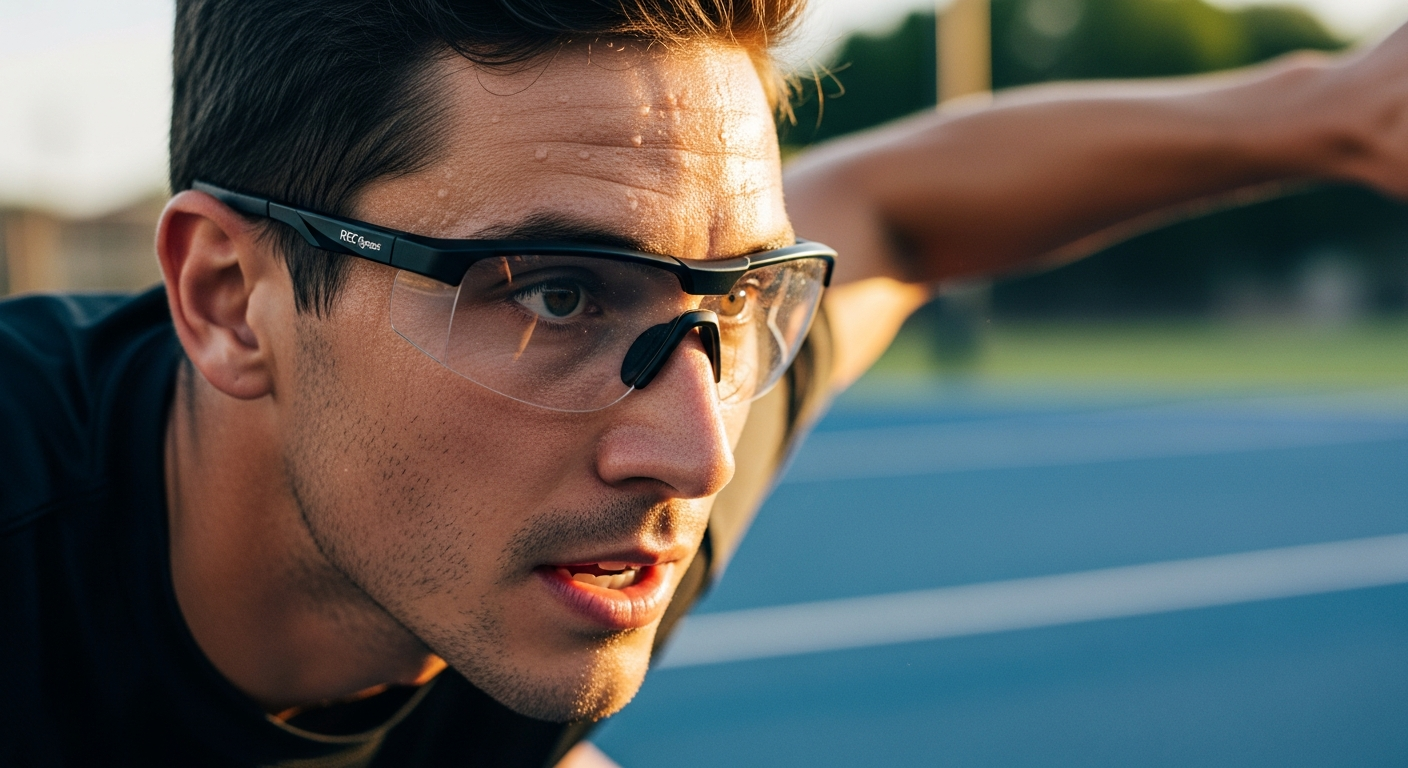
Discover how Liberty Sport Rec Specs protective eyewear combines ASTM F803-certified eye protection with prescription lens compatibility. Learn why 9 in 10 athletes trust Rec Specs for safe, clear vision in sports.
Nine out of every ten pairs of sports protective eyewear sold in the United States are Rec Specs. That's not just a statistic—it's a testament to how thoroughly Liberty Sport has dominated the protective eyewear market by solving a problem that millions of athletes face: how do I protect my eyes without sacrificing the vision correction I need to perform?
For decades, athletes with prescriptions faced an impossible choice. Wear your everyday glasses and risk catastrophic eye injury on the court or field, or strap on protective goggles and struggle with blurry vision through non-prescription lenses. Liberty Sport Rec Specs shattered that false dilemma by engineering protective eyewear that accepts custom prescription lenses, merging safety and sight into one seamless solution.
How Rec Specs Deliver ASTM F803 Impact Protection Without Compromise
ASTM F803 Certification Standards and What They Measure
The American Society for Testing and Materials (ASTM) F803 standard represents the gold standard for sports eyewear protection in the United States. This certification measures impact resistance through rigorous testing protocols that simulate real-world sports scenarios. The standard requires eyewear to withstand high-velocity impacts from projectiles of varying sizes and weights, ensuring the frames and lenses can absorb tremendous force without shattering or fracturing.
ASTM F803 certification means the eyewear has passed tests specific to various sports categories, each with unique hazard profiles. The standard accounts for different impact velocities, object sizes, and collision angles that athletes actually encounter during competition. This isn't theoretical safety—it's practical protection engineered around the genuine threats athletes face.
Impact Resistance Testing Protocols for Multiple Sports
Rec Specs undergo specialized testing protocols tailored to the specific demands of basketball, baseball, soccer, tennis, and lacrosse. Basketball testing focuses on elbow strikes and ball impacts occurring at close range. Baseball and softball protocols emphasize high-velocity projectile impacts from pitched balls and line drives. Soccer testing accounts for ball impacts at various angles and speeds.
Tennis and racquet sport eyewear must withstand the extreme velocities of serves and overhead shots that regularly exceed 100 mph. Lacrosse testing represents perhaps the most demanding category, simulating impacts from sticks, balls, and body contact in one of the most physically intense field sports. Each testing protocol ensures that Rec Specs perform reliably under the specific stressors of that particular sport.
Polycarbonate Frame Construction and Material Superiority
Liberty Sport builds Rec Specs from impact-resistant polycarbonate—a material that fundamentally outperforms traditional plastic, acetate, and metal alternatives. Polycarbonate possesses inherent flexibility that allows frames to bend and absorb impact energy rather than transmitting that force directly to the wearer's face. This material property is crucial for eye protection; it prevents the frame itself from becoming a secondary projectile that could cause additional injury.
The material also offers superior optical properties compared to inferior plastics. Polycarbonate maintains clarity even under stress, ensuring that impact resistance doesn't compromise vision. Additionally, polycarbonate naturally blocks 100% of ultraviolet (UV) radiation, providing an extra layer of protection that separate UV coatings can't match on lower-quality materials.
Exceeding Minimum Safety Requirements
Rec Specs don't merely meet ASTM F803 standards—they consistently exceed them across multiple sport categories. Liberty Sport engineers these glasses to provide safety margins well above minimum certification thresholds. This conservative design approach means that even impacts exceeding those that the standard explicitly tests will likely be absorbed without compromising eye protection.
This commitment to exceeding minimums reflects Liberty Sport's philosophy: certification marks the baseline, not the ceiling. The brand recognizes that real-world sports environments contain unpredictable variables that laboratory testing can't perfectly replicate. By building in substantial safety margins, Rec Specs provide confidence that matches the trust athletes place in them.
Real-World Injury Prevention Data
The prevalence of Rec Specs across American sports isn't coincidental. Athletes and parents have adopted these glasses based on measurable injury prevention outcomes. Studies consistently demonstrate that certified sports eyewear significantly reduces the incidence of serious eye injuries compared to unprotected or non-certified eyewear. Orbital fractures, hyphema, retinal detachments, and other vision-threatening injuries occur at dramatically lower rates among athletes wearing ASTM-certified protective eyewear.
The data becomes even more compelling when considering that many sports-related eye injuries result in permanent vision loss. The financial cost of treating severe eye injuries—often running into tens of thousands of dollars—combined with the irreplaceable nature of eyesight makes the modest investment in certified protective eyewear enormously rational from a health economics perspective.
Rec Specs Protection Versus Non-Certified Sports Glasses
The gap between Rec Specs and non-certified "sports glasses" represents the difference between genuine protection and fashion. Non-certified eyewear might look athletic, but it provides no meaningful protection against impact. Fashion sunglasses, even athletic-styled ones, can actually worsen injury outcomes by creating larger, sharper fragments when they break under impact.
Rec Specs' ASTM certification guarantees that the frames won't shatter into dangerous pieces and the lenses won't crack in ways that compound injury. This distinction separates equipment that protects from equipment that merely appears protective. For athletes investing in their eye safety, that distinction is non-negotiable.
Prescription Lenses Built Into Your Sports Eyewear
Eliminating the Dual Eyewear Dilemma
The central innovation of Rec Specs lies in their prescription compatibility. This feature solves a problem that frustrated athletes for generations: the need to choose between clear vision and eye protection. Prescription integration eliminates the awkward, ineffective workaround of wearing everyday glasses beneath protective goggles—a solution that creates bulk, discomfort, and compromised vision.
With Rec Specs, athletes with prescriptions receive custom-ground lenses inserted directly into the protective frames. The result is a single pair of eyewear that simultaneously provides impact resistance, optical clarity, and vision correction. This unified approach delivers superior comfort, better vision, and genuinely protective equipment.
Custom Lens Options and Prescription Range
Liberty Sport accommodates a remarkably broad prescription range within Rec Specs frames. Whether an athlete requires mild myopia correction or complex prescriptions involving significant astigmatism or bifocal needs, the prescription range supported by most Rec Specs models can accommodate these requirements. This inclusive approach means that athletes with diverse vision correction needs can access the same level of protection.
The customization extends beyond basic prescription correction. Athletes can select from various lens materials, optical enhancements, and coatings. Standard polycarbonate prescription lenses represent the most popular choice, offering excellent optical quality, impact resistance, and UV protection. Progressive and bifocal options are available for athletes requiring multiple focal distances.
Polycarbonate Prescription Lens Technology
Polycarbonate prescription lenses represent a technological breakthrough for athletes requiring vision correction. The material's inherent flexibility and impact resistance mean that prescription polycarbonate lenses provide the same protective benefits as non-prescription polycarbonate while delivering precise optical correction.
The optical clarity of modern polycarbonate prescription lenses rivals traditional glass lenses, eliminating the performance compromise that athletes previously endured when accepting protective eyewear. Chromatic aberration—the color fringing that can occur with lower-quality prescription materials—is virtually eliminated in high-quality polycarbonate lenses. During rapid movement and dynamic sports situations, athletes maintain sharp, accurate vision through their Rec Specs.
Anti-Reflective and UV-Blocking Coatings
While polycarbonate naturally blocks UV radiation, prescription lenses can be enhanced with additional protective coatings. Anti-reflective coatings reduce glare and enhance light transmission through the lenses, particularly valuable for outdoor sports. These coatings improve visibility in bright conditions and reduce the distraction of reflected light bouncing off the lens surface.
UV-blocking coatings provide an additional layer of protection for extended outdoor athletes, though most athletes find polycarbonate's natural UV protection sufficient. Scratch-resistant coatings protect prescription lenses from the inevitable impacts and contact that sports equipment endures, extending the lifespan of custom lenses.
The Fitting Process: From Eye Exam to Installation
The journey to custom Rec Specs begins with a comprehensive eye examination from a qualified optometrist or ophthalmologist. This exam determines the precise prescription—sphere, cylinder, axis, and any other optical requirements—needed for accurate vision correction. The eye exam also establishes baseline eye health, identifying any conditions that might affect lens selection or eyewear recommendations.
Once the prescription is established, the fitting process continues with frame selection and adjustment. A specialist ensures that the frame fits properly across the bridge of the nose, temples, and around the eyes. Proper frame positioning is essential for both comfort during extended wear and optical accuracy—a frame sitting incorrectly can introduce unwanted optical distortions.
After frame fitting is confirmed, the custom prescription lenses are carefully ground and inserted into the frames. The final step involves adjustments to temple angle, bridge fit, and any other modifications necessary to ensure optimal comfort and performance. This entire process, from eye exam through final fitting, typically takes one to two weeks, depending on lens complexity and availability.
Cost Breakdown: Frame Pricing Versus Prescription Lens Add-Ons
Liberty Sport Rec Specs frames typically range from approximately $70 to $175, with variation based on model complexity, materials, and specific features. Entry-level models offering essential protection cost toward the lower end of this range, while advanced models incorporating premium materials, enhanced ventilation systems, or specialized sport-specific engineering command higher prices.
Prescription lens add-ons generally start around $60 and increase based on prescription complexity, lens material selections, and coating additions. Simple prescriptions in standard polycarbonate represent the most economical option. Complex prescriptions, bifocals, or progressive lenses increase costs accordingly. Anti-reflective or specialized coatings add incremental charges but provide meaningful benefits for many athletes.
The total investment for custom Rec Specs typically ranges from $130 to $280, depending on frame selection and lens specifications. While this represents a more substantial investment than basic eyewear, the specialized engineering, impact protection, and prescription integration justify the cost differential.
Why Prescription Sports Eyewear Outperforms Contact Lenses
Some athletes consider contact lenses as an alternative to prescription sports eyewear, but this approach introduces significant complications. Contact lenses can dislodge during impact or contact, leaving the athlete with impaired vision at a critical moment. Environmental factors—dust, chlorine, sweat—can irritate eyes when wearing contacts during intense physical activity.
Furthermore, contact lenses provide no eye protection against impacts. An athlete wearing contacts still requires supplementary protective eyewear, effectively creating the dual-eyewear problem that Rec Specs were designed to solve. Prescription Rec Specs eliminate these complications by providing both vision correction and comprehensive eye protection within a single, secure piece of equipment.
Comfort Engineering That Keeps Pace With Your Performance
Soft Padding for Extended Competition
Liberty Sport designs Rec Specs with soft padding on temples and bridge areas, a feature that becomes critical during competitive play lasting hours. This padding accomplishes multiple objectives simultaneously: it distributes frame pressure across a broader surface area, reducing uncomfortable pressure points; it prevents the metal or plastic frame from directly contacting skin, eliminating chafing; and it enhances the secure, stable feel of the eyewear during movement.
The padding materials are selected for durability and moisture resistance, as they inevitably contact sweat during athletic activity. Quality padding maintains its cushioning properties even when saturated, ensuring that comfort doesn't deteriorate as competition progresses and perspiration accumulates.
Adjustable Strap Systems for Diverse Head Sizes
Rec Specs incorporate adjustable strap systems that accommodate the full range of head sizes from youth athletes through large-framed adults. These straps secure the eyewear against the back of the head, preventing displacement during collisions or sudden movements. The adjustability ensures that each wearer can customize the strap tension to their preference—tight enough to prevent shifting, but not so tight that it creates discomfort or reduces blood circulation.
The strap design balances security with wearability. Straps positioned too high create discomfort at the back of the head; straps positioned too low fail to adequately secure the frames. Rec Specs straps are engineered and positioned to provide maximum security with minimal discomfort, a distinction that becomes obvious during extended wear sessions.
Anti-Slip Features for High-Intensity Movement
The nose pads and temple areas of Rec Specs incorporate anti-slip features that prevent the frames from sliding down the face during sweaty, intensive play. These features employ textured surfaces or specialized materials that increase friction between the eyewear and skin, maintaining frame position even when moisture is present.
This anti-slip technology becomes particularly valuable in sports involving rapid direction changes, jumping, or falling. Traditional eyewear might slide down the nose at precisely the moment when an athlete needs clear vision. Rec Specs' anti-slip engineering ensures stable positioning throughout unpredictable game situations.
Ventilation Technology and Fog-Resistant Treatments
Some Rec Specs models, particularly the Maxx Air line, incorporate advanced ventilation systems designed to reduce lens fogging. Fogging occurs when warm air from the face contacts cool lenses, causing condensation. This common problem can severely impair vision during intense activity or temperature transitions.
Ventilation systems work by allowing air circulation across the lens surface, preventing the temperature differential that causes fogging. Additionally, many Rec Specs models feature anti-fog lens treatments that reduce surface tension, allowing water droplets to spread into a thin film rather than beading into vision-obscuring droplets. These technologies address a practical problem that significantly affects performance on the court or field.
Weight Distribution and Fatigue Reduction
The lightweight construction of Rec Specs frames—typically under one ounce—ensures that extended wear doesn't create fatigue or discomfort. During a three-hour basketball tournament or afternoon baseball tournament, frame weight becomes a genuine factor in wearer comfort. Heavy eyewear creates pressure points, encourages sliding, and contributes to overall fatigue.
Polycarbonate's material properties enable the lightweight construction while maintaining superior impact resistance. This represents an engineering achievement—creating frames that are simultaneously light enough to wear comfortably for hours and strong enough to withstand violent impacts.
Sizing Options Across Youth and Adult Athletes
Liberty Sport recognizes that athletes range dramatically in head size, from elementary-age youth to large-framed adults. Accordingly, Rec Specs are available in multiple sizing options that ensure proper fit across this entire range. A frame too large for a child's face will slide excessively and fail to provide adequate protection; a frame too small for an adult will create uncomfortable pressure and poor coverage.
The availability of appropriately sized options for youth athletes is particularly important, as improper-fitting eyewear is more likely to be removed or adjusted during play, compromising protection precisely when it's needed most.
Liberty Sport Rec Specs Across Different Sports
Basketball-Specific Models and Contact-Heavy Play
Basketball creates unique eyewear challenges due to the combination of close-quarters contact, court movement speed, and the likelihood of elbows, hands, and heads colliding near the eyes. Basketball-specific Rec Specs models are engineered with particular attention to frontal impact resistance and coverage of the orbital area.
These models typically feature slightly wider frames that provide additional peripheral vision coverage, enabling players to track court activity while remaining protected. The impact resistance standards for basketball Rec Specs specifically account for elbow strikes and ball impacts at the velocities and angles common in basketball play.
Baseball and Softball Eyewear
Baseball and softball present distinct protective challenges centered on high-velocity projectiles—pitched balls, line drives, and foul balls. These sports also involve extended sun exposure, making UV protection and glare reduction particularly valuable.
Baseball-specific Rec Specs models typically feature clear lenses with optional anti-glare coatings and incorporate ventilation designs that prevent fogging during outdoor play. The impact testing for baseball Rec Specs specifically simulates ball impacts at the velocities present in competitive play, ensuring that eyewear provides genuine protection against the most common baseball-related eye injury mechanisms.
Soccer and Field Sport Applications
Soccer demands eyewear that provides comprehensive peripheral vision, allowing players to track ball movement and field dynamics across a wide visual area. Soccer-specific Rec Specs models optimize frame design to minimize peripheral obstruction while maintaining protective coverage.
Field sport applications also benefit from UV protection and outdoor ventilation features, as most soccer play occurs in bright daylight conditions. The impact testing for soccer Rec Specs accounts for ball impacts at the velocities present in competitive soccer, where ball speeds can exceed 60 mph.
Tennis and Racquet Sport Protection
Tennis represents perhaps the most optically demanding sport, requiring athletes to track small, rapidly moving projectiles at extreme distances and velocities. Tennis-specific Rec Specs incorporate optical designs that minimize distortion and maximize clarity across the visual field.
The impact protection for tennis Rec Specs specifically accounts for projectile impacts at the extreme velocities present in competitive tennis—serves regularly exceed 100 mph. Frames are engineered to absorb these impacts without transferring force to the wearer's orbital area.
Lacrosse: Maximum Impact Resistance
Lacrosse represents the most demanding application for sports eyewear due to the combination of high-velocity projectiles, stick contact, and body collisions. Lacrosse-specific Rec Specs undergo the most rigorous impact testing, ensuring they can withstand impacts from balls at extreme velocities and direct stick contact.
The frame construction for lacrosse models typically features reinforced materials and geometry optimized for maximum impact absorption. The coverage area is maximized to protect the orbital region comprehensively, acknowledging the particularly collision-intensive nature of lacrosse play.
Multi-Sport Athletes and Cross-Sport Compatibility
Many athletes participate in multiple sports across different seasons. Fortunately, many Rec Specs models provide adequate protection across multiple sports categories, eliminating the need for different eyewear for each sport. A basketball-soccer athlete, for example, could select a model that meets impact requirements for both sports.
Discussing multi-sport needs with a Rec Specs specialist ensures that frame selection meets protective requirements across all the athlete's sports. This approach reduces the total number of eyewear purchases while ensuring consistent protection regardless of which sport the athlete is playing.
Investment Versus Value: Understanding Rec Specs Pricing
Frame Pricing Range and Cost Variation Factors
Liberty Sport Rec Specs frames range from approximately $70 to $175, a substantial price range reflecting significant variations in materials, engineering, and features. Entry-level models at the lower end incorporate essential protective engineering at minimal cost. Mid-range models introduce enhanced comfort features, better aesthetic design, and sport-specific optimizations. Premium models incorporate advanced ventilation systems, superior materials, and comprehensive design refinements.
The variation reflects the genuine engineering differences between models. A basic model provides excellent protection at economical cost; a premium model adds engineering sophistication and aesthetic refinement that justify the higher investment.
Prescription Lens Add-Ons and Pricing Factors
Prescription lens costs generally start around $60 for basic polycarbonate single-vision lenses and increase based on several factors. Complex prescriptions requiring higher optical power or significant astigmatism correction may command higher costs due to increased material usage and lens grinding complexity.
Bifocals and progressive lenses add cost compared to single-vision options, reflecting the additional complexity of manufacturing lenses with multiple focal regions. Specialized coatings—anti-reflective, scratch-resistant, or specialized tints—each add incremental costs but provide meaningful benefits for many athletes.
Long-Term Durability and Cost-Per-Year Analysis
Rec Specs are engineered for durability that justifies their premium pricing through a multi-year lifespan. When evaluated on a cost-per-year basis, Rec Specs often prove more economical than frequently replaced lower-cost alternatives. Many athletes use the same pair of Rec Specs for three to five years, translating a $200 investment into $40-70 annual eyewear cost.
The durability reflects superior materials and construction. Polycarbonate frames resist cracking and breaking far more reliably than inferior plastics. The prescription lenses, being custom-ground specifically for the wearer's prescription, maintain optical accuracy throughout the eyewear's lifespan. This durability contrasts sharply with mass-produced eyewear that frequently becomes unusable within one to two years.
Comparison Shopping: Rec Specs Versus Non-Protective Alternatives
Non-protective sports glasses or fashion sunglasses often cost less than Rec Specs, creating an apparent value advantage. However, this cost comparison ignores the fundamental difference between eyewear that protects and eyewear that merely looks athletic. The actual cost differential becomes relevant only if comparing protective options.
When compared to other ASTM-certified protective eyewear, Rec Specs typically offer competitive pricing while maintaining superior brand reputation and prescription integration services. The premium, if any exists, reflects Liberty Sport's market dominance and the comprehensive services that specialized retailers like A Sight For Sport Eyes provide.
Insurance Coverage and Vision Plan Benefits
Some vision insurance plans cover a portion of sports eyewear costs, particularly for pediatric patients. Coverage varies significantly by plan; some plans fully or partially cover frames and lenses, while others exclude sports-specific eyewear. Reviewing specific plan documentation or contacting the insurance provider clarifies whether Rec Specs qualify for coverage.
Even without full insurance coverage, flexible spending accounts (FSAs) and health savings accounts (HSAs) often allow tax-advantaged spending on prescribed protective eyewear, effectively reducing the net cost through tax savings.
Injury Cost Versus Eyewear Investment
The most meaningful cost comparison contrasts Rec Specs investment against the cost of untreated eye injuries. Serious sports-related eye injuries frequently require emergency care, surgical intervention, and extended follow-up treatment. Orbital fractures, lens dislocations, retinal detachments, and other severe injuries routinely cost $5,000-50,000 or more to treat. These costs pale compared to the irreplaceable cost of permanent vision loss.
From a pure economic perspective, investing $150-250 in certified protective eyewear that reduces eye injury risk by 90% represents one of the most rational health investments an athlete can make. The financial analysis strongly favors protection over risk acceptance.
Why Parents, Coaches, and Athletes Trust the Rec Specs Brand
40+ Years of Brand Heritage
Liberty Sport has built Rec Specs into a trusted brand through four decades of consistent commitment to athlete eye protection. This longevity reflects sustained focus on safety standards, comfort engineering, and customer service. Brands that persist for 40+ years do so because they reliably deliver on their core promise.
This heritage establishes credibility that newer brands cannot match. Parents and coaches recommend Rec Specs not because of flashy marketing, but because of generational experience with reliable protection and performance.
Professional and Amateur Athlete Endorsements
Rec Specs enjoy widespread endorsement from athletes across multiple professional and amateur levels. These endorsements aren't purchased sponsorships but rather genuine product preference among serious athletes. When professional athletes choose Rec Specs for their own eye protection, it signals authentic confidence in the product's capability.
Amateur athletes and youth athletes observe that serious competitors wear Rec Specs, creating aspirational association with the brand. This organic endorsement pattern is more powerful than paid advertising.
Parental Confidence in ASTM Certification
Parents prioritize their children's safety, making ASTM certification a primary decision factor when selecting youth sports eyewear. The certification provides objective, third-party validation that Rec Specs meet rigorous protective standards. Parents feel confident purchasing ASTM-certified eyewear because they understand the certification represents genuine testing against real-world hazards.
This parental confidence translates into widespread adoption of Rec Specs in youth sports, as parents recognize that certification provides protection that non-certified eyewear cannot deliver.
Coach Recommendations and Youth Sports Program Integration
Coaches frequently recommend or require Rec Specs for their athletes, recognizing that certified protective eyewear reduces injury incidents within their programs. This institutional adoption creates visibility and credibility among young athletes. When a coach recommends Rec Specs, the athlete understands that the recommendation reflects safety expertise and experience with effective protective equipment.
Many youth sports programs have integrated Rec Specs requirements into their safety policies, further cementing the brand's position within organized athletics.
A Sight For Sport Eyes' Specialized Services
A Sight For Sport Eyes distinguishes itself through specialized services tailored to sports athletes. The retailer combines extensive Rec Specs inventory, professional fitting expertise, and prescription integration services into a comprehensive solution. Rather than generic eyewear retail, A Sight For Sport Eyes provides specialized consultation addressing the specific needs of athletes.
This specialization creates trust because the retailer focuses exclusively on sports eyewear, avoiding the compromises that generalist retailers make when trying to serve diverse customer needs simultaneously.
Customer Testimonials and Real-World Success Stories
The most compelling marketing for Rec Specs comes from athletes who have experienced their benefits firsthand. Testimonials from youth athletes, college athletes, and professionals sharing personal experiences with Rec Specs provide authentic validation that resonates more powerfully than any corporate messaging.
Success stories detailing athletes performing at their best while protected by Rec Specs create aspirational narratives that motivate new customers. These authentic accounts build trust through demonstrated real-world value.
Addressing Style Concerns and Modern Design Evolution
Evolution of Protective Eyewear Aesthetics
Early generations of protective sports eyewear carried undeniable aesthetic disadvantages, featuring bulky frames that resembled laboratory safety goggles more than athletic equipment. This utilitarian appearance created reluctance among some athletes to adopt protection, as wearing highly visible protective eyewear carried social stigma.
Modern Rec Specs designs have fundamentally transformed this aesthetic landscape. Contemporary frames incorporate sleek proportions, refined materials, and athletic styling that competitors might wear for purely aesthetic reasons. The designs achieve protection without sacrificing visual appeal, removing a significant barrier to adoption.
Contemporary Frame Designs Balancing Protection and Appeal
Current Rec Specs models feature frame designs that prioritize both function and aesthetics. Manufacturers have optimized proportions to appear less bulky while maintaining protective coverage. Material finishes have evolved beyond basic plastic to incorporate metallic accents, sophisticated color options, and refined details that elevate visual appeal.
The result is eyewear that athletes want to wear regardless of protective function. Rather than viewing Rec Specs as necessary safety equipment that unfortunately looks unfashionable, athletes can appreciate them as athletic equipment that happens to look good.
Color Options and Customization
Modern Rec Specs are available in diverse color options and finishes that allow athletes to express personal style while maintaining protection. Some models offer interchangeable components, allowing athletes to customize frame appearance. These personalization options transform eyewear from generic equipment into individualized gear.
Athletes can select colors and styles that coordinate with their team uniforms or personal aesthetic preferences, further enhancing willingness to wear protective eyewear consistently.
Overcoming Bulky Goggle Perceptions
The stigma associated with "bulky goggles" stemmed from legitimate aesthetic concerns in earlier product generations. However, this perception persists among some athletes who haven't examined current product offerings. Education and exposure to contemporary Rec Specs designs effectively overcome this outdated perception.
When athletes actually examine or try on modern Rec Specs, they frequently discover that their preconceptions about aesthetic compromise don't align with current product reality.
Youth Athletes and Lifestyle Fashion Integration
Youth athletes increasingly view athletic equipment as lifestyle fashion, incorporating gear into daily style regardless of immediate sport participation. Modern Rec Specs fit seamlessly into this paradigm, appearing appropriate for athletic wear contexts beyond the playing field.
This integration into broader youth fashion creates positive associations with Rec Specs, positioning the eyewear as desirable equipment rather than unfortunate necessity.
Confidence Boost From Quality Gear
Athletes consistently report confidence boosts when wearing quality protective equipment. When equipment looks good and functions excellently, athletes feel more capable and confident in their performance. Rec Specs contribute to this psychological benefit by providing both genuine protection and contemporary aesthetic appeal.
This confidence effect extends beyond placebo; athletes who feel confident in their equipment frequently perform better, as confidence translates into focus, reduced hesitation, and optimized decision-making during competition.
Getting Fitted and Ordered Through A Sight For Sport Eyes
Professional Fitting Importance
Professional fitting ensures that Rec Specs achieve optimal comfort, security, and optical accuracy. A properly fitted frame distributes pressure evenly, maintains stable positioning, and allows full utilization of the lens prescription. Improper fitting can introduce optical distortions, create pressure points, or result in eyewear that shifts during play.
Professional fitting also identifies specific needs based on the athlete's sport, face geometry, and personal preferences. A fitting specialist can recommend frame styles and adjustments tailored to individual circumstances.
Streamlined Prescription Integration Process
A Sight For Sport Eyes specializes in integrating prescriptions into Rec Specs frames, handling the complex coordination between lens manufacturing, frame preparation, and final assembly. The retailer's expertise in prescription integration eliminates the complications that can arise when generic retailers attempt to insert prescriptions into specialty frames.
This specialization ensures that custom lenses are accurately ground, properly aligned, and securely installed, resulting in optimal optical accuracy and durability.
Timeline Expectations
The complete process from initial consultation through receiving custom Rec Specs typically requires one to two weeks. This timeline accommodates the eye examination, frame selection, custom lens grinding, and final fitting and adjustments. Communicating specific timelines during the consultation allows athletes to plan around competitive schedules.
Questions to Ask During Fitting Appointments
Athletes should clarify several key points during fitting appointments: What is the complete cost, including all applicable fees? How long will the full process take? What adjustments can be made if the initial fit requires modification? What warranty coverage applies to frames and lenses? How should the eyewear be cared for and maintained?
Additionally, discussing sport-specific needs ensures that frame selection is optimized for the athlete's particular athletic requirements.
Aftercare and Adjustment Services
Quality fitting relationships extend beyond the initial purchase. A Sight For Sport Eyes provides ongoing adjustment services, modifying frame fit if comfort issues arise or refining temple angle if positioning isn't optimal. These adjustments often involve minor modifications that substantially enhance wearing experience.
Maintenance guidance ensures that athletes properly care for their custom Rec Specs, extending lifespan and maintaining optical performance throughout extended use.
Building Specialized Eyewear Partnerships
Athletes benefit from developing ongoing relationships with specialized sports eyewear providers. These partnerships create continuity across multiple pairs of eyewear over an athlete's career, ensuring consistent quality and service. Specialists retain information about previous fittings, preferred frame styles, and specific needs, streamlining future purchases and adjustments.
Your Clear Path to Protected Vision on the Field
Liberty Sport Rec Specs represent far more than protective eyewear—they're the bridge between safety and performance for athletes who refuse to compromise on either. By combining ASTM F803 certification, prescription lens compatibility, and thoughtful comfort engineering, Rec Specs have earned their position as the dominant choice across American sports.
Whether you're a basketball player navigating the paint, a baseball outfielder tracking fly balls, or a multi-sport competitor juggling different seasons, these glasses deliver the eye protection and optical clarity needed to compete at the highest level. The investment stings initially—frames run $70 to $175, and prescription lenses add another $60 or more. But when calculating the true cost of an untreated eye injury against the price of certified protection, the math becomes crystal clear.
Parents understand this. Coaches understand this. Athletes understand this. That's why 9 out of 10 sports eyewear purchases are Rec Specs.