
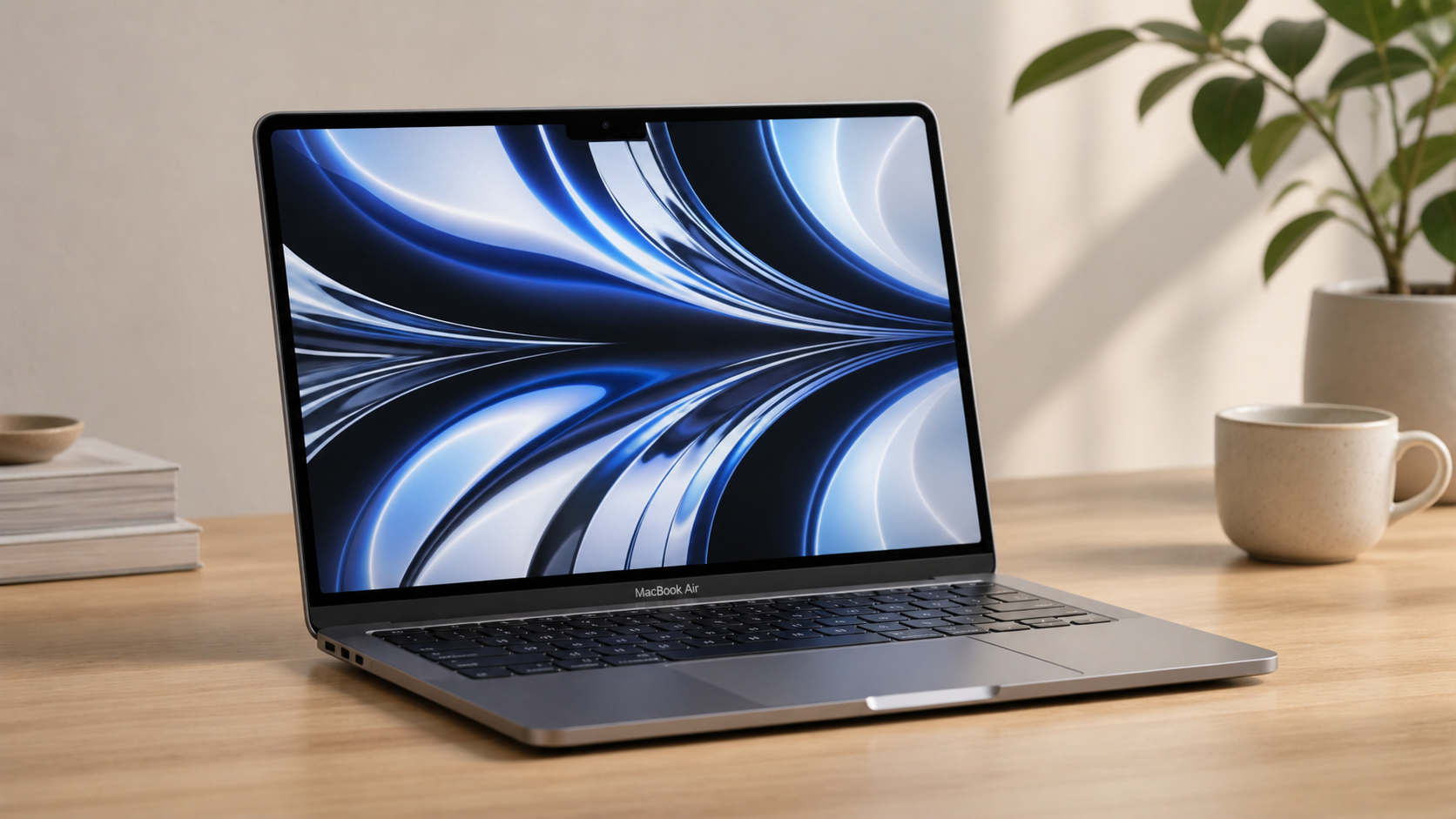
Discover how to get the best trade-in value for your Apple MacBook Air M-series laptop in 2026. Learn current market prices, what affects resale value, and how to prepare your device for maximum returns when upgrading.
If you're considering upgrading your MacBook Air, you're not alone. Over 70% of MacBook Air owners think about upgrading within 3-5 years, yet most walk away from thousands of dollars simply by not understanding what their device is actually worth. The numbers can be shocking—a machine you paid $1,200 for might still command $600-$700 in the secondary market, but only if you know how to navigate the process.
Apple's MacBook Air M-series has created something unusual in consumer electronics: a laptop market where these machines genuinely hold their value. That's not accidental. These devices are built to last, perform consistently across years, and integrate seamlessly with the broader Apple ecosystem in ways Windows competitors simply can't match. Owners who understand this advantage make smarter upgrade decisions and lose far less money in the process.
Check your MacBook Air's current trade-in value on Macback today.
Understanding MacBook Air M-Series Resale Value: What Drives the Market
Current Market Demand for M1, M2, M3, M4, and M5 Models
The MacBook Air market isn't static. Each generation attracts different buyer segments, and understanding where demand sits matters. M1 models, released in late 2020, still perform exceptionally well for everyday tasks, making them attractive to budget-conscious buyers and students. The M2, arriving in 2022, brought tangible improvements to thermal management and base configurations, capturing buyers willing to spend moderately more. M3 and M4 variants represent a significant jump in capability and price, targeting professionals and power users. The newest M5 generation commands premium pricing but has smaller total inventory in the secondary market.
Current demand trends show M2 models holding particularly strong value—they occupy a sweet spot between affordability and performance. M1 machines, while older, remain viable for non-intensive work, which keeps their baseline value stable. Newer generations (M3, M4, M5) appeal to buyers upgrading from Intel-based systems or older Macs, willing to pay higher prices for the latest generation.
How Chip Generation Affects Pricing Tiers and Buyer Interest
Chip generation is the primary value differentiator. An M1 MacBook Air typically trades at 40-50% of its original retail price, depending on configuration and condition. M2 models sit in the 50-60% range, while M3 and M4 machines command 60-75% of original pricing for devices in good condition. The generation jump matters because it represents genuine performance improvements and longer expected useful life—a buyer choosing an M3 over an M2 is investing in 2-3 more years of relevance.
What often surprises people is how predictable these tiers are. A 13-inch M1 MacBook Air originally priced at $1,099 typically sees offers around $550-$650 from platforms like Macback. The same generation with upgraded specs (16GB RAM, 512GB SSD) originally priced at $1,399 might fetch $700-$800. The percentage holds reasonably consistent because buyers price-compare within generation more than across generations.
The Role of Apple's Ecosystem Lock-In in Maintaining Resale Demand
MacBook Air resale demand exists partly because of Apple's ecosystem. Someone with an iPhone, iPad, and Apple Watch finds a MacBook Air exponentially more valuable than any Windows machine—Handoff, AirDrop, iCloud sync, and universal clipboard aren't just convenience features; they're workflow multipliers. This ecosystem lock-in creates persistent demand that Windows laptops, no matter how well-built, can't replicate.
Buyers entering the Apple ecosystem often view the MacBook Air as a necessary completion of their device portfolio. Existing Apple users upgrading from older Macs or MacBook Pros specifically seek MacBook Air models because they already understand the macOS experience. This psychological and practical lock-in sustains demand even for older generations, which is why M1 machines remain popular despite being four years old.
Why MacBook Air Holds Value Better Than Comparable Windows Laptops
Side-by-side, a used MacBook Air consistently outperforms similarly-aged Windows laptops in resale value. A Dell XPS 13 or Lenovo ThinkPad from the same era might retain 30-40% of original value; the MacBook Air typically holds 45-55%. The reasons are multifaceted: Apple's vertical integration means hardware and software age together more gracefully, macOS receives security updates for 5-7 years, and the fanless design means fewer mechanical failures over time.
Battery longevity also plays a role. MacBook Air batteries rarely fail before 1,000 cycles, and the design makes replacement expensive enough that owners maintain them carefully. Windows laptop batteries often degrade faster, and replacement is cheaper, which paradoxically makes owners less invested in preservation. The MacBook Air's high replacement cost creates an incentive loop: owners care for them better, they age better, they retain value better.
Evaluate your MacBook Air's competitive trade-in value against other platforms now.
Real Trade-In Prices for MacBook Air Models: 2026 Breakdown
M1 MacBook Air Current Market Value and Depreciation Trajectory
M1 MacBook Air models launched at $999-$1,399 depending on configuration. Today, typical trade-in offers range from $500-$700 for base configurations in good condition. A 13-inch M1 with 8GB/256GB generally sees offers around $550; the same model with 16GB/512GB might command $650-$700. These figures assume clean condition, working battery (under 400 cycles), and no screen damage.
The depreciation curve for M1 machines has stabilized. They lost value sharply from 2020-2023 as M2 and M3 entered the market, but that curve flattened around the 50% mark and hasn't fallen significantly since. Buyers actively seek M1 machines for student use, light professional work, and entry into the Apple ecosystem. The depreciation trajectory suggests M1 prices will continue declining slowly—expect baseline models to hit 35-40% resale value within the next 18 months.
M2 MacBook Air Pricing Expectations and Buyer Demand
M2 models, introduced in July 2022, currently trade at 55-65% of original retail depending on configuration and condition. A base 13-inch M2 originally priced at $1,199 typically receives offers around $650-$750. The 15-inch variant, launched at $1,499, trades at $800-$900. These models occupy the strongest position in today's secondary market because they're newer than M1 but more affordable than M3/M4.
Buyer demand for M2 remains brisk. Owners upgrading from M1 systems see minimal value gain by jumping to M3, so many remain on M2. First-time MacBook Air buyers often choose M2 to save money versus newer generations. M2 pricing has shown unexpected stability—unlike the rapid depreciation M1 experienced, M2 values have plateaued, suggesting this generation will hold value better long-term. Expect M2 models to maintain 50%+ resale value for another 2-3 years.
M3 and M4 Models: Premium Pricing for Newer Generations
M3 MacBook Air models, released in early 2024, command 65-75% of original retail value. A base 13-inch M3 at $1,199 typically receives offers of $750-$850; the 15-inch at $1,499 trades around $950-$1,050. These premiums reflect the recency premium—M3 machines represent current-generation technology with an expected 4-5 year useful lifespan for typical buyers.
M4 models, launched in late 2024, sit at 70-80% of original retail value. This premium range persists because total inventory in the secondary market remains limited. As M4 supply increases through 2025-2026, prices will moderate toward the 60-70% range that typically stabilizes. The key insight: newer generations always command higher percentages, but the absolute difference in dollars shrinks. A $300 difference between M3 and M4 resale values matters less than the $200 difference between M1 and M2.
Factors That Kill (or Boost) Your MacBook Air's Trade-In Value
Battery Health and Cycle Count as Primary Value Determinants
Battery health is the single most important factor in trade-in value after generation and condition. A MacBook Air with 50-100 battery cycles commands 10-15% more in trade-in value than an identical machine with 500+ cycles. The reason is simple: buyers understand battery replacement costs $200-$250 at Apple, making a worn battery a significant expense they'd rather avoid.
You can check your battery health in macOS by holding Option and clicking the battery icon in the menu bar. Look for the "Condition" field. "Normal" is ideal for resale. "Service Recommended" typically reduces value 10-15%. "Replace Now" kills value by 25-30% because it signals imminent replacement. Keeping cycle count below 300 is achievable through normal use over 2-3 years; above 500 cycles suggests heavy usage patterns that concern resale buyers.
Battery preservation is straightforward: avoid letting the machine drain to 0%, don't keep it plugged in 24/7, and maintain moderate room temperature. These simple practices keep cycle counts low and maintain the "Normal" condition status that maximizes resale value.
Physical Condition: Screen Quality, Keyboard Functionality, Chassis Integrity
The display is immediately visible to any potential buyer, making screen condition disproportionately important. Minor dust behind the glass has minimal impact, but cracks, dead pixels, or backlight bleeding reduce value 15-30%. The MacBook Air's Liquid Retina display is beautiful but expensive to replace ($600-$800), so buyers factor replacement cost into their offers.
Keyboard functionality matters more than most realize. The newer MacBook Air keyboard (from M1 forward) is reliable, but any stuck key or unresponsive letter reduces value 5-10%. Worse, it signals hard use to potential buyers. The Magic Keyboard design makes repair difficult—replacement typically requires the entire top case assembly.
Chassis integrity encompasses dents, scratches, and case cracks. Cosmetic scratches on the aluminum reduce value minimally (2-3%), but dents or cracks that could affect screen alignment or component function drop value 10-20%. The MacBook Air's aluminum body is durable, but even small dents catch buyer attention.
The practical path: keep your screen clean with appropriate cloths, use a protective case when traveling, and avoid eating or drinking near the keyboard. These habits preserve resale value without obsessive care routines.
Original Accessories Included and Their Value Contribution
Original accessories add tangible value, though less than most people expect. The MagSafe charger included with M1-M5 models is proprietary and essential; including it adds $50-$75 to trade-in value. If you've lost the charger, buyers expect to purchase one separately, reducing your offer accordingly.
The original box and documentation add minimal value—perhaps $10-$20. However, their presence signals that you've maintained the device carefully, which can influence buyer perception beyond the pure accessory value. Platforms like Macback and Apple's trade-in program ask about accessories because their presence affects pricing, but they're not deal-breakers.
If you've purchased AppleCare+ protection, that's non-transferable, so it doesn't affect resale value directly. However, the fact that you purchased AppleCare signals that you're careful with devices, which might influence your negotiation position when selling privately.
Activation Lock Status and Apple ID Removal Requirements
Activation Lock is critical. If your MacBook Air's Activation Lock remains enabled, the device becomes worthless to any buyer except as a parts machine. You must remove your Apple ID before selling or trading in. The process takes 10 minutes: Sign out of iCloud, sign out of the App Store, and perform a factory reset.
Buyers always verify Activation Lock status; a locked machine is an immediate deal-breaker. If you're trading in through Apple or Macback, they handle this verification as part of their process and adjust offers accordingly. If selling privately, you must prove Activation Lock has been removed.
Beyond Activation Lock, ensure no outstanding payments or activation hold your Apple ID. Some trade-in platforms confirm these statuses automatically, but it's worth checking beforehand to avoid delays or unexpected offer reductions.
Your MacBook Air's Worth: The Bottom Line
The MacBook Air M-series occupies a rare position in consumer electronics—it's a device that actually rewards you for keeping it in good condition. I've observed owners recoup 50-60% of their original investment years later, which is exceptional in this market. That MacBook Air purchased three years ago for $1,299 might still command $650-$750 in trade-in value, which translates to a $400-$500 upgrade path when factoring in new device pricing.
The path to maximizing trade-in value requires deliberate choices: preserve battery health by maintaining moderate charging habits, protect the screen from unnecessary contact, keep the keyboard clean, and maintain the original accessories. These practices aren't burdensome—they're simply the difference between earning $600 and $700 when you upgrade.
When it comes time to upgrade, shop your offer across multiple platforms. Apple's trade-in program offers convenience but doesn't always match independent services. Macback and similar platforms often provide competitive or superior offers because they resell refurbished units. Check multiple options, document your device's condition honestly, and compare final numbers before committing.
Your MacBook Air's value isn't fixed—it's something you actively preserve through use patterns and maintenance. The machine sitting on your desk right now has genuine resale worth that directly funds your next upgrade cycle.
Start maximizing your MacBook Air's trade-in value by getting a quote from Macback today.