
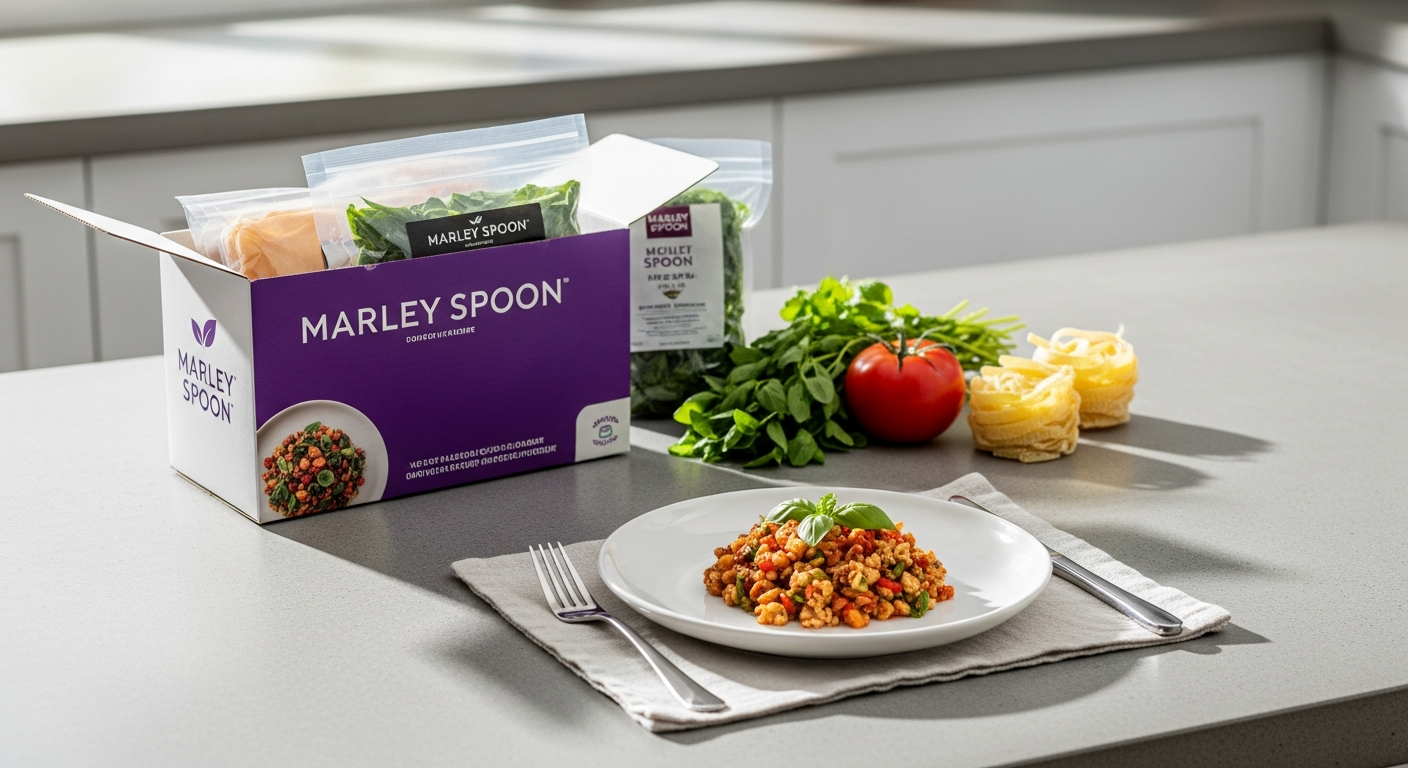
Discover how Marley Spoon meal kit subscription delivers chef-designed, single-serving recipes and fresh ingredients to busy individuals. Explore pricing, flexibility, and whether it’s worth the investment for solo diners in 2026.
Nearly 60% of single-person households struggle with meal planning and food waste—ordering takeout becomes the default when cooking for one feels overwhelming. The repetitive cycle of deciding what to eat, shopping for ingredients, and managing portions that spoil before you can use them drains both time and money. Marley Spoon, the German-born meal kit company that's revolutionized home cooking since 2014, recognized this gap and created their Balance line specifically targeting individuals who want restaurant-quality meals without traditional subscription commitments.
Solo diners face a unique challenge that family-focused meal services often overlook. Standard grocery shopping wastes ingredients when you're cooking for one, while takeout becomes expensive and unsatisfying over time. Balance by Marley Spoon bridges this gap with single-serving, ready-to-heat meals and cook-from-scratch options designed around your actual appetite.
This guide covers everything you need to know about Marley Spoon's individual meal options—from how their single-serving model works to whether the pricing makes sense compared to cooking solo from scratch, which dietary preferences they support, how fresh ingredients arrive, and whether this service genuinely reduces weeknight dinner stress for people living alone.
Explore Marley Spoon's Balance line for solo diners today.
The Single-Serving Revolution: Why Marley Spoon's Balance Line Changes the Game
How Balance by Marley Spoon differs from their standard family-focused meal kits
Balance by Marley Spoon represents a fundamental shift in how the company approaches individual cooking. While their standard subscription caters to 2 and 4-person households, Balance acknowledges that solo diners have different needs. The service delivers single-serving portions that eliminate the leftover problem entirely—you cook what you'll eat, nothing more.
Pre-portioned ingredients designed specifically for one person's appetite
Every component arrives measured for one person. Rice portions match individual serving sizes, protein quantities reflect solo consumption, and vegetable amounts prevent waste. This precision means you're not forced to buy bulk quantities that spoil before you finish them.
Ready-to-heat meal options for ultra-busy weeks versus cook-from-scratch recipes
Balance offers both heated meals and traditional recipe kits. During hectic weeks, you can select ready-to-heat options that require minimal effort. When you have time and energy, cook-from-scratch recipes deliver the satisfaction of creating something from quality ingredients. The flexibility means you're never locked into one approach.
Portion flexibility and how to avoid leftovers that sit in your fridge
The subscription model lets you adjust how many meals arrive each week. Choose 2, 3, 4, or 5 meals—whatever matches your schedule and dining habits. Skip weeks when you have plans or need a break. This control prevents the common problem of meal kits arriving when you don't need them, forcing you to store extra meals.
Weekly menu variety—over 100 recipes to choose from, even for solo diners
Marley Spoon offers more than 100 recipes weekly, ensuring variety even for solo subscribers. This prevents the monotony that often accompanies individual cooking. One week you might prepare a Martha Stewart-inspired pasta dish, the next a quick weeknight stir-fry or a leisurely vegetarian braise.
Customization options that let you skip weeks or adjust meal counts without penalties
The subscription model includes genuine flexibility. You're not locked into rigid contracts or penalized for taking breaks. Adjust your meal count, pause for a month, or change dietary preferences through your account settings without complications or extra fees.
Breaking Down the Cost: Is Marley Spoon Worth It for Solo Living?
Per-meal pricing for individual plans versus grocery store shopping comparisons
Balance pricing typically ranges from $8.69 to $12.99 per portion, depending on the meal selected and your subscription tier. This exceeds bulk grocery shopping, where you might prepare meals for $5 to $8 per serving if you're buying strategically and cooking carefully. However, the comparison becomes more nuanced when you factor in actual shopping habits.
Shipping fees and how they impact overall monthly costs
Shipping runs approximately $10.99 to $11.99 per delivery. For a 2-meal weekly plan, this adds roughly $2.50 to $3 per meal in shipping costs. Higher-frequency orders (4 or 6 meals weekly) distribute shipping across more portions, reducing the per-meal impact.
Scaling analysis: cost per portion for 2-meal, 4-meal, and 6-meal weekly options
A 2-meal weekly plan at $12.99 per portion plus $11 shipping costs approximately $27 before taxes. A 4-meal plan might total $52 (4 × $11 + $8 per portion), and a 6-meal plan reaches approximately $75. The per-portion cost decreases as you order more meals, but absolute monthly spending increases. Most solo diners find a 2 to 4-meal weekly plan sustainable.
Hidden savings through reduced food waste and eliminated impulse purchases
The real financial advantage emerges when you calculate what you're not spending. Grocery shopping for one often results in spoiled produce and forgotten ingredients. Takeout impulse purchases disappear when dinner is already planned and arriving at your door. Many solo diners discover they spend less overall despite the higher per-portion rate.
Budget-friendly meal selections within the Balance line
Not all Balance meals cost the same. Marley Spoon highlights budget-conscious options each week, typically featuring seasonal vegetables and plant-based proteins. Selecting these recipes can reduce your average cost per meal to the lower end of the range.
Promotional offers and first-order discounts for new subscribers
New subscribers often receive discounts on their first order—sometimes 50% off the initial week. This reduced entry point lets you test the service without full financial commitment. Loyalty programs occasionally offer credits for long-term subscribers.
Real-world cost scenarios: weekly, monthly, and annual spending estimates
A sustainable 3-meal weekly plan costs approximately $35 to $45 per week ($12 per meal plus $11 shipping divided across 3 meals). Monthly spending reaches $140 to $180. Annually, you're investing $1,680 to $2,160 in meals. This exceeds bulk grocery shopping but significantly undercuts regular takeout and restaurant dining for solo eaters.
Check current pricing and available promotions for Marley Spoon meal plans.
Recipe Variety and Dietary Flexibility for Solo Eaters
Vegetarian, vegan, and plant-based meal options available each week
Marley Spoon maintains dedicated vegetarian and vegan selections throughout their weekly menu. Solo diners following these dietary approaches never face limited choices. Plant-based recipes receive the same attention to flavor and technique as meat-based options.
Low-carb and quick-meal selections for time-crunched individuals
Each week includes explicitly labeled low-carb meals and recipes completed in 20 minutes or less. These options let you maintain specific nutritional goals without ordering separate meals or spending hours in the kitchen.
Martha Stewart-inspired recipes and gourmet cooking at home
Marley Spoon's US market features Martha Stewart-inspired recipes, bringing elevated home cooking within reach. You'll prepare dishes with unfamiliar ingredients and techniques—Mediterranean braises, seasonal vegetable preparations, and international cuisine—without the intimidation of sourcing specialty ingredients separately.
Limited options for strict dietary needs (keto, gluten-free, allergen-specific)
This is where Marley Spoon shows limitations. While they offer vegetarian, vegan, and low-carb selections, truly restrictive diets like strict keto or gluten-free compliance lack dedicated categories. Allergen filtering exists but isn't as comprehensive as services specifically designed around restrictive eating. If you follow multiple dietary restrictions simultaneously, you might find limited weekly options.
How to navigate dietary preferences within the subscription settings
Your account settings allow you to filter recipes by dietary preference—vegetarian, vegan, low-carb, and quick meals. These filters persist week to week, automatically excluding options that don't match your needs. You can adjust filters anytime without penalty.
Seasonal menus and rotating recipes to prevent meal fatigue
Menus rotate seasonally, featuring ingredients at peak freshness. Spring brings lighter vegetable-forward meals, summer offers quick grilling options, autumn introduces braises and root vegetables, and winter features warming preparations. This natural rotation prevents the monotony of repeating the same recipes monthly.
Difficulty level range: from beginner-friendly to advanced home cooks
Recipes span from straightforward preparations suitable for cooking novices to techniques requiring intermediate skills. Recipe cards indicate estimated difficulty and cooking time upfront. Beginner cooks can build confidence gradually, while experienced home cooks find complexity and culinary challenge.
Fresh Ingredient Quality and Packaging Integrity
How Marley Spoon sources and maintains ingredient freshness
Marley Spoon partners with regional suppliers to source fresh produce and proteins. Ingredients are selected based on seasonal availability and quality standards. The company works with their logistics partners to minimize time between packing and delivery, typically ensuring ingredients arrive within 1-3 days.
Insulation and ice pack systems designed for safe delivery
Packaging includes insulated boxes and ice packs calibrated to maintain proper temperatures during transit. Perishable items sit in sealed cold compartments separate from non-perishables. This system is designed to protect ingredients through standard delivery timeframes and typical weather conditions.
Typical shelf life of ingredients upon arrival
Most fresh produce lasts 3-5 days after arrival when stored properly. Proteins should be used within 1-2 days or frozen immediately. Non-perishable components (grains, pantry staples, sauces) last weeks or months. The staggered shelf life works well for weekly meal planning—you use fresher items early in the week and shelf-stable components later.
Packaging materials and sustainability concerns for solo portions
Individual portions require more packaging per meal than family-sized kits—each ingredient arrives separately in compartments designed for one person. While this eliminates food waste, it increases packaging waste. Marley Spoon uses recyclable and compostable materials where possible, but the volume of packaging remains higher than traditional grocery shopping. Environmental-conscious diners may feel conflicted about this trade-off.
Common customer experiences with ingredient quality and condition
Most subscribers report receiving fresh, high-quality ingredients in good condition. However, occasional issues occur—sometimes a vegetable arrives slightly wilted or a protein shows minor discoloration from the cold journey. Customer service typically addresses these problems through replacements or credits. The frequency of such issues is lower than with standard grocery delivery services but not nonexistent.
What to expect with perishable items in warm climates or delayed deliveries
Warm climates present challenges for insulated box systems. Extended delays or particularly hot weather can compromise ice pack effectiveness, potentially affecting ingredient quality. If you live in a consistently warm area or your delivery often experiences delays, this service requires more caution. Schedule deliveries for days when you'll be home to receive them promptly.
Return or replacement policies for damaged or substandard ingredients
Marley Spoon maintains a straightforward replacement policy. Report damaged or substandard ingredients within 48 hours of delivery, and the company typically sends replacements or issues credits. The process is handled through your account portal, making claims simple and quick.
The Cooking Experience: From Recipe Card to Dinner Table
Detailed recipe card design and ease of following instructions
Recipe cards feature clear, step-by-step instructions with ingredient photos and timing guidance. Instructions assume no prior knowledge, making them accessible to cooking novices. More experienced cooks appreciate the detail without feeling patronized. Cards include helpful notes about flavor profiles and technique explanations.
Estimated prep and cooking times for individual meals
Each recipe clearly indicates prep time and active cooking time separately. A "20-minute meal" might involve 10 minutes of prep and 10 minutes of cooking, giving you realistic expectations. These estimates prove generally accurate for home cooks with basic knife skills and kitchen familiarity.
Skill-building opportunities through diverse cuisine exposure
Cooking through Marley Spoon's menu naturally builds culinary skills. You'll encounter international cuisines, unfamiliar ingredients, and new techniques in manageable portions. The guided structure prevents the overwhelm that comes from searching random recipes online, while the variety prevents stagnation.
Equipment and pantry staples you'll need at home
Standard home kitchen equipment suffices—basic knives, cutting board, saucepans, and mixing bowls. Marley Spoon recipes occasionally require specific tools (immersion blender, for example), but these appear infrequently and are noted in advance. Most recipes work with standard equipment found in functional home kitchens. They assume you have basic pantry staples like salt, oil, and pepper.
Batch cooking strategies for solo diners who want meal prep flexibility
While individual meals arrive pre-portioned, nothing prevents you from preparing multiple meals simultaneously. Cook two meals in one session to cover multiple nights, then reheat as needed. Some recipes scale up easily for this approach, creating your own meal prep without the time investment of cooking from scratch weekly.
Community and cooking tips through Marley Spoon's digital platform
Marley Spoon maintains a digital platform where subscribers access recipe videos, technique tutorials, and customer cooking tips. This community aspect transforms cooking from isolation into connection—you're part of a group exploring the same recipes simultaneously worldwide. The platform occasionally features chef interviews and behind-the-scenes sourcing stories.
How the cooking process compares to restaurant takeout in terms of satisfaction
Cooking a Marley Spoon meal takes 30-50 minutes typically, compared to 20 minutes of waiting for delivery plus time to eat takeout. However, the satisfaction differs fundamentally. You create something with your hands using quality ingredients, engaging all your senses in the process. Many solo diners find this active engagement more satisfying than passive takeout consumption—the meal feels like an accomplishment rather than a transaction.
Subscription Flexibility and Pause/Cancel Options
How to adjust meal frequency without long-term commitment
Your account settings allow weekly adjustments to meal count without penalties. Choose 2, 3, 4, or 5 meals for the upcoming week, then modify again before the next ordering window. This flexibility means you're never locked into a fixed amount.
Pause options for weeks when you need a break
Rather than canceling entirely, pause your subscription for single weeks or multiple weeks. Your account remains active, but deliveries stop until you resume. This prevents losing subscriber status or promotional credits during vacation, illness, or temporary budget constraints.
Cancellation process and any associated fees or restrictions
Cancellation requires logging into your account and selecting the cancel option—no phone calls or retention hurdles. There are no cancellation fees or penalties. Your last scheduled delivery arrives on your final order date, then service stops. You can reactivate your account later if you return to the service.
Customer service responsiveness for account modifications
Marley Spoon handles account changes through a self-service portal, eliminating the need to contact customer service for adjustments. For more complex issues, email support typically responds within 24 hours. Phone support is available, though response times vary by region.
Ability to change dietary preferences or skip specific recipes mid-week
You can modify dietary preference filters anytime, though skipping specific recipes mid-week isn't possible once your order is locked in (typically 5-7 days before delivery). Plan ahead if you notice an unappealing recipe in the upcoming week, or let it arrive and modify future orders to avoid similar options.
Rollover credits or loyalty benefits for long-term subscribers
Marley Spoon occasionally offers loyalty programs with credits for long-term subscribers, though these programs vary by region. New promotions emerge seasonally, and long-term subscribers typically receive email alerts about special offers before the general public.
Trial periods and risk-free options for first-time users
First-time subscribers often receive substantial discounts (sometimes 50% off the first order) rather than formal trial periods. This reduced-cost entry point lets you test the service at minimal financial risk. If you're unsatisfied after the first delivery, cancellation is straightforward with no obligations.
Real-World Pros and Cons for Solo Subscribers
Advantages: Eliminates decision fatigue around meal planning and grocery shopping
The mental load of deciding what to cook, planning a shopping list, and navigating the grocery store vanishes. Marley Spoon handles these decisions for you. Each week, you simply select from available recipes rather than starting from scratch. For busy professionals and remote workers, this elimination of decision fatigue represents genuine value.
Reduced food waste through pre-portioned components solves the core problem of solo cooking—buying ingredients for recipes that spoil before you use them. Everything arrives in exactly the amount you need, nothing more. The environmental and financial benefits of this precision extend beyond immediate meal costs.
Access to gourmet recipes expands your culinary horizons without the research and ingredient sourcing required for attempting unfamiliar dishes independently. You cook restaurant-quality meals at a fraction of restaurant prices, building skills and confidence through guided experience.
Time savings accumulate across meal planning, grocery shopping, and ingredient prep. Marley Spoon handles planning and sourcing; you focus only on cooking and eating. For solo diners, this time reclamation often translates to greater overall well-being.
Exposure to new cuisines and ingredients prevents the monotony that solo cooking often creates. You try preparations and flavors you might never discover on your own, expanding your palate and cooking repertoire.
Convenience for busy professionals means dinner happens on your timeline without takeout defaults or ultra-processed frozen meals. Quality ingredients and straightforward recipes combine to make home cooking viable even during demanding work weeks.
Disadvantages: Higher per-meal cost than bulk shopping
At $8.69 to $12.99 per portion plus shipping, Marley Spoon exceeds bulk grocery shopping costs. If your primary goal is absolute cost minimization, this service doesn't deliver the lowest possible price per meal. Careful grocery shopping and meal planning can undercut Marley Spoon pricing, though this requires significant time investment.
Packaging waste concerns emerge from individual portioning. Each ingredient arrives separately in compartments, maximizing convenience but increasing packaging volume. While materials are recyclable, the environmental impact per meal exceeds bulk grocery shopping where items combine in fewer containers.
Limited restrictive dietary options create challenges for people following strict keto, gluten-free, or multiple dietary restrictions simultaneously. While general categories like vegetarian and vegan work well, highly specialized diets may find insufficient weekly variety.
Occasional quality inconsistencies occur when ingredients arrive in substandard condition or ice packs fail during warm-weather delivery. While customer service addresses these issues, they disrupt meal plans and create frustration.
Requires active meal planning in a different sense—you must select recipes by the ordering deadline and coordinate delivery timing with your schedule. While this is less demanding than traditional grocery shopping, it's not entirely passive.
Unpredictable delivery timing means your meals might arrive early in the week or late, affecting your cooking schedule. Standard delivery windows last several days, requiring flexibility in planning which nights you'll cook.
Making the Decision: Is Marley Spoon Right for Your Solo Kitchen?
Ideal customer profile: who benefits most from this service
Marley Spoon serves busy professionals and remote workers who value time over absolute cost minimization. Solo diners who enjoy cooking but lack energy for extensive meal planning thrive with this service. People seeking culinary exploration and variety find genuine satisfaction. Individuals tired of takeout defaults but struggling with solo cooking logistics benefit most.
The ideal subscriber earns a comfortable income that makes the higher per-portion cost acceptable, values convenience alongside quality, and lives in a location with reliable delivery. They're willing to take 30-50 minutes to cook a meal and find that process satisfying rather than burdensome.
Lifestyle factors that make meal kit subscriptions worthwhile
Demanding work schedules that leave little time for meal planning and grocery shopping make subscriptions valuable. Remote work arrangements where you want fresh, engaging meals at home enhance subscription value. Social schedules that vary week to week benefit from flexible pause options. Limited kitchen storage or refrigerator space makes bulk grocery shopping impractical, favoring portion-controlled deliveries.
Living far from quality grocery stores or in areas with limited fresh ingredient availability increases subscription value. Dietary interest where you want to explore new cuisines amplifies benefits. Time poverty combined with budget availability creates the perfect scenario for meal kit subscriptions.
Questions to ask yourself before committing to a subscription
Do you actually enjoy cooking, or are you seeking to avoid the activity entirely? Marley Spoon works best for people who find cooking rewarding, not those seeking total convenience. Is $8.69 to $12.99 per meal sustainable within your budget? Calculate realistic monthly spending including shipping. How much time do you spend on meal planning and grocery shopping currently? If this time commitment is minimal, subscription benefits are reduced.
Do you have reliable refrigerator space for weekly deliveries? Do you live in an area with reliable delivery service? Will you be home during delivery windows? Can you commit to cooking within 1-3 days of arrival for optimal freshness?
How to calculate your personal break-even point
Track your current monthly spending on groceries, takeout, and restaurant meals. Calculate the average per-meal cost. Compare this to Marley Spoon's cost per meal plus shipping. Factor in time value—how much is eliminating meal planning and grocery shopping worth to you hourly? Consider food waste costs—what percentage of groceries currently spoil before use? Reducing waste provides genuine savings that offset higher per-portion meal costs.
Alternative meal solutions and how Marley Spoon compares
Grocery delivery services like Instacart still require meal planning but eliminate shopping trips. They offer lower per-item costs but don't solve the portion problem for solo diners. Meal prep services (HelloFresh, EveryPlate) provide similar benefits at varying price points and recipe complexity levels. Takeout and restaurant dining cost more but require no cooking. Traditional grocery shopping costs less but demands significant time and planning. Frozen meal services provide convenience but sacrifice ingredient quality and cooking engagement.
Trial strategies: starting with a single week before committing
Order a single week with a 2 or 3-meal plan to test the service without major financial commitment. Pay attention to delivery condition and timing. Cook one meal carefully, noting ingredient quality and recipe clarity. Compare time and cost to your normal solo dinner process. Assess whether the satisfaction and convenience justify the cost for your specific situation.
Hybrid approaches: combining Marley Spoon with other meal solutions
You need not choose Marley Spoon exclusively. Many solo diners combine 2-3 Marley Spoon meals weekly with grocery shopping for flexibility. Some use the service during demanding work weeks and grocery shop during lighter weeks. Others maintain Marley Spoon year-round while supplementing with occasional takeout. This hybrid approach provides flexibility—you get structure and convenience from subscriptions while maintaining budget control through selective grocery shopping.
Your Path to Effortless Solo Dinners Starts Here
Marley Spoon's individual meal subscription addresses a real problem that solo diners face—the exhausting cycle of deciding what to cook, shopping for ingredients, and managing portions that inevitably spoil. Their Balance line specifically acknowledges that cooking for one requires a different approach than family meal kits, and that attention to detail makes a measurable difference. At $8.69 to $12.99 per portion plus shipping, you're paying more than bulk grocery shopping—but you're also paying for convenience, zero food waste, and access to recipes you might never attempt on your own.
For busy professionals, remote workers, and anyone tired of the takeout treadmill, that trade-off often feels worth it. The real value emerges when you factor in the time saved, the reduced decision fatigue, and the genuine pleasure of cooking elevated meals without the stress. That said, this service thrives for people who actually enjoy cooking and want variety in their weekly rotation. If you're seeking ultra-strict keto or gluten-free compliance, or if your budget is razor-thin, you'll find better options elsewhere.
But if you're a solo diner who values fresh ingredients, culinary exploration, and freedom from meal planning—Marley Spoon deserves serious consideration. Start with a single week to test the experience and pay attention to how ingredients arrive, whether recipes fit your skill level, and how total cost aligns with your budget. The service offers genuine flexibility, responsive customer service, and the ability to pause or cancel without penalty, meaning your first week carries minimal risk.
Begin your solo dining transformation with Marley Spoon Balance today.