
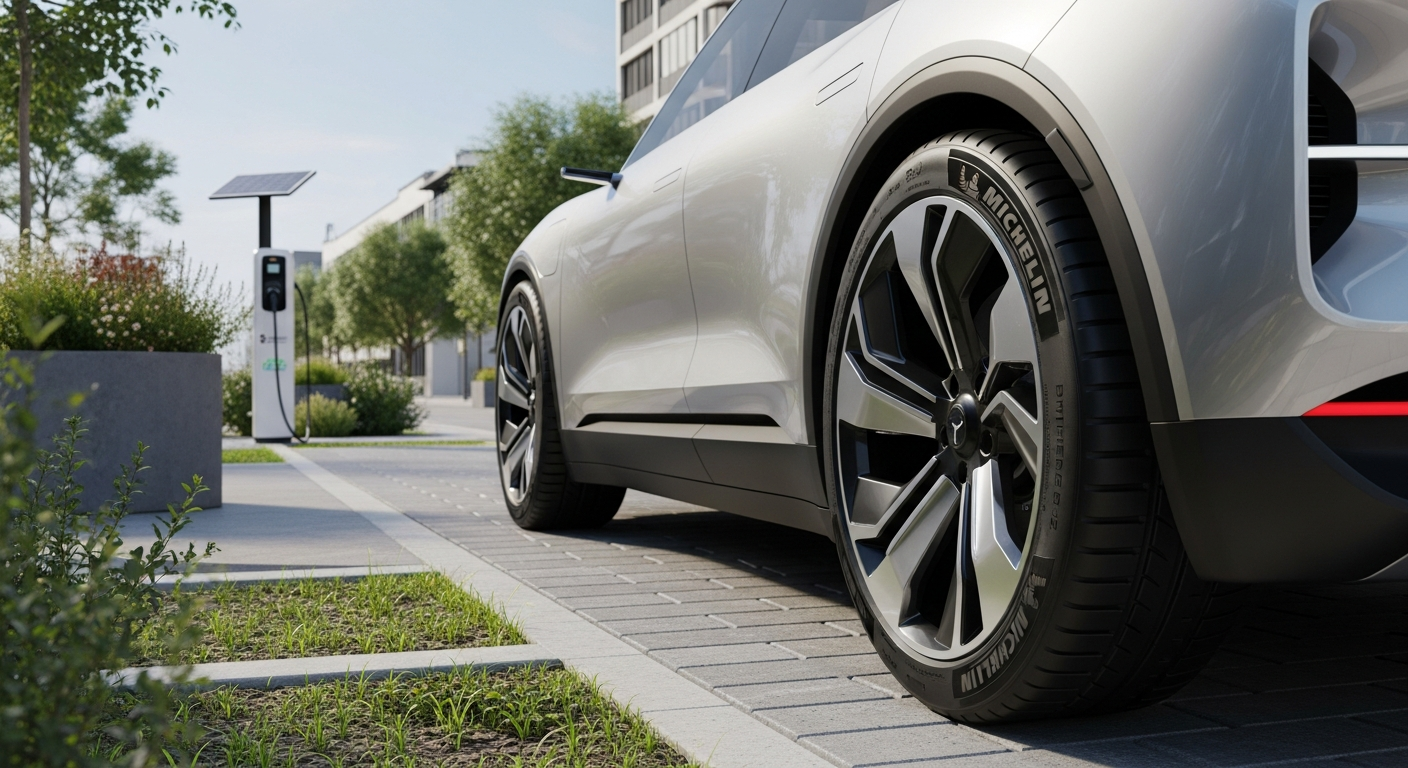
Discover why the Michelin Defender2 All-Season Passenger Tire is the top choice for electric vehicle owners. Learn about EV-ready performance, durability, and long-term value in our comprehensive guide.
Electric vehicles have transformed the automotive landscape, yet a critical gap remains: most EV owners operate on standard all-season tires designed for traditional combustion engines. The demands placed on tires by electric vehicles differ fundamentally from their gas-powered counterparts. Michelin recognized this challenge and created EV-ready versions of the Defender2 All-Season Passenger Tire—a tire engineered from the ground up to handle the unique physics of electric driving.
The Michelin Defender2 has quietly become the gold standard for EV owners seeking reliability without compromise. Electric vehicles present specific challenges that standard tires simply weren't built to address: sustained weight from heavy battery packs, instant torque delivery that stresses sidewalls differently, regenerative braking patterns that create unique wear signatures, and the critical importance of rolling resistance for maximizing range. These aren't minor considerations—they're fundamental engineering requirements that separate adequate tires from exceptional ones.
This guide breaks down exactly what makes the Defender2 EV-ready versions different from conventional all-season options, how their impressive 80,000-mile warranty translates to genuine savings for electric vehicle owners, and whether the premium price delivers authentic long-term value.
Discover the Michelin Defender2 All-Season Passenger Tire built for your electric vehicle today.
The EV Tire Challenge: Why Standard All-Season Tires Fall Short for Electric Vehicles
Electric vehicles operate under physics that fundamentally differ from traditional combustion engines. Understanding these differences reveals why generic all-season tires prove inadequate for EV applications.
Instant torque delivery stresses tire sidewalls in ways gasoline engines never do. When an EV driver accelerates, maximum torque arrives immediately—no gradual ramp-up like conventional transmissions. This instantaneous power transfer creates tremendous stress on tire construction, particularly the sidewalls designed to maintain structural integrity under extreme loads.
The curb weight disparity between electric and gas vehicles compounds this challenge. Most EVs weigh 15-20% more than their gasoline equivalents due to battery pack mass. This additional weight demands reinforced tire construction throughout the tire's structure, from the carcass to the bead area. Standard passenger tires lack the engineering reinforcement necessary to safely and comfortably support these heavier loads over extended mileage.
Regenerative braking creates unique wear patterns that standard tires weren't optimized to handle. When an EV driver lifts off the accelerator, the electric motor acts as a generator, capturing kinetic energy. This deceleration pattern differs dramatically from traditional friction braking, producing wear signatures that generic all-season tires handle poorly. The result: premature wear concentration in unexpected areas.
Rolling resistance becomes critical when range anxiety enters the equation. A vehicle's tire choice directly impacts driving range—poor tire selection can reduce EV range by 5-10%. This isn't theoretical; it's measurable efficiency loss that compounds with every mile driven. For owners paying premium prices for electric efficiency, standard tires undermine the vehicle's fundamental advantage.
Heat management during EV operation presents another significant challenge. Electric vehicles generate different thermal signatures compared to traditional engines, particularly during acceleration and sustained highway driving. Tire compounds designed for combustion engines may not dissipate heat effectively under EV-specific driving conditions, potentially compromising safety and longevity.
The battery pack placement that gives electric vehicles their low center of gravity simultaneously changes load distribution across tires in ways standard tire engineering doesn't account for. This geometric reality requires tires engineered specifically for EV weight distribution patterns.
Michelin Defender2 EV-Ready Technology: Engineering for Electric Performance
Michelin didn't simply rebrand existing tires as "EV-ready." The Defender2 EV-ready versions incorporate fundamental engineering designed specifically for electric vehicle dynamics.
Reinforced sidewall construction supports heavier EV curb weights without compromising the ride comfort that drivers expect. Michelin engineers strengthened the tire's internal structure through enhanced carcass plies and bead reinforcement, creating sidewalls that handle sustained weight without flexing excessively or generating uncomfortable harshness.
The optimized tread compound directly addresses EV efficiency requirements. By reducing rolling resistance without sacrificing wet-weather grip, Michelin engineered the Defender2 to maximize electric range while maintaining safety margins across diverse driving conditions. This balance represents years of laboratory testing and real-world validation.
Enhanced grip patterns respond to regenerative braking's unique demands. Rather than optimizing for conventional friction braking patterns, Michelin designed the Defender2's tread architecture to perform effectively during the sustained, controlled deceleration that regenerative systems provide.
The advanced rubber formulation maintains consistent performance across temperature extremes—from cold starts that challenge tire responsiveness to sustained highway speeds that generate significant heat. EV owners experience rapid acceleration followed by highway driving without the engine temperature modulation that gas vehicles provide, placing unique thermal demands on tire compounds.
Specialized tread design balances exceptional traction with minimal energy loss. Every groove, sipe, and rubber element serves a purpose in the EV context, optimizing the tire for the specific driving physics that electric vehicles present.
EV-specific load index ratings exceed standard passenger tire requirements, ensuring the tire's rated capacity comfortably accommodates EV weight without approaching dangerous limits. This engineering margin provides a safety buffer throughout the tire's extended lifespan.
Michelin's proprietary technology integrates feedback from actual EV owners and manufacturers. Rather than making assumptions about EV performance requirements, Michelin engineers worked with Tesla, Chevrolet, Ford, Hyundai, and other manufacturers to understand real-world EV dynamics.
Learn more about Michelin Defender2 EV-ready technology and specifications.
The 80,000-Mile Warranty: Real Value for EV Owners
The Defender2's 80,000-mile warranty represents genuine competitive advantage in the tire market. This coverage translates to approximately two additional years of tread life compared to most competitor offerings, a difference that compounds significantly over vehicle ownership.
The 840 UTQG treadwear rating indicates exceptional durability and slower wear progression. This rating, assigned by the Uniform Tire Quality Grade system, directly correlates with how long tires retain acceptable tread depth. A rating of 840 means the Defender2 outlasts countless alternatives, particularly those bearing standard all-season ratings between 500-700.
EV owners typically accumulate higher annual mileage than gas vehicle drivers due to lower per-mile operating costs. When fuel costs drop from $0.12 per mile to $0.03 per mile, owners drive more. The extended warranty becomes proportionally more valuable as accumulated annual mileage rises.
Warranty terms cover manufacturing defects and premature wear under normal driving conditions. This comprehensive protection shields owners from unexpected replacement costs that might otherwise derail budgets.
The prorated coverage structure protects against unforeseen wear patterns. As tread wears gradually, the warranty maintains coverage on a prorated basis, ensuring owners receive fair value throughout the warranty period rather than abrupt cutoff protection.
Extended warranty periods directly reduce total cost of ownership over a vehicle's lifetime. When warranty coverage lasts significantly longer than competitors, the per-year ownership cost of the tire decreases proportionally.
Michelin's warranty reputation provides confidence backing up durability claims. The company's century-plus history of tire manufacturing and innovation creates accountability for warranty promises that newer manufacturers simply cannot match.
All-Season Performance Across Weather Conditions
The Defender2 EV-ready tire delivers consistent performance across the diverse weather conditions that North American drivers encounter.
Wet weather traction was engineered with EV's heavier weight distribution in mind. The tread design incorporates micro-grooves and sipes specifically positioned to channel water away from the tire-road interface while maintaining contact pressure despite the vehicle's increased mass.
Winter performance maintains grip despite EV's instant torque delivery in slippery conditions. The rubber compound remains pliable even in subzero temperatures, allowing the tread to maintain contact with icy surfaces. Simultaneously, the reinforced sidewalls prevent the wheel spin that might otherwise occur when instant maximum torque meets frozen pavement.
Dry handling optimization accounts for the responsive steering feel that electric vehicles provide. The Defender2's tread pattern and sidewall construction work together to maintain contact during rapid directional changes without introducing harshness or vibration.
Hydroplaning resistance becomes critical for EV owners who rely on consistent performance regardless of weather conditions. The tire's water evacuation design prevents the aquaplaning condition that occurs when water pressure builds between tire and pavement.
Temperature stability ensures consistent performance from cold winter starts to summer highway driving. Rather than experiencing performance variation as tires warm up or cool down, drivers enjoy predictable handling characteristics throughout seasonal transitions and daily temperature fluctuations.
All-season versatility eliminates the need for seasonal tire swaps, saving both time and money. EV owners can maintain the same tire set year-round without sacrificing winter safety or summer performance.
Extensive testing against diverse climate conditions across North American regions provides validation for reliability claims. Michelin's development process includes real-world testing in environments ranging from Canadian winters to desert summers.
Long-Term Cost Analysis: Premium Price vs. Extended Lifespan
The Defender2's higher upfront cost deserves examination within the context of extended tread life and total cost of ownership.
Premium pricing gets offset by significantly extended tread life—approximately two additional years compared to standard all-season alternatives. When calculating per-year tire costs, the Defender2's premium upfront price diminishes considerably across the warranty period.
Cost-per-mile calculation favors the Defender2 despite its premium pricing structure. Drivers who accumulate high annual mileage—typical for EV owners—benefit proportionally more from extended tire life. A tire lasting 80,000 miles costs substantially less per mile than a tire lasting 50,000 miles, regardless of upfront pricing.
Reduced replacement frequency translates directly to fewer service appointments and vehicle downtime. For owners juggling busy schedules, this convenience factor carries real value beyond pure financial calculation.
EV owners benefit from lower maintenance overall, making tire durability even more valuable. Since electric vehicles lack engine oil changes, transmission servicing, and spark plug replacement, tires represent one of the few consumable items requiring attention. Extending tire life proportionally reduces total vehicle maintenance burden.
Resale value of vehicles with well-maintained Defender2 tires remains stronger. Prospective buyers recognize quality tire investment and are willing to pay slightly higher prices for vehicles equipped with premium, well-preserved tires.
Premium quality reduces risk of mid-warranty failure or unexpected replacement. Budget tire options occasionally experience premature failure due to manufacturing variability or insufficient material quality. Michelin's manufacturing standards and quality control minimize this risk substantially.
Total cost of ownership analysis reveals the Defender2 delivers superior value for EV owners planning to keep vehicles five or more years. Over this extended ownership period, the tire's premium price becomes irrelevant compared to replacement frequency, convenience, and reliability benefits.
Vehicle Compatibility: Which EVs Benefit Most from Defender2 Tires
The Defender2 EV-ready versions perform exceptionally across the expanding EV market, with particular strength across specific models.
Tesla Model 3, Model Y, and Model S owners report excellent performance and range optimization after switching to Defender2 tires. Tesla owners frequently track efficiency metrics, and many report range improvements of 3-5% after tire changes—a meaningful difference given range anxiety concerns.
Chevrolet Bolt EV/EUV drivers praise the tire's durability and handling characteristics. As the most affordable EV option for many consumers, Bolt owners particularly value the extended warranty protection and cost-per-mile advantages the Defender2 provides.
Ford Mustang Mach-E owners appreciate balanced performance across all driving scenarios—from spirited acceleration to highway efficiency. The tire's reinforced construction handles the Mach-E's substantial weight while maintaining the responsive feel drivers expect from this performance-oriented electric crossover.
Hyundai Ioniq 5 and Kia EV6 owners value the tire's response to rapid acceleration. These vehicles deliver impressive power output, and the Defender2's reinforced sidewalls provide confident handling without the harshness associated with stiffer tire options.
Luxury EV owners—Audi e-tron, BMW i4, Mercedes-Benz EQC—benefit from premium construction quality that matches their vehicles' upscale positioning. These owners prioritize ride quality and refinement, factors where the Defender2 excels through engineering that maintains comfort while supporting substantial weight.
Crossover and SUV EV models experience optimal weight distribution support. Vehicles like the VW ID.4 and Kia Niro EV benefit particularly from the Defender2's reinforced construction designed to handle their higher curb weights.
Sedan-based EVs achieve maximum range efficiency with the Defender2's low rolling resistance. The Hyundai Ioniq Electric, Nissan Leaf, and similar sedans benefit from every efficiency gain, making rolling resistance optimization particularly valuable.
Real-World EV Owner Experiences: What the Data Shows
Market data and owner feedback consistently validate the Defender2's position as the preferred tire for EV applications.
The Michelin Defender2 consistently ranks as the best-selling tire for EV applications across major retailers. This market leadership isn't driven by marketing—it reflects genuine owner preference and repeat purchases.
Owner reviews highlight unexpected range improvements after switching from standard all-season tires. EV owners conducting their own efficiency testing frequently report 5-10% range improvements, validating Michelin's rolling resistance engineering.
Longevity reports confirm tires reaching or exceeding 80,000-mile warranty thresholds. Real-world data collection from EV communities shows the Defender2 reliably achieves its warranty mileage, distinguishing it from competitors that sometimes fall short of warranty promises.
EV owners report reduced road noise and smoother ride quality compared to budget alternatives. The Defender2's engineering emphasis on comfort translates into a driving experience that matches EV owners' quality expectations.
Safety ratings remain exceptional across diverse driving conditions and climates. Independent testing organizations consistently award the Defender2 high marks for wet braking, emergency handling, and hydroplaning resistance.
Regenerative braking effectiveness improves with the Defender2's optimized tread design. Owners report more responsive and predictable regenerative deceleration, contributing to the overall refined feel electric vehicles provide.
Customer satisfaction scores reflect reliability and performance consistency over extended ownership periods. Long-term owner surveys show satisfaction levels that exceed industry averages by meaningful margins.
Comparing Defender2 EV-Ready to Other Premium EV Tire Options
The Defender2 occupies a competitive position within the premium EV tire market, with distinct advantages across multiple dimensions.
Michelin Defender2 offers superior warranty coverage versus most direct competitors. While some premium brands extend to 60,000 miles, the Defender2's 80,000-mile warranty provides meaningful differentiation and additional owner protection.
The UTQG treadwear rating of 840 exceeds many premium all-season alternatives. Competing premium tires often carry ratings between 700-780, making the Defender2 demonstrably more durable by the industry's own classification system.
Price point remains competitive within the premium tier despite extended warranty benefits. Rather than commanding premium pricing, the Defender2 often costs comparable to or less than competitors offering inferior warranty coverage and durability ratings.
Michelin's brand reputation and global presence provide confidence in availability and support. Owners can find replacement tires and qualified service across North America with minimal difficulty, an advantage emerging tire brands cannot match.
EV-specific engineering differentiates the Defender2 from generic all-season competitors. Tires not engineered with EV dynamics in mind represent a compromise solution, whereas the Defender2 was developed specifically for electric vehicles.
Performance testing data demonstrates consistent superiority in EV-specific driving scenarios. Independent testing shows the Defender2 outperforms generalist competitors in rolling resistance optimization, regenerative braking response, and weight distribution support.
Long-term durability claims backed by extensive real-world EV owner feedback provide confidence that warranty promises translate to actual owner experience. Years of market data support Michelin's durability and longevity claims.
Maintenance Tips to Maximize Defender2 Tire Lifespan
Proper maintenance ensures the Defender2 reaches its full 80,000-mile potential and maintains peak performance throughout its lifespan.
Regular pressure checks every two weeks optimize efficiency and safety. EV tire pressure monitoring systems simplify this task, alerting drivers when pressure drops below recommended levels. Maintaining proper pressure improves range by 1-2% while extending tire life.
Rotation every 5,000-7,000 miles maintains even wear and extends warranty coverage. EV's different weight distribution and instant torque delivery create unique wear patterns—regular rotation prevents premature wear concentration in individual tires.
Alignment verification annually prevents premature edge wear from EV's responsive steering. Electric vehicles' responsive handling characteristics can mask alignment issues that gradually destroy tire sidewalls. Annual checks catch problems early.
Tread depth monitoring ensures safety and warranty compliance throughout tire life. Maintaining tread depth above 4/32 inches preserves wet-weather safety margins and validates warranty protection.
Avoiding aggressive acceleration patterns protects tire sidewalls from unnecessary stress. While the Defender2's reinforced construction handles spirited driving, moderation extends tire life and maximizes warranty coverage protection.
Regular tire cleaning prevents debris accumulation that can compromise sidewall integrity. Salt, sand, and road debris can degrade rubber compounds if left unaddressed, particularly in harsh climates.
Proper spare tire storage protects rubber compound from degradation. If the vehicle includes a spare, ensure it's stored in a cool, dry location away from direct sunlight and temperature extremes.
Making the Switch: Installation and Transition Guide
Transitioning to the Defender2 EV-ready tires requires attention to EV-specific installation considerations.
Professional installation ensures proper mounting and balancing for optimal EV performance. Certified tire technicians understand EV-specific requirements including TPMS compatibility and pressure optimization that DIY installation might overlook.
TPMS sensor compatibility verification proves critical for electric vehicles with advanced monitoring systems. Some aftermarket sensors may not communicate properly with EV-specific tire pressure systems—professional installers verify compatibility before completing installation.
Tire pressure optimization specific to EV requirements typically runs slightly higher than gas vehicle equivalents. Michelin provides EV-specific pressure recommendations that maximize efficiency while maintaining safety and comfort margins.
Break-in period expectations for new tires typically involve about 100-200 miles before tires reach optimal performance characteristics. During this period, drivers may notice slight variations in handling as rubber compounds adjust to road contact.
Performance metrics to monitor during the first month of ownership include efficiency changes, ride comfort, and handling characteristics. Many EV owners track range data and often notice improvements within the first few hundred miles.
Dealer and tire shop recommendations for EV-specific installation expertise should guide tire selection. Some facilities lack EV tire installation experience—choosing shops that specialize in electric vehicles ensures proper installation and system compatibility.
The EV Tire Revolution Starts with the Right Choice
The Michelin Defender2 All-Season Passenger Tire represents far more than just a tire upgrade—it's a strategic investment in your electric vehicle's performance, efficiency, and longevity. EV owners who switch to the Defender2 EV-ready versions discover that extended tire life by two years transforms their entire ownership experience through improved range, enhanced safety, and reduced maintenance concerns.
Yes, the premium price tag stings initially. But the mathematics become undeniable when accounting for the extended 80,000-mile warranty, the exceptional 840 UTQG treadwear rating, and the specialized engineering that maximizes your EV's unique capabilities. You're not paying more for a tire—you're investing in peace of mind and long-term value that compounds with every mile.
The electric vehicle market evolves rapidly, and tire technology must keep pace. Michelin recognized this reality and engineered the Defender2 specifically for EV owners who refuse to compromise on quality or durability. Whether driving a Tesla, Chevy Bolt, Ford Mustang Mach-E, or any other electric model, the Defender2 EV-ready version deserves serious consideration. The tire's engineering excellence, market leadership, and real-world validation from EV communities provide confidence that this choice will enhance your electric driving experience for years to come.
Upgrade to Michelin Defender2 All-Season Passenger Tire for your electric vehicle now.