
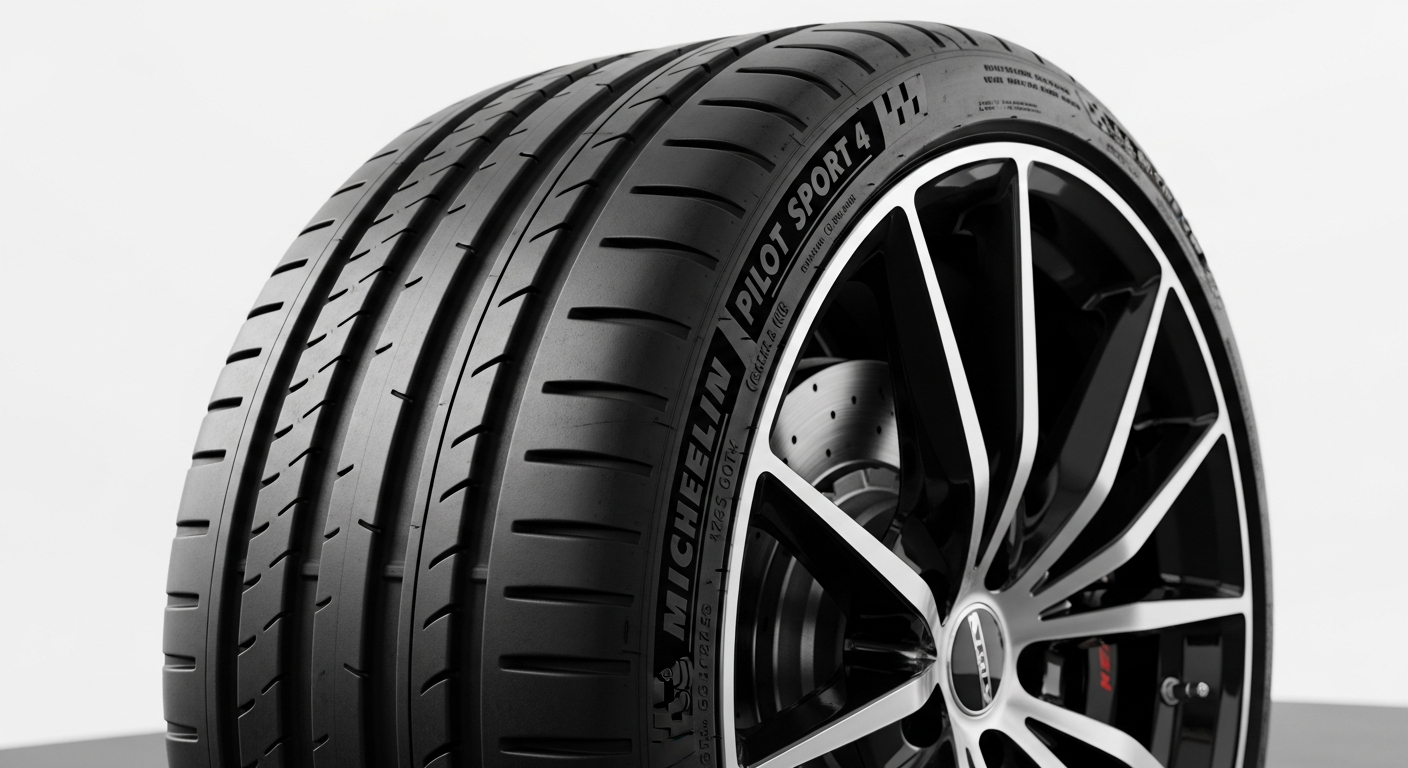
Discover why the Michelin Pilot Sport 4 high-performance summer tire dominates the premium segment. Explore Dynamic Response Technology, wet/dry grip performance, and whether this track-bred tire justifies its premium price for your driving style.
Over 35% of premium tire purchases worldwide involve high-performance summer options, yet distinguishing genuine performance gains from marketing claims remains frustratingly difficult for most drivers. The tire market floods consumers with technical specifications and promotional language that obscures which products actually deliver measurable benefits.
The Michelin Pilot Sport 4 occupies a rare position: it’s engineered directly from Michelin’s racing programs at Le Mans and Formula E, bringing technology originally designed for extreme motorsport conditions into a street-legal package that everyday enthusiasts can genuinely use. This tire represents genuine innovation rather than incremental updates.
Understanding what makes the Pilot Sport 4 exceptional requires examining its engineering foundations, evaluating real-world performance across various driving conditions, assessing durability characteristics, and determining whether premium pricing aligns with your specific needs and driving patterns.
Explore Michelin Pilot Sport 4 pricing and availability at reifen.at
Engineering Behind Dynamic Response Technology
Hybrid Belt Architecture and Contact Patch Optimization
The foundation of the Pilot Sport 4’s handling characteristics lies in its hybrid aramid and nylon belt construction. This architectural approach maintains a consistent contact patch across varying speeds and driving intensities—a critical factor for both wet and dry performance. When braking hard or cornering aggressively, tires naturally flex and deform. The hybrid belt system resists this deformation, keeping more rubber in contact with the road surface precisely when drivers need it most.
Dynamic Response Technology for Precision Control
Michelin’s Dynamic Response Technology represents a fundamental shift in how modern tires manage steering input. Rather than applying uniform construction throughout the tire, this technology optimizes sidewall stiffness and belt tension to deliver sharper steering response at various speeds. At highway speeds, the tire maintains composure and stability. During aggressive cornering or track-inspired driving, the technology heightens steering precision and feedback.
Asymmetric Tread Pattern and Cornering Grip
The asymmetric design features reinforced outer shoulder blocks that engage during aggressive cornering. As a driver increases lateral acceleration, these blocks flex and compress in a controlled manner, expanding the contact patch without causing excessive squirm or instability. The inner tread pattern prioritizes water evacuation and braking performance, creating a design optimized for multiple driving scenarios simultaneously.
Functional Elastomer and Silica Chemistry
The rubber compound itself incorporates a functional elastomer and hydrophobic silica system that fundamentally changes how the tire behaves in wet conditions. The hydrophobic silica resists water absorption, maintaining grip levels even as moisture accumulates on the tire surface. This chemistry allows the tire to maintain performance in heavy rain while preserving dry-weather grip—a balance many competitors struggle to achieve.
Decoding the Specifications—What the Numbers Actually Mean
Load Rating: 92 and Real-World Capacity
A load rating of 92 translates to 630 kg (approximately 1,389 lbs) per tire. For most performance vehicles, this rating accommodates the vehicle weight plus occupants and cargo with a safety margin. A typical sports car weighing 3,200 pounds distributed across four tires requires approximately 400 kg per tire under normal conditions, leaving comfortable headroom. Understanding this specification prevents overloading, which would degrade performance and shorten tire life.
Speed Rating Y: Beyond Legal Limits
The Y speed rating indicates the tire maintains its engineering integrity up to 300 kph (186 mph). This specification exceeds legal highway speeds in virtually all jurisdictions but becomes relevant during track driving or emergency maneuvers. The rating confirms the tire’s structural design can withstand extreme forces without failure, providing confidence during high-performance driving.
UTQG Rating: 540 AA A Explained
The 540 UTQG treadwear rating suggests approximately 40,000-50,000 miles under normal conditions, though actual longevity varies significantly with driving style. The AA traction rating indicates excellent wet braking performance verified through standardized government testing. The A temperature resistance rating confirms the tire maintains integrity during sustained high-speed driving when internal temperatures rise substantially.
Pilot Sport 4S: Enhanced Variant
For extreme performance enthusiasts, Michelin offers the Pilot Sport 4S with enhanced specifications and more aggressive tread designs optimized for track-focused vehicles. This variant begins at $325 per tire and delivers marginal performance gains appreciated primarily by dedicated track drivers rather than street enthusiasts.
Wet Conditions Performance—Where This Tire Truly Excels
Superior Wet Braking Distance
Independent testing consistently demonstrates that the Pilot Sport 4 achieves shorter wet braking distances than many premium competitors. Starting from 60 mph on wet pavement, this tire stops notably earlier than tires costing similar amounts. This performance difference becomes critical during emergency braking situations on rain-soaked roads when stopping distance directly impacts safety.
Hydroplaning Resistance and Water Evacuation
Wide circumferential grooves and the asymmetric tread pattern work together to channel water away from the tire’s contact patch. The tire evacuates water rather than allowing it to accumulate, preventing the hydroplaning phenomenon where the tire rides on a water layer and loses contact with pavement. Drivers navigating heavy downpours experience maintained braking capability and steering control.
Wet Cornering Grip and Confidence
Beyond braking, the Pilot Sport 4 delivers impressive wet cornering grip. The functional elastomer compound grips wet pavement effectively while the reinforced shoulder blocks provide lateral support. Drivers pushing through sweeping corners during wet conditions encounter confident, predictable tire behavior rather than sudden grip loss or vague steering feel.
Silica Compound Technology Impact
The silica chemistry becomes increasingly important as temperatures drop and moisture increases. Cold, wet conditions represent the worst-case scenario for tire grip, yet the Pilot Sport 4 maintains performance levels in these challenging environments through its specialized compound formulation.
Check current Michelin Pilot Sport 4 availability and specifications on reifen.at
Dry Performance and High-Speed Stability
Exceptional Dry Braking and Cornering Capability
On dry pavement, the Pilot Sport 4’s performance exceeds industry standards for high-performance summer tires. The hybrid belt system maintains optimal contact patch geometry while the reinforced shoulder blocks engage fully during cornering. Drivers experience braking distances that rival much more expensive track-specific tires.
Steering Response and Direct Feedback
The Dynamic Response Technology delivers steering response that feels immediate and connected. Drivers notice directness in corner entry, mid-corner adjustments, and exit. This responsiveness transforms driving confidence, particularly during weekend mountain road exploration or track day participation.
High-Speed Stability and Thermal Management
During sustained high-speed driving, tire internal temperatures rise substantially. The Pilot Sport 4’s construction and compound formulation maintain performance stability across this temperature range. A tire might grip excellently at 60 mph but lose precision at 120 mph if not properly engineered—the Pilot Sport 4 resists this degradation.
Track-Inspired Performance on Public Roads
The tire’s characteristics suit drivers who occasionally explore performance driving without dedicating their vehicles exclusively to track use. The refinement and compliance allow highway driving comfort while preserving the capability for aggressive driving when conditions and legality permit.
Durability and Tread Life Expectations
UTQG Rating and Realistic Longevity
The 540 UTQG treadwear rating compares favorably to other ultra-high-performance tires. However, actual tread life varies significantly. Aggressive driving, frequent hard acceleration, and sustained cornering at high lateral forces accelerate tread wear. Conservative drivers in moderate climates might achieve 50,000 miles while track-focused drivers see 30,000-35,000 miles.
Maintenance Practices Extend Tire Life
Proper tire alignment prevents uneven wear patterns that prematurely damage tread. Maintaining recommended inflation pressure (typically 32-35 psi for passenger cars) optimizes contact patch shape and wear distribution. Rotating tires every 5,000-7,000 miles equalizes wear across all four positions, maximizing lifespan.
Driving Style’s Significant Impact
A driver who accelerates gently, corners smoothly, and brakes progressively extends tire life substantially compared to someone who launches aggressively, attacks corners at maximum lateral force, and brakes hard frequently. The tire tolerates aggressive driving—that’s its design purpose—but longevity suffers as a trade-off.
Cost-Per-Mile Analysis
While individual tires cost $180-$200 (or $325 for the 4S variant), analyzing cost-per-mile reveals compelling value. If one set lasts 40,000 miles, the per-mile cost falls between $0.02-$0.04 depending on size. Superior performance during ownership plus extended lifespan justifies the premium positioning.
Comfort, Noise, and Daily Drivability
Competitive Noise Characteristics
The Pilot Sport 4 maintains noise levels competitive with other performance tire options. On highways, tire noise remains discernible but not intrusive—acceptable for extended driving sessions without fatigue. The tire doesn’t deliver the silent, luxury-car quietness of budget-oriented tires, but it avoids the aggressive road roar of extreme track-focused alternatives.
Vibration and Ride Comfort Balance
The tire balances responsiveness with compliance. The construction transmits enough feedback to convey road surface information without transmitting harsh vibration into the cabin. Drivers appreciate feeling connected to the road without experiencing an uncomfortably jarring ride quality.
Suitable for Luxury and Performance Vehicles
The Pilot Sport 4 works effectively on both modern luxury sports cars requiring refinement and older, track-focused vehicles tolerating coarser ride characteristics. The tire adapts to various suspension architectures while maintaining its core performance characteristics.
Extended Driving Session Capability
Commuters and road-trip enthusiasts report acceptable comfort during several-hour driving sessions. Interior cabin noise remains manageable during highway cruising, and the tire doesn’t induce excessive vibration or harshness that accumulates driver fatigue.
Pricing Strategy and Value Proposition
Base Pricing and Size Variations
Individual Pilot Sport 4 tires begin at approximately $180-$200 for popular sizes, with pricing varying based on tire diameter, width, and sidewall profile. Larger sizes and performance variants cost more. A complete set for a mid-sized performance car typically totals $700-$900 before installation and balancing services.
Pilot Sport 4S Premium Variant Positioning
The enhanced 4S variant starts at $325 per tire, representing a $125-$150 premium for marginal performance improvements. This variant suits dedicated track drivers prioritizing absolute performance over cost considerations. Street enthusiasts typically find the standard Pilot Sport 4 sufficient for their needs.
Premium Justification Through Performance Metrics
The pricing positions the Pilot Sport 4 as a premium product, justified by independent testing confirming superior wet braking, dry grip, and handling characteristics compared to mid-range competitors. Professional motorsport heritage and Michelin’s engineering reputation support the premium positioning.
Competitive Price-to-Performance Ratio
When evaluated against direct competitors offering similar performance levels, the Pilot Sport 4’s price-to-performance ratio remains competitive. Comparable tires from other manufacturers often cost similarly while delivering equivalent performance.
Who Should Buy the Pilot Sport 4
Performance Vehicle Owners
Drivers of sports cars, performance sedans, and high-powered coupes benefit significantly from the Pilot Sport 4’s capabilities. The tire’s engineering matches the vehicle’s performance potential, ensuring tires don’t become the limiting factor in handling capability.
Enthusiast Drivers Valuing Measurable Performance
Drivers who appreciate tangible performance advantages and understand tire engineering justify premium pricing through genuine capability improvements. These individuals appreciate knowing that their tire investment translates to shorter braking distances and improved cornering grip.
Weekend Track Day Participants
For drivers occasionally visiting racing facilities, the Pilot Sport 4 delivers street-legal performance suitable for track use. The tire doesn’t require special preparation beyond normal driving and tolerates track sessions without damage.
Warm Climate Residents
Drivers in regions where summer weather dominates year-round can utilize the Pilot Sport 4’s summer-optimized design continuously. Cold weather never compromises performance, eliminating the need for seasonal tire changes common in moderate climates.
Limitations and Honest Trade-Offs
Premium Pricing Creates Entry Barriers
The higher cost compared to mid-range alternatives prevents some budget-conscious drivers from accessing the Pilot Sport 4’s performance benefits. Economic constraints sometimes necessitate choosing less-capable tires regardless of performance advantages.
Summer-Only Suitability
The Pilot Sport 4 performs optimally in warm conditions and becomes unsuitable for cold weather or snow. Drivers in climates experiencing winter conditions must invest in separate winter tires, increasing total tire costs substantially. This seasonal requirement demands planning and storage space.
Seasonal Management Requirements
Changing tires twice annually—from summer to winter and back—consumes time and money. Storage space for off-season tires challenges apartment dwellers and those with limited garage capacity. Professional tire changing services add cost and scheduling complexity.
Better Alternatives in Winter Climates
For drivers experiencing harsh winters, all-season or winter tires provide superior safety performance regardless of summer capability. The Pilot Sport 4’s premium pricing and summer-only design make it suboptimal for year-round use in cold regions.
Motorsport Heritage and Real-World Engineering Proof
Le Mans Racing Program Influence
Michelin’s involvement in Le Mans endurance racing—among motorsport’s most demanding competitions—directly informs consumer tire development. The brutal conditions at Le Mans expose tire weaknesses immediately: failure means retirement, financial losses, and reputation damage. Innovations surviving Le Mans scrutiny transfer to road tires with genuine engineering credibility.
Formula E Technology Transfer
Formula E racing represents cutting-edge performance development on controlled track environments. Advanced materials, construction techniques, and compound formulations proven in Formula E’s extreme conditions transfer to road-going variants. This technology transfer demonstrates engineering excellence beyond typical marketing claims.
Professional Success as Engineering Credibility
When professional drivers and racing teams choose Michelin tires for competition, they validate engineering capabilities in ways advertising cannot match. Teams invest enormous sums in performance optimization—compromising on tires would be economically illogical. Professional endorsement through tire selection provides tangible proof of engineering reliability.
Racing Heritage Demonstrates Real-World Durability
Racing-derived technology proves durability and reliability under conditions far exceeding normal driving. A tire surviving multi-hour endurance races at extreme speeds will absolutely handle typical street driving. Conversely, a tire designed only for street use might fail under motorsport conditions, suggesting inferior engineering foundations.
The Performance Investment Worth Considering
The Michelin Pilot Sport 4 represents far more than a premium-priced product—it embodies a genuine connection between professional motorsport engineering and everyday driving experience. The Dynamic Response Technology, exceptional wet and dry grip capabilities, and impressive durability combine to create a compelling case for drivers unwilling to compromise on safety and performance. For those driving performance-oriented vehicles in warm climates, prioritizing handling confidence, and appreciating engineering validated through racing credentials, this tire delivers measurable advantages justifying the investment.
The real question remains not whether the Pilot Sport 4 is excellent—independent testing confirms it absolutely is—but whether its particular strengths align with your driving priorities and climate conditions. If you drive year-round in a cold climate, an all-season alternative might better serve your needs. If you live where summer extends most of the year and value performance, the Pilot Sport 4 warrants serious consideration.
Visit your preferred tire retailer to check current pricing for your specific vehicle size, compare available fitment options, and review user feedback from drivers operating similar vehicles. Your next tire purchase should reflect your actual driving needs, climate conditions, and performance priorities—not marketing promises or generic recommendations.
Visit reifen.at to compare Michelin Pilot Sport 4 pricing and specifications for your vehicle