
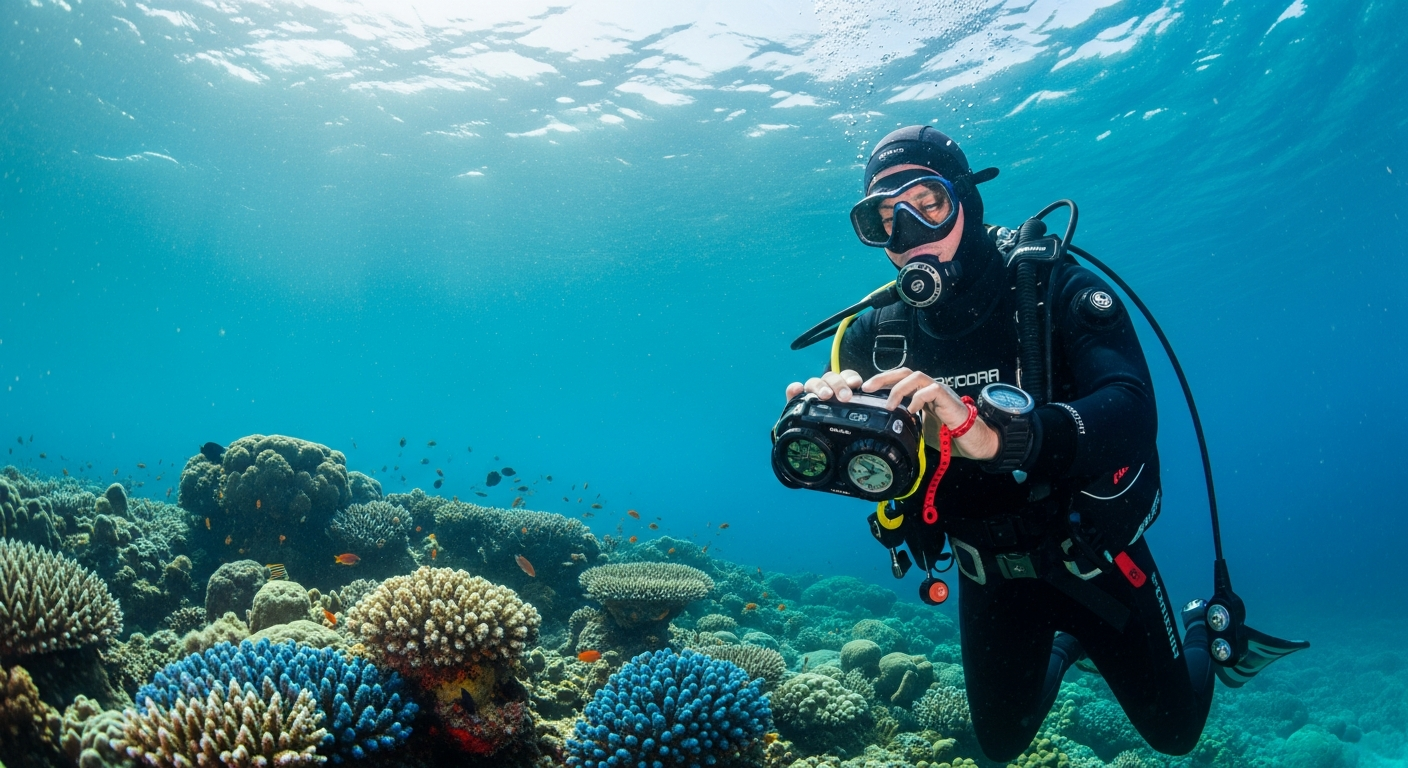
Discover how advanced multi-gas dive computers revolutionize technical diving with Nitrox and Trimix support. Learn gas management strategies, safety features, and which models suit your diving goals.
Advanced Multi-Gas Dive Computers: Essential Technology for Technical Divers
Technical divers face a critical challenge: managing multiple gas mixtures while monitoring decompression obligations, nitrogen narcosis, and oxygen toxicity simultaneously. One miscalculation underwater can turn a thrilling deep dive into a dangerous emergency. That's where advanced multi-gas dive computers become absolute game-changers—they handle the complex calculations so you can focus on the dive itself.
I've watched the evolution of dive technology firsthand, and multi-gas dive computers represent a genuine leap forward in underwater safety. These sophisticated wrist-mounted devices go far beyond simple depth gauges. They're engineered specifically for divers who demand versatility—whether you're exploring a wreck with enriched air, pushing deeper with Trimix, or switching between gas blends mid-dive.
Explore advanced multi-gas dive computers at Dip'N Dive US today.
Understanding Multi-Gas Dive Modes and Their Real-World Applications
Air Mode: Standard Recreational Diving
Air mode represents the foundational operating system for recreational diving. The computer calculates no-decompression limits based on standard nitrogen and oxygen ratios found in compressed air. This mode serves divers exploring shallow to moderate depths where nitrogen narcosis remains manageable and oxygen toxicity presents minimal risk.
Nitrox Mode: Extending Bottom Time
Nitrox mode opens possibilities for enriched air diving with oxygen concentrations up to 40 percent. By reducing the nitrogen component, Nitrox extends bottom time significantly and shortens surface intervals between dives. The computer continuously monitors oxygen partial pressure to prevent oxygen toxicity—a critical safety function that prevents central nervous system oxygen toxicity events.
Trimix Mode: Technical Deep Diving
Trimix mode introduces helium into the gas mixture, making deep dives beyond 40 meters safely manageable. Helium eliminates the nitrogen narcosis problem that becomes increasingly dangerous with depth. Technical divers rely on Trimix mode for wreck penetrations, deep cave exploration, and other demanding underwater environments where standard gas mixtures create unacceptable physiological risks.
Gauge Mode: Manual Operation
Gauge mode strips away automatic decompression calculations, allowing experienced divers to use their own decompression tables and manual gas planning. This mode appeals to divers who want their computer functioning as a depth and time gauge while maintaining complete control over decompression decisions.
Free Dive Mode: Apnea Diving
Free dive mode tracks breath-hold duration and depth without nitrogen loading calculations. This functionality accommodates spearfishing, freediving competitions, and other apnea activities where traditional scuba decompression algorithms don't apply.
Critical Safety Features That Protect Technical Divers
Real-Time Decompression Monitoring
Continuous decompression calculations form the backbone of modern dive computer safety. The computer processes your current depth, ascent rate, and gas mixture moment by moment, recalculating no-decompression limits and required stop times instantaneously. This eliminates guesswork and adapts automatically to your actual dive profile rather than forcing you to follow predetermined tables.
Ascent Rate Alarms
Audible and visual warnings activate when you exceed safe ascent speeds, typically 10 meters per minute. Rapid pressure changes cause the cellular damage responsible for decompression sickness. The computer's relentless monitoring prevents this common mistake, even when you're focused on navigation or gas management tasks.
Depth and Dive Time Tracking
Precise depth measurements and elapsed time display at a glance eliminate mental math and memory errors. You know exactly how deep you've gone and exactly how long you've been underwater—information that drives every decompression decision.
Integrated Air Management
Tank pressure monitoring directly on your wrist unit transforms gas management. Real-time pressure alerts warn you when reserves fall below safety thresholds, preventing out-of-gas emergencies that can escalate into catastrophic incidents.
Digital Compass
Underwater navigation becomes reliable with an integrated compass. This feature prevents disorientation in low-visibility conditions and helps you locate exit points reliably during currents or reduced visibility scenarios.
Shop the latest multi-gas dive computer models with integrated safety features here.
Display Technology and Data Interpretation Underwater
High-Resolution Color Screens
Modern dive computers feature color displays that maintain readability across diverse lighting conditions. Bright tropical sunlight and dark cave environments both present different visibility challenges—advanced screens handle both extremes effectively. Color coding helps you identify different data categories instantly without reading text labels.
Customizable Information Layouts
Your primary screen can prioritize the metrics that matter most for your specific dive plan. Want depth, remaining no-decompression time, and ascent rate dominating the display? The computer adapts. Prefer gas mixture information and tank pressure instead? Reconfigure with a few button presses. This flexibility prevents information overload while ensuring critical data stays visible.
Intuitive User Interface
Menu systems anticipate cold-water stress and the limitations of thick gloves. Navigation requires minimal button presses, and logical menu organization means you won't struggle to find settings during pre-dive setup. Manufacturers design these interfaces based on extensive testing with actual divers wearing protective equipment.
Large, Legible Fonts
Numbers scale appropriately so you don't miss vital information during high-stress situations. A small font might look sleek on your wrist, but underwater stress and nitrogen narcosis can impair your ability to read tiny text. Advanced computers prioritize legibility over aesthetic minimalism.
Graphical Representations
Dive profiles, ascent rate curves, and gas consumption charts communicate complex data visually. Your brain processes graphical information faster than numerical data, and this becomes critical when you need instant understanding of your decompression obligations or gas consumption trends.
Connectivity, Data Logging, and Post-Dive Analysis
Bluetooth Integration
Wireless data transfer to smartphones and computers eliminates tedious manual dive log entries. Your computer syncs automatically after surfacing, uploading your dive profile to cloud storage within seconds. This convenience encourages consistent logging, which builds your diving history database.
Dive Profile Storage
Every dive generates detailed records including depth curves, temperature variations, gas switches, and decompression stops. This granular data reveals patterns and trends that improve your diving technique over time. You can see exactly where you spent your bottom time, how efficiently you managed your ascent, and whether you maintained optimal buoyancy.
Cloud-Based Dive Logs
Secure backup and organization of your diving history creates a permanent record. Track your progression from early technical dives through advanced expeditions. Identify patterns—do certain environmental conditions affect your performance? Have your ascent rates improved? Are you managing gas consumption more efficiently than six months ago?
Performance Metrics
Analytics quantify your diving efficiency. Bottom time, surface interval calculations, ascent rate consistency, and gas consumption rates all appear as trends and comparisons. This data-driven approach transforms diving from intuitive guesswork into measurable skill development.
Training Insights
Historical data helps you identify specific areas for improvement. Maybe your ascent rates vary significantly between dives, suggesting buoyancy control issues. Perhaps your gas consumption exceeds peers on similar dive profiles, indicating breathing technique problems. Advanced computers give you this feedback, enabling targeted training.
Depth Ratings, Build Quality, and Durability Standards
Depth Ratings: 100m to 200m
Most advanced multi-gas computers support depth ratings between 100 and 200 meters, accommodating recreational deep diving through technical cave and wreck exploration. Your actual diving goals should match your computer's depth rating—purchasing a 200-meter computer when you'll never exceed 60 meters wastes money, while choosing a 100-meter computer for planned 150-meter technical dives creates unacceptable risk.
Impact-Resistant Casing
Durability engineering protects against drops, bumps, and accidental contact with rocks or wreck structures. The casing absorbs shock that would shatter less robust instruments. This matters during boat operations, equipment changes, and the inevitable moments when equipment gets dropped or bumped.
Scratch-Resistant Lens Materials
Premium models feature sapphire crystal lenses; mid-range options use mineral glass. Both maintain clarity after years of use. Sapphire resists scratching better, preserving optical clarity longer and improving long-term usability. Mineral glass costs less but requires careful handling to preserve visibility.
Waterproof Sealing
O-ring construction and pressure-tested housings prevent water intrusion and internal corrosion. Manufacturers subject their computers to depth testing that exceeds rated specifications, confirming seals function reliably across your actual diving depths.
Battery Longevity
Rechargeable battery systems provide 20 to 40 hours of continuous dive time depending on model and usage patterns. Quick charging between expeditions means you're never waiting hours for your computer to become ready for the next dive. Modern batteries charge fully in just a few hours.
Price Ranges, Feature Tiers, and Investment Considerations
Entry-Level Technical Computers ($500-$700)
Basic Nitrox support, essential safety features, and simpler interfaces define this tier. These computers suit newly certified technical divers exploring Nitrox diving without needing advanced Trimix capabilities or excessive customization options.
Mid-Range Advanced Models ($700-$1,000)
Trimix capability, enhanced color displays, integrated air management, and Bluetooth connectivity characterize this price range. Most technical divers find mid-range models satisfy their actual requirements. The balance between features and cost makes this tier the most popular choice.
Premium High-End Computers ($1,000-$1,200+)
Advanced decompression algorithms, GPS integration for surface navigation, extensive customization options, and superior build materials with premium sapphire lenses define premium models. Professional divers and cave explorers justify these costs through enhanced safety algorithms and exceptional durability.
Feature-to-Cost Analysis
Evaluate which capabilities align with your actual diving plans rather than paying for unused functions. A premium computer with advanced AI algorithms provides limited benefit if you'll only dive Nitrox to 40 meters. Conversely, entry-level models disappoint if you're planning Trimix technical dives. Match features to reality.
Longevity Value
Higher initial investment often yields 10 or more years of reliable service, reducing your per-dive cost substantially. A $1,000 computer lasting 12 years works out to approximately $84 annually, assuming 50 dives per year. The apparent expense becomes reasonable when amortized across the computer's operational lifespan.
Choosing the Right Multi-Gas Computer for Your Diving Profile
Recreational vs. Technical Assessment
Honest evaluation of your actual diving intentions matters enormously. Will you genuinely use advanced features, or would a simpler computer suffice for your purposes? Some divers purchase advanced computers anticipating future technical training they never pursue. Purchase based on what you'll actually do, not theoretical possibilities.
Gas Mixture Planning
Determine which modes you'll realistically use. Air-only diving? Nitrox exploration? Trimix technical adventures? Future-proof your purchase by considering your diving aspirations over the next 5-10 years, but don't overspend on capabilities you won't realistically employ.
Depth Aspirations
Match your computer's depth rating to current certification and realistic diving goals. Plan conservatively—if you're certified to 40 meters and dream of eventually reaching 80 meters, select a computer rated for at least 100 meters to provide safety margin.
Environmental Conditions
Consider the waters where you'll primarily dive. Cold-water diving demands different battery performance and interface usability than warm tropical conditions. Cave diving, wreck exploration, and open water diving each present unique equipment demands—select a computer optimized for your primary environment.
Interface Preferences
Some divers prefer minimalist screens showing only essential information; others want maximum data displayed simultaneously. Test models in-store before committing. Hold them underwater in a pool or tank. Navigate menus with gloved hands. Your interface preferences are deeply personal—don't compromise on this aspect.
Brand Ecosystem
Evaluate manufacturer support, software update frequency, replacement part availability, and user community size. Purchasing from established brands ensures ongoing software support, parts availability, and community knowledge sharing. Boutique brands might offer unique features but provide fewer resources for long-term support.
Mastering Advanced Functions and Avoiding Common Pitfalls
Pre-Dive Setup Procedures
Proper configuration before entering water prevents dangerous mistakes. Set gas mixtures accurately, establish appropriate depth limits, and customize alarm thresholds for your specific dive plan. Pre-dive setup becomes routine with practice, but careless configuration can undermine all your computer's safety benefits.
Gas Switch Protocols
Understanding when and how to safely transition between different gas blends during decompression requires training and practice. Your computer calculates which gas is optimal at your current depth, but you must understand the physiology behind those recommendations. This knowledge prevents oxygen toxicity and other gas-related incidents.
Algorithm Selection
Different computers use different decompression models—Buhlmann algorithms, RGBM approaches, and proprietary variations each produce slightly different decompression schedules. Understanding your model's approach matters because it influences your actual dive planning and decompression obligations.
Alarm Customization
Setting appropriate thresholds prevents both ignored warnings and excessive false alarms that create unnecessary stress. Discover what alarm settings work for your diving style and physiology. Some divers need conservative alerts; others find frequent false alarms counterproductive.
Training and Certification
Many manufacturers offer online courses and formal training programs. Consider dedicated instruction to maximize your computer's capabilities. Understanding advanced functions transforms your computer from a safety tool into an enhancer of your technical diving performance.
The Future of Multi-Gas Dive Computer Technology
AI-Powered Decompression Algorithms
Machine learning models will adapt to individual diver physiology and environmental factors, potentially reducing decompression time while maintaining safety margins. AI systems analyzing millions of dive profiles will identify optimal decompression strategies superior to traditional static algorithms.
Advanced Wearable Integration
Seamless connectivity with smartwatches, AR glasses, and other emerging dive tech platforms will create integrated underwater information systems. Your computer will communicate wirelessly with surface support, creating redundancy and enhanced safety monitoring.
Predictive Safety Systems
Computers anticipating problems before they occur based on dive profile trends represent the next frontier. If your gas consumption exceeds predictions, your computer will alert you before you approach critical reserve levels. Early warnings provide time for corrective action.
Enhanced GPS Capabilities
Integrated surface navigation, dive site mapping, and emergency location services will help rescue teams locate divers in distress. GPS integration enables detailed analysis of current patterns affecting your actual dive path.
Biometric Monitoring
Heart rate, oxygen saturation, and other health metrics will inform decompression decisions. Individual physiology varies significantly, and biometric feedback enables computers to adapt their algorithms to your specific physiological responses.
Beyond the Wrist: Why Advanced Multi-Gas Dive Computers Are Non-Negotiable for Technical Divers
Advanced multi-gas dive computers have fundamentally transformed how technical divers approach safety, efficiency, and confidence underwater. These aren't luxury gadgets—they're precision instruments that handle life-critical calculations, allowing you to focus entirely on the dive experience. Whether you're managing Nitrox blends on recreational dives or executing complex Trimix decompression schedules in technical environments, the right computer becomes an extension of your training and judgment.
I've emphasized throughout this guide that choosing the right model requires honest assessment of your diving goals, budget constraints, and feature requirements. Entry-level technical computers deliver excellent value for newly certified technical divers, while premium models justify their cost through advanced algorithms and durability for professionals. The investment—ranging from $500 to $1,200—pays dividends in safety margins, reduced cognitive load, and post-dive learning opportunities.
Your next step is straightforward: visit a trusted retailer, handle several models in person, and ask detailed questions about features that align with your diving plans. Don't get seduced by specs you'll never use. Instead, prioritize reliability, intuitive interface design, and manufacturer support. Once you've selected your computer, commit to thorough training and consistent practice with its features before attempting advanced dives. The technology is only as effective as your understanding of it.
The underwater world demands respect and preparation. An advanced multi-gas dive computer gives you both—equipping you with real-time intelligence that transforms complex diving scenarios into manageable, enjoyable experiences. Make the investment with confidence.
Browse the complete selection of advanced multi-gas dive computers at Dip'N Dive US now.