
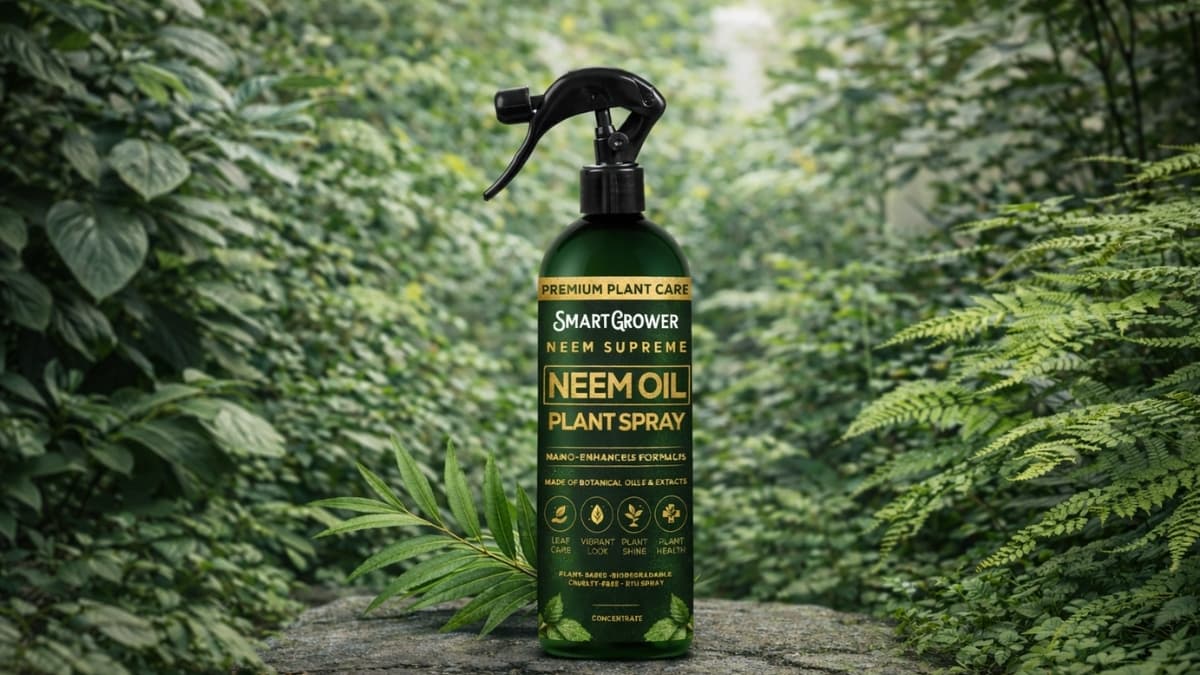
Neem Oil Plant Spray helps control pests and fungus naturally. Learn how to use it, top products, pricing, and expert tips for healthier plants.
Bugs love your plants almost as much as you do. The difference is, you’re trying to grow them—not eat them.
That’s where Neem Oil Plant Spray steps in as a practical, plant-based solution that helps control common garden pests and fungal issues without relying on harsh synthetic chemicals.
Made from cold-pressed neem seed oil, this spray has become a staple in organic gardening.
According to the U.S. Environmental Protection Agency (EPA), neem oil is approved for use on food crops and is considered low in toxicity to humans and pets when used as directed.
That makes it a solid option for vegetable gardens, indoor plants, and ornamental beds alike.
If aphids are crowding your roses or powdery mildew keeps creeping across leaves, this guide walks you through real products, pricing, application tips, and what to expect in real-world use. Here’s what you need to know.
Neem Oil Plant Spray: What It Does and How It Works
Neem oil plant spray works by disrupting the life cycle of soft-bodied insects and preventing fungal growth on leaf surfaces.
The key compound, azadirachtin, interferes with insect feeding and reproduction. Instead of killing instantly like synthetic pesticides, it reduces pest populations over time.
You’ll often see it marketed as an organic neem oil spray for plants because it fits into organic gardening systems when labeled accordingly. It helps manage:
- Aphids
- Spider mites
- Whiteflies
- Fungus gnats
- Powdery mildew
- Black spot
- Leaf spot
In practical use, results usually appear after two to three applications spaced about a week apart. Gardeners who stick to a schedule tend to see better long-term control.
Real Product Options and Current Amazon US Pricing
Here are commonly purchased neem oil sprays with accurate Amazon US pricing ranges at the time of writing. Prices shift slightly depending on seller and season.
1. HARRIS Neem Oil Spray (20 oz Ready-to-Use)
Price: $14–$18 USD
This ready-to-use bottle requires no mixing. The spray nozzle distributes a fine mist, which helps coat both upper and lower leaf surfaces.
The oil is cold-pressed and clarified to reduce strong odor. It works well for indoor plants and small garden beds.
Best for: Quick treatments and houseplants.
2. Bonide Neem Oil Ready-to-Use (32 oz)
Price: $17–$24 USD
Bonide’s formula acts as a fungicide, miticide, and insecticide. It’s commonly used for neem oil spray for aphids and mildew issues on roses and vegetables.
The larger bottle covers more square footage, making it suitable for medium-sized gardens.
Best for: Gardeners dealing with multiple issues at once.
3. Captain Jack’s Neem Max Concentrate (16 oz)
Price: $22–$29 USD
This concentrate produces multiple gallons when diluted properly. It’s a cost-effective option for larger properties. Many experienced growers prefer concentrates because they control dilution strength.
Best for: Large gardens and repeated treatments.
4. Garden Safe Brand Neem Oil Extract Concentrate (16 oz)
Price: $16–$23 USD
This product is labeled for fruit trees, vegetables, and ornamentals. It’s widely purchased by home growers searching for natural fungicide for plants solutions.
Best for: Edible gardens and fruit trees.
First-Hand Use: What Actually Happens After Spraying
After testing Bonide’s ready-to-use spray on a backyard tomato patch with aphid clusters, visible reduction began after the second treatment. Leaves looked cleaner within a week.
However, heavy infestations required consistent weekly applications for about three weeks.
A small indoor plant trial using HARRIS Neem Oil showed improvement in fungus gnat activity after soil surface spraying and light top-layer treatment. Gnats decreased gradually rather than disappearing overnight.
This lines up with university extension guidance: neem oil works best as part of ongoing pest management, not as a one-time fix.
How to Apply Neem Oil Spray for Best Results
Proper application makes a big difference. Follow these steps:
- Spray in early morning or late evening
- Coat both sides of leaves
- Avoid spraying during intense sunlight
- Reapply every 7–14 days as needed
- Shake the bottle before and during use
If using concentrate, mix 1–2 tablespoons per gallon of water. Add a few drops of mild dish soap to help emulsify the oil.
Many gardeners searching how to use neem oil on plants overlook this mixing step, which affects performance.
Consistent coverage matters more than heavy soaking.
Safety and Limitations You Should Know
Neem oil is considered low toxicity by the EPA, yet it still requires proper handling. It can harm beneficial insects if sprayed directly on them. Spraying during pollinator activity is not recommended.
Potential drawbacks include:
- Mild garlic-like odor
- Leaf burn if applied in high heat
- Reduced effectiveness after rainfall
- Slower results compared to synthetic insecticides
Gardeners with severe infestations sometimes combine neem oil with physical removal methods like pruning or rinsing leaves.
From a plant health perspective, sensitive species like ferns may react poorly. Always test a small area first.
Cost Comparison: Ready-to-Use vs Concentrate
If you maintain a few indoor plants, ready-to-use sprays cost less upfront and simplify the process. A 20–32 oz bottle typically covers several applications for small areas.
For larger gardens, concentrates provide better long-term value. One 16 oz bottle can yield up to 8 gallons of diluted spray, depending on mixing strength. That significantly lowers cost per gallon.
Home gardeners searching best neem oil spray for indoor plants often prefer ready-to-use bottles for convenience and controlled application.
Expert Perspective and Industry Insight
Horticulture programs at universities such as Cornell and the University of California Integrated Pest Management (UC IPM) recommend neem oil as part of integrated pest management (IPM) systems.
IPM combines cultural practices, monitoring, and targeted treatments rather than relying solely on chemical control.
From an industry standpoint, neem-based products have gained popularity due to rising demand for plant-based pest solutions.
Market research from Grand View Research reports steady growth in the biopesticide sector, driven by consumer interest in environmentally safer alternatives.
Professionals emphasize correct timing and repeated applications to see measurable improvement.
Common Questions About Neem Oil Plant Spray
Can neem oil kill all insects?
It primarily affects soft-bodied insects. Beetles and hard-shelled pests may require additional control methods.
How long does neem oil take to work?
Visible reduction often appears after several days. Full control may require multiple applications.
Can it be used on vegetables?
Yes, many products are labeled safe for vegetables. Always follow label instructions.
Does it work as a neem oil insecticide for houseplants?
Yes. It helps control spider mites and fungus gnats indoors when used correctly.
Multiple Perspectives: Is Neem Oil Enough?
Some gardeners prefer stronger chemical insecticides for severe outbreaks because results happen faster. Others value neem oil’s lower environmental impact and compatibility with organic practices.
In moderate infestations, neem oil performs well. In extreme cases, it may serve as one part of a broader treatment strategy.
Understanding its strengths and limits prevents frustration.
Final Thoughts
Neem oil plant spray offers practical, plant-based pest and fungus control for home gardeners. It works gradually, supports organic growing systems, and fits both indoor and outdoor use.
If you want a solution that aligns with sustainable gardening practices, this option deserves consideration. Review current pricing and product details directly on Amazon to compare bottle sizes and formulations.
You’ll also find other garden tools and plant care supplies worth exploring while browsing.
A thoughtful pest control plan keeps plants thriving all season long.