
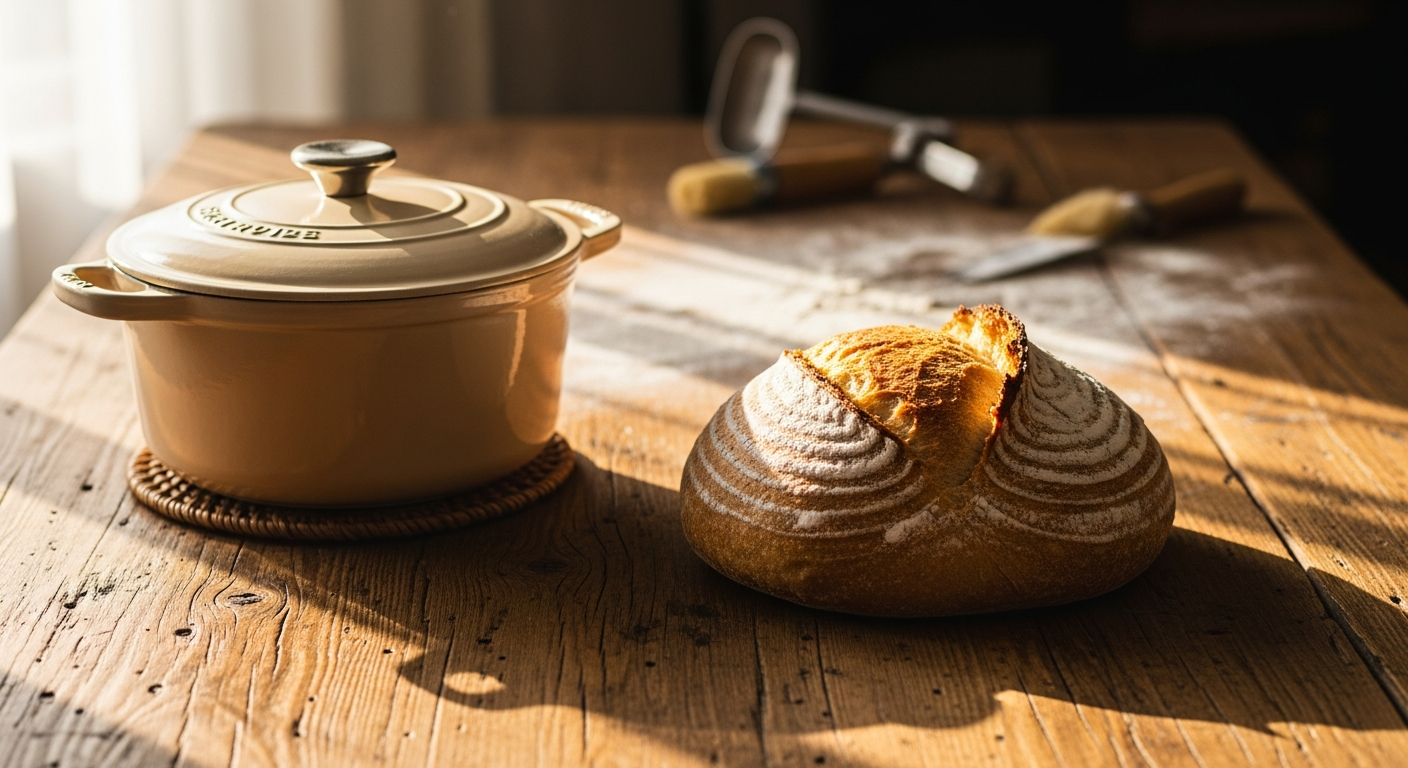
Discover how the Nuovva Enamelled Cast Iron Dutch Oven transforms homemade bread baking with superior heat retention and affordable luxury. Learn why bakers swear by this bestseller for perfect loaves every time.
Why Cast Iron Dutch Ovens Revolutionized Home Bread Baking
If you've ever bitten into a perfectly crusted loaf from an artisan bakery and wondered why your homemade versions fall flat, you're not alone. Homemade bread baking has exploded in popularity over recent years, yet most home bakers wrestle with the same frustrating problem: achieving that bakery-quality crust and perfectly risen loaf that seems perpetually out of reach. The culprit isn't skill or ingredients—it's equipment.
The difference between mediocre bread and magnificent bread often hinges on one critical factor: heat control and moisture management during baking. Professional bakers have known this secret for centuries, relying on specialized equipment to replicate conditions that transform ordinary dough into crusty, golden masterpieces. Your home oven, without proper tools, simply can't deliver what a commercial deck oven does.
The Nuovva Enamelled Cast Iron Dutch Oven changes that equation. This specialized tool replicates professional bread-baking conditions right in your home kitchen. The enamelled cast iron construction provides exceptional heat retention and even distribution—the exact conditions needed to develop that crackling crust and open crumb structure that defines exceptional bread. At prices ranging from £44.99 to £49.99, Nuovva delivers professional-grade performance without the premium price tag of luxury brands.
Discover why the Nuovva Enamelled Cast Iron Dutch Oven is transforming home bakeries across the UK.
Why Cast Iron Dutch Ovens Revolutionized Home Bread Baking
The Role of Steam in Developing a Crispy, Caramelized Crust
Steam is the secret ingredient in professional bread baking. When dough bakes, the surface needs moisture and heat simultaneously to allow proper expansion before the crust sets. Without steam, bread develops a thick, pale, and tough exterior. A Dutch oven traps the steam released by the dough, creating a humid microclimate that keeps the surface extensible during the critical first minutes of baking. This delayed crust formation allows the bread to rise fully before browning occurs, resulting in that coveted golden-brown exterior with a crispy, crackling texture.
How Cast Iron's Heat Retention Creates the Ideal Baking Environment
Cast iron's density and thermal mass make it exceptional for bread baking. Once preheated, cast iron maintains consistent, even temperature throughout the baking process—something thinner baking vessels struggle to accomplish. This stability prevents the temperature fluctuations that cause uneven browning or collapsed centers. The material absorbs heat gradually, distributes it uniformly across the bread's surface, and radiates it consistently, replicating the behavior of professional commercial ovens at a fraction of the cost.
The Difference Between Baking in a Dutch Oven Versus Traditional Baking Vessels
Baking on a standard baking sheet or Dutch oven without a lid produces dramatically different results. An open tray allows steam to escape immediately, leaving the bread surface exposed to dry heat. This causes the crust to set too quickly, preventing proper oven spring and resulting in a dense, gummy interior. A covered Dutch oven maintains steam concentration, extending the window for expansion and creating the atmospheric conditions that produce an open crumb structure. The enclosed environment essentially transforms your home oven into something approaching professional capabilities.
Why Professional Bakers Have Relied on Dutch Ovens for Decades
Commercial bakeries have long understood that Dutch ovens and covered baking vessels are non-negotiable. The results speak for themselves: consistent, reproducible, exceptional bread. Professional bakers use these tools because they work. The investment in proven equipment that delivers reliable results justifies itself through customer satisfaction and repeat business. Home bakers now have access to the same fundamental principle—Dutch ovens level the playing field between home and professional kitchens.
The Science of Moisture Circulation and How It Affects Crumb Structure
Crumb structure—that open, airy interior with irregular holes—develops through proper fermentation and steam management during baking. When steam circulates around the dough in a Dutch oven, it allows the gluten network to stretch further before setting. Gas bubbles expand more fully, creating larger, more irregular holes characteristic of artisan bread. Without proper steam management, bubbles collapse, producing a dense, tight crumb that feels heavy in your mouth. The Dutch oven environment maintains the moisture that permits optimal bubble expansion.
Comparison of Results: Dutch Oven Baking Versus Open-Tray Baking
The contrast between breads baked in a Dutch oven and those baked on open trays reveals the impact of proper equipment. Dutch oven loaves display a deep, crackling crust with caramelized color and visible scoring details. The interior features an open, irregular crumb structure with varied bubble sizes—a hallmark of professional bread. Open-tray loaves, by comparison, develop pale, thick crusts and dense, tight crumbs with small, uniform holes. The difference is visually obvious and immediately apparent when you bite into each loaf.
Enamelled Cast Iron vs. Traditional Cast Iron: What Sets Nuovva Apart
The Advantages of Enamel Coating for Bread Bakers
Enamel coating transforms cast iron into a more practical everyday tool without sacrificing performance. The smooth enamel surface prevents dough from sticking during baking—a common frustration with bare cast iron where flour can adhere to uneven surfaces. This coating eliminates the reactivity of bare iron with acidic doughs, preventing metallic flavors from developing in your bread. For bread bakers specifically, enamel coating means superior non-stick properties that bare cast iron simply cannot match, making the baking process less stressful and cleanup far simpler.
Why Seasoning Isn't Required with Enamelled Cast Iron
Bare cast iron requires meticulous seasoning—a process of building up layers of polymerized oil to create a non-stick surface. This maintenance is ongoing and sometimes unpredictable. Enamelled cast iron arrives ready to use. The factory enamel coating provides the non-stick surface immediately, eliminating weeks of seasoning buildup before the cookware becomes truly functional. For busy home bakers, this means you can begin baking immediately without the preliminary investment of effort or time that traditional cast iron demands.
Heat Retention Capabilities: Enamelled Versus Bare Cast Iron
The thermal properties of cast iron—whether bare or enamelled—remain fundamentally the same. Both retain and distribute heat with equal excellence. The enamel coating is extremely thin and doesn't meaningfully impact heat transfer or thermal mass. Enamelled cast iron heats up at the same rate as bare cast iron and maintains temperature with identical consistency. For bread baking purposes, the performance difference is negligible, but the practical advantages of enamel are substantial.
Durability and Longevity of Nuovva's Enamelled Construction
Nuovva's enamelled cast iron is engineered for decades of use. The combination of high-quality cast iron base and factory-applied enamel creates a durable product that withstands regular baking and cooking. The robust construction means you're making a one-time investment that will outlast cheaper baking vessels. Cast iron cookware passes through generations; with proper care, a Nuovva Dutch oven will still be producing exceptional bread decades from now.
Cleaning and Maintenance: The Practical Benefits of Enamel
Cleaning bare cast iron requires careful technique—avoid harsh soaps, dry immediately to prevent rust, and maintain the seasoning layer. Enamelled cast iron simplifies this dramatically. You can wash it with standard dish soap and hot water without concern. Food residue doesn't bond to the smooth enamel surface as it does to bare iron. Most cleanup requires only a quick rinse and dry. For busy home bakers, this practical advantage makes the Dutch oven significantly less intimidating and more likely to be used regularly.
Temperature Stability Up to 500°F and What That Means for Your Bakes
Nuovva's enamelled cast iron remains safe and stable at temperatures up to 500°F. This capability opens possibilities beyond bread. You can preheat to higher temperatures for breads requiring aggressive heat, use it for roasting applications that demand intense heat, and confidently employ it across virtually any stovetop-to-oven recipe. The 500°F threshold positions it as a genuinely multi-purpose tool rather than a single-use specialty item.
Cost Comparison: Nuovva's Value Proposition Against Premium Competitors
Premium Dutch oven brands charge £150 to £300+ for functionally similar products. Nuovva delivers the same enamelled cast iron construction, same heat performance, and equivalent durability at £44.99 to £49.99. You're acquiring professional-grade equipment at a price point that makes the investment accessible to home bakers. The cost savings don't reflect reduced quality—they reflect a business model committed to making specialized baking tools available to serious home cooks rather than positioning them as luxury status items.
Experience the Nuovva difference—premium quality at an unbeatable price.
Choosing the Right Size and Shape for Your Baking Style
The 6.4-Quart (28cm) Round Casserole: Ideal Loaf Types and Baking Applications
The round 6.4-quart Dutch oven accommodates most standard bread recipes. A typical artisan loaf weighing 800-1000 grams fits comfortably with room for oven spring. The round shape distributes heat evenly around the loaf, promoting uniform browning and crust development. This size suits sourdough, sandwich bread, boules, and most enriched doughs. The round geometry also works beautifully for roasting whole chickens, braising short ribs, and preparing stews—making it the most versatile single-Dutch-oven choice for varied cooking.
The Rectangular Bread Loaf Pot (32cm x 16cm): Perfect for Sandwich Loaves and Batards
The rectangular shape accommodates longer loaves like batards, sandwich breads, and baguette-style loaves. The elongated pan follows the loaf's natural shape, eliminating the compression that occurs when fitting a long loaf into a round pot. This shape excels for producing restaurant-quality sandwich bread or rustic batards. If your baking focuses on specific loaf shapes, this rectangular option provides superior results compared to forcing elongated dough into a round vessel.
How Dutch Oven Capacity Affects Baking Time and Crust Development
Larger capacity creates more air space around the dough, slightly reducing steam concentration and potentially requiring marginally longer baking times. Smaller capacity creates denser steam concentration, which can accelerate browning. Most recipes specify timing for standard Dutch oven sizes; adjusting times slightly based on your specific capacity ensures optimal crust development. A slightly larger pot might require an additional minute or two; a snug fit might shorten baking slightly. Experience with your specific pot quickly teaches you the adjustments needed.
Determining the Right Size Based on Your Typical Loaf Weight
If you primarily bake standard 800-900 gram loaves, the 6.4-quart round pot provides ideal proportions. Loaves should have room to rise without touching the sides, but not so much space that steam disperses excessively. A good rule of thumb: your loaf should take up roughly 40-50% of the pot's volume when fully risen. This balance ensures adequate steam concentration while allowing proper expansion. If you bake larger loaves regularly, a larger pot becomes necessary; smaller loaves can accommodate smaller pots.
Versatility Beyond Bread: Using Your Dutch Oven for Roasting, Braising, and Stews
A Dutch oven used exclusively for bread represents underutilized potential. The same vessel that bakes exceptional bread excels at roasting vegetables until they caramelize, braising tough cuts of meat into tender perfection, and preparing stews that develop deep, complex flavors. The even heat distribution and lid management that benefits bread equally benefits any covered cooking application. A serious kitchen investment should work across multiple purposes, and the Nuovva Dutch oven accomplishes this admirably.
Storage Considerations for Different Sizes in Your Kitchen
Round 6.4-quart pots stack efficiently on shelves. Rectangular pots require dedicated shelf space but fit into tall cabinets more readily than round vessels. If kitchen storage is limited, a round pot maximizes space efficiency. If you have vertical storage space, a rectangular pot might fit more conveniently. Consider your cabinet dimensions before purchasing multiple sizes. Many home bakers find that one well-chosen pot handles most scenarios, making storage a non-issue.
Investment Strategy: Starting with One Size Versus Building a Collection
Most home bakers benefit from starting with a single 6.4-quart round pot. This workhorse size accommodates the majority of bread recipes and diverse cooking applications. Once you've experienced the benefits and identified specific gaps—perhaps you frequently bake sandwich loaves and want a dedicated rectangular pot—expanding your collection becomes strategic rather than speculative. Building gradually means you acquire each pot when you understand exactly how you'll use it, avoiding unnecessary duplicates.
The Nuovva Dutch Oven in Action: Real Baking Scenarios
Achieving the Perfect Sourdough: Crust Development and Scoring Techniques
Sourdough demands exceptional steam management, and the Dutch oven delivers this flawlessly. Preheat your pot in a 450°F oven for at least 30 minutes. Score your loaf with a sharp blade in your preferred pattern—the Dutch oven's stable heat and consistent steam will allow your score to open dramatically, creating that signature "ear" that defines beautiful sourdough. Close the lid for the first 20 minutes of baking, allowing the dough to expand fully in the steam-rich environment. Remove the lid for the final 25-30 minutes, permitting the crust to deepen to a rich mahogany brown. The result: a sourdough with exceptional crust structure and open crumb that rivals commercial bakeries.
Baking Artisan Sandwich Loaves with Consistent Results
A rectangular Dutch oven creates the ideal environment for sandwich bread. Preheat to 425°F. Place your shaped dough in the pot and cover with the lid. The enclosed environment maintains consistent moisture that keeps the dough extensible during the early baking stage. After 25 minutes, remove the lid to allow browning. Continue baking uncovered for 20-25 minutes until the loaf develops a golden-brown exterior. The consistent heat from the pot's thermal mass means every loaf bakes identically—no more guessing about which rack position in your oven produces the best results. This consistency is a game-changer for anyone baking regularly.
Creating Crusty Ciabatta and Rustic Italian Breads
Ciabatta's open crumb and crispy crust require serious steam management—exactly what a Dutch oven provides. These relatively wet, slack doughs need a high-humidity environment to expand without setting too quickly. The covered Dutch oven maintains the moisture that allows ciabatta's characteristic large, irregular bubbles to develop fully. When uncovered near the end of baking, the steam escape permits the crust to crisp and darken. Italian rustic breads—pane toscano, pane di semola, and similar styles—all benefit from the consistent heat and moisture control that the Dutch oven provides.
Using the Dutch Oven for Enriched Doughs (Brioche, Challah, and Focaccia)
Enriched doughs—those containing butter, eggs, and milk—benefit differently from the Dutch oven's properties. Rather than developing a crusty exterior, these breads benefit from the even heat distribution that prevents over-browning of their enriched, butter-laden surfaces. The enclosed environment prevents the rapid surface browning that can occur with butter-rich doughs on open trays. Focaccia, with its dimpled surface and drizzle of oil, bakes beautifully in a Dutch oven, developing an evenly golden crust without dark spots. Brioche and challah benefit from the consistent, gentle heat that produces tender, golden loaves with perfectly baked exteriors.
Temperature Management: Preheating Strategies for Optimal Results
Preheating your Dutch oven thoroughly ensures that when your dough enters, it immediately experiences the elevated temperature needed for proper oven spring. Preheat for a minimum of 30 minutes at your target temperature—longer at higher temperatures. Many bakers preheat for 45-60 minutes to ensure the cast iron's substantial thermal mass reaches equilibrium. Cold dough entering a hot Dutch oven creates the thermal shock that triggers rapid expansion. Skipping or shortening preheating produces noticeably inferior results, as the pot gradually heats while your dough is inside, extending baking time and reducing oven spring.
Moisture Release Techniques: When to Remove the Lid During Baking
Timing lid removal represents a critical decision point in Dutch oven baking. Remove the lid too early, and steam escapes before the dough finishes expanding, producing a tighter crumb and paler crust. Remove it too late, and the crust doesn't brown sufficiently, remaining pale and soft. Most recipes suggest removing the lid roughly 20-25 minutes into baking, but the exact timing depends on your oven, loaf size, and target crust color. Experimentation teaches you the optimal timing for your specific situation. Most bakers quickly develop intuition about when the loaf has expanded fully and the crust is ready to brown.
Troubleshooting Common Bread-Baking Issues with Dutch Oven Baking
Dense, gummy crumbs often indicate insufficient steam or inadequate baking time. Ensure your pot is truly preheated, the lid remains closed during early baking, and you're baking for the full duration the recipe specifies. Pale crust suggests either insufficient oven temperature or removing the lid too early. Check your oven's actual temperature with a thermometer—many home ovens run cool. Overly thick, hard crust usually means the pot is too small relative to the loaf, concentrating steam excessively, or the temperature was excessive. Uneven browning suggests uneven heat distribution in your oven; try rotating the pot halfway through baking. Most issues resolve through small adjustments to temperature, timing, or pot preheating duration.
Real Customer Testimonials: What Home Bakers Are Achieving
Home bakers across the UK consistently report transformative results with the Nuovva Dutch oven. Customers describe achieving professional-quality crust, open crumb structure, and consistent results that eluded them with previous equipment. Sourdough enthusiasts praise the dramatic improvement in crust caramelization and scoring definition. Sandwich bread bakers report that every loaf now meets their expectations, eliminating the variability that frustrated them previously. The overwhelming theme: the Dutch oven removed the final barrier between decent homemade bread and exceptional bread. These aren't testimonials from professional bakers—they're from home cooks who discovered that proper equipment genuinely does make a measurable difference.
Durability, Maintenance, and Long-Term Value
The Lifespan of Enamelled Cast Iron with Proper Care
Enamelled cast iron lasts decades or longer with basic care. The cast iron core will outlive you if protected from severe damage; the enamel coating proves similarly durable when treated reasonably. Avoid sudden temperature shocks—don't place a preheated pot directly under cold water, as thermal stress can crack the enamel. Don't bang it against hard surfaces or drop it, as impacts can chip the coating. With normal kitchen use, a Nuovva Dutch oven will function perfectly for 30, 40, or 50 years. Many cooks inherit cast iron from parents or grandparents; durability represents one of cast iron's defining characteristics.
Step-by-Step Cleaning Instructions for Bread Baking Residue
After baking, allow the pot to cool slightly but while still warm, fill it with hot water and a small amount of dish soap. Use a soft sponge or cloth to gently wipe the interior, removing any flour or dough residue. For stubborn spots, a soft brush works well without damaging the enamel. For the exterior, a quick wipe with a damp cloth usually suffices. Avoid scouring pads or abrasive cleaners that can scratch the enamel. Dry thoroughly with a soft towel, then store. The entire process takes 3-4 minutes, far simpler than maintaining bare cast iron.
Preventing Chipping and Maintaining the Enamel Coating
The enamel coating is durable but not indestructible. Prevent chipping by avoiding sudden temperature changes—allow pots to cool before washing with cold water. Don't strike the rim against hard surfaces or drop the pot. Store it away from areas where heavier items might be stacked on top. If chipping does occur, it doesn't compromise the pot's functionality for bread baking; the underlying cast iron isn't exposed to dough in normal bread baking use. Even with minor chips, the pot remains fully functional. For purely aesthetic concerns, touch-up enamel paints exist, but functionality isn't affected.
Storage Tips to Protect Your Investment
Store your Dutch oven in a cool, dry cabinet or shelf. Stack the lid on top of the pot, or position it nearby where it won't be damaged. If stacking multiple pots, place cloth or cardboard between them to prevent enamel-to-enamel scratching. Keep it away from areas where it might be bumped or knocked over. Avoid storing near sources of moisture that could promote rust in any exposed cast iron. A kitchen shelf at waist height works ideally—accessible for regular use yet protected from accidental damage.
Seasoning Myths Debunked: Why Nuovva Doesn't Require Seasoning
The persistent myth that all cast iron requires seasoning confuses many potential buyers. Bare cast iron requires seasoning because unprotected cast iron rust easily; seasoning creates a protective, non-stick layer. Enamelled cast iron has that protective layer built in. The factory enamel coating serves the same purpose as seasoned layers on bare iron—it protects the underlying iron and provides non-stick properties. You cannot and should not attempt to season enamelled cast iron; the enamel coating is permanent and sufficient. This represents a significant practical advantage for home bakers who want equipment that works immediately without preliminary maintenance.
Cost Per Use: Calculating the Value Over Years of Baking
Consider a baker who bakes bread weekly—52 loaves annually. If the Dutch oven costs £49.99 and lasts 20 years, the cost per use is approximately 4.8 pence per loaf. Even accounting for occasional non-bread uses, the per-use cost is negligible. A premium brand at £200 would cost approximately 19 pence per loaf over the same timeframe. Most bakers bake far more than 52 loaves over 20 years; the actual cost per use drops considerably. This calculation reveals the exceptional long-term value of investing in durable equipment rather than purchasing cheaper alternatives that require replacement.
Warranty and Customer Support from Nuovva UK
Nuovva stands behind its products, offering customer support that responds to questions and concerns. The company's reputation for quality manufacturing means defects are rare, but when issues do arise, the company addresses them. The best warranty is a product engineered for durability; Nuovva delivers that through robust construction and quality materials. For a product positioned as a long-term investment, reliable manufacturer support provides peace of mind.
Why This is a One-Time Investment for Serious Bakers
Serious bakers will bake hundreds or thousands of loaves in a Nuovva Dutch oven over its lifespan. The upfront investment—approximately £50—represents genuine value when you consider the daily, weekly, and yearly usage over decades. This is equipment you purchase once, then use for the rest of your baking life. Unlike gadgets that become outdated or worn, a quality Dutch oven improves with use, developing character and reliability. The one-time nature of the investment means you can direct future baking budget toward quality ingredients rather than equipment replacement.
Beyond Bread: Expanding Your Cooking Repertoire
Roasting Vegetables and Meats with Superior Browning
The Dutch oven's even heat distribution and moisture retention make it exceptional for roasting. When you roast vegetables with the lid off, the cast iron's thermal mass provides consistent heat that develops caramelization on all sides. Root vegetables become golden and tender; Brussels sprouts develop crispy, caramelized exteriors. Whole chickens or meat roasts brown evenly without hot spots or pale areas. The bottom of the pot, heated by direct contact with the oven rack, browns proteins beautifully without burning. Vegetables develop deep, sweet flavors as the Maillard reaction proceeds uniformly across their surfaces.
Braising Tougher Cuts of Meat to Tender Perfection
Braising represents the Dutch oven's classical use, and for good reason. The covered pot environment creates the perfect conditions for breaking down collagen in tough cuts—chuck roasts, short ribs, pork shoulder, beef cheeks—transforming them into fork-tender masterpieces. The combination of gentle, even heat and trapped moisture over hours of cooking yields results impossible to achieve in regular pans. The low, stable temperature that the Dutch oven maintains prevents scorching while permitting the slow transformation that makes tough cuts delicious.
Creating Restaurant-Quality Stews and Casseroles
Beef stew, chicken and dumplings, and other slow-cooked dishes achieve restaurant quality in a Dutch oven. The even heat development allows vegetables and proteins to cook uniformly. The thermal mass prevents the temperature fluctuations that cause some ingredients to overcook while others remain undercooked. The lid traps aromatics and moisture, intensifying flavors. After hours on low heat, the result is a cohesive, deeply flavored stew that tastes like it spent the day simmering in a professional kitchen.
Baking Desserts: Cobblers, Cakes, and Bread Puddings
The Dutch oven's versatility extends to desserts. A cobbler baked in cast iron develops an evenly browned topping and perfectly cooked filling thanks to the pot's thermal properties. Bread puddings, clafoutis, and other custard-based desserts bake evenly without the browning issues that thinner pans create. The covered environment prevents the rapid surface drying that can cause cakes to develop domed tops. For many dessert applications, the Dutch oven produces superior results compared to standard baking pans.
One-Pot Meals That Go from Stovetop to Oven
The Dutch oven's oven-safe construction to 500°F means you can start cooking on the stovetop—searing meat, sautéing aromatics—then transition directly to oven cooking without transferring ingredients to different pans. This capability simplifies cooking and cleanup while reducing the number of dishes used. A single pot handles the entire cooking process from initial browning through final cooking, yielding better flavor development than separately cooking components.
Heat Distribution Advantages for Even Cooking Across All Dishes
Whether you're roasting, braising, baking, or simmering, the Dutch oven's even heat distribution produces consistent results. Hot spots that plague regular pans simply don't exist in cast iron. Every portion of the pot receives the same temperature as every other portion. This uniformity means you can confidently prepare dishes without rotating halfway through, without worrying about uneven browning, and without the guesswork that comes with variable heat distribution.
Oven-Safe Up to 500°F: The Possibilities This Unlocks
The 500°F temperature rating permits use in virtually any oven-based cooking scenario. High-heat roasting, aggressive bread baking, broiler use—all fall within the pot's safe operating range. This capability means you're not limited to gentle, low-temperature applications. You can prepare dishes requiring intense heat without concern about damaging the equipment.
Why Serious Home Cooks Consider It a Multi-Purpose Essential
A Dutch oven that performs exceptionally for bread, handles roasting and braising with equal competence, and accommodates desserts and one-pot meals represents genuine versatility. Serious home cooks understand that equipment justifying its space in a kitchen must earn that space through regular use across multiple applications. The Nuovva Dutch oven accomplishes this, functioning as a bread oven, a braise pot, a roasting pan, and a general cooking vessel all in one. This multi-purpose capability positions it as a centerpiece of any well-equipped kitchen rather than a specialized single-use tool.
Investment Considerations: Is the Nuovva Dutch Oven Right for You?
Who Benefits Most from Owning a Dutch Oven (Bread Bakers, Home Cooks, Entertaining Hosts)
Anyone serious about bread baking gains immediate, measurable benefits from a Dutch oven. The improvement in crust quality, crumb structure, and consistency justifies the investment alone. Beyond bread, home cooks who regularly braise, roast, or prepare slow-cooked dishes discover superior results. Hosts who entertain gain a multi-purpose tool that permits complex dishes prepared directly in the cooking vessel, simplifying hosting while impressing guests. If you cook or bake regularly, a Dutch oven provides benefits across multiple cooking scenarios.
Budget-Friendly Positioning: Affordability Without Compromise
At £44.99-£49.99, Nuovva positions the Dutch oven as genuinely affordable. This price point sits well below premium brands, yet the quality matches what you'd find in pots costing three to five times more. For anyone hesitating about investing in specialized baking equipment, this pricing eliminates financial barriers. You're not choosing between budget alternatives; you're choosing a product that delivers exceptional quality at an exceptional price.
Comparing Total Cost of Ownership Against Single-Use Baking Equipment
Many home bakers accumulate specialized equipment: expensive bread peels, specialty dough scrapers, specialized thermometers, and numerous other tools. A Dutch oven often costs less than the cumulative price of multiple specialized tools yet delivers superior results. If you were planning to invest in bread-baking equipment anyway, choosing the Dutch oven as your primary investment makes financial sense compared to purchasing multiple single-purpose tools.
Questions to Ask Yourself Before Purchasing
Consider your baking frequency and the types of breads you typically make. Do you bake weekly or occasionally? Do you prefer crusty artisan loaves or soft sandwich breads? Are you interested in expanding beyond bread to braising and roasting? Do you have adequate storage space? These questions help determine not just whether a Dutch oven makes sense, but which size and shape best suits your specific needs. Thoughtful consideration before purchasing ensures your investment directly addresses your actual cooking and baking practices.
The Environmental Advantage: Durability Means Less Waste
A Dutch oven used for decades or longer produces remarkably low waste compared to replacing baking equipment every few years. Purchasing a quality product that lasts a lifetime generates less environmental impact than replacing multiple cheaper alternatives. The manufacturing footprint is distributed across decades of use, making the per-use environmental impact minimal. For environmentally conscious consumers, investing in durable goods represents a more sustainable choice than cycling through disposable alternatives.
Building Your Kitchen Toolkit: Where the Dutch Oven Fits
A well-equipped kitchen contains tools for essential tasks, with each tool earning its space through regular use. A Dutch oven fits as a foundational piece—useful across multiple cooking applications and justifying permanent cabinet space. Unlike specialized gadgets used occasionally, a Dutch oven becomes a regular workhorse. If you're building or rebuilding your kitchen toolkit, a Dutch oven represents one of the most valuable investments you can make.
Return on Investment: Measuring Success in Perfect Loaves and Meals
The ROI of a Dutch oven isn't purely financial—it's measured in the quality of bread you produce and the confidence you develop. When your loaves consistently achieve that coveted golden crust and open crumb structure, when your braises emerge tender and flavorful, when roasted vegetables develop perfect caramelization—these represent genuine returns on your investment. Many home bakers describe using a Dutch oven as a transformative moment in their cooking journey. That transformation, measured in consistently better results, represents value beyond financial metrics.
When to Upgrade or Add Additional Sizes to Your Collection
Starting with a single round 6.4-quart pot covers most scenarios. After months or years of regular use, you might recognize a specific gap—perhaps you frequently bake longer batards and want a rectangular pot, or you realize a smaller pot would work for occasional single-loaf bakes. Upgrading or expanding becomes strategic once you understand exactly how additional pots would enhance your specific cooking practices. Building your collection gradually means each pot addresses a real need rather than representing speculative purchases.
Your Path to Bakery-Quality Bread Starts Here
The Nuovva Enamelled Cast Iron Dutch Oven represents far more than a simple kitchen purchase. It's a gateway to mastering one of the most rewarding culinary skills: artisan bread baking. The combination of superior heat retention, even temperature distribution, and effortless maintenance makes this bestseller an exceptional choice for anyone serious about elevating their baking game.
What truly sets Nuovva apart is the commitment to quality without the luxury price tag. You're investing in professional-grade performance at a fraction of what you'd pay for competing brands. The robust enamelled cast iron construction promises years of reliable service, meaning every loaf you bake—whether it's your first or your hundredth—will benefit from equipment built to last.
The evidence speaks loudly through countless customer testimonials and the consistent praise from home bakers who've transformed their results. From achieving that coveted golden crust to developing an open, airy crumb structure, this Dutch oven delivers. And the versatility extends far beyond bread, making it a genuinely multi-purpose tool that earns its place in any serious kitchen.
Ready to stop watching bakery windows and start creating your own showstopping loaves?
Get your Nuovva Enamelled Cast Iron Dutch Oven today and transform your bread-baking journey.