
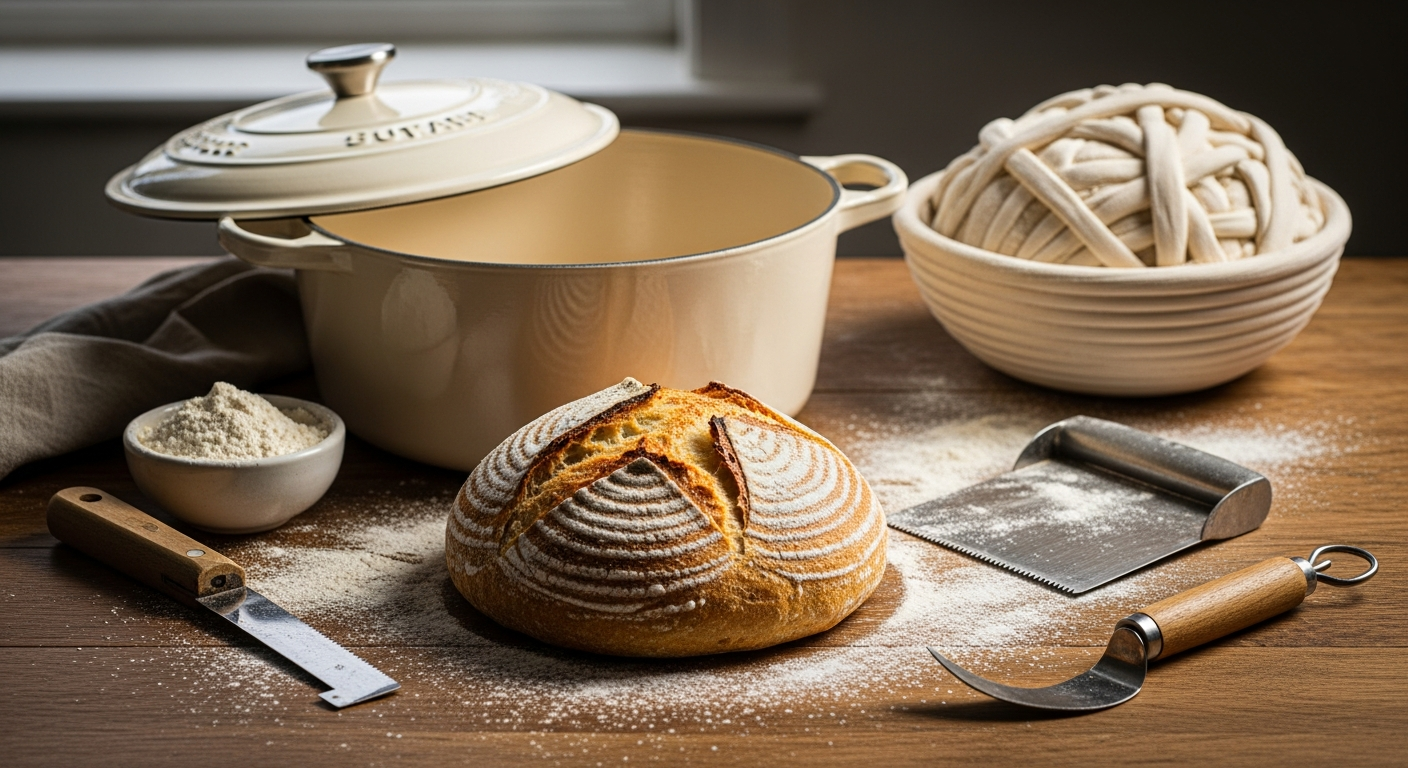
Discover how the Nuovva Enamelled Cast Iron Dutch Oven transforms your bread baking with superior heat retention and steam control. Learn why home bakers trust this affordable, durable cookware for perfect sourdough every time.
Professional bakers have kept their artisan bread-baking secrets locked away for decades, but here's the truth: the single most important tool for achieving that coveted golden crust and impossibly soft crumb isn't fancy equipment or years of training. It's steam. And that's exactly where the Nuovva Enamelled Cast Iron Dutch Oven changes everything for home bakers like you.
Cast iron Dutch ovens have become the go-to choice for serious bread enthusiasts, and Nuovva UK has perfected the formula. Their enamelled cast iron design eliminates the fuss of seasoning while delivering the heat retention that transforms ordinary dough into bakery-quality loaves. The triple-layer enamel coating, moisture-locking lid with self-basting ridges, and induction-compatible design make this a genuinely practical investment for your kitchen.
Discover how the Nuovva Dutch Oven can transform your bread baking today.
This guide walks you through everything you need to know about using the Nuovva Dutch Oven for bread baking—from understanding the science behind steam management to mastering the specific techniques that produce restaurant-quality results. You'll discover sizing considerations, maintenance tips, and real-world applications that extend far beyond sourdough. By the end, you'll understand exactly why this affordable piece of cookware has become a best-seller among home bakers.
Why Steam Control Is the Game-Changer for Bread Baking
The science of steam in the oven and how it creates the signature crispy crust
Steam is the invisible hero of exceptional bread baking. When water vapor surrounds your dough during the initial baking phase, it keeps the crust flexible and moist. This allows the bread to expand fully—a process called "oven spring"—before the crust sets. Without adequate steam, the crust hardens prematurely, trapping the expanding dough inside and resulting in a dense, gummy crumb. With proper steam management, you achieve that delicate balance: a shatteringly crisp exterior surrounding an airy, open crumb structure.
How the Nuovva's self-basting ridges trap and redistribute moisture during baking
The Nuovva's moisture-locking lid features self-basting ridges that work like an ingenious internal water cycle. As steam rises from your dough, it condenses on the lid's underside. The ridges catch these water droplets and continuously redistribute them back onto the bread's surface, maintaining a humid environment throughout the covered baking phase. This constant circulation of steam ensures even browning and optimal crust development without requiring manual intervention or water spraying.
The difference between baking bread in a Dutch oven versus traditional baking methods
Traditional bread baking often relies on steam injections—spraying water into the oven or placing steam pans on the rack below. These methods are inconsistent and lose effectiveness quickly as steam escapes into the kitchen. A Dutch oven creates a sealed microclimate, trapping steam precisely where it matters: directly around your bread. The results are noticeably superior: more consistent crust color, better oven spring, and loaves that rival professional bakery output.
Temperature retention benefits that prevent crust setting before the crumb fully expands
Cast iron's exceptional thermal mass means the Dutch oven retains heat with remarkable stability. When your dough hits the preheated vessel, the surrounding cast iron maintains its temperature throughout the critical initial baking phase. This thermal consistency prevents the temperature fluctuations that can cause premature crust setting. Your bread gets the time it needs to expand fully before the crust hardens, resulting in higher loaves with more dramatic scoring definition.
Why professional bakeries have relied on enclosed baking vessels for generations
Commercial bakeries use deck ovens with steam injection systems—essentially industrial versions of the Dutch oven principle. They've proven for decades that enclosed steam control produces superior bread. By using a Nuovva Dutch Oven, you're replicating the exact methodology that professional bakers depend on, just on a home scale. You're not experimenting with untested methods; you're implementing time-tested techniques that have shaped the bread industry.
Choosing the Right Size for Your Bread Baking Needs
Capacity options: 4.7L (24cm), 5.6L (26cm bread pot), and 6.4L (28cm) models explained
The Nuovva range offers three primary capacities, each suited to different baking goals. The 4.7L (24cm) model works perfectly for smaller loaves or tight kitchens. The 5.6L (26cm bread pot) sits in the sweet spot for standard sourdough loaves—the size that most home bakers work with. The 6.4L (28cm) model accommodates larger boules or batards, plus opens up possibilities for other cooking applications beyond bread.
How to match Dutch oven size to your typical loaf weight and dough hydration levels
Consider your typical loaf weight before baking. A standard artisan sourdough weighs 400-500 grams before baking, expanding slightly in the oven. The 26cm model provides ample headspace without wasting internal volume. If your recipes include high-hydration doughs (those with lots of water that spread more during baking), a slightly larger pot prevents the dough from touching the sides, which could create uneven browning. Conversely, if you prefer smaller, denser loaves, the smaller model offers better heat distribution.
Space considerations for both oven placement and kitchen storage
A Dutch oven occupies significant oven space, so measure your interior dimensions before purchasing. If you have a compact oven, the smaller 24cm model slides into spaces that larger pots cannot access. Storage also matters—consider where you'll keep this substantial piece of cookware. The various sizes stack differently, and kitchen layouts vary widely. The 26cm bread pot offers an excellent compromise between functionality and practical storage.
Scaling recipes based on pot capacity and how it affects baking times
Larger pots allow more dough volume, but they may require adjusted baking times since the thermal mass extends slightly further from the bread's surface. Standard recipes work seamlessly in the 26cm model. If you move to a different size, expect minor timing variations of 2-5 minutes. Keep notes on your first few bakes to dial in your oven's specific behavior with your chosen pot size.
Why the 26cm bread pot specifically caters to standard sourdough loaves
The 26cm bread pot was essentially designed with sourdough in mind. Its diameter accommodates a perfectly round boule without the dough pressing against the sides. Its height ensures the lid closes properly even with high-rising doughs. For anyone focused on sourdough baking, this size eliminates guesswork—it's the proven standard.
Find the perfect size for your bread baking style on the Nuovva UK website.
The Triple-Layer Enamel Advantage Over Traditional Cast Iron
Protection against rust without the seasoning maintenance routine
Traditional cast iron requires seasoning—building up layers of polymerized oil through repeated cooking and careful maintenance. Miss proper storage or leave moisture on the surface for even a few hours, and rust appears. The Nuovva's triple-layer enamel coating eliminates this entirely. The enamel acts as a complete barrier between the iron and moisture, making rust virtually impossible. You can use your Dutch oven intensively without the anxiety that accompanies raw cast iron ownership.
Non-stick performance that develops naturally over time with use
The enamel surface starts naturally non-stick and improves slightly with use as microscopic food particles season the cooking surface. Unlike raw cast iron, where seasoning requires specific technique and dedication, the Nuovva's non-stick properties develop passively. You're not maintaining cookware; you're simply cooking in it.
Easy cleanup after baking—no stuck-on dough or burnt residue battles
After bread baking, dough residue wipes away cleanly from the enamel surface. Raw cast iron often develops baked-on flour that requires serious scrubbing or soaking. With the Nuovva, warm water and a soft cloth typically suffice. For tougher residue, gentle soap poses no risk to the enamel—something you'd never do with seasoned cast iron. The cleanup difference alone justifies the enamel coating for many bakers.
Durability of the reinforced enamel coating through hundreds of baking cycles
Nuovva's reinforced triple-layer enamel withstands extreme temperature fluctuations and mechanical stress. One baker baking sourdough twice weekly experiences roughly 100 bakes annually. The enamel maintains its integrity through hundreds of these cycles without chipping or degrading. This durability ensures your Dutch oven remains functional and attractive for decades.
Why the enamel finish maintains food safety without chemical coatings
Enamelled cast iron contains no synthetic non-stick coatings like PTFE or PFOA. The enamel is essentially a glass-like ceramic layer fused directly to the iron. This manufacturing approach means nothing leaches into your food, regardless of temperature or cooking method. You get food safety through material science rather than chemical compounds, which matters if you're conscious about what touches your ingredients.
Comparison to raw cast iron: time savings and convenience factors
The practical difference between enamelled and raw cast iron comes down to time and mental energy. Raw cast iron demands attention: proper seasoning, careful drying, occasional maintenance. The Nuovva requires none of this. That freed-up mental space and the hours you don't spend maintaining cookware represent genuine value. For busy bakers juggling work and family, the convenience factor proves significant.
Temperature Mastery: Oven-Safe Performance Up to 500°F
How the 260°C (500°F) rating supports high-heat bread baking techniques
Professional bread baking often occurs at 450-475°F for artisan loaves, with some specialty breads reaching 500°F. The Nuovva's full 500°F rating means you never hit a ceiling on baking temperature. You can implement aggressive high-heat techniques—like extremely hot initial baking followed by temperature reduction—without worrying that your equipment can't handle the demands. This temperature range covers virtually every bread recipe you'll encounter.
Preheating strategies that maximize the Dutch oven's heat retention
Proper preheating is crucial. Most bakers preheat the Dutch oven at full baking temperature for 30-45 minutes, allowing the cast iron mass to reach thermal equilibrium. This preheating phase builds up the thermal reserve that sustains even heat throughout baking. The Nuovva's cast iron construction reaches and maintains temperature more effectively than thinner cookware. Once preheated, it sits at that temperature point stubbornly, resisting the cooling effect that bread dough initially applies.
Managing temperature during the covered and uncovered baking phases
Most bread recipes use a two-phase approach: covered baking for roughly 20 minutes to trap steam and promote oven spring, then uncovered baking for 20-25 minutes to develop the crust color. The Nuovva handles this transition seamlessly. When you remove the lid, the Dutch oven maintains its core temperature even as the lid (which cools faster) comes out. The bread continues baking in stable conditions rather than experiencing the temperature swings that sometimes occur when removing improvised steam covers.
Compatibility with all hob types, including induction stovetops
The Nuovva's cast iron construction makes it fully compatible with induction cooktops—something not all cookware offers. If your kitchen includes an induction range, the Nuovva works flawlessly. You can sear dough-shaping tools on the stovetop, scald water for steam additions, or sear meat on the hob before transferring directly to the oven. This versatility makes the Dutch oven genuinely multipurpose cookware, not just a baking specialty item.
Safety features of the sturdy double handles during high-temperature handling
The reinforced double handles are engineered for high-temperature safety. They remain cool enough to grip without heat mitts for most of the baking phase, though using proper oven mitts is always wise above 375°F. The handles don't wobble or flex, providing confident control when moving a pot of extremely hot cast iron. This stability prevents the accidents that sometimes occur with flimsy single handles on heavy cookware.
Beyond Bread: Expanding Your Cooking Repertoire
Slow-cooked stews and braises that benefit from even heat distribution
The Nuovva truly excels at slow-cooked dishes. Beef bourguignon, chicken cacciatore, bean stews—anything requiring low-and-slow cooking benefits from the Dutch oven's even heat distribution. The cast iron distributes heat across the bottom and sides uniformly, preventing hot spots that scorch food on a conventional pot. The lid's moisture retention means your stew simmers gently, concentrating flavors without excessive evaporation or liquid loss.
Searing meats at high temperatures before low-and-slow cooking
Start with a screaming-hot Nuovva on the stovetop to sear meat before transferring directly to the oven for braising. The cast iron's heat retention means proper browning happens quickly, developing the Maillard reaction that creates deep, savory flavors. No transition time needed—the pot goes straight from cooktop to oven without losing heat or requiring a separate step.
Roasting vegetables with the moisture-locking lid for concentrated flavors
Root vegetables roasted in a covered Dutch oven develop concentrated, caramelized flavors as their natural moisture cycles back through the lid's self-basting ridges. The even heat ensures uniform browning rather than the burnt-edges-raw-centers problem that can occur on sheet pans. Finish the roast uncovered if you want a drier texture, or leave the lid on for vegetables with concentrated, almost sauce-like interiors.
One-pot meals that transition seamlessly from stovetop to oven
Risotto, paella, tagines—any dish that moves from stovetop to oven benefits from the Dutch oven's versatility. Sauté aromatics, build your base, then transfer to the oven for hands-off finishing. The induction compatibility means modern cooktops work flawlessly, while the temperature rating ensures no worries about thermal shock or damage from high heat transitions.
Casseroles and gratins that develop superior browning and texture
Lasagna, gratins, and baked pasta dishes develop superior browning in the Nuovva compared to glass or ceramic dishes. The iron's superior heat conduction means the edges and bottom develop rich browning that many bakers prize. The lid prevents surface drying during the covered baking phase, then you remove it for the final uncovered minutes to set the cheese or topping.
The Practical Reality: Weight, Maintenance, and Long-Term Care
Understanding the weight factor and ergonomic handling strategies
The primary trade-off with cast iron is weight. A 26cm Nuovva Dutch oven weighs roughly 6-7 pounds empty—substantially more than ceramic or stainless steel alternatives. When filled with dough and preheated, you're handling 10+ pounds of extremely hot cookware. This weight is actually beneficial for thermal stability, but it demands respect during handling. Always use proper oven mitts, ensure your oven racks are sturdy, and plan your movements carefully. Never rush when handling a hot Dutch oven.
Some bakers keep their Dutch oven on a dedicated oven rack rather than retrieving it from storage before each use, simply because the daily retrieval feels cumbersome. This approach actually improves consistency by reducing handling and temperature shock.
Proper drying techniques to prevent rust on the uncoated rim
One caveat: the rim where the lid meets the pot body isn't enamelled—just bare cast iron. This exposes a small rust risk if you're careless. Dry the rim thoroughly after washing, ideally with a dedicated cloth reserved for this task. Some bakers apply a thin coat of neutral oil to the rim monthly as insurance. This minor maintenance is far simpler than seasoning an entire raw cast iron pot, but it does require mindfulness.
Long-term maintenance that ensures decades of reliable baking
Beyond rim drying, your Nuovva needs almost no maintenance. Store it in a dry location, use it regularly (which actually improves its condition), and avoid sudden thermal shocks like filling a hot pot with cold water. Hand washing is preferable to dishwasher use—not because it's necessary, but because hand washing gives you an opportunity to thoroughly inspect and dry the rim. This casual attention spans just minutes and ensures your Dutch oven remains in perfect condition indefinitely.
Storage solutions that protect both the cookware and your kitchen space
The Dutch oven occupies substantial storage space. Options include stacking it inside the oven (many bakers keep theirs perpetually on the oven rack), storing it in a cabinet under the range, or dedicating a kitchen shelf to display it—many cooks do this since the Nuovva's colors make it attractive enough for open shelving. If stacking other pans inside it, place a cloth or towel between them to prevent scratches to the enamel interior.
When the investment in a quality Dutch oven pays for itself through durability
Consider the cost-per-use over decades of ownership. A Nuovva Dutch Oven purchased for £50-70 that remains functional for 20+ years works out to pennies per use. Compare this to replacing flimsy cookware multiple times over that same period, and the true value becomes obvious. You're not just buying a pot; you're acquiring something approaching a kitchen heirloom.
Color Selection and Kitchen Aesthetics
Available color range and how it complements modern kitchen designs
The Nuovva range includes vibrant enamel colors that actually enhance modern kitchen aesthetics. Unlike purely functional cookware, a brightly colored Dutch oven can sit on open shelving or hang from a rail without looking out of place. The color options range from classic creams and blacks to bold reds and oranges, allowing you to match existing décor or make a statement piece. This aesthetic appeal isn't frivolous—it means you're more likely to keep the pot visible and accessible, integrating it into your cooking routine rather than burying it in a cabinet.
Personalization options that make your cookware visually distinctive
Your Dutch oven becomes a personal reflection of your baking space. The color you choose becomes part of your kitchen's visual identity. Some bakers specifically select colors matching their kitchen palette; others choose contrasting shades that pop. This personalization creates an emotional connection to the cookware that transcends its utilitarian function—it becomes a kitchen centerpiece rather than hidden equipment.
Durability of the enamel finish colors through repeated use and cleaning
Quality enamelled cookware maintains its color vibrancy for decades. The Nuovva's reinforced triple-layer enamel resists fading and discoloration that might occur with lower-quality products. Even after hundreds of bakes and countless cleanings, the colors remain bright and true. This durability justifies the initial color investment—you're not choosing a color that will look faded and tired within years.
Resale value considerations for well-maintained, attractive cookware
Quality enamelled cast iron cookware actually holds resale value. If you ever need to part with your Nuovva, its color, condition, and brand reputation mean potential buyers exist. A well-maintained colored Dutch oven in good condition can sell for 50-70% of its original purchase price, making it among the better kitchen investments for resale potential.
Matching your Dutch oven to existing cookware collections
If you own other cookware, the Nuovva's color range likely includes options that coordinate. Mixing and matching colors can look deliberately curated rather than random. Many cooks who own multiple sizes of the Nuovva choose different colors for each, creating a distinctive collection that looks intentional rather than utilitarian.
Value Proposition: Professional Results at Accessible Prices
Price range of £39.99 to £69.99 compared to premium brand alternatives
This pricing is genuinely remarkable. Comparable enamelled cast iron Dutch ovens from premium brands cost £200-400. The Nuovva delivers near-identical functionality—triple-layer enamel, moisture-locking lid, heat retention, durability—at a fraction of the price. You're accessing professional-grade equipment without the premium brand markup. This isn't budget cookware with limitations; it's premium cookware at budget-friendly prices.
Cost-per-use calculation when baking bread multiple times weekly
Imagine baking twice weekly—roughly 100 loaves annually. Over a conservative 10-year lifespan, that's 1,000 loaves baked in your Nuovva. A £60 investment works out to 6 pence per loaf—literally less than the cost of yeast. Factor in all the non-bread uses (stews, roasts, casseroles), and the cost-per-use becomes nearly negligible. Few kitchen tools offer such exceptional value over their lifespan.
Quality benchmarks that justify the investment against cheaper alternatives
The triple-layer enamel isn't cosmetic—it's the difference between cookware lasting 20 years and cookware failing after 5. The self-basting ridges aren't nice-to-have—they're the feature that produces professional steam management. The induction compatibility means future flexibility regardless of kitchen upgrades. These features cost money to engineer, and the Nuovva includes them without charging premium prices.
Long-term savings from reduced need to replace worn-out cookware
Buy cheap cookware repeatedly, and you spend more than buying quality cookware once. The Nuovva's durability means you're not replacing your Dutch oven every few years. You buy once, use for decades, and enjoy the complete peace of mind that comes with owning something built to last. The financial argument for quality becomes obvious once you calculate total spending over time.
Customer reviews consistently highlighting value and performance alignment
Nuovva Dutch Ovens consistently receive praise for exceeding expectations at their price point. Buyers compare them favorably to Dutch ovens costing three times more. The combination of affordability, performance, and durability creates a product that delivers on its promise—probably the single best predictor of customer satisfaction and positive reviews.
Getting Started: Your First Loaves in the Nuovva Dutch Oven
Initial seasoning and preparation before your first bake
New enamelled cast iron requires minimal preparation. Wash it thoroughly with warm soapy water to remove any manufacturing residue, dry completely, and you're ready to bake. Some bakers prefer rubbing the interior with neutral oil before first use, though this isn't strictly necessary. The enamel comes pre-seasoned from the factory. Unlike raw cast iron, you're not building a seasoning layer—you're simply preparing a clean cooking surface.
Adjusting your favorite bread recipes for Dutch oven baking
Most bread recipes require no adjustment—simply bake as written but use the Dutch oven instead of a standard Dutch oven or covered baking vessel. The primary adjustment is usually reducing water slightly if your recipe was originally designed for open-pan baking, since the enclosed environment retains more moisture. Start with your original recipe and make notes on the results. The second loaf in your Dutch oven will be even better than the first as you dial in the specific behavior of your pot and oven.
Troubleshooting common issues: uneven browning, over-proofing, steam escape
Uneven browning usually indicates the Dutch oven wasn't fully preheated or one spot in your oven runs hotter than others. Extend preheating to 45 minutes and rotate the pot halfway through baking if needed. Over-proofing suggests your dough rose too long before baking—watch for it to increase by 50-75% in volume rather than doubling. Steam escape means either the lid wasn't seated properly (ensure the rim is dry) or humidity in your kitchen is exceptionally low (extremely rare). Most issues resolve themselves once you've baked 2-3 loaves and understand your Dutch oven's specific personality.
Temperature and timing adjustments when switching from other baking vessels
If you previously baked without a Dutch oven, expect faster baking due to superior heat retention. Reduce baking time by 5-10 minutes compared to uncovered baking. If you used sheet pans with various steam methods, expect your first loaves to brown faster and more evenly—this is the Dutch oven advantage in action. Keep detailed notes on your first few bakes to establish baseline timing for your oven.
Building confidence through progressive experimentation with different dough types
Your first loaves might be standard sourdough—proven recipes that work reliably. Once comfortable, experiment with enriched doughs (those with butter, eggs, or milk), whole grain loaves, or high-hydration recipes designed for open-crumb structure. Each dough type behaves slightly differently in the Dutch oven, and testing these variations builds your intuitive understanding of how the tool performs. By loaf number ten, you'll instinctively know how your specific Dutch oven and oven combination performs.
Elevate Your Bread Baking with a Tool That Delivers
The Nuovva Enamelled Cast Iron Dutch Oven bridges the gap between aspiration and reality for home bakers. You get professional-grade steam control, exceptional heat retention, and the durability that means this single piece of cookware will outlast countless baking trends. The triple-layer enamel eliminates the maintenance headaches of traditional cast iron while delivering identical performance benefits. Whether you're chasing that perfect sourdough crust, slow-cooking hearty stews, or experimenting with one-pot meals, this Dutch oven adapts to your kitchen's demands without compromise.
The affordability factor makes this genuinely remarkable. You're not paying premium prices for premium results—you're accessing bakery-quality outcomes at a fraction of what professional equipment costs. The available sizes, color options, and induction compatibility mean there's a Nuovva Dutch Oven that fits your specific kitchen setup and baking ambitions.
Stop settling for bread that's good enough. Start baking the loaves you've always wanted to create. Your next batch of sourdough deserves to be baked in a vessel that was designed specifically to help you succeed.
Start your bread-baking transformation with the Nuovva Enamelled Cast Iron Dutch Oven today.