
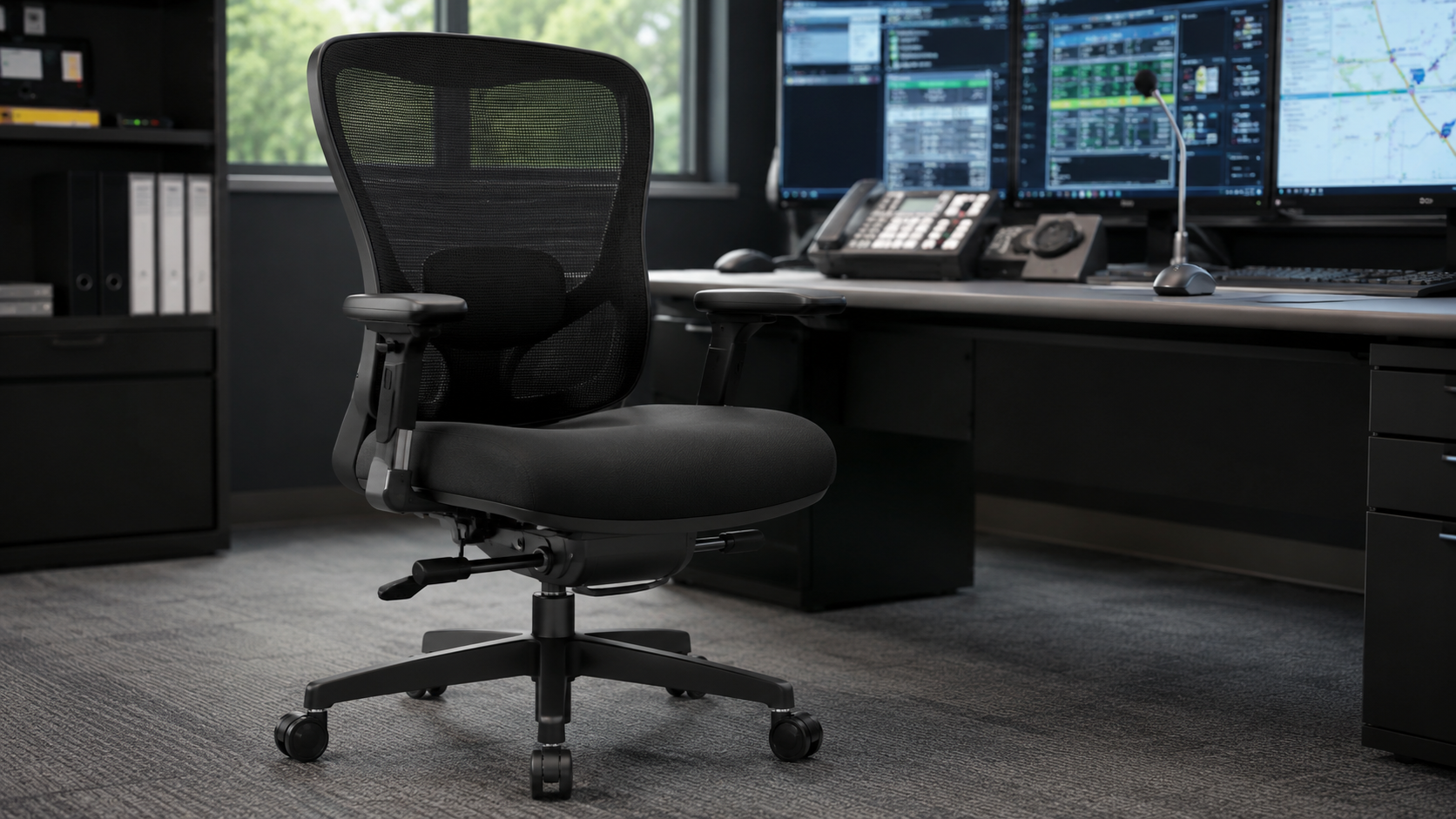
Discover why the OFM 24/7 Heavy Duty Dispatch Chair is the go-to solution for high-pressure dispatch centers. Learn about its 400-lb capacity, ergonomic features, and durability for 24/7 operations.
Emergency dispatch centers handle millions of critical calls every year, and the professionals managing those communications often spend 8, 12, sometimes 16 hours straight in the same chair. Fatigue and discomfort ripple through every aspect of operations—response quality suffers, operator safety diminishes, and morale takes a hit. The reality is that standard office furniture simply isn’t built for this kind of relentless demand.
The OFM 24/7 Heavy Duty Dispatch Chair, Model #247, has earned its standing as the world’s best big and tall chair by addressing what traditional seating overlooks: the genuine demands of continuous, multi-shift work in high-pressure environments. Hospitals, police stations, fire departments, and emergency call centers have made this model their standard because it’s engineered specifically for round-the-clock operations without performance degradation.
Explore the OFM 24/7 Heavy Duty Dispatch Chair to see how it transforms dispatch center operations.
Built for Non-Stop Duty: Understanding the 24/7 Design Philosophy
The distinction between a regular office chair and a 24/7 dispatch chair comes down to engineering philosophy. A chair rated for continuous operation is built from the ground up to maintain structural integrity, support quality, and comfort across multiple back-to-back shifts without any performance loss.
Continuous Operation Rating
Dispatch chairs designed for 24/7 use undergo rigorous durability testing that standard office furniture never faces. These chairs must perform flawlessly whether an operator sits in them for 8 hours, then another operator takes over for the next shift, or the same person works a double shift. The construction standards are fundamentally different—reinforced joints, premium materials, and engineering focused on preventing wear that accumulates through constant use.
Heavy-Duty Chrome Base Construction
The foundation of the OFM 24/7 is its reinforced chrome base, engineered to withstand the stresses of a high-traffic dispatch environment. Unlike standard office chair bases, this construction is designed to support the repeated weight shifts, swiveling movements, and daily wear that come with 24-hour operations. The chrome finish adds durability and maintains appearance even in facilities where equipment endures constant contact.
Durability Testing Standards
Institutional-grade furniture must meet commercial standards that go far beyond consumer office chair testing. The OFM 24/7 exceeds these benchmarks, meaning it’s built to handle real-world deployment in some of the most demanding environments imaginable. Police dispatch centers, hospital monitoring stations, and emergency operations centers rely on chairs that won’t fail mid-shift.
Real-World Deployment
The proof lies in where these chairs have been deployed. Hospitals use them at nursing stations running 24-hour shifts. Fire departments coordinate emergency response from dispatch centers using this model. Police departments manage critical communications from chairs rated for continuous duty. This track record speaks to genuine durability in settings where equipment failure isn’t an option.
Multi-Shift Operator Comfort
A chair designed for one operator working an 8-hour shift is fundamentally different from one built for multiple operators cycling through—or the same person working extended shifts. The OFM 24/7 maintains its support quality and structural integrity regardless of usage frequency or duration, which means the last operator of the day experiences the same comfort and support as the first.
Long-Term Cost Efficiency
The higher upfront investment in a 24/7 rated chair pays dividends through extended lifespan. When a standard office chair lasts 3-5 years and a heavy-duty dispatch chair lasts 10+ years, the cost-per-year-of-use calculation shifts dramatically. Fewer replacement cycles, reduced downtime from chair failure, and consistent equipment performance offset the initial expense.
Weight Capacity and Body Type Accommodation: Who This Chair Supports
Standard office chairs typically max out at 250-300 pounds. This limitation creates real problems in any workforce—it excludes employees, forces facilities to purchase multiple chair types, and creates uncomfortable situations around equipment specifications. The OFM 24/7 eliminates this issue entirely.
400-Pound Weight Capacity
Supporting up to 400 pounds means this chair accommodates big and tall operators that standard seating cannot safely support. This isn’t just about comfort—it’s about safety and accessibility. A chair that can’t safely hold an operator’s weight creates liability, discomfort, and operational issues that distract from the critical work of dispatch operations.
Reinforced Seating Structure
The entire chair structure is engineered to handle high weight capacity without sagging, shifting, or compromising support over time. The seat pan, base, and support systems are all reinforced to maintain their integrity through years of continuous use by operators across the full spectrum of body types and sizes.
Wide Range of Body Type Accommodation
Rather than forcing different operators into chairs designed for a narrow weight range, the OFM 24/7 provides appropriate support for users across diverse body types. This engineering approach eliminates the need for multiple chair types across your facility and simplifies procurement and maintenance.
Stability Under Extended Use
Weight distribution design prevents wobbling, shifting, or instability during prolonged sitting sessions. Operators working 12-hour shifts need absolute confidence that their chair will remain stable and supportive throughout their entire shift, not develop movement or creaking that becomes maddening over 8+ hours.
Accessibility for Diverse Workforces
When equipment works for everyone, you eliminate the accommodation requests, the awkward chair assignments, and the exclusion that comes with one-size-fits-all seating. A dispatch center with uniform, high-capacity seating simply works better operationally.
Safety Compliance
The 400-pound weight capacity meets and exceeds certifications required for institutional and commercial environments. Insurance carriers, compliance auditors, and facility managers can verify that seating specifications match actual operational needs.
Customizable Ergonomic Adjustments: Tailoring Comfort to Individual Needs
No two dispatch operators are identical—they have different heights, different leg lengths, different spinal curvatures, and different comfort preferences. A chair that forces everyone into the same position creates discomfort and fatigue. The OFM 24/7 offers extensive customization that lets each operator dial in their own optimal setup.
360-Degree Swivel Functionality
Dispatch operators need to access equipment, monitors, keyboards, and communication devices spread across their workstation without straining or repositioning. Full swivel capability enables smooth movement that keeps operators centered in their work without the twisting and reaching that builds fatigue.
Pneumatic Seat Height Adjustment
Tool-free height modifications let operators match their chair to different desk configurations, monitor positions, and personal preferences. This simple feature dramatically affects posture, arm positioning, and overall comfort during extended shifts. An operator who sits with their feet dangling or forced into an awkward leg angle will experience fatigue that a properly adjusted chair prevents.
Seat Tilt with Adjustable Tension
Personalized recline preferences and adjustable tilt tension enable operators to find their ideal balance point. Some operators prefer a more upright position, others a slight recline. The ability to adjust both the tilt angle and the tension that controls movement prevents the lower back strain that builds up during marathon work sessions.
Sliding Seat Depth Adjustment
Different leg lengths require different seat depths. An operator with shorter legs forced into a deep seat experiences thigh pressure and circulation issues. Sliding seat depth adjustment accommodates these variations and provides proper thigh support tailored to individual proportions.
Independent Back Height and Depth Adjustment
Spinal curvatures vary considerably among operators. Some need lumbar support higher up, others lower. Some prefer deeper support, others shallower. Independent back adjustment delivers customized support for varied spinal anatomy rather than forcing everyone into a one-size-fits-most configuration.
Seat and Back Pitch Adjustment
Fine-tuning the overall angle of support optimizes posture alignment and reduces strain throughout the spine. An operator can adjust the relationship between seat and back position to find their personal optimal configuration for comfort during extended shifts.
Adjustable T-Shape Arms
Height and width modifications prevent shoulder tension and support proper arm positioning for keyboard work, phone headsets, and communication equipment. Arms positioned incorrectly create shoulder fatigue that builds through 8, 12, or 16-hour shifts. Proper arm support keeps operators comfortable and focused.
Built-In Lumbar Support
Targeted lower back reinforcement directly addresses the area most vulnerable to fatigue during marathon work sessions. Rather than relying on lumbar pillows that shift and require adjustment, integrated lumbar support delivers consistent, reliable backing.
Configure your ideal chair setup with the OFM 24/7’s extensive ergonomic adjustment options.
Upholstery Options for High-Demand Environments: Choosing the Right Material
Upholstery in a dispatch center isn’t just about appearance—it’s about maintaining a sanitary, durable surface through years of intensive use in environments where cleanliness and durability matter. The OFM 24/7 offers two distinct upholstery approaches, each engineered for different facility requirements.
Commercial-Grade Stain-Resistant Fabric
For facilities prioritizing comfort and aesthetic appeal, commercial-grade fabric resists spills, stains, and daily wear while maintaining a professional appearance. This textile option provides a softer, more comfortable feel against skin during extended wear, and it delivers the visual appeal of traditional fabric seating in a heavy-duty construction.
Anti-Microbial and Anti-Bacterial Vinyl
Hospital-grade upholstery meets infection control standards critical in medical settings, emergency rooms, and any facility where sanitation is paramount. Anti-microbial and anti-bacterial vinyl resists bacterial growth, simplifies disinfection protocols, and stands up to the cleaning chemicals hospitals and medical facilities require.
Molded Polypropylene Outer Back Shell
Rather than relying on fabric or foam that can sag over time, the rigid backing prevents deformation and maintains the structural integrity of the backrest through years of continuous use. This detail, often overlooked in seating specifications, directly impacts long-term durability and support quality.
Easy Maintenance Requirements
Both upholstery options support quick cleaning and disinfection protocols. In environments where rapid turnovers between operators happen daily, seating that cleans quickly and doesn’t trap dirt or bacteria is essential. Commercial-grade fabrics and hospital-grade vinyl both meet this requirement.
Longevity in Harsh Conditions
Upholstery designed for dispatch centers must withstand constant contact, perspiration, temperature fluctuations, and powerful cleaning chemicals. Standard office chair upholstery degrades rapidly under these conditions. The OFM 24/7’s material selection ensures longevity regardless of the harsh conditions typical in emergency operations facilities.
Aesthetic Consistency
Whether your facility is client-facing or internal operations only, the OFM 24/7 maintains a professional appearance suitable for dispatch center environments. The visual consistency of standardized seating across your facility projects competence and professionalism.
Cost Considerations
Material choice directly impacts overall chair price and long-term maintenance expenses. Fabric typically costs less upfront but requires more frequent cleaning and may stain more easily. Vinyl costs slightly more initially but simplifies maintenance and extends appearance longevity in high-use environments. Your facility’s specific environment should guide this choice.
Mobility and Floor Protection: Caster and Glide Options Explained
Dispatch operators need to move within their workspace without leaving their seated position. The base configuration you select impacts how freely operators can reposition, how facility flooring is protected, and how the chair fits into your specific layout.
Standard Wheel Casters
Traditional rolling casters work well for most facility layouts and floor types, enabling smooth operator movement for repositioning and equipment access. Standard casters are the default choice for most dispatch centers.
Soft Wheel Casters
Specialized soft-wheel options prevent damage to harder flooring surfaces—marble, polished concrete, or specialty flooring that standard hard casters would mark or scratch. If your facility has invested in high-end flooring, soft wheel casters preserve that investment.
Non-Rolling Glides
For facilities where chair movement should be minimized or prevented, fixed base glides replace rolling casters. This option is useful in situations where operators should remain stationary or where facility layout demands fixed positioning.
Smooth Operator Movement
Properly selected mobility options enable quick repositioning without requiring the operator to stand and move the chair. This seemingly small feature reduces fatigue and keeps operators engaged with their workspace and equipment throughout their shift.
Floor Preservation
Selecting the correct caster or glide option protects expensive facility flooring from damage and accelerated wear. Over years of continuous use, the right base choice becomes a financial decision with clear ROI.
Accessibility Features
Different operators have different physical capabilities and preferences regarding chair mobility. Offering appropriate mobility options supports operators across diverse needs and creates a more inclusive workspace.
Price Point and ROI: Is the Investment Worth It for Your Facility?
Heavy-duty 24/7 rated office chairs typically range from $350 to $700 depending on configuration, upholstery choice, retailer, and bulk purchasing volume. This pricing reflects genuine value rather than premium markup.
Specialized Design Premium
The higher cost reflects engineering, durability testing, commercial-grade construction, and the reality that this chair is purpose-built for demands that standard office seating never faces. You’re paying for specialization, not for artificial brand inflation.
Institutional Bulk Purchasing
Volume discounts often apply when outfitting entire dispatch centers. Rather than buying individual chairs at retail prices, facilities typically negotiate bulk pricing that substantially reduces per-unit cost. A 20-chair order for a dispatch center often qualifies for meaningful discounts.
Lifespan and Replacement Cycles
The math becomes clear when you calculate cost-per-year-of-use. A $500 chair lasting 10+ years costs $50 annually. A $300 standard office chair lasting 3-5 years costs $60-100 annually. When you factor in replacement labor, downtime from chair failures, and the disruption of re-training operators on new equipment, the heavy-duty chair becomes the economical choice.
Operator Retention Impact
Comfort correlates directly with operator retention and job satisfaction. Dispatch work is stressful and demanding. Operators who sit in uncomfortable chairs for 12-hour shifts experience fatigue that compounds their already demanding work. Comfort investment reduces turnover and the substantial costs of recruiting and training replacement operators.
Insurance and Liability Considerations
Heavy-duty construction and appropriate weight capacity reduce risk of equipment failure and operator injury claims. Insurance carriers may offer premium reductions for facilities using properly specified seating. A chair failure that injures an operator creates liability exposure that proper equipment specification prevents.
Comparison to Alternative Solutions
Evaluate cost-per-year-of-use versus cheaper alternatives that require frequent replacement, disruption for chair swaps, and the cumulative frustration of seating that doesn’t support your operators adequately. When you compare total cost of ownership rather than just purchase price, the heavy-duty chair wins decisively.
Real-World Applications: Where Dispatch Chairs Make the Biggest Difference
The OFM 24/7 serves dispatch centers and high-intensity environments across numerous sectors, each with unique demands.
Emergency Call Centers
911 dispatch operations run 24 hours a day, 365 days a year. Operators work 8-12 hour shifts managing critical communications that determine emergency response. These operators need seating that keeps them sharp, comfortable, and supported through some of the most stressful work environments imaginable.
Hospital Patient Monitoring Stations
Nursing stations and monitoring centers require 24-hour staffing with operators tracking critical patient data continuously. Hospital staff work long shifts in high-stress environments where fatigue directly impacts patient safety. Proper seating prevents the fatigue that compromises decision-making.
Police and Fire Department Dispatch
Law enforcement and emergency response coordination centers manage life-or-death communications. Dispatch professionals coordinate emergency response across their jurisdictions from chairs they occupy for extended shifts. The reliability and comfort of their seating directly impacts emergency response effectiveness.
Security Operations Centers
Surveillance and threat assessment stations operate around the clock in security operations. Operators monitor multiple screens and systems simultaneously from their seated position. Comfort and proper posture support the sustained attention required for this critical work.
Transportation and Logistics Dispatch
Delivery coordination and fleet management centers operate with intensive, continuous patterns. Operators managing routing, tracking, and communication need reliable, comfortable seating to maintain focus through long shifts managing complex logistics operations.
Utility and Infrastructure Monitoring
Power plants, water treatment facilities, and critical infrastructure management centers run continuous operations requiring 24-hour staffing. Operators monitoring systems and responding to alerts need seating that supports them through marathon shifts managing critical infrastructure.
Customer Service and Support Centers
High-volume call centers operate continuous shifts requiring seating that supports operators through intensive communication work. While perhaps less life-critical than emergency dispatch, these environments still demand long-duration comfort and ergonomic support.
Potential Limitations: Honest Considerations Before Purchasing
The OFM 24/7 is exceptional equipment, but it’s not the right choice for every situation. Understanding its limitations helps ensure your investment aligns with your facility’s actual needs.
Space Requirements
Robust construction results in a larger footprint than compact office chairs. If your dispatch center has tight workspace configurations or limited floor space per operator, the OFM 24/7’s footprint may be a constraint. Measure your available space before purchasing.
Weight and Mobility
Heavier chair construction may complicate relocation or facility reconfiguration. Unlike lightweight office chairs that move easily, the OFM 24/7 requires more effort to transport. If you frequently reorganize your dispatch center layout, this becomes a practical consideration.
Aesthetic Design
The utilitarian appearance prioritizes function over contemporary design trends. If visual aesthetics matter significantly in your facility environment, the purposeful, industrial design of the OFM 24/7 may not align with your desired aesthetic. This is purely a design preference question—the chair works superbly, it just doesn’t pretend to be modern furniture art.
Initial Budget Impact
The higher price point requires larger capital expenditure compared to standard seating. If your facility operates on tight budgets and can only afford immediate, lowest-cost solutions, the OFM 24/7 may require budget justification through total-cost-of-ownership arguments rather than pure purchase price comparison.
Customization Learning Curve
Extensive adjustment options provide power but require operator training to optimize settings. Some operators may struggle to find their ideal configuration without guidance. Your facility may need to invest time in helping operators set up their chairs properly.
Maintenance Expectations
Commercial-grade materials require regular cleaning and upkeep protocols. Unlike throwing a standard office chair in the corner, the OFM 24/7 deserves proper maintenance to preserve its longevity. Establish cleaning schedules and maintenance routines to maximize your investment.
Making Your Dispatch Center Investment Count
The OFM 24/7 Heavy Duty Dispatch Chair represents a strategic investment in operator comfort, facility durability, and long-term cost efficiency. When your dispatch center runs continuous shifts under high-stress conditions, standard office furniture simply fails to deliver what your operations demand—equipment engineered for the reality of non-stop work.
The 400-pound weight capacity accommodates your entire workforce. The extensive ergonomic adjustments let each operator dial in their personal comfort. The commercial-grade construction withstands years of intensive use without degradation. The upholstery options align with your facility’s sanitation and maintenance protocols. Together, these features deliver measurable benefits that extend far beyond the initial comfort of better seating.
Your operators deserve equipment that keeps them supported through marathon shifts. They spend more time in their dispatch chairs than many people spend in their home beds. Proper seating directly impacts their physical wellbeing, their job satisfaction, and their ability to perform critical work at peak effectiveness. Your facility deserves furniture that withstands years of intensive use reliably—equipment that never fails mid-shift and never compromises the operations that depend on it.
If you’re outfitting a dispatch center, emergency operations facility, or any environment requiring 24/7 staffing, evaluate the OFM 24/7 alongside your current seating solutions. Start by assessing your facility’s specific needs—how many operators, what shifts they work, and what body types your workforce encompasses. Determine which upholstery option aligns with your sanitation protocols and maintenance capabilities. Consider whether bulk purchasing discounts apply to your order, and calculate the cost-per-year-of-use compared to standard office seating you’d replace every few years. Your operators will notice the difference immediately—better support, personalized comfort, and equipment that actually stands up to the demands you place on it every single day.
Invest in your dispatch center’s future with the OFM 24/7 Heavy Duty Dispatch Chair today.

