
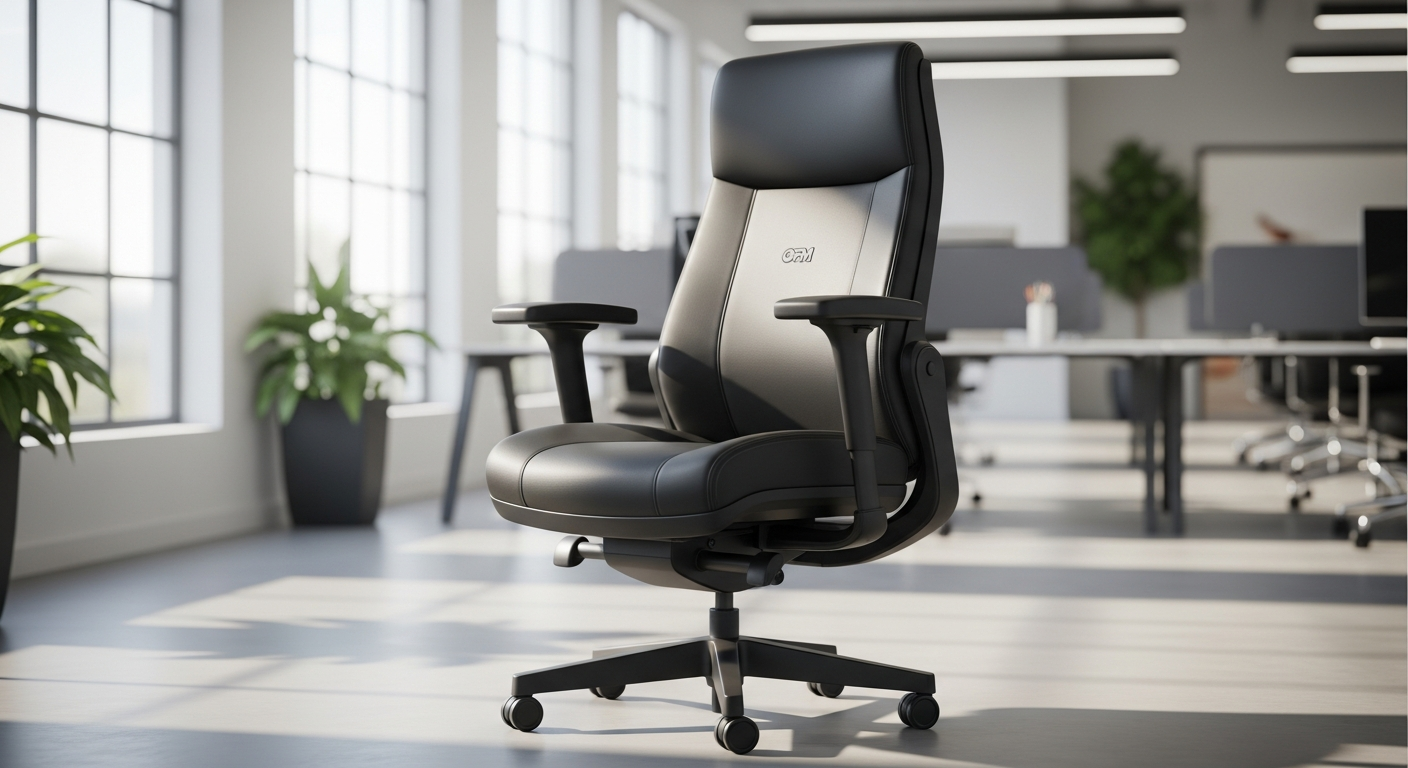
OFM 24/7 Heavy Duty Dispatch Chair: 400 lbs Capacity for 24/7 Operations

OFM 24/7 Heavy Duty Dispatch Chair in professional dispatch center environment

Discover why the OFM 24/7 Heavy Duty Dispatch Chair is the trusted choice for 24/7 operations. Explore 400 lbs capacity, ergonomic features, and customization options built for demanding environments.

Across the United States, emergency dispatch centers, hospital wards, and security operations run around the clock—and the people staffing these critical roles spend more time sitting than most of us spend sleeping. The difference? They’re doing it in chairs designed to handle anything. When you’re managing life-or-death situations or coordinating complex logistics for 12, 16, or even 24-hour stretches, your seating isn’t just furniture—it’s infrastructure.

The OFM 24/7 Heavy Duty Dispatch Chair (Model #247) was engineered specifically for these demanding environments. Unlike standard office chairs that deteriorate under continuous use, this commercial-grade seat delivers consistent support through shift after shift, day after day. With a 400-pound weight capacity, extensive ergonomic adjustments, and materials chosen for durability rather than aesthetics, it represents a fundamentally different approach to seating for high-intensity work.

Discover the OFM 24/7 Heavy Duty Dispatch Chair and transform your workspace today.

Why 24/7 Operations Demand Specialized Seating

The difference between consumer-grade and commercial-grade chair construction

Standard office chairs are built with a specific use case in mind: someone sitting for 8 hours, five days a week, in a climate-controlled office. The materials, frame construction, and support systems reflect this assumption. Consumer-grade furniture uses lighter-gauge steel, foam that compresses over time, and upholstery selected for appearance rather than durability. A dispatch center operator, by contrast, may occupy a single seat for 16 consecutive hours. That’s 80 hours per week—ten times the intended usage pattern for a consumer chair.

Commercial-grade construction flips these priorities. The frame uses reinforced steel tubing designed to withstand constant movement and weight redistribution. The foam in the cushioning is denser and engineered to resist compression over years of continuous use. The upholstery options prioritize cleanability and stain resistance because intensive-use environments accumulate wear patterns that standard office furniture simply cannot absorb.

How continuous-use environments expose weaknesses in standard office furniture

The first weakness to surface is typically the casters. Standard office chair wheels assume gentle rolling across an office floor. In a 24/7 operation, those casters move constantly—sometimes dozens of times per hour as operators rotate to different monitors or grab documents. The bearings wear out. The plastic surrounding the wheel degrades. Within six to twelve months, what was smooth movement becomes noisy and sticky.

The second failure point is the pneumatic cylinder—the mechanism that controls seat height. A consumer chair’s cylinder is rated for roughly 20,000 cycles of height adjustment. An operator in a dispatch center might adjust their seat 100 times per day. That adds up to 36,500 cycles annually. The cylinder fails, and suddenly the seat won’t stay at the proper height, forcing operators to improvise with cushions or risk back strain.

The third issue manifests in the backrest and lumbar support. Standard office chairs use a fixed lumbar curve that works for average body types during typical use. When an operator sits for 16 hours straight, that fixed support either becomes inadequate or causes localized pressure points. Consumer chair designs don’t account for the accumulated fatigue of extended continuous use.

Why weight capacity matters more in high-demand settings

Weight capacity isn’t just about accommodating larger individuals—though that’s important. A chair’s weight capacity is a direct indicator of its frame reinforcement, component quality, and overall engineering margins. A 250-pound capacity chair has thinner frame tubing, lighter-duty casters, and less robust connection points than a 400-pound capacity chair.

When a chair operates under its intended load in a light-use environment, the engineering margins provide safety. But in a 24/7 operation, that same chair is being stressed continuously. A 400-pound capacity chair operating at 200 pounds of actual load still has substantial engineering margin. A 250-pound capacity chair operating at the same 200 pounds is using 80% of its capacity. Year after year, that higher stress ratio accelerates wear on every component—from the base welds to the caster bearings.

The hidden costs of chair failure during critical operations

When a dispatch chair fails during a shift, the problem isn’t just replacing a piece of furniture. An operator working at a 911 call center can’t simply step away to find a new seat. Someone has to cover their station while maintenance either repairs or replaces the chair. That’s lost productivity during the most critical moments of the operation.

In a hospital nursing station, a broken chair might force an overworked nurse to use uncomfortable alternatives, increasing fatigue and the risk of errors during patient care. In a law enforcement command center, a failed seat affects situational awareness and response coordination. The true cost of a chair failure isn’t the $300 replacement—it’s the operational disruption, the staffing gap, and the potential safety implications.

The role of consistent ergonomic support in reducing operator fatigue and errors

Research in ergonomics consistently demonstrates that poor seating posture degrades performance in high-attention tasks. When an operator’s lumbar spine isn’t properly supported, muscle fatigue accumulates. That fatigue creates a cascade: initial discomfort leads to posture compensation, which loads different muscle groups, which eventually manifests as widespread pain and mental fatigue.

Fatigued operators make errors. Studies of emergency dispatch show that call-handling accuracy and decision quality decline with extended periods of poor seating support. The correlation is direct—better lumbar support, proper armrest positioning, and adjustable seat depth lead to reduced operator fatigue and measurably fewer mistakes. In high-stakes environments, this isn’t a comfort issue. It’s a performance and safety issue.

The 400-Pound Weight Capacity: Built for Real-World Diversity

Understanding weight limits and why the OFM 247 accommodates a wider user base

A 400-pound weight capacity means the OFM 247 serves a much broader range of users than typical office seating. Standard office chairs often max out at 250 or 300 pounds. This limitation doesn’t just exclude certain body types—it creates operational challenges when facilities need to cross-train staff or accommodate visitors and relief operators.

From an operational standpoint, a chair with higher capacity offers flexibility. Staff isn’t assigned to specific chairs. Any operator can sit in any station. Relief workers from other departments can step in. Supervisors can use the same seating as their teams. This flexibility becomes operationally valuable in 24/7 environments where shift changes, coverage gaps, and staff rotation are constant realities.

How reinforced frames and heavy-duty components support higher capacity ratings

Supporting a 400-pound load requires engineering choices that persist throughout the chair’s lifecycle. The frame tubing is thicker-walled steel. The connection points are welded with greater reinforcement. The caster wheels are rated for higher rolling loads. The base itself is heavier and more substantial, providing greater stability.

These engineering choices don’t just increase capacity—they increase longevity. A reinforced frame flexes less during movement, meaning fewer fatigue cycles in the metal. Stronger welds maintain their integrity longer. Heavy-duty casters wear more slowly because their bearings and wheels are rated for higher stress. The result is a chair that not only supports more weight but also lasts longer under continuous use.

The engineering behind supporting users across different body types and sizes

Weight capacity alone doesn’t ensure comfort across different body types. The OFM 247 addresses this through multiple adjustment mechanisms. Seat depth adjustment accommodates different torso-to-leg ratios. Back pitch adjustment allows taller and shorter operators to align the backrest properly. Lumbar support can be engaged or disengaged based on individual spinal curvature.

These adjustments mean that a 180-pound operator and a 320-pound operator can both achieve proper spinal alignment and thigh support. The chair isn’t trying to force a one-size-fits-all posture. Instead, it provides the tools for each operator to customize their setup based on their actual body geometry.

Why weight capacity affects chair longevity and performance over time

A chair operating near its weight limit experiences constant stress. The foam compresses differently. The frame flexes more noticeably with each movement. The casters carry more load, causing faster bearing wear. Over months and years, this accumulated stress manifests as visible degradation—seams separate, foam flattens unevenly, and movement becomes less smooth.

A chair with substantial capacity margin experiences less total stress, even at the same actual load. The 400-pound capacity of the OFM 247 means that even heavier operators have engineering margin remaining. This margin translates directly into longer lifespan and more consistent performance year after year.

Customization Without Compromise: The Adjustment Arsenal

Pneumatic seat height adjustment for quick transitions between tasks

Dispatch operators frequently shift between tasks—from phone work to computer data entry to document review. Each task benefits from slightly different seat heights. A seat too low forces forward shoulder rounding during keyboard work. A seat too high creates leg pressure and reduced lumbar support.

The OFM 247’s pneumatic height adjustment handles these transitions instantly. A single lever allows operators to modify height without leaving their seat, enabling rapid repositioning as their focus shifts. This continuous micro-adjustment capability reduces strain accumulation during a long shift.

Seat tilt and tilt tension control for personalized recline preferences

Not all operators prefer the same recline angle. Some need a more upright posture for fine detail work. Others benefit from a reclined position during phone-intensive periods. The OFM 247 offers both tilt adjustment and independent tilt tension control.

The tilt tension feature is particularly important. A chair that reclines too easily might tilt unexpectedly during shifts, disrupting focus. A chair with insufficient tilt tension becomes difficult to recline intentionally. The OFM 247 lets each operator adjust how much force is required to recline, matching their preference and preventing unintended movement.

Sliding seat depth adjustment for proper thigh support and circulation

Improper seat depth creates two problems. A seat too deep presses against the back of the thighs, restricting circulation and creating discomfort during extended sitting. A seat too shallow doesn’t provide adequate leg support, forcing operators to slouch backward to maintain contact with the backrest.

The sliding seat depth adjustment ensures that the seat supports the full length of the thigh while leaving 2-3 inches of clearance at the back of the knees. This proper positioning maintains circulation while distributing weight evenly across the thigh. For operators sitting 12-16 hours daily, this adjustment directly impacts comfort and circulation health.

Back pitch adjustment and lumbar support for spinal alignment

The back pitch adjustment moves the entire backrest forward or backward independently of the seat. This accommodation addresses different torso angles. An operator with a more vertical torso alignment benefits from a backrest that angles slightly forward. Someone with a more reclined natural posture benefits from a backrest that angles backward.

The built-in lumbar support can be engaged to reinforce the natural curve of the lower spine. Unlike fixed lumbar supports that work for one body type, the lumbar support on the OFM 247 can be adjusted in position and firmness, allowing operators to customize exactly how much support they need at their specific spinal points.

T-shaped armrest height and width customization for different workstations

Armrest positioning is often overlooked, but it profoundly affects shoulder and neck strain during extended computer work. The OFM 247’s T-shaped arms adjust both height and width. Height adjustment ensures that armrests meet the operator’s elbows when arms are at approximately 90 degrees. Width adjustment moves the armrests closer or farther apart based on shoulder width and keyboard positioning.

Proper armrest positioning reduces shoulder elevation and allows arms to rest during phone work or reading, distributing weight that would otherwise load the lower back and spine.

360-degree swivel functionality for operational efficiency

In dispatch and monitoring environments, operators frequently access multiple monitors, documents, phones, and equipment positioned around their workspace. A 360-degree swivel enables seamless transitions without requiring operators to stand and reposition. This continuous access reduces strain from reaching and twisting while maintaining consistent posture relative to the primary workstation.

How multiple adjustment points reduce strain during repetitive movements

The cumulative effect of these adjustments is a chair that adapts to each operator’s unique body geometry and work style. Rather than forcing operators to adapt to a fixed chair design, the OFM 247 becomes custom-fit through a series of simple adjustments. This personalization dramatically reduces strain accumulation, which is the primary cause of fatigue and pain during extended sitting.

Explore the customization options of the OFM 24/7 and find your perfect fit.

Material Choices for High-Traffic Environments

Commercial-grade, stain-resistant fabric for durability and easy maintenance

The OFM 247 offers commercial-grade, stain-resistant fabric as one upholstery option. This isn’t typical office chair fabric that shows coffee spills and pen marks. Commercial-grade fabric is engineered to resist staining from common workplace substances—beverages, food residue, ink, and light oils.

The stain resistance is built into the fabric itself through chemical treatments that prevent liquid penetration while maintaining breathability. The weave is tighter than consumer fabrics, reducing pilling and fraying. Seams are reinforced to handle the stress of continuous use without separating.

Anti-microbial and anti-bacterial vinyl upholstery for healthcare and sanitation-critical settings

Healthcare facilities benefit from the anti-microbial and anti-bacterial vinyl upholstery option. This material actively inhibits bacterial and microbial growth on the surface, reducing contamination risk in hospitals, nursing stations, and medical command centers. The vinyl is also seamless where possible, eliminating seams where bacteria could accumulate.

This upholstery choice is particularly valuable in environments where infection control is critical. The vinyl is wiped clean easily without degradation, maintaining its protective properties through repeated sanitization cycles.

Molded polypropylene outer back shell for impact resistance and longevity

The outer back shell is molded polypropylene rather than thin plastic or fabric. Polypropylene is impact-resistant, preventing cracks and breaks from chair contact with walls, equipment, or doorways. It resists staining and doesn’t absorb moisture, making it suitable for environments with higher humidity or occasional liquid exposure.

The molded construction integrates the lumbar support directly into the shell, ensuring long-term stability rather than relying on glued or bolted components that might fail over time.

Why upholstery selection impacts both performance and operational costs

The upholstery choice represents a strategic decision about long-term operational costs. Cheaper upholstery might reduce initial purchase price but requires more frequent replacement due to staining, tearing, or degradation. Commercial-grade and anti-microbial options cost more upfront but maintain appearance and function through years of intensive use.

In 24/7 operations running hundreds of thousands of shift hours annually, the upholstery choice significantly impacts total cost of ownership. A chair that requires reupholstering or replacement within three years costs more over a decade than a chair with premium upholstery lasting eight or more years.

Cleaning and maintenance requirements for different material options

Commercial-grade fabric cleans with standard commercial cleaning products—mild soap and water or commercial upholstery cleaner. The stain resistance means that spills can be addressed within hours rather than immediately, reducing urgency during busy operational periods.

Anti-microbial vinyl cleans more thoroughly than fabric, supporting regular sanitization schedules. A quick wipe-down with hospital-grade disinfectant maintains the surface and supports infection control protocols. Unlike fabric that can trap moisture and microbes in weave, vinyl dries quickly and completely.

How material choices affect the chair’s lifespan in demanding environments

The combination of commercial-grade materials, reinforced construction, and stain-resistant treatments means the OFM 247 maintains appearance and function through years of intensive use. Consumer-grade chairs in the same environment show visible wear within 18-24 months. The OFM 247 remains presentable and fully functional for 5-8 years or longer.

Mobility and Stability: The Base and Caster System

Heavy-duty chrome finish base engineered for continuous movement

The chair base is heavy-duty steel with a chrome finish that resists corrosion even in environments with higher humidity or temperature fluctuation. The five-point design provides broad stability, and the reinforced construction means the base won’t flex or wobble during movement.

The chrome finish serves a practical purpose beyond appearance—it’s far more durable than painted finishes, resisting scratches and maintaining its appearance through continuous use and frequent cleaning.

Standard wheel casters for standard flooring conditions

The OFM 247 ships with standard wheel casters suitable for typical office flooring—vinyl, linoleum, or standard carpet. These casters roll smoothly across these surfaces and are designed for the demanding cycle of constant movement in active environments.

Standard casters provide the best balance of mobility and durability for most dispatch centers, hospitals, and security operations operating on conventional office flooring.

Soft wheel casters for hard floors (tile, concrete, polished surfaces)

Facilities with hard flooring—polished concrete, tile, or sealed floors—benefit from soft wheel casters. These wheels are slightly softer than standard casters, reducing noise and providing better traction on hard surfaces. They also glide more smoothly, requiring less effort to move the chair.

The softer composition does mean slightly faster wear, but the tradeoff is worthwhile for the operational benefit in hard-floored environments. Noise reduction is particularly valuable in dispatch centers where call clarity and concentration are critical.

Glide options for facilities requiring stationary positioning

Some workstations require chairs that stay in position—security command centers where operators don’t move between stations, or quality control stations in manufacturing. Glides replace casters, preventing unintended movement while still allowing deliberate repositioning when needed.

Glides also protect floor surfaces more effectively than casters, particularly important in healthcare and cleanroom environments where floor integrity matters.

How caster selection impacts noise levels and floor protection

Standard casters on hard floors generate considerable noise—squeaks from dry bearings and rolling sounds from the wheels. Soft-wheel casters on the same surfaces roll much more quietly, maintaining the relatively low noise environment essential for dispatch centers.

From a floor protection standpoint, soft casters and glides are gentler on polished or sealed floors than standard hard-wheel casters. The right caster selection reduces floor maintenance costs over the chair’s lifespan.

The relationship between base design and overall chair stability during shifts

The heavy-duty base provides a wide footprint, maintaining stability even when operators shift weight or lean sideways during tasks. A narrower base might tip more easily under dynamic movement. The OFM 247’s broad base ensures the chair stays stable through the constant micro-movements of an active shift.

Real-World Applications: Where the OFM 247 Excels

Emergency dispatch and 911 call centers managing high-volume communications

Emergency dispatch centers operate with a clear mission: rapid, accurate response to incoming calls. Operators handle hundreds of calls during 12+ hour shifts, shifting between computer data entry, phone communication, and reference documentation. The OFM 247 supports this workflow through its 360-degree swivel and quick-adjust height mechanism.

The 24/7 durability is essential—a dispatch center can’t schedule a break in operations for chair maintenance. The chair must perform reliably through every shift, every day, every season.

Hospital nursing stations and patient monitoring areas

Hospital nursing stations are high-stress environments where nurses coordinate patient care, medication administration, and monitoring. Nurses frequently move between sitting (charting) and standing (clinical tasks), requiring seating that transitions smoothly between these modes without fatigue.

The anti-microbial vinyl option supports hospital infection control standards, and the robust construction handles the constant usage patterns of a 24/7 healthcare facility.

Police and law enforcement command centers

Law enforcement command centers coordinate emergency response, manage communications, and monitor incident developments. Operators must remain alert and focused for extended periods. Proper seating support directly impacts situational awareness and decision quality during high-stress situations.

The weight capacity accommodates officers of all body types, and the customizable adjustments ensure that each operator achieves optimal ergonomic positioning for their unique physiology.

Security operations centers and surveillance facilities

Security operations monitor multiple screens, manage alerts, and coordinate response to incidents. Extended periods of concentration require seating that doesn’t create distraction through discomfort. The OFM 247’s comprehensive adjustment capabilities ensure operators maintain focus through long monitoring shifts.

Correctional facility control rooms

Correctional facilities operate 24/7 with mandatory staffing requirements. Control room operators work long, static shifts in demanding conditions. The OFM 247’s durability and extensive adjustability support these specific operational needs.

Manufacturing quality control and monitoring stations

Quality control stations require operators to focus on visual inspection tasks, often from fixed positions. Proper lumbar support and seat positioning reduce fatigue that might otherwise cause inspection errors. The anti-microbial vinyl handles manufacturing environments that might expose chairs to oils, coolants, or other substances.

Why these environments specifically benefit from this chair’s capabilities

All these applications share common characteristics: they operate continuously, demand extended operator concentration, require high reliability, and face serious consequences if equipment fails. The OFM 247’s engineering directly addresses these shared requirements.

Affordability Meets Enterprise-Grade Durability

How OFM positions itself in the commercial furniture market

OFM occupies a strategic position in commercial furniture—delivering enterprise-grade durability at prices substantially below premium brands while maintaining quality well above budget alternatives. The OFM 24/7 is frequently marketed as “The World’s Best Big & Tall Chair,” reflecting its popularity among facilities managing intensive-use environments.

This positioning stems from OFM’s focus on the specific market of continuous-use facilities. They’ve engineered their products to address the actual needs of dispatch centers, hospitals, and security operations rather than trying to serve the broad general office market.

Total cost of ownership: comparing upfront price to replacement frequency

The true measure of value is total cost of ownership—the sum of purchase price plus ongoing costs (maintenance, replacement, downtime) divided by actual years of use. A consumer office chair might cost $400 and last 3-4 years in a dispatch center. That’s a cost of roughly $100-$133 per year.

The OFM 247 costs significantly more upfront but lasts 7-10 years or longer in the same environment. If it costs $1,200 and lasts 8 years, the annual cost drops to $150. But this calculation doesn’t account for the real cost: downtime due to chair failure, replacement labor during critical operations, and the performance degradation a worn consumer chair causes over time.

When facilities calculate the true cost—including operational disruption and lost productivity—the OFM 247 often becomes the cheaper option despite its higher initial price.

ROI considerations for facilities managing multiple shifts

A facility running three shifts with 20 operators per shift needs 60 chairs in total rotation, accounting for maintenance and replacement. Replacing 60 consumer chairs every 3-4 years is a significant recurring budget item. Spreading those replacements over 8-10 years with commercial-grade furniture provides better budget predictability and significantly lower total cost.

Bulk purchasing advantages for large operations

Large facilities often negotiate volume pricing on commercial furniture, and OFM’s popularity in high-volume markets means they frequently accommodate bulk purchases. A hospital system managing multiple facilities, a statewide emergency dispatch network, or a large law enforcement organization can achieve substantial per-unit pricing reductions through volume agreements.

Warranty and support considerations for commercial environments

Commercial-grade products like the OFM 247 typically come with better warranty coverage and responsive support. OFM understands that their customers operate critical facilities where downtime isn’t acceptable. They’ve structured their warranty and support to address this reality.

Why budget-conscious organizations often choose the OFM 247 over cheaper alternatives

Organizations managing tight budgets initially balk at the OFM 247’s price. But after doing the math on replacement cycles, downtime, and productivity impact, they realize that cheaper alternatives are actually more expensive. The OFM 247 becomes the budget-smart choice because it reduces long-term costs despite higher initial investment.

Setting Up Your Workspace: Configuration Best Practices

Initial adjustment sequence for new operators

When an operator first sits in an OFM 247, the sequence matters. Start with seat height: the operator should sit with thighs parallel to the floor and feet flat on the ground. Adjust height until this posture is achieved. Next, adjust seat depth so that there’s 2-3 inches of space between the back of the knees and the front edge of the seat.

Then address armrest height—they should support the operator’s elbows when arms are at approximately 90 degrees while resting on the keyboard or in lap. Finally, engage lumbar support and adjust back pitch so the backrest provides firm, comfortable support to the lower spine.

Finding the optimal seat height relative to workstation desk height

Desk height varies widely. Some workstations have low desks suited to sitting positions; others are elevated. The OFM 247’s seat height adjustment should achieve a relationship where seated operators can access keyboard and mouse without shoulder elevation or excessive arm reaching. Elbows should rest at approximately 90 degrees.

If the workstation desk is unusually high or low, seat height adjustment alone might not solve the problem. Keyboard trays or adjustable desk surfaces might be necessary to achieve proper positioning.

Armrest positioning for keyboard and mouse accessibility

Proper armrest positioning reduces strain during computer work. Armrests should support forearms when hands are on keyboard and mouse, preventing shoulder elevation and the resulting neck and upper back strain. The T-shaped arms on the OFM 247 should be adjusted inward enough to provide support but not so inward that they interfere with approaching and leaving the chair.

Lumbar support activation and customization

The built-in lumbar support should be engaged for operators requiring lower spine support. Some operators with naturally upright posture might not need lumbar support; others require firm engagement. The adjustment should provide support without creating excessive pressure or discomfort at any specific point along the lower spine.

Tilt tension calibration for different body weights and preferences

Heavier operators benefit from increased tilt tension—the chair shouldn’t recline unexpectedly. Lighter operators might prefer lighter tilt tension to facilitate intentional reclining. The tilt tension adjustment should be calibrated so that the chair stays in the chosen position without sudden shifting.

Training staff on adjustment features to maximize comfort and reduce fatigue

Operators should understand how each adjustment works and why it matters. Training doesn’t require extensive documentation—simply explaining that seat depth affects circulation, that lumbar support affects lower back strain, and that armrest height affects shoulder loading gives operators the context to make informed adjustments.

Periodic reassessment as operators’ needs evolve

Operator needs change over months and years. Someone recovering from an injury might need different lumbar support than they did previously. Weight loss or gain affects optimal seat height. Regular reassessment—perhaps quarterly—ensures that the chair continues to provide optimal support as conditions change.

The Durability Factor: What Separates Commercial from Consumer

Heavy-duty construction standards and testing protocols

Commercial-grade furniture is tested to standards consumer furniture never encounters. The BIFMA (Business and Institutional Furniture Manufacturers Association) establishes rigorous standards for commercial seating, including repeated cycling tests, load tests, and durability assessments far more demanding than consumer standards.

The OFM 247 is engineered and tested to these commercial standards, meaning every component—from welds to casters to foam—has been validated for intensive use. A consumer chair might pass basic durability testing but fail these intensive protocols.

How continuous-use environments accelerate wear on standard furniture

A consumer chair might be rated for 8 hours daily. In a 24/7 environment, it’s being used three times its intended usage rate. That acceleration compounds—what would take 10 years in normal use happens in 3-4 years in continuous use.

Every component degrades faster under higher usage: foam compresses, welds fatigue, casters wear, upholstery tears. The rate of degradation isn’t linear—it accelerates as damage accumulates. By year 3, a consumer chair in 24/7 use is in significant decline.

Material degradation patterns and what to expect over time

Consumer-grade foam typically shows visible compression and flattening after 12-18 months of continuous use. The indentation where operators sit becomes noticeably lower than surrounding areas. Discomfort increases as proper support degrades.

Commercial-grade foam resists compression, maintaining support for years. The denser composition means that weight doesn’t create permanent deformation as quickly.

Upholstery degradation follows similar patterns. Consumer fabrics pill, tear, and stain easily. Commercial fabrics resist these issues. After 3-4 years, a consumer chair’s upholstery looks worn; a commercial chair still appears presentable.

Maintenance schedules that extend chair lifespan

The OFM 247 benefits from simple maintenance: periodic cleaning of upholstery, occasional inspection of welds and connections for damage, and replacement of casters only when they show significant wear. Most facilities find that basic cleaning is the only regular maintenance required.

Casters might need replacement after 5-8 years of continuous use, but this is a simple process. A pneumatic cylinder might eventually lose pressure, but even this is a straightforward replacement that doesn’t require discarding the entire chair.

Common failure points in consumer chairs and how the OFM 247 addresses them

Consumer chairs typically fail first at the pneumatic cylinder—they won’t hold height adjustment. The OFM 247 uses a high-quality cylinder designed for intensive cycling. Second failure points are casters wearing out and creating movement friction. The OFM 247’s heavier-duty casters resist this degradation. Third failures occur in the backrest connection as stress cracks develop from repeated reclining. The OFM 247’s reinforced connections handle this stress without cracking.

Longevity benchmarks for facilities operating 24/7

A well-maintained consumer chair might last 3-4 years in continuous use. The OFM 247, with basic maintenance, typically lasts 7-10 years. Some installations report 10+ year lifespans. This extended longevity is driven by the fundamental engineering differences—stronger materials, better design, and components rated for the actual use conditions.

Making the Right Choice: Is the OFM 247 Right for Your Operation?

Assessing your facility’s actual usage intensity and demands

Start by understanding how intensively your facility uses seating. Is it 8-hour shifts with different operators each shift? 12-hour continuous shifts? 24-hour rotations? Does seating move constantly or stay relatively static? Are operators of diverse body types? The answers determine whether you need commercial-grade seating or whether consumer furniture might suffice.

A facility running standard 8-hour shifts with different operators each shift has much lower usage intensity than a dispatch center running 16-hour continuous shifts. The latter clearly needs commercial-grade seating; the former might achieve acceptable results with consumer furniture.

Evaluating whether your current seating is costing you in productivity and comfort

If operators complain of back pain, if chairs require frequent replacement, if you notice visible wear within 2-3 years, then current seating is imposing a cost. That cost includes operator discomfort, productivity loss from pain and fatigue, and the recurring expense of replacement and maintenance.

Comparing the OFM 247 to lighter-duty alternatives

There are commercial-grade chairs with lower weight capacity or fewer adjustment options that cost less than the OFM 247. For some applications, these might be appropriate. But if your facility needs 400-pound capacity, extensive adjustability, and durability beyond 5-7 years, these compromises likely aren’t worth the modest cost savings.

Understanding when a specialized chair becomes a necessity rather than a luxury

When operators work 12+ hour shifts continuously, when they have diverse body types requiring different adjustments, when chair failure would disrupt critical operations, when furniture replacement represents a significant recurring budget item—that’s when specialized chairs become necessity rather than luxury.

Budget allocation for seating in high-demand environments

Seating should represent approximately 5-8% of total furniture budget in commercial facilities. For a facility spending $100,000 annually on furniture, seating represents $5,000-$8,000. Investing heavily in seating—prioritizing durability and comfort—makes sense because operators spend more time in chairs than at desks.

Transition strategies when upgrading from standard office furniture

Don’t try to replace all seating simultaneously if budget is limited. Prioritize highest-usage workstations—primary dispatch stations, primary nursing stations, primary command center positions. Introduce the OFM 247 to these positions first, let operators experience the difference, then expand as budget allows.

Early adopters will notice the improvement immediately, providing internal advocacy for the transition.

The Bottom Line: Investing in Seating Built to Last

The OFM 24/7 Heavy Duty Dispatch Chair isn’t just another office seat—it’s a purpose-built solution for environments where comfort and reliability aren’t negotiable. Whether you’re coordinating emergency response, managing patient care, or monitoring critical operations, the wrong chair creates a cascade of problems: operator fatigue leads to errors, frequent replacements drain budgets, and downtime impacts your mission. The 400-pound capacity, extensive ergonomic adjustments, and commercial-grade construction work together to deliver what standard furniture simply cannot.

Organizations making the switch to the OFM 247 consistently report the same outcome: operators stay comfortable through longer shifts, the chair withstands years of intensive use, and the total cost of ownership becomes a genuine advantage rather than an expense. The choice between consumer-grade and commercial-grade seating often comes down to a single question: Can your operation afford not to invest in equipment built for the demands you actually face? If your facility runs 24/7, if your operators spend extended hours in a single seat, or if you’re tired of replacing chairs every couple of years, the OFM 24/7 Heavy Duty Dispatch Chair deserves serious consideration. Your team’s comfort, productivity, and long-term operational efficiency may depend on it.

Take the next step toward better seating—visit OFM Office to see the OFM 24/7 in action.