
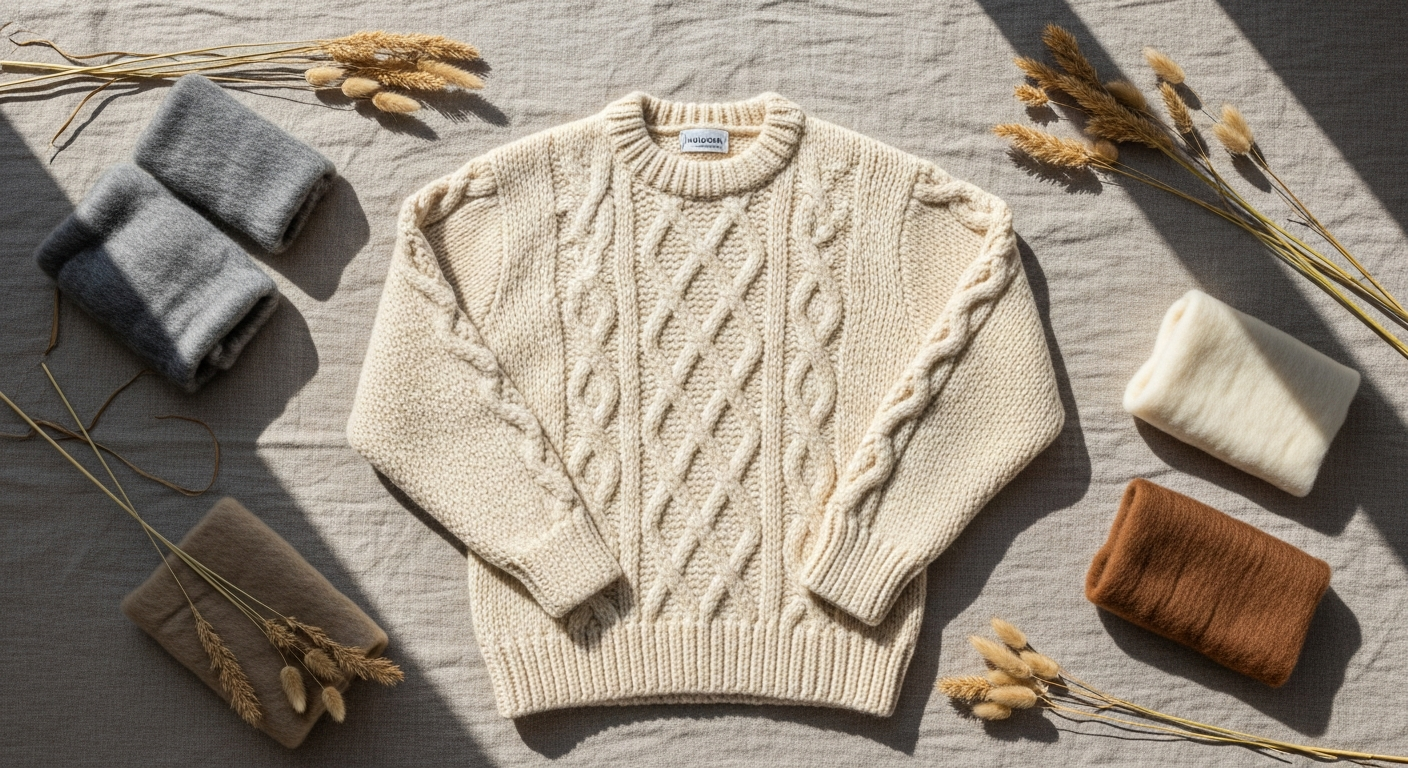
Discover why the Peregrine Hudson Aran Jumper is the ultimate sustainable knitwear investment. Learn about its British wool construction, durability, and timeless design that outlasts trendy alternatives. Shop quality over quantity.
The average person buys 60% more clothing items today than they did 15 years ago—yet keeps them for half as long. We're caught in a cycle of disposable fashion that drains our wallets and our planet. The Peregrine Hudson Aran Jumper represents everything the 'buy less, buy better' movement stands for.
Handcrafted from 100% British wool in Yorkshire's heritage mills, this isn't just another sweater. It's a deliberate choice to invest in a piece that combines traditional craftsmanship with genuine performance—delivering warmth, durability, and timeless style that justifies its price tag.
Discover the Peregrine Hudson Aran Jumper and invest in quality that lasts.
The Science Behind Superior Warmth: Understanding Fisherman's Rib Construction
How Fisherman's Rib Knit Uses Nearly Double the Yarn
The Hudson Aran Jumper's legendary warmth doesn't come from magic—it comes from engineering. The fisherman's rib knit construction requires almost double the yarn of a standard knit, creating a fabric that's substantially thicker and more densely woven. This isn't excess; it's intentional design that directly translates to superior insulation.
The Relationship Between Yarn Density and Insulation Capabilities
Yarn density determines how effectively a garment traps air pockets. The more densely packed the fibers, the more still air gets trapped within the weave—and still air is nature's best insulator. The Hudson's 5gge (gauge) weight positions it as a medium-heavy knit, meaning it achieves that sweet spot between substantial warmth and wearability.
Why 100% British Wool Outperforms Synthetic Blends
Synthetic blends cut costs but sacrifice performance. Pure British wool excels because wool fibers naturally possess crimp and elasticity that synthetics simply cannot replicate. This structural advantage means the wool maintains its loft over time, continuing to trap warm air even after years of wear. Blended fabrics compress and lose effectiveness far more quickly.
The Role of Natural Crimp and Elasticity in Trapping Body Heat
Wool's natural waviness creates more surface area and air pockets than straight synthetic fibers. The elasticity allows the fabric to spring back to its original shape after compression, meaning the jumper maintains its insulating properties season after season. This biological advantage is why wool remains the gold standard for cold-weather knitwear.
Built to Last Decades: Durability and Longevity Benefits
The Craftsmanship Difference Between Small-Batch Production and Mass Manufacturing
Peregrine produces the Hudson in batches of around 200 pieces—a deliberate constraint that prioritizes quality over volume. Mass manufacturers churn out thousands weekly, accepting defects and inconsistencies as inevitable. Small-batch production allows craftspeople to inspect every jumper, catch imperfections, and ensure only the finest pieces reach customers.
How British Wool Accreditation Ensures Fiber Quality and Consistency
British Wool Accreditation isn't decorative branding. It guarantees that the wool meets strict standards for fiber fineness, color consistency, and purity. Sourcing within 60 miles of Peregrine's Yorkshire factory means close relationships with local farmers and rigorous traceability. You know exactly where your jumper's fibers originated and how they were managed.
Pilling Resistance and Structural Integrity of Traditional Aran Knits
The dense construction of Aran knits naturally resists pilling better than looser weaves. Pilling occurs when fibers break free and tangle on the surface—but when fibers are firmly anchored in a tight weave, they stay put. Combined with premium British wool's superior fiber strength, the Hudson maintains its appearance beautifully over decades.
Real-World Durability Claims Backed by Customer Testimonials
Customers consistently report their Hudson jumpers remaining in excellent condition after years of regular wear. The testimonials paint a picture of pieces that don't wear out—they become better loved, more comfortable, and more integrated into daily life.
Natural Properties That Work for You: Water Repellency and Antibacterial Wool
Lanolin's Role in Creating Natural Water Resistance Without Chemical Treatments
Wool naturally contains lanolin, an oil that sheds water before it penetrates the fiber. This isn't applied afterward as a chemical treatment—it's inherent to the wool itself. The Hudson's water-repellent properties mean light rain and drizzle bead right off, while the fabric remains breathable and comfortable against your skin.
How Chemical-Free Processing Protects Both Your Skin and the Environment
Peregrine's approach avoids harsh chemical finishes that synthetic alternatives require. Chemical-free processing means no residual treatments that might irritate sensitive skin, and no pollutants entering waterways during manufacturing. Your skin and the environment both benefit from this commitment to natural fiber properties.
Antibacterial Properties That Reduce Odor and Extend Time Between Washes
Wool's natural antibacterial qualities actively inhibit odor-causing bacteria growth. This means you can wear the Hudson more frequently between washes—reducing water consumption, detergent use, and wear on the fibers from repeated laundering. A jumper that stays fresher longer is a jumper that lasts longer.
Benefits for Sensitive Skin and Those Avoiding Synthetic Finishes
Those with sensitive skin often find that pure wool feels better against their skin than synthetic blends or chemically treated alternatives. The Hudson's chemical-free processing and natural fiber composition make it an excellent choice for anyone seeking comfort without irritation.
Experience the comfort of authentic British wool craftsmanship.
Made in England: The Value of Ethical Production and Local Craftsmanship
Peregrine's Yorkshire Factory and Commitment to British Manufacturing
Every Hudson Aran Jumper originates from Peregrine's heritage mill in Yorkshire, a region with centuries of knitwear expertise. Manufacturing in England means rigorous quality oversight, fair labor standards, and a commitment to craftsmanship that mass-production outsourcing cannot replicate.
Sourcing Within 60 Miles: Reducing Carbon Footprint and Supporting Local Farmers
Most of the Hudson's wool comes from British Wool Accredited farms within 60 miles of the factory. This proximity dramatically reduces transportation emissions while building a support network for British farming. You're not just buying a jumper—you're supporting an entire local ecosystem of producers and craftspeople.
Fair Labor Practices and Quality Control Standards in UK Production
UK manufacturing ensures fair wages, safe working conditions, and ethical labor practices by default. Peregrine's commitment to British production reflects values that prioritize people alongside profit, creating jumpers made by fairly compensated craftspeople working in safe conditions.
How Local Production Enables Small-Batch Quality Over Mass-Market Quantity
Keeping production local and small-scale allows Peregrine to maintain control over every aspect of the jumper's creation. They're not chasing volume metrics that force corners to be cut. Instead, they're crafting pieces that reflect their reputation and values.
Cost-Per-Wear Analysis: Why £135 Actually Represents True Value
Calculating the Real Cost of Ownership Over 10+ Years of Wear
A £135 jumper worn twice weekly for 10 years equals approximately £1.30 per wear—a figure that beats most budget alternatives significantly. Yet many people replace cheaper jumpers three or four times in that same period, paying similar total amounts for inferior garments.
Comparing Price-to-Longevity Against Budget and Mid-Range Alternatives
Budget jumpers at £30-40 rarely survive more than one or two seasons of regular wear before pilling, stretching, or losing shape. Mid-range options at £60-80 perform better but still pale against the Hudson's longevity. When you factor in replacement frequency, the Hudson's upfront cost becomes a bargain.
Hidden Costs of Fast Fashion: Frequent Replacements, Dry Cleaning, Disposal
Fast fashion's true cost extends beyond the price tag. Replacing jumpers three times costs money each time. Dry cleaning inferior fabrics adds up. Throwing away worn-out garments costs emotionally and environmentally. The Hudson eliminates these hidden expenses entirely.
Investment Perspective: Treating Quality Knitwear as a Wardrobe Foundation Piece
Rather than viewing the Hudson as a discretionary purchase, consider it a foundational investment like quality shoes or jeans. It's the piece you reach for constantly, the one that works with dozens of other items, the one that actually improves with age. That's the hallmark of a true investment piece.
Make the Investment Count
The Peregrine Hudson Aran Jumper demands a different mindset than typical shopping habits—one that values quality over quantity, longevity over novelty, and craftsmanship over convenience. When you break down the actual cost-per-wear over a decade, pair that with the environmental benefits of choosing one exceptional piece over multiple disposable alternatives, and factor in the genuine warmth and durability you'll experience with every wear, the £135 investment becomes remarkably sensible.
This isn't about spending more money upfront. It's about spending smarter. You're acquiring a piece of British heritage that performs as beautifully as it looks, ages gracefully, and actually becomes more comfortable with time.
If you're ready to break the fast-fashion cycle and build a wardrobe that reflects your values, the Hudson Aran Jumper is the perfect starting point.