
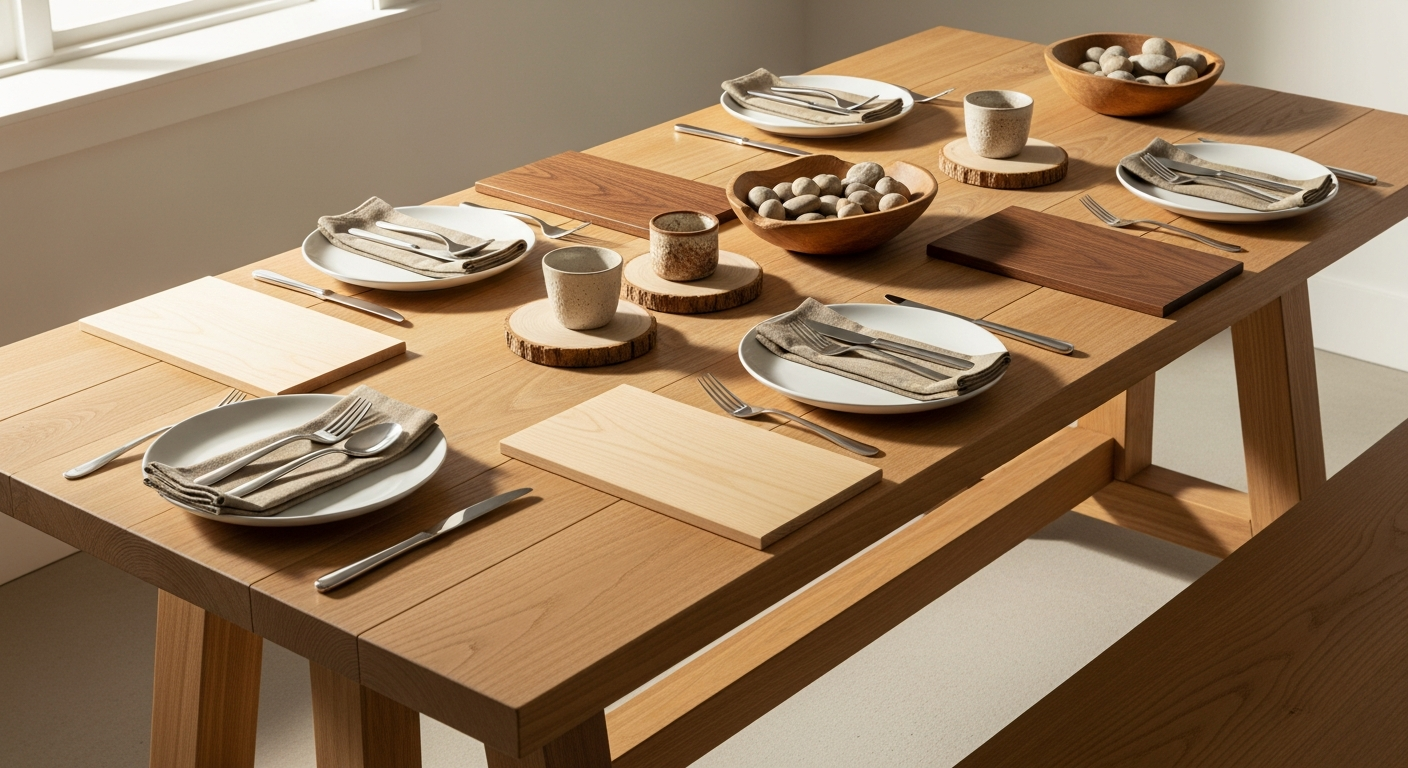
Discover which wirebrush finish works best for your space. Compare black, blonde, pecan, and seashell options for the Plank+Beam 72-inch dining table with expert guidance on durability and maintenance.
A quality dining table should anchor your home for decades, not become a regret within months. The Plank+Beam 72-Inch Solid Wood Dining Table has earned its reputation as one of the brand's best-sellers, but the real question isn't whether the table itself is solid—it's which finish will work best for your life. The choice between black wirebrush, blonde wirebrush, pecan wirebrush, and seashell wirebrush isn't merely cosmetic; each finish carries distinct implications for durability, maintenance, aesthetic impact, and how your table will age in your specific home.
Wood finishes aren't interchangeable. A dark finish that hides daily grime might clash with your minimalist aesthetic, while a light blonde option that brightens a dim dining room could become your biggest headache during dinner with young children. These finishes affect more than appearance—they influence how visible wear becomes, how much maintenance you'll realistically perform, and whether your table will feel like a centerpiece or a source of stress five years down the line. Plank+Beam's commitment to non-toxic finishes and sustainable materials means you're getting durability without compromise, but selecting the right finish for your household dynamics, design preferences, and lifestyle requires understanding what each option truly delivers.
This guide walks through the real differences between every finish Plank+Beam offers. You'll discover how wirebrush texture functions beyond aesthetics, what daily maintenance actually looks like for each option, and which finishes handle high-traffic households best. Whether you prioritize visual drama, practical performance, or design flexibility, the insights here will guide you toward a finish that feels right the moment you sit down to your first family meal.
Explore the Plank+Beam 72-Inch Solid Wood Dining Table and its finish options today.
Understanding Wirebrush Finishes: What Sets Them Apart
What wirebrush finishing actually means and how it differs from standard stains
Wirebrush finishing is fundamentally different from a typical stain. Rather than applying color directly to smooth wood, the wirebrush process physically texture the surface—brushes with wire bristles intentionally roughen the wood grain, creating valleys and raised surfaces. This textured foundation then receives stain, which settles unevenly across the undulating surface. The result is a finish with visible depth, character, and subtle visual complexity that flat stains simply cannot achieve.
Standard stains create uniform color across smooth wood, prioritizing sleek appearance and mirror-like reflections. Wirebrush finishes sacrifice that uniformity for personality. The texture catches light differently depending on angle and time of day, creating a living quality that evolves as you move through your dining room. This isn't accidental—it's intentional design that adds visual interest and disguises minor imperfections that would stand out prominently on smooth, glossy surfaces.
How the textured surface affects both aesthetics and functionality
The wirebrush texture serves dual purposes. Aesthetically, it creates that coveted rustic-yet-refined look that defines modern farmhouse and industrial design. The visible grain patterns and subtle variations between boards feel authentic rather than mass-produced. Functionally, the texture provides practical advantages: it hides dust and crumbs between cleanings far more effectively than smooth finishes, and minor scratches blend into the existing surface variations rather than creating obvious blemishes.
There's a trade-off, however. That same textured surface traps food particles and can be more challenging to clean than smooth wood. Spilled wine or sauce settles into the grain valleys, requiring more aggressive wiping. The texture can also snag delicate fabrics—a tablecloth or fine linen napkin might catch slightly on the wirebrush surface if pulled carelessly.
Why Plank+Beam chose this finishing method for durability and visual appeal
Plank+Beam selected wirebrush finishing specifically because it addresses the vulnerabilities of solid wood at an affordable price point. Texture naturally masks wear patterns, meaning your table can develop a beautiful patina over years without looking damaged or neglected. This approach also reduces the need for constant refinishing—one of the biggest maintenance headaches with solid wood furniture.
The durability advantage comes from the non-toxic sealant applied over the wirebrush texture. This protective layer sits within and across the textured surface, creating a barrier against moisture and spills. The complexity of the texture actually enhances sealing effectiveness compared to smooth surfaces, where sealant can pool or drip unevenly.
The role of non-toxic finishes in protecting your family and the environment
Plank+Beam's commitment to non-toxic finishes matters far beyond marketing language. Volatile organic compounds (VOCs) in traditional wood finishes off-gas continuously, affecting indoor air quality and potentially contributing to respiratory issues, especially in households with children or pets. Non-toxic finishes eliminate this concern while maintaining equivalent durability and protection.
Environmental responsibility also factors into this choice. Sustainable manufacturing practices and non-toxic finishing processes mean your table doesn't carry hidden ecological costs. The solid pine construction itself emphasizes renewable materials—pine grows quickly and regenerates efficiently compared to slower-growing hardwoods.
How wirebrush texture interacts with different wood grain patterns in solid pine
Solid pine wood has distinct grain characteristics that interact beautifully with wirebrush texture. Pine's natural grain patterns—variations in growth rings and mineral streaks—become dramatically more visible once wirebrush texture is applied. The texture emphasizes these patterns, creating visual depth that transforms plain wood into something far more compelling.
Different boards within the same table will show varying degrees of grain prominence. Some boards display tight, uniform grain while others feature dramatic mineral streaks or unusual patterns. This variation is not a defect; it's authentic solid wood character. The wirebrush finish allows each board's unique personality to emerge rather than hiding it under uniform color.
Black Wirebrush Finish: Modern Edge Meets Farmhouse Charm
Visual impact of black wirebrush in contemporary and industrial dining spaces
Black wirebrush creates immediate visual drama. The dark tone grounds a space while the textured surface prevents the heaviness that flat black can impose. In industrial dining rooms, black wirebrush tables feel right at home alongside exposed brick, metal fixtures, and concrete elements. In contemporary spaces, the finish provides a sophisticated anchor that doesn't feel overly casual or country.
The contrast between the dark finish and lighter wood grain—which shows through more prominently in wirebrush texture—creates visual interest that keeps the table from feeling flat or one-dimensional. Light hits the textured surface in countless micro-angles, creating depth that photographs beautifully and feels premium in person.
How the dark finish hides dust, crumbs, and minor scratches between cleanings
This is where black wirebrush becomes a practical favorite for busy households. Dust and debris are nearly invisible against dark wood, so your table maintains a polished appearance even when deep cleaning happens only weekly. Crumbs from toast or crackers virtually disappear between the texture valleys and the dark finish until you wipe the surface.
Minor scratches that would be glaring on lighter finishes blend seamlessly into the dark surface variation. A fork dragged slightly too hard across the table, a chair leg catching the edge, keys set down carelessly—these everyday accidents become unnoticeable rather than creating visible damage that prompts frustration or repair concern.
Best interior design styles that complement a black wirebrush table
Black wirebrush adapts to multiple design narratives. Industrial spaces with exposed wood beams, metal accents, and minimalist décor feel complete with a black table as the centerpiece. Modern farmhouse interiors—a hugely popular aesthetic combining rustic elements with clean lines—benefit from black wirebrush's ability to bridge both sensibilities. Scandinavian-inspired spaces often incorporate black as a grounding element, and wirebrush texture fits this approach perfectly.
Contemporary dining rooms with neutral walls and statement lighting also pair beautifully with black wirebrush. The table becomes a focal point without overwhelming, especially when paired with natural wood chairs or mid-century modern seating. Even transitional spaces that blend traditional and contemporary elements incorporate black wirebrush successfully.
Lighting considerations: how room brightness affects the appearance of black finishes
Black finishes are remarkably lighting-dependent. In dimly lit dining rooms with warm ambient lighting, black wirebrush can feel slightly heavy or cave-like. Conversely, bright natural light reveals the texture and subtle color variations that prevent blackness from becoming oppressive. The ideal scenario involves balanced lighting—overhead fixtures combined with natural window light and perhaps task lighting from a statement pendant.
Warm-toned bulbs enhance the grain visibility and richness of black wirebrush, while cool fluorescent lighting can make the table feel harsh. Dimmer switches provide flexibility, allowing you to adjust the mood during casual family dinners versus formal entertaining.
Maintenance requirements and cleaning tips specific to dark wood finishes
Black wirebrush actually requires less frequent visible cleaning than many assume. Weekly wiping with a soft microfiber cloth removes dust and maintains appearance. For spills, prompt blotting with a slightly damp cloth prevents staining. Recommended cleaning products include pH-neutral wood cleaners that won't affect the non-toxic finish.
Fingerprints are virtually invisible on black surfaces—a major advantage over lighter finishes. Water spots become more noticeable, so dry the table after cleaning to maintain the appearance of pristine condition. Annually, consider applying a wood conditioning product to maintain the finish's depth and prevent the dryness that can lead to cracking.
Blonde Wirebrush Finish: Light, Airy, and Versatile
Creating a bright, open feeling in smaller or darker dining areas
Blonde wirebrush acts as a lighting amplifier. In spaces lacking abundant natural light, the pale finish reflects available light efficiently, creating an airy feeling that darker finishes cannot match. Smaller dining rooms feel more spacious when anchored by a light-toned table, which recedes slightly visually rather than dominating the space.
This finish particularly excels in dining areas integrated into kitchens or open-concept living spaces where brightness and visual continuity matter. Blonde wood communicates openness and accessibility—qualities that make spaces feel welcoming rather than formal or imposing.
How blonde finishes work with both minimalist and eclectic décor styles
Blonde wirebrush is remarkably flexible within contemporary design. Minimalist spaces appreciate its clean, light aesthetic and the way it doesn't visually compete with other elements. Eclectic interiors benefit from blonde as a neutral foundation that allows colorful chairs, artwork, and accessories to become the focal points without fighting a dark table for attention.
The versatility extends to color pairing. Blonde wirebrush works equally well with cool-toned white and gray schemes or warm ivory and cream palettes. Colorful chair upholstery pops against light wood, and botanical décor or natural fiber accessories complement rather than clash with the pale finish.
Showing wear patterns: what to expect as a blonde table ages
Blonde finishes develop visible patina over time. Scratches, marks from hot dishes, and darkening from age accumulation create a character-filled aesthetic that appeals to those who embrace lived-in beauty. However, this also means visible wear appears more readily than on darker finishes. Spill stains may leave ghost marks even after cleaning, and high-traffic areas develop a darker polish from repeated contact.
Some homeowners find this aging process endearing—the table becomes a record of family history. Others prefer finishes that maintain pristine appearance longer. Understanding your comfort with visible wear is essential when considering blonde.
Pairing blonde wirebrush with different chair styles and table accessories
Blonde tables accommodate virtually any chair aesthetic. Natural wood chairs in complementary tones create cohesive warmth. Black modern chairs provide striking contrast. Upholstered chairs in jewel tones, pastels, or neutrals all work beautifully. Metal chairs—industrial metal, bentwood, or contemporary designs—pair well with blonde's clean aesthetic.
Accessories and table linens provide personality without complexity. White or cream linens enhance the airy feeling. Colorful runners or patterned cloths add visual interest. Wooden serving boards, ceramic dinnerware, and natural fiber placemats all coordinate effortlessly with blonde finishing.
Maintenance: addressing stains and spills on lighter wood surfaces
Blonde wirebrush requires more attentive spill management than darker finishes. Immediate blotting prevents stain setting, especially for wine, coffee, or oil-based spills. Regular wiping with barely damp cloths maintains appearance and prevents dust from settling into grain valleys.
Recommended products include gentle wood cleaners specifically formulated for light finishes. Avoid products with strong color additives that might stain pale wood. Annual wood conditioning maintains the finish's luster and prevents cracking. For stubborn stains that develop, specialized wood stain removers or professional refinishing may become necessary—a reality to accept when choosing blonde.
Pecan Wirebrush Finish: Warmth and Traditional Appeal
Rich, warm tones that ground a dining space and create intimacy
Pecan wirebrush occupies the middle ground between dramatic black and bright blonde—a position that offers considerable advantages. The warm, medium-brown tone creates an inviting, intimate atmosphere that encourages lingering over meals and conversation. Pecan doesn't feel formal or cold; it radiates approachability while maintaining sophistication.
This warmth works particularly well in dining rooms designed to feel like gathering spaces. Family homes, multigenerational environments, and spaces intended for frequent entertaining all benefit from pecan's inherent hospitality. The finish says "this is where we connect" rather than "this is formal territory."
How pecan finishes bridge the gap between modern and traditional design
Pecan wirebrush defies easy categorization. Traditional design sensibilities appreciate the warm wood tone that recalls heritage furniture and timeless aesthetics. Modern designers value the mid-tone's versatility and the wirebrush texture's contemporary interpretation of rustic elements. This bridge quality makes pecan exceptionally forgiving in transitional spaces or homes that blend multiple design eras.
A pecan table grounds farmhouse interiors, complements industrial spaces, and integrates seamlessly into contemporary designs. It works in cabins and city apartments, country homes and suburban families. Few finishes offer this degree of adaptive compatibility.
Complementary color palettes for walls, chairs, and kitchen cabinetry
Pecan's warmth pairs beautifully with almost any color strategy. Warm neutral walls in beige, tan, or soft gold enhance pecan's richness without competing. Cool whites and grays create elegant contrast. Jewel-toned accent walls become focal points against a pecan table without visual conflict.
Kitchen cabinetry in natural wood, white, or even soft gray coordinates harmoniously with pecan tables. Pecan itself works as bridge coloring when other kitchen elements feel disconnected. Chairs in virtually any finish—upholstered, natural wood, metal, or mixed materials—pair well with pecan. This flexibility reduces design stress and allows other elements to shine.
Hiding imperfections: the advantages of mid-tone finishes in high-traffic areas
Pecan's middle tone provides ideal balance for hiding wear while remaining visually interesting. It's darker than blonde, so dust, crumbs, and minor scratches disappear between cleanings. It's lighter than black, so it doesn't amplify every spill or water spot into a visible blemish. High-traffic families with moderate maintenance standards find pecan performs beautifully across wear patterns.
The warm grain visibility in pecan also creates visual interest that camouflages imperfections better than uniform finishes. Scratches blend with existing grain variations, and minor damage becomes part of the patina story rather than obvious defects.
Stain resistance and durability compared to lighter and darker options
Pecan finishes, when properly sealed with Plank+Beam's non-toxic finish, offer reliable stain resistance comparable to darker options while maintaining better visibility of the wood's actual character than black. The mid-tone moderates both extremes: not as demanding as blonde regarding immediate spill attention, yet not as forgiving as black regarding visible marks.
Real-world durability data suggests pecan finishes age gracefully and evenly. They develop patina without dramatic color shifts that can occur with some finishes. The medium tone provides a stable baseline that accommodates aging without requiring constant restoration or concern that the table is becoming damaged.
Seashell Wirebrush Finish: Subtle Sophistication and Coastal Vibes
The unique aesthetic of seashell finish and its growing popularity in 2026
Seashell wirebrush represents the latest evolution in light wood finishes—a pale, almost whitewashed aesthetic with subtle warm undertones that distinguish it from pure blonde. The name captures the aesthetic perfectly: the soft, neutral tone of beach shells bleached by sun and sand. This finish has gained significant traction recently as coastal and Scandinavian design influences continue strengthening in residential interiors.
Seashell differs from blonde by offering greater subtlety and sophistication. Where blonde reads as bright and cheerful, seashell communicates understated elegance and calm. The pale tone feels intentional and curated rather than simply light. In 2026, homeowners increasingly appreciate finishes that convey design intention through subtlety rather than boldness.
Creating a coastal, beachy, or Scandinavian-inspired dining environment
Seashell wirebrush transforms dining rooms into peaceful retreats reminiscent of coastal living. Paired with soft whites, pale blues, natural linens, and beach-inspired décor, seashell tables anchor serene, vacation-like spaces within primary residences. The finish works beautifully in homes embracing coastal aesthetic, whether actual waterfront properties or inland spaces aspiring to beach-house feelings.
Scandinavian design—characterized by light, uncluttered spaces with natural materials and functionality—finds perfect expression through seashell finishing. The pale tone, subtle texture, and non-toxic finish alignment all resonate with Scandinavian design philosophy. Seashell tables work equally well in minimalist Scandinavian spaces and lived-in farmhouse interiors with coastal influence.
How neutral, pale finishes work in open-concept living spaces
Seashell's extreme neutrality makes it exceptional for open-concept living where dining areas flow into kitchens and living rooms. The pale finish connects rather than divides spaces, creating visual continuity without requiring matching finishes throughout. Seashell tables recede slightly, allowing kitchen cabinetry, wall colors, and living room furniture to establish the space's character while the table provides quiet foundation.
In open-concept homes, seashell performs the role of invisible anchor—present and functional but not demanding visual attention. This allows flexibility in decorating adjacent areas without coordinating against a dominant table finish.
Showing fingerprints and dust: realistic expectations for light finishes
The trade-off for seashell's subtle beauty involves visible daily dust and fingerprints. The pale finish shows dust accumulation more obviously than medium or dark tones. Fingerprints from hands wiping across the surface become visible, particularly in natural light. These visibility issues don't indicate cleanliness failures; they're simply optical realities of light finishes.
Expectations should be set realistically: seashell requires more frequent light cleaning than darker finishes. Weekly wiping becomes necessary maintenance rather than occasional preference. Households with young children, pets, or minimal cleaning tolerance might find seashell frustrating despite its aesthetic appeal.
Pairing seashell with white, cream, or soft gray interior palettes
Seashell naturally coordinates with pale, neutral color schemes. White walls create cohesive, airy spaces where seashell tables feel like intentional extensions of surrounding aesthetic. Cream and off-white palettes pair beautifully, offering warmth while maintaining brightness. Soft grays—whether walls, cabinetry, or upholstery—provide subtle contrast that enhances rather than conflicts with seashell's delicate tone.
This finish particularly excels in monochromatic or nearly monochromatic spaces, where subtle tonal variation becomes important visual interest. Seashell tables within pale palettes create quiet elegance that bold finishes cannot achieve. Accessorizing with natural textures—linen, jute, wool—and muted colors preserves the serene atmosphere that seashell finishes establish.
Durability and Longevity Across All Four Finishes
Comparative durability testing and real-world performance data
All four Plank+Beam wirebrush finishes utilize the same non-toxic sealing process, meaning durability comes from finish quality rather than inherent material differences. Real-world performance data suggests that with proper care, any of these finishes should maintain functional integrity for ten to fifteen years or longer in average household conditions.
Black wirebrush shows the longest practical longevity before visible wear becomes noticeable—imperfections blend so effectively that tables maintain appearance despite actual surface changes. Pecan finishes age evenly without dramatic color shifts. Blonde and seashell develop visible patina more quickly, requiring earlier intervention if pristine appearance matters to owners. This doesn't indicate inferior durability; it reflects visibility differences rather than structural compromise.
How different finishes respond to temperature and humidity fluctuations
Solid pine wood is more sensitive to moisture and temperature fluctuations than hardwoods, and this sensitivity affects all Plank+Beam finishes equally. Rapid humidity changes—particularly common in homes with forced-air heating or cooling—can cause wood expansion and contraction that leads to cracking or warping. This risk applies regardless of finish selection.
Mid-toned finishes like pecan and seashell show cracking less obviously than black (where splits are dramatically visible) or blonde (where they appear as dark lines). However, the underlying wood stress remains constant across all finishes. Maintaining stable indoor humidity between 35-55% becomes essential for any Plank+Beam table, regardless of finish choice. Finish selection influences appearance of aging rather than fundamental durability.
Impact resistance: how each finish handles dings, dents, and daily wear
Wirebrush texture itself provides dent resistance that smooth finishes lack. The textured surface distributes impact across multiple surface points, and the texture valleys hide minor dings that would be visible on flat surfaces. A fork dropped on the table, a chair dragged slightly too hard, a pet's collar jingling against wood—these everyday impacts show far less obviously on wirebrush than on smooth finishes, regardless of color.
Darker finishes hide impact marks more effectively than light ones. Black shows virtually nothing, while seashell might reveal lighter wood beneath. However, the wirebrush texture itself mitigates impact visibility across all colors compared to smooth finishing. The functional durability—the wood's resistance to actual damage—remains constant; visibility of that damage varies by finish.
UV exposure and fading: protecting your table from sunlight damage
Direct sunlight represents the primary threat to all four finishes, though impact varies by color. Light finishes like blonde and seashell fade more noticeably, developing uneven coloration in areas exposed to direct sun. Pecan shows moderate fading if regularly exposed to intense light. Black finishes fade least obviously but can develop subtle color shifts over years of direct exposure.
Plank+Beam's non-toxic finishes provide moderate UV protection, but this isn't equivalent to professional furniture wax with UV blockers. Positioning tables away from direct south- or west-facing windows prevents dramatic fading. Sheer curtains that filter light while maintaining brightness represent an ideal compromise. If your dining room has significant natural light, accept that visible fading may occur over years—any wood finish faces this reality.
The role of proper sealing in extending finish lifespan
The non-toxic sealing process that Plank+Beam applies at manufacture represents the primary durability factor across all finishes. This seal protects against moisture infiltration, surface scratches, and UV degradation. However, seals gradually wear through normal use, meaning finish lifespan depends partly on maintenance and occasional re-sealing.
After five to seven years of average use, tables benefit from professional wood restoration or homeowner application of quality wood conditioner that refreshes the original seal. This maintenance doesn't require complete refinishing; it simply restores the protective layer. Proper sealing maintenance essentially resets the durability clock, extending overall table lifespan significantly.
Maintenance and Cleaning: What Each Finish Demands
Daily cleaning routines tailored to black, blonde, pecan, and seashell finishes
Black wirebrush requires minimal daily attention. Occasional wiping with a soft microfiber cloth removes dust; once-weekly thorough cleaning maintains appearance. Blonde and seashell demand more frequent attention—twice-weekly light wiping prevents dust accumulation from becoming obvious, and spills need immediate blotting. Pecan occupies the middle ground, benefiting from weekly light cleaning without daily necessity.
The texture of all wirebrush finishes means that vacuuming near the table prevents dust from settling into grain valleys. Using placemats and runners reduces direct contact with finish, extending the time between deep cleanings. These practices benefit all finishes equally, though light finishes justify the effort more obviously.
Food and beverage spill protocols for different finish types
Black wirebrush is most forgiving—most spills become invisible if wiped reasonably promptly, even if not immediately. Blonde and seashell require immediate attention, particularly for color-bearing substances like wine, coffee, or beets. Blotting immediately with slightly damp cloths prevents staining better than aggressive scrubbing, which can damage finish.
Pecan finishes handle most spills well with prompt attention. Oil-based spills (cooking oil, salad dressing) require more care across all finishes—these can darken wood and become permanent if not addressed quickly. Never allow spills to dry completely, as dried stains become exponentially harder to remove. Keep soft cloths near the dining area for quick spill response.
Recommended cleaning products that won't damage non-toxic finishes
Plank+Beam's non-toxic finishes require compatible cleaning products. pH-neutral wood cleaners like Murphy's Oil Soap, diluted vinegar and water solutions, or specialized non-toxic wood care products work effectively without damaging the finish. Avoid harsh chemicals, bleach, or products containing silicone—these can cause build-up or finish cloudiness over time.
Microfiber cloths remain superior to paper towels or regular cloths because they don't shed fibers and clean more thoroughly with less pressure. For stubborn marks or sticky residue, a slightly damp cloth with minimal gentle rubbing succeeds better than aggressive scrubbing. Allow tables to air dry after cleaning rather than toweling, which can leave streaks.
Seasonal maintenance: addressing humidity-related issues
Summer humidity and winter heating create opposing stresses on solid wood. Summer's moisture can cause swelling and warping, while winter heating dries wood and promotes cracking. Fall represents the ideal time for maintenance: humidity stabilizes and wood is less stressed.
Autumn is optimal for applying wood conditioning products that refresh the seal and prepare wood for winter dryness. Humidifiers in heated homes during winter prevent extreme drying that leads to cracking. Conversely, dehumidifiers in summer homes or particularly humid climates prevent the excess moisture that causes warping. These environmental controls protect the underlying wood regardless of finish choice.
Refinishing options if your chosen finish becomes damaged or worn
Minor surface damage can often be addressed without complete refinishing. Scratches can be filled with wood putty matching your finish color, then sanded smooth and sealed. Professional wood restoration services can address more significant damage while maintaining your original finish aesthetic.
Complete refinishing becomes necessary if cracking is severe or if you want to change finishes entirely. Professional refinishing removes the existing finish and applies new sealing, essentially restoring your table to new condition. This process costs several hundred dollars but extends table lifespan indefinitely and allows finish changes if your design preferences evolve.
Matching Your Finish to Your Lifestyle and Home
Assessment questions: traffic level, family size, and entertaining frequency
Begin by honestly assessing your household's interaction patterns. How often do you use the dining table? Daily? Several times weekly for family meals? Primarily for entertaining? Tables used daily for casual family meals require finishes that hide spills and daily dust—black or pecan excel here. Formal entertaining spaces benefit from lighter finishes that photograph beautifully and convey intentional design.
Family size matters significantly. Large families with young children need finish visibility that helps identify spill sources and damage requiring attention—not to indicate failure but to enable quick response. Single occupants or couples might tolerate light finishes requiring more frequent cleaning simply because fewer people create less mess.
Pets and children: which finishes handle the messiest households best
Black wirebrush emerges as the clear winner for households with young children or pets. Muddy paw prints, food spills from high chairs, juice boxes, and the inevitable accidents all become virtually invisible. The finish allows family living without constant anxiety about table damage.
Blonde and seashell require considerably more maintenance tolerance. Households with toddlers, pets that come indoors after outdoor play, or general chaos find these finishes frustrating. Pecan represents a reasonable compromise—it hides more than light finishes but lighter than black, accommodating family living without requiring militant cleaning standards.
Open-concept living: choosing finishes that coordinate with kitchen and living areas
Open-concept homes require finish consideration beyond the dining area itself. Light finishes like blonde and seashell create visual continuity with light kitchen cabinetry and pale living room walls. These finishes "disappear" into the overall space rather than creating distinct zones.
Black wirebrush works beautifully in open-concept spaces with darker cabinetry or industrial elements, serving as a visual anchor point rather than a transition. Pecan offers flexibility within multiple design schemes. Consider how your table finish relates to surrounding major elements—cabinetry, flooring, wall colors—to ensure cohesion rather than accidental clash.
Personal style preferences and how to prioritize aesthetics versus practicality
The ideal choice balances aesthetic preference with realistic maintenance willingness. If you're drawn to seashell's subtle sophistication but dread frequent cleaning, compromise with pecan, which approaches seashell's warmth while requiring less maintenance. If black's modern drama appeals but you worry it might feel heavy, consider a well-lit space or pair black with lighter chairs and accessories that balance the finish visually.
Honest self-assessment prevents regret. Some people genuinely enjoy the meditative practice of careful furniture maintenance and view it as a privilege reflecting the table's importance. Others resent maintenance as obligation. Neither answer is wrong—they simply require matching your finish choice to your actual preferences, not your aspirational identity.
Testing finishes in your space before committing to a purchase
Plank+Beam provides finish samples or links to customer photos of specific finishes in real homes. Studying how your chosen finish appears in lighting conditions matching your dining room illuminates potential satisfaction or surprises. Visit showrooms if possible to see finishes in person—photographs don't fully capture wirebrush texture or how light interacts with each finish.
Consider bringing paint samples of your wall color to showrooms to evaluate coordination. Visualize chair colors, lighting fixtures, and accessories alongside finish samples. This mental rehearsal prevents the disappointment of receiving a table that clashes with your actual décor despite looking perfect in a neutral showroom.
Your Plank+Beam Finish Journey Starts Now
The Plank+Beam 72-Inch Solid Wood Dining Table deserves a finish matching both your vision and your reality. Whether you're drawn to black wirebrush's sleek sophistication, blonde's airy brightness, pecan's warm richness, or seashell's subtle elegance, each option delivers on quality and style. Understanding the real differences between these finishes—from maintenance demands to durability profiles to design versatility—empowers decision-making you'll feel confident about for years to come.
Take time to visualize each finish in your dining space, considering how your household actually uses furniture. Think about the aesthetic direction you're heading and whether your maintenance preferences align with your finish choice. Black demands the least attention while providing maximum drama. Blonde and seashell require more frequent cleaning but reward with brightness and sophistication. Pecan offers meaningful middle ground.
Revisit the finish that resonated most with you throughout this guide. Check out customer photos of that specific finish in real homes, where genuine lighting and actual wear patterns tell stories that marketing images cannot capture. Don't hesitate to reach out to Plank+Beam's team with finish-specific questions—they understand that finish selection is consequential and deserve your thorough consideration.
Start exploring your perfect Plank+Beam finish match and bring home your ideal dining table today.