
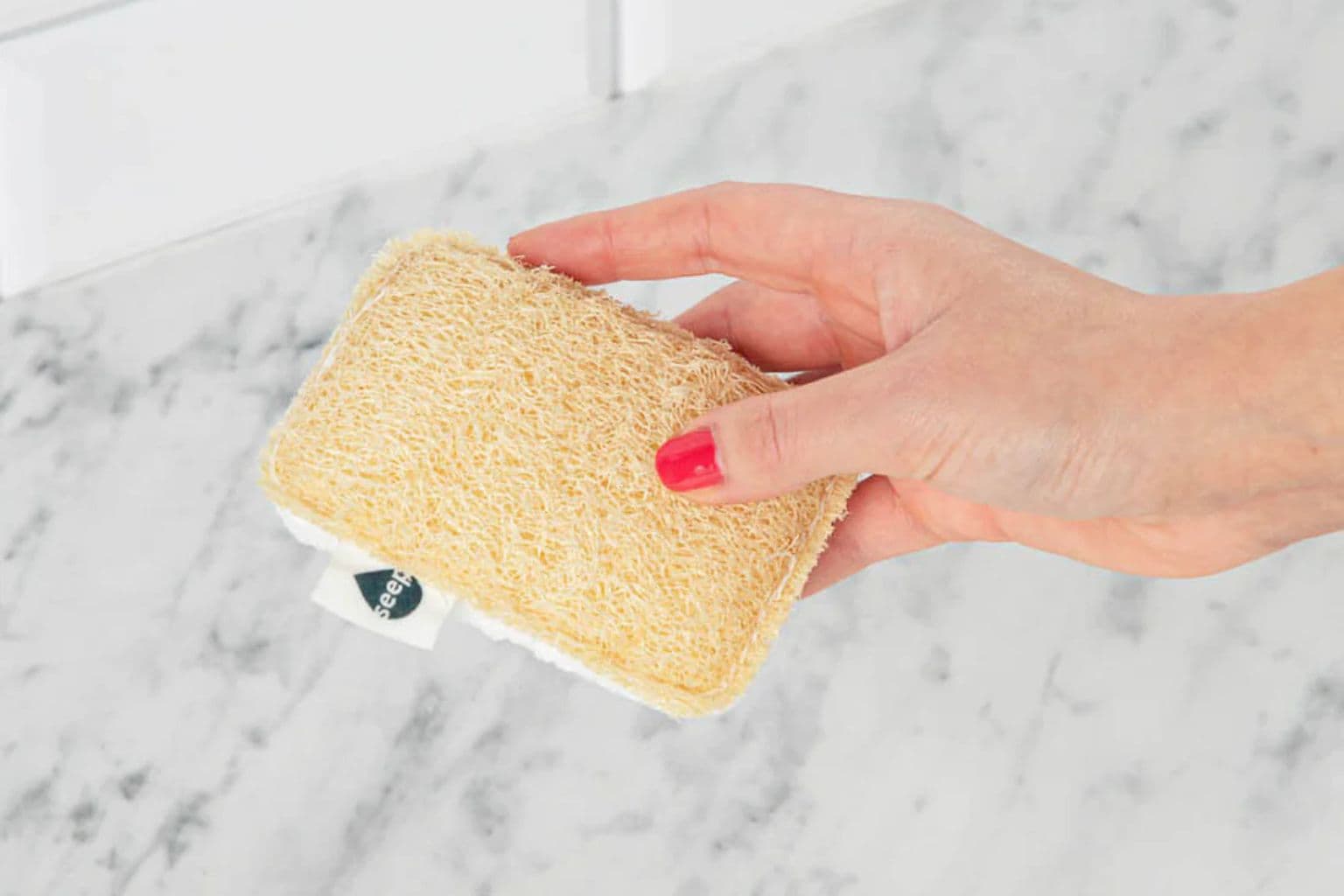
Trying to ditch plastic at the kitchen sink? Seep’s plant-based sponge scourers use natural loofah and wood pulp to clean dishes and wipe counters without shedding microplastics, so your daily clean stays low-waste and effective.
You might not think much about the sponge by your sink. But many traditional sponges and scrubbers can shed tiny plastic fragments as you wash. If you’re trying to cut plastic at home, this is one swap that fits into your routine fast.
Seep’s plastic-free sponge scourers are built to handle everyday mess while keeping plastics out of the product and out of your drain.
You get a simple two-sided design made from plant-based materials, with a feel that’s familiar enough to use right away.
What You’re Actually Using
These scourers are designed as a two-in-one tool. One side is made to scrub, and the other is made to absorb and wipe.
Here’s what that looks like in daily use:
- Loofah scouring side: Gives you texture for stuck-on food and greasy pans.
- Wood pulp cellulose side: Soaks up spills and helps you wipe surfaces clean.
- Cotton stitching: Holds the layers together without synthetic binding.
- Comfortable size: Easy to grip for dishes, countertops, and quick cleanups.
Because the materials are plant-based, you’re not relying on the common plastic fibers found in many conventional sponges. That matters if your goal is reducing plastic contact in everyday cleaning.
What Makes It Different From a Typical Sponge
A plastic-free sponge isn’t helpful if it falls apart quickly or can’t scrub well. The main difference here is the balance between abrasion and absorbency, without using plastic mesh or foam.
You’ll notice a few practical changes:
- The loofah side can feel firmer when dry, but it softens once wet.
- The cellulose side behaves more like a classic sponge, especially for wiping and soaking.
- The scrub texture is more “natural fiber” than “sharp plastic,” which can feel gentler on cookware.
If you use non-stick pans or coated surfaces, you still need to apply reasonable pressure. But many people find loofah scrubs tough on mess and less aggressive than some plastic scourers.
How to Keep It Fresher for Longer
Any sponge can get gross if it stays wet and trapped in the same spot all day. If you want better hygiene and longer use, your habits matter as much as the material.
A simple routine helps:
- Rinse thoroughly after use to remove food bits and soap residue.
- Squeeze out excess water so it dries faster.
- Store it with airflow instead of leaving it in standing water.
- Wash periodically using a dishwasher or a gentle laundry cycle (around 30°C, if that option fits your routine).
If you want to stretch usability further, you can also separate tasks. Keep one sponge for dishes and another for counters. This reduces cross-contamination and usually keeps both in better shape.
What You Do When It’s Worn Out
One of the biggest wins here is the end-of-life decision. Instead of tossing a plastic-heavy sponge that lingers in landfill, you can choose a lower-waste path.
If you compost at home, you can:
- Cut the sponge into smaller pieces to help it break down faster.
- Add it to an active compost mix with a balance of greens and browns.
- Expect a gradual breakdown over time, depending on heat and moisture.
If you don’t compost, it’s still a cleaner disposal story than plastic-based options. Plant materials won’t persist the same way, and you avoid adding plastic fibers to the waste stream.
Is It Worth Switching?
If you’re trying to reduce plastic, this is one of those “small item, constant use” changes that adds up. You’re using a sponge almost every day, so the materials and durability matter more than you’d expect.
The value isn’t just about price-per-sponge. It’s also about what you’re avoiding: plastic shedding, frequent replacements, and that cycle of tossing something designed to degrade.
If you want your kitchen cleaning to match your low-waste goals without sacrificing performance, these plant-based scourers are a practical place to start.