
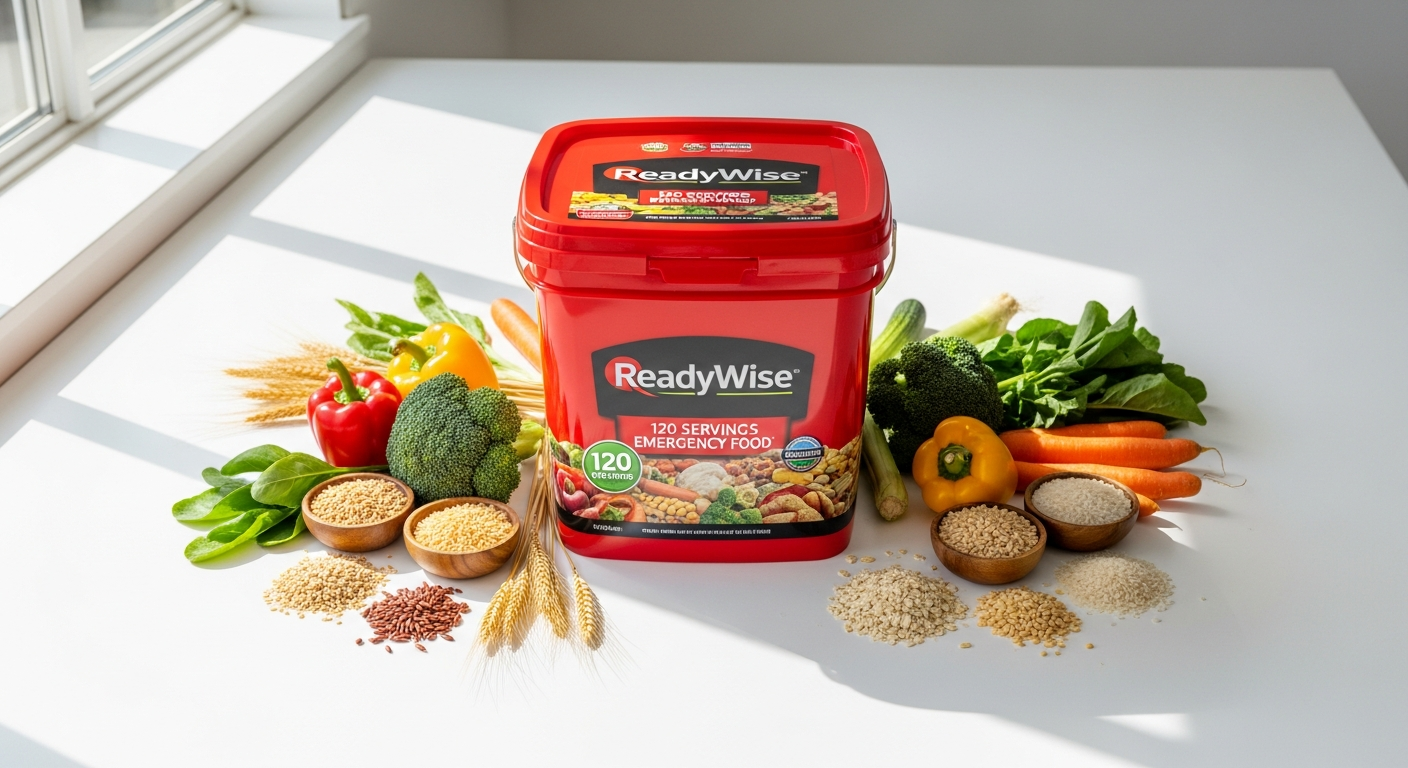
Discover our in-depth ReadyWise 120-Serving Emergency Food Bucket review. Learn about shelf life, meal variety, calorie content, and whether this emergency food supply truly delivers for families and preppers.
When disaster strikes without warning, families face a stark reality: empty cupboards and no time to prepare. Over 2 million American households experienced food insecurity in 2024, and that number climbs dramatically when natural disasters hit. Emergency preparedness isn't just about having a plan—it's about having the right supplies ready when disaster hits.
ReadyWise has built a reputation as one of the most trusted names in emergency food supplies, and their 120-serving bucket represents the sweet spot between affordability and comprehensive coverage. This bucket has become the go-to choice for families stocking their pantries, outdoor enthusiasts preparing for extended trips, and serious preppers building long-term food security.
The product promises a 25-year shelf life, simple preparation, and enough variety to keep meal fatigue at bay—but does it deliver on all fronts? Explore the ReadyWise 120-Serving Emergency Food Bucket to secure your family's food supply today. Throughout this review, you'll discover everything you need to know about this emergency food supply: the actual meal options you'll receive, how the calorie content stacks up against your real needs, the genuine pros that make it worth buying, and the honest cons that matter.
What's Actually Inside the ReadyWise 120-Serving Bucket?
Breakdown of meal categories
The ReadyWise 120-Serving bucket contains a comprehensive mix of freeze-dried and dehydrated meals spanning three main categories: breakfasts, lunches, and dinners. Each category delivers different nutritional profiles and flavor experiences designed to sustain you through extended emergencies without monotony.
Specific meal examples and variety
Inside the bucket, you'll find meals like Cheesy Macaroni, Teriyaki Rice, and Brown Sugar and Maple Multi-Grain Cereal, alongside Whey Milk and numerous other options. This variety matters tremendously during stressful situations when normal food routines disappear. Having multiple choices prevents the psychological burden of eating the same meal repeatedly.
Packaging and portion flexibility
Individual pouches contain pre-measured portions that vary by meal type. This approach offers flexibility—breakfast servings differ from dinner portions based on typical consumption patterns. Heavy-duty bucket packaging protects contents from pests, moisture, and environmental degradation while remaining portable enough to grab during evacuations.
Nutritional balance and ingredient quality
ReadyWise sources ingredients through freeze-drying and dehydration methods that preserve nutritional content while extending shelf life dramatically. The meals balance carbohydrates, proteins, and fats across different meal types, supporting sustained energy during demanding situations.
Decoding the 120 Servings Claim: What You Really Get
Understanding servings versus person-days
Here's where marketing meets reality. The "120 servings" label doesn't automatically translate to 120 meals or even 60 days of food for two people. A serving size for breakfast differs substantially from dinner servings. Understanding this distinction prevents disappointment when you open your bucket.
Actual caloric content and daily requirements
Most ReadyWise 120-serving buckets provide approximately 1,800 to 2,000 calories per person per day when consumed as directed. This caloric range suits sedentary to moderately active individuals, but active people engaged in physical labor or emergency response work may find this insufficient.
How serving sizes vary by meal type
Breakfast portions are typically lighter than dinner portions, reflecting natural eating patterns. This variation means calculating actual coverage requires examining individual meal specifications rather than assuming equal portions throughout.
Real coverage based on household needs
A family of four with typical caloric needs might receive roughly 15-20 days of complete nutrition from a single 120-serving bucket. Higher-activity individuals or larger families should calculate their specific requirements before purchasing.
Supplementation for high-calorie-need individuals
Active individuals—particularly those working in emergency response, construction, or physically demanding jobs—should plan supplementary calorie-dense foods alongside their ReadyWise purchase. Nuts, oils, and high-calorie snacks extend the effective coverage significantly.
The 25-Year Shelf Life: Storage Requirements and Reality
Environmental conditions for maximum longevity
That impressive 25-year shelf life depends entirely on proper storage. Cool, dry, dark environments maintain food viability across decades. Basements, closets, and pantries away from direct sunlight and heat sources work well. Temperature fluctuations, moisture exposure, and light degradation all reduce actual shelf life substantially.
How improper storage affects your investment
Store buckets in hot garages or damp basements, and that 25-year promise diminishes rapidly. Nutritional degradation accelerates in warm environments. Moisture penetration compromises individual pouches and promotes mold growth.
Heavy-duty bucket design and sealing
The buckets themselves feature robust construction with tight-sealing lids. Individual pouches within add an extra protection layer, creating multiple barriers against environmental exposure. This dual-layer approach represents genuine quality.
Protection mechanisms against degradation
The sealed pouch system protects against pests and insects that might otherwise contaminate stored food. Moisture barriers prevent humidity damage, while opaque bucket material blocks light exposure that destroys nutrients.
Rotation recommendations for optimal freshness
Even with extended shelf life, rotating older buckets into your regular diet maintains peak nutritional value. A simple first-in-first-out system ensures you're consuming older stock first while still maintaining adequate emergency reserves.
Recognizing degraded food
Inspect contents periodically for visible mold, off-odors, or unusual discoloration. While freeze-dried foods resist spoilage remarkably well, your senses provide reliable indicators if something has compromised integrity.
Preparation Made Simple: Water, Heat, and Timing
Step-by-step preparation instructions
Most meals follow consistent preparation: add the meal packet contents to hot water, stir, and wait 10-20 minutes for rehydration. Instructions printed on individual pouches provide specific guidance for each meal type. The simplicity proves invaluable when stress and chaos surround you.
Water requirements and quality considerations
You'll need hot water—typically one to two cups depending on the meal. During actual emergencies, reliable water access becomes critical. Having a backup water supply stored alongside your food bucket is non-negotiable. Ideally, you'll have purification capability or pre-purified water reserves.
Typical rehydration timing and variations
Most meals rehydrate within 10-20 minutes, though some heartier meals require longer. This timing matters during emergencies when you might be operating without conventional cooking equipment. The relatively quick preparation makes these meals practical in challenging conditions.
Heat sources needed for meal preparation
A camping stove, fireplace, or even solid fuel tablets can provide necessary heat. During power outages, having backup heat sources ensures you're not limited by electricity availability. Planning multiple heat-source options strengthens your preparedness strategy.
Why water availability shapes emergency success
You could have the best emergency food bucket in the world, but without water for rehydration, it becomes difficult to prepare. This fundamental requirement shapes your broader emergency preparedness strategy. Water storage capacity should match or exceed food reserves.
Taste enhancement and seasoning recommendations
Some users report that meals taste bland straight from the pouch. Salt packets, hot sauce, dried herbs, and spice blends transform the experience. Storing a variety of seasonings alongside your emergency bucket costs little but dramatically improves meal satisfaction during stressful situations.
The Honest Strengths That Make This Bucket Stand Out
ReadyWise has engineered genuine advantages into this product that extend beyond marketing claims. The exceptional durability means your investment survives years of storage without degradation. Unlike flimsy cardboard boxes, the heavy-duty bucket withstands temperature fluctuations, handles repeated moving, and resists crushing under other stored items.
The stackable design maximizes storage efficiency in cramped spaces. Grab-and-go handles transform the bucket from a stationary storage item into something you can actually carry during evacuations. That practical consideration matters tremendously when seconds count during emergencies.
ReadyWise has clearly invested in improving taste and nutrition over recent years. Compared to older emergency food products, these meals deliver noticeably better flavor profiles and caloric density. Customer satisfaction ratings reflect this commitment to continuous improvement.
Meal variety stands out as a competitive advantage. Instead of eating the same repetitive meals, you're choosing from diverse options daily. This psychological benefit prevents the mental fatigue that undermines morale during extended emergencies.
The price point of $120-$300 represents genuine affordability relative to the quantity and shelf life provided. Budget-conscious families can achieve meaningful food security without breaking the bank. ReadyWise's trusted brand reputation means you're buying from a company with genuine emergency preparedness credentials.
Beyond emergency use, many customers report using these buckets for camping trips, RV adventures, and outdoor expeditions where convenient, lightweight meals eliminate cooking complexity. This versatility extends the bucket's value beyond emergency scenarios.
The Real Drawbacks You Should Know Before Buying
Honestly evaluating drawbacks prevents buyer's remorse after your purchase arrives. Some competing brands pack more calories per serving, making them better choices for high-energy-requirement households. If your family includes athletes, manual laborers, or teenagers with substantial appetites, this bucket alone might not meet your needs.
Taste presents a genuine concern for some users. While ReadyWise has improved significantly, reports persist that meals arrive bland without seasoning enhancements. This isn't a deal-breaker since adding seasonings is simple, but it's worth acknowledging before buying.
The gap between "120 servings" marketing and actual person-days of food coverage frustrates some buyers. Marketing emphasizes the serving count while minimizing discussion of realistic coverage duration. Calculating your household's actual caloric needs clarifies this discrepancy.
Water dependency is fundamental—without a reliable water source, your emergency food becomes difficult to prepare. This isn't a product flaw so much as a reality you must account for in your broader preparedness strategy.
Individual serving sizes may not satisfy high-calorie-need individuals when consumed as suggested. Supplementation with additional meals becomes necessary for adequate daily caloric intake.
Storage space requirements demand consideration if you live in compact housing. Multiple buckets necessary for larger families accumulate footprint quickly. Planning storage location before purchasing prevents logistical surprises.
Standard bucket packages limit customization of meal selections. If you dislike certain meal options, you're stuck with them. Some competitors offer customizable buckets, though typically at higher price points.
Check current pricing and availability on the ReadyWise 120-Serving Emergency Food Bucket now.
Who Should Buy This Emergency Food Supply
This bucket serves families seeking affordable long-term emergency backup solutions exceptionally well. Single individuals and couples benefit from reasonable portion sizes and meal variety without excessive quantities.
Moderate-activity households—those without extreme caloric demands—find this bucket perfectly suited to their needs. Sedentary to lightly active families will appreciate the caloric balance and meal selection.
Preppers building layered food security systems should include ReadyWise buckets in their strategy. Combining this product with other food sources, water reserves, and emergency supplies creates comprehensive preparedness.
Outdoor enthusiasts and camping trip planners discover substantial value in the variety and convenience. The grab-and-go design makes these buckets practical for RV trips and extended camping adventures.
However, large families with high caloric requirements should strongly consider purchasing multiple buckets or supplementing with additional calorie-dense foods. Active individuals engaged in physically demanding work should plan supplementary nutrition beyond what a single bucket provides.
This product shouldn't serve as the sole food source for active disaster response workers, construction crews, or others performing high-energy activities during emergencies. Their caloric demands exceed what the bucket reliably delivers.
Consider supplementing with additional calorie-dense options if your household includes athletes, teenagers, or anyone with substantially elevated energy requirements.
Comparing ReadyWise to Competing Emergency Food Buckets
ReadyWise's primary competitors include Wise Foods and Mountain House, each offering distinct advantages and disadvantages. Price-per-serving comparisons reveal ReadyWise often delivers competitive value, particularly during sales periods.
Shelf life claims vary slightly across brands, though most premium emergency food suppliers offer 25+ year viability when stored properly. Storage advantages favor buckets with superior sealing mechanisms and robust construction—areas where ReadyWise performs strongly.
Meal variety differs noticeably between brands. ReadyWise emphasizes diverse flavor profiles, while some competitors focus on utilitarian calories without culinary variety. This distinction shapes user experience substantially.
Customer satisfaction and review ratings consistently favor ReadyWise, reflecting genuine product quality and brand reliability. Emergency preparedness communities widely recognize ReadyWise as a trusted player with proven track records.
Value proposition analysis for budget-conscious buyers often favors ReadyWise when comparing equivalent serving counts and shelf life across brands. Occasional sales periods present opportunities for even better pricing.
Smart Storage and Rotation Strategies for Maximum Benefit
Optimal placement significantly influences long-term success. Basements, closets, and pantries away from direct sunlight provide ideal conditions. Avoid garages where temperature fluctuations accelerate degradation, and steer clear of damp crawl spaces where moisture compromises integrity.
Temperature and humidity monitoring systems help maintain awareness of storage environment conditions. Inexpensive digital monitors alert you to problematic temperature swings or excessive moisture before damage occurs.
A first-in-first-out rotation strategy ensures older buckets move into regular consumption while you replenish supplies. This approach maintains constant emergency readiness while preventing nutritional degradation from extended storage.
Organizing multiple buckets for accurate family coverage calculations prevents overestimating or underestimating your actual preparedness. Clear labeling with purchase dates enables systematic rotation and inventory tracking.
Accessibility planning during actual emergencies matters tremendously. Storing buckets where you can reach them quickly without moving furniture or navigating obstacle courses proves invaluable when seconds count.
Protecting buckets from light exposure and temperature fluctuations requires thoughtful placement. Basements beneath ground level naturally provide stable temperatures. Adding shelving improves organization and accessibility.
Creating inventory systems for tracking expiration dates—though your buckets won't truly expire—maintains awareness of overall supply status. Simple spreadsheets or inventory management apps prevent gaps in your emergency preparedness strategy.
Real User Experiences: What Buyers Actually Say
Verified customer reviews reveal consistent praise for convenience and value. Users repeatedly highlight the grab-and-go design, describing it as genuinely practical during emergencies and outdoor adventures.
Common complaints center on taste consistency and calorie adequacy for high-energy-requirement individuals. Several reviewers mention needing seasonings to enhance flavor, describing baseline taste as utilitarian rather than gourmet.
Cooking hack recommendations from users include adding butter packets for richness, combining different meal packets for variety, and using them for camping trips to discover preferences before actual emergencies arise.
Satisfaction ratings for value and overall quality remain consistently high across major review platforms. Most customers express confidence in the product's shelf life and reliability.
Long-term storage success stories from verified purchasers confirm that properly stored buckets maintain integrity across years without notable degradation. Some users report consuming portions from buckets stored for 10+ years without quality issues.
Performance reports during actual emergency situations—though limited—describe the meals as genuinely lifesaving and convenient. Users stranded by weather events or experiencing extended power outages praised the ease of preparation with limited resources.
Recommendations for improving the overall product experience center on offering customizable bucket configurations and increasing calorie density for high-activity households.
Calculating Your Emergency Food Needs: A Practical Guide
Begin by assessing your household's baseline daily caloric requirements. Most adults need 2,000-2,500 calories daily, but this varies substantially by individual.
Age, activity level, and special dietary needs shape caloric demands significantly. Children require fewer calories than adults. Athletes, manual laborers, and pregnant women require substantially more than sedentary individuals.
Determining how many buckets your family actually needs involves straightforward math: multiply household members by daily caloric requirements, then divide by the bucket's daily caloric provision. The result clarifies your minimum purchase quantity.
Supplementing ReadyWise with other food sources strategically extends your capabilities. Combining buckets with canned goods, dried pasta, rice, and freeze-dried vegetables creates more comprehensive preparedness.
Creating a tiered emergency food strategy for comprehensive coverage combines multiple approaches: some shelf-stable ready-to-eat meals, some items requiring minimal cooking, and some raw ingredients for basic meal preparation. This diversity ensures resilience if one category becomes inaccessible.
Budget planning for comprehensive food security implementation requires calculating total costs and spreading purchases across multiple months. Rather than buying everything simultaneously, gradual accumulation reduces financial strain while achieving your preparedness goals.
Timeline for building adequate emergency supplies systematically spans weeks or months rather than demanding one large expenditure. Starting with a single bucket, then adding additional supplies monthly, eventually creates robust emergency food security without overwhelming your budget.
Your Path to Emergency Food Security Starts Here
The ReadyWise 120-Serving Emergency Food Bucket delivers genuine value for families and preppers seeking affordable, long-lasting emergency provisions. Its 25-year shelf life, diverse meal options, and straightforward preparation make it a solid foundation for emergency preparedness—but it's not a one-size-fits-all solution.
The honest truth is you'll want to verify that the calorie count matches your household's actual needs. Plan to enhance flavors with seasonings and potentially supplement with additional calories if anyone in your family has high energy requirements. What makes this bucket stand out is its combination of affordability, reliability, and convenience.
ReadyWise has clearly invested in improving taste and nutrition over the years, and that commitment shows in customer satisfaction ratings. The stackable, grab-and-go design means you're not just buying food—you're buying peace of mind that's actually portable when you need it most.
Ready to strengthen your family's emergency preparedness? Start by calculating your household's real caloric needs, then decide whether one bucket or multiple buckets fit your situation. Pair your purchase with a reliable water storage system and a basic first-aid kit, and you've built a meaningful safety net.
Your future self will thank you for taking action today. Get your ReadyWise 120-Serving Emergency Food Bucket and start building your family's emergency food security now.