
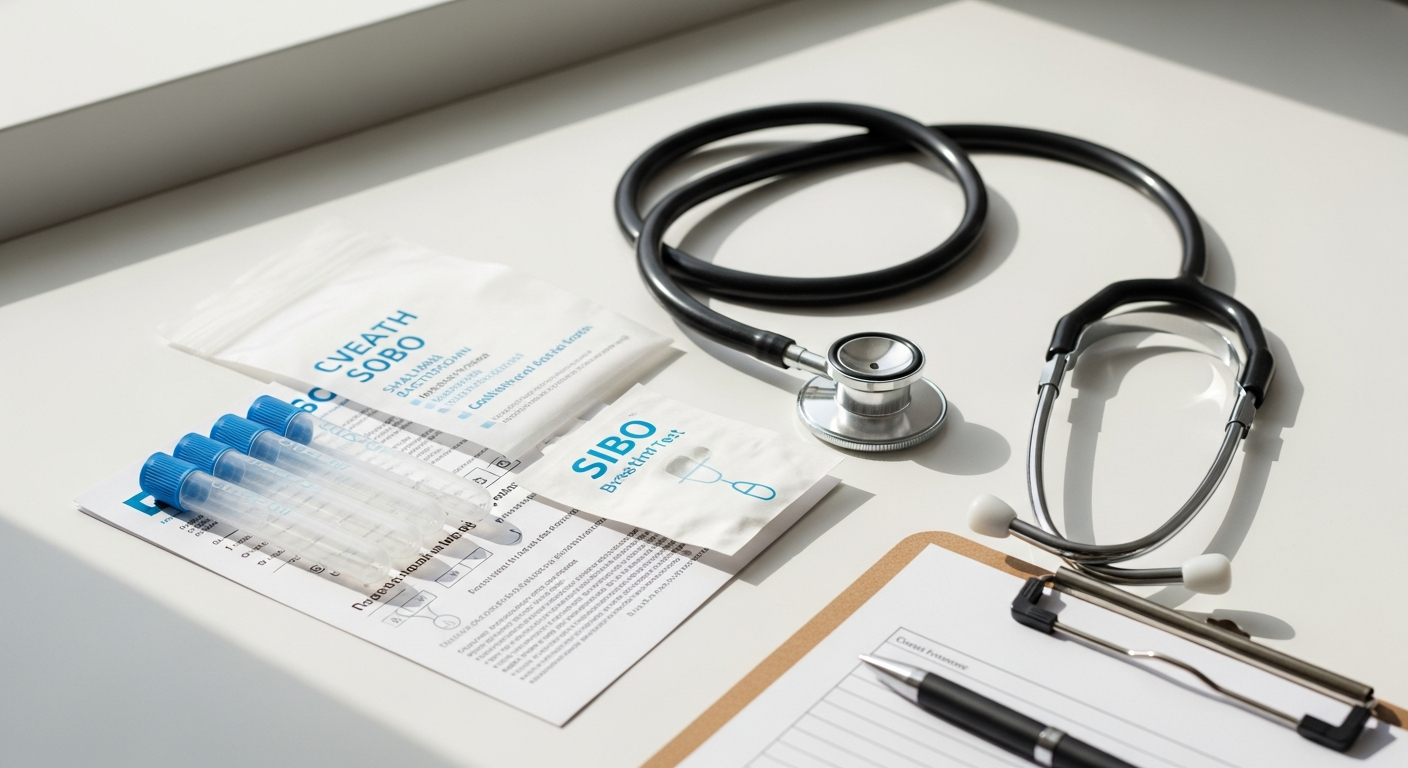
Struggling with persistent bloating, gas, or unexplained digestive symptoms? Learn how the SIBO + IMO Lactulose Breath Test works at home, what it measures, how to prepare, and what your results may reveal.
Persistent bloating, gas, constipation, and other digestive symptoms can have many possible causes. When small intestinal bacterial overgrowth (SIBO) or intestinal methanogen overgrowth (IMO) is suspected, breath testing provides a non-invasive way to investigate.
The SIBO + IMO Lactulose Breath Test described here is completed at home and measures both hydrogen and methane. Samples are then returned for laboratory analysis and professional interpretation.
Understanding the preparation and collection process is important because seemingly minor mistakes can affect the usefulness of the results.
What Does a SIBO + IMO Breath Test Measure?
The test uses lactulose, a non-digestible sugar that travels through the digestive tract.
When microorganisms ferment lactulose, they produce gases including hydrogen and methane. These gases enter the bloodstream, reach the lungs, and can then be measured in collected breath samples.
Testing both gases is useful because SIBO and IMO aren’t exactly the same condition. Hydrogen is commonly associated with bacterial fermentation, while methane production is associated with methanogens.
Why Does This Test Use Lactulose?
Lactulose isn’t absorbed in the same way as ordinary dietary sugars.
Because it moves through the digestive tract and undergoes microbial fermentation, measuring changes in breath gases over time can provide information about fermentation patterns.
The source positions lactulose as particularly useful for detecting activity across a broader portion of the small intestine compared with glucose-based testing.
However, interpretation of breath testing can be complex, so results are best considered alongside symptoms and appropriate clinical assessment.
Preparing for the Test Matters
Preparation is one of the most important parts of breath testing.
The supplied instructions state that testing should generally take place at least four weeks after antibiotics. They also advise discussing medications such as proton pump inhibitors and antacids with a healthcare professional rather than stopping them independently.
The source additionally calls for dietary preparation, temporary discontinuation of certain supplements, and a 12-hour fast before collecting the first sample.
Always follow the instructions supplied with your specific kit because protocols can differ.
How At-Home Sample Collection Works
The process begins with a baseline breath sample before drinking the supplied lactulose solution.
Additional samples are then collected at timed intervals. The source describes collection approximately every 20 minutes for three hours, creating a sequence that shows how hydrogen and methane levels change following lactulose consumption.
Correct labeling, timing, sealing, and storage are essential.
The supplied protocol also says samples should be returned promptly using the provided packaging.
Understanding Hydrogen and Methane Results
Results aren’t based simply on whether hydrogen or methane is present.
The pattern and magnitude of gas changes matter.
The source describes a hydrogen increase of more than 20 ppm above baseline within 90 minutes as an indicator used for SIBO. It describes methane readings of 10 ppm or higher as relevant to IMO.
These figures shouldn’t be used to self-diagnose from isolated numbers. Professional interpretation can help place the measurements within the context of the complete test and your symptoms.
Common Mistakes Can Affect Testing
At-home convenience makes following the protocol especially important.
Potential problems identified in the supplied material include testing too soon after antibiotics, incomplete fasting, incorrect collection timing, contaminated tubes, interfering supplements, and improper sample return.
Trying to improvise around the instructions can reduce the usefulness of the test.
If you’re uncertain about preparation, medication use, or sample collection, clarify those questions with the testing provider or an appropriate healthcare professional before starting.
What Happens After Testing?
The source states that results are delivered digitally and include clinical interpretation rather than simply providing raw gas measurements.
Depending on the findings, the next step may involve discussing results with a healthcare professional and determining whether further evaluation or treatment is appropriate.
Treatment shouldn’t be selected from a breath-test number alone.
The supplied material discusses dietary approaches, antimicrobial treatment, specialist referral, and possible follow-up testing, but the appropriate approach depends on the individual diagnosis and clinical circumstances.
Who Might Consider SIBO or IMO Testing?
Breath testing may be considered when ongoing digestive symptoms warrant investigation and SIBO or IMO is among the suspected causes.
Symptoms alone can’t establish the diagnosis because bloating, gas, constipation, diarrhea, and abdominal discomfort overlap with many gastrointestinal conditions.
That’s why testing is most useful as part of a broader diagnostic process rather than as a standalone answer.
A Convenient Way to Investigate Digestive Symptoms
The SIBO + IMO Lactulose Breath Test offers the convenience of collecting samples at home while having them analyzed professionally.
Its ability to measure both hydrogen and methane is particularly relevant when investigating different microbial fermentation patterns. The main commitment is careful preparation followed by approximately three hours of timed breath collection.
The source lists the test at £299, although current pricing should be confirmed before ordering.
For people investigating persistent digestive symptoms, the test can provide additional information to discuss with a healthcare professional. Its value ultimately depends on following the collection protocol carefully and interpreting the findings within the wider clinical picture.