
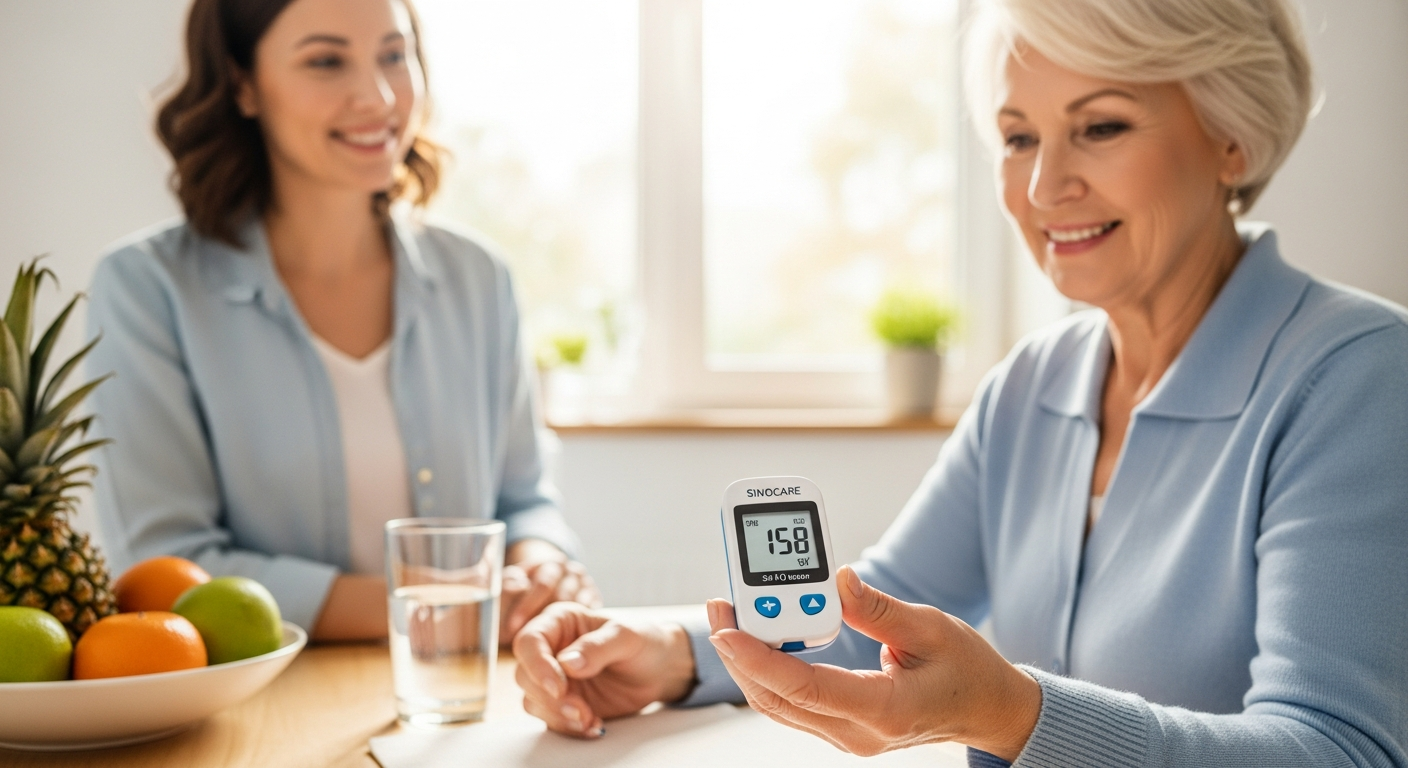
Discover how the Sinocare Safe AQ Smart Blood Glucose Monitor simplifies diabetes management for seniors and caregivers. No-coding technology, affordable pricing, and portable design make daily testing effortless. Learn what makes it ideal for elderly users.
Managing diabetes becomes increasingly complex with age. Yet here's the reality: over 37 million Americans live with diabetes, and seniors account for nearly 25% of that population. The struggle isn't just about staying healthy—it's about finding a testing device that actually fits into daily routines without confusion, expense, or frustration.
The Sinocare Safe AQ Smart Blood Glucose Monitor has emerged as a game-changer for this demographic. Designed with simplicity at its core, this affordable device eliminates the technical barriers that often discourage older adults from consistent glucose monitoring. For caregivers supporting aging parents or relatives, it represents peace of mind without the premium price tag.
This guide is specifically created for seniors and their caregivers seeking a straightforward, dependable testing solution. Discover why the Sinocare Safe AQ Smart is the right choice for your glucose monitoring needs today. You'll understand why the no-coding system matters, how its portable design fits active lifestyles, and exactly what makes it stand out as an accessible choice for long-term diabetes management.
The Senior-Friendly Design That Changes Everything
No-coding technology eliminates confusion and user error
The absence of manual code entry represents a fundamental shift in accessibility. Seniors no longer need to worry about entering a code before each test or matching a strip code to the meter—the device handles this automatically. This single feature dramatically reduces the likelihood of testing errors that could lead to incorrect medication adjustments.
Large, clear digital display for easy reading without strain
The monitor features a digital display designed specifically for aging eyes. Numbers appear large and legible, eliminating the frustration of squinting or needing reading glasses to see results. High contrast between the display and background ensures visibility in various lighting conditions.
Intuitive button layout requiring minimal dexterity
The device's simple button arrangement accommodates users with arthritis or reduced hand strength. No complicated sequences or simultaneous button presses are required—just straightforward, single-button operation that anyone can master within minutes.
Lightweight and compact construction for effortless portability
Weighing very little and fitting easily into a pocket or small bag, the monitor travels anywhere without adding noticeable bulk. This portability means seniors can test at home, during medical appointments, while traveling, or at social gatherings without drawing attention or requiring special preparation.
Simple operation that requires no smartphone or app connectivity
Unlike modern glucose monitors that depend on Bluetooth connections or smartphone apps, the Sinocare Safe AQ Smart operates entirely independently. No need to download applications, manage software updates, or troubleshoot connectivity issues. The device works the same way today as it did the day you purchased it.
Straightforward kit packaging with essential supplies included
The complete kit arrives with everything needed to begin testing immediately: the monitor itself, lancets for obtaining blood samples, and test strips. There's no need to order supplies separately or wait for additional items to arrive.
Minimal setup time—start testing within minutes of purchase
From opening the box to performing the first test, the entire process takes just minutes. Insert the battery, use a test strip, prick a finger, and receive a glucose reading. The straightforward design means no complex calibration or configuration steps.
Understanding the Technical Specs Without the Jargon
Minimal blood sample requirement (0.6 microliters) reduces finger-prick discomfort
The device requires only a tiny drop of blood—smaller than a grain of rice. This minimal sample volume means less pain during the finger prick, making testing something users actually feel comfortable doing multiple times daily without dread.
Ultra-fast 5-10 second results for immediate feedback
Waiting for results creates anxiety and disrupts the testing experience. With results appearing in just 5 to 10 seconds, users get immediate feedback about their glucose levels. This speed allows for quick decisions about eating, activity, or medication adjustments.
Measurement range accommodates typical and elevated glucose levels (20-600 mg/dL)
The monitor accurately measures glucose across a wide range, from very low to very high levels. This comprehensive range means the device works effectively for nearly all glucose monitoring situations seniors encounter in daily life.
Memory storage of 200-500 readings for trend tracking over weeks and months
The device stores hundreds of test results with date and time stamps automatically recorded. Instead of writing results down in a logbook, users simply check the monitor's memory to review their glucose patterns over extended periods. This data becomes invaluable during doctor's appointments for discussing medication adjustments or identifying problematic eating patterns.
Standard CR2032 battery lasts through extended testing periods
The meter uses a common battery available at any pharmacy or supermarket. Battery life is reliable and extended, meaning users won't find themselves with a dead monitor at a critical moment.
Reliable accuracy for daily monitoring and medication adjustments
The device provides consistent, dependable readings suitable for making real healthcare decisions. While not laboratory-grade equipment, its accuracy is sufficient for daily monitoring and coordinating with healthcare providers.
Date and time stamping helps identify patterns and correlations
Automatically recorded timestamps reveal which times of day glucose runs highest or lowest. Seniors and caregivers can connect glucose readings to specific meals, activities, or times, identifying triggers and patterns that inform better management strategies.
Cost Considerations for Fixed Incomes and Budgets
Entry-level pricing starting around €16.99 makes initial investment minimal
The monitor itself costs less than many senior citizens spend on a single meal out. This affordability removes a major barrier to blood glucose monitoring that might otherwise prevent consistent testing.
Complete kit includes monitor, lancets, and test strips for immediate use
Purchasing the kit means no additional expenses before starting to test. Everything needed arrives in one package, preventing surprise costs or delays waiting for supplies to arrive separately.
Affordable consumables (strips and lancets) reduce ongoing expenses
Test strips and lancets remain inexpensive compared to premium monitor brands. Seniors managing diabetes on fixed incomes can afford the ongoing supplies needed for consistent monitoring without financial hardship.
No subscription fees or hidden costs associated with operation
Unlike some modern glucose monitors requiring cloud storage subscriptions or app memberships, the Sinocare Safe AQ Smart has no hidden fees. The purchase price covers everything—no ongoing monthly charges drain budgets.
Bulk purchasing options for test strips provide additional savings
Buying supplies in larger quantities reduces per-unit cost. Seniors can stock up on strips during sales or bulk ordering periods, further stretching limited healthcare budgets.
Insurance coverage possibilities for qualifying individuals
Many insurance plans cover glucose monitors and supplies for individuals with diagnosed diabetes. Seniors should check their coverage options before purchasing, as insurance may cover part or all of the cost.
Exceptional value-to-function ratio compared to premium alternatives
The Sinocare Safe AQ Smart delivers essential monitoring functionality at a fraction of premium brand prices. Seniors get reliable daily monitoring without paying for unnecessary features they won't use.
Real-World Testing: What Seniors Actually Experience
Minimal pain from tiny blood samples—many users report barely feeling the prick
The small sample requirement means the lancet penetrates only slightly into the skin. Most users report that the finger prick causes minimal discomfort—some barely notice it at all. This low-pain experience encourages consistent testing without dreading each measurement.
Fast results enable quick dietary or activity adjustments
Knowing glucose levels within seconds allows immediate response. If a reading runs high, users can take a walk or adjust their next meal. If low, they can quickly consume a snack. This immediate feedback loop makes testing feel actionable rather than merely informational.
Memory function helps during doctor's appointments and health discussions
Rather than trying to remember readings or searching through a logbook, users simply scroll through the monitor's memory during medical visits. Healthcare providers appreciate the consistent data, and discussions about medication adjustments become more evidence-based.
Portability allows testing at home, during travel, or at social gatherings
The compact size means seniors never leave home without their glucose monitor. Testing happens discreetly wherever needed—maintaining health management without disrupting social activities or drawing attention.
Consistent readings build confidence in daily management routines
Regular, reliable testing creates a sense of control over health. Seniors develop confidence in their ability to manage diabetes effectively, reducing anxiety about health outcomes and medication management.
Simple cleaning and maintenance requires no special skills
The device requires minimal maintenance—occasional gentle wiping with a soft cloth to keep the display clean. No complicated cleaning procedures, special solutions, or technical troubleshooting needed.
Reliable performance across different environmental conditions
Whether testing at home, in a car, at the beach, or during travel, the monitor performs consistently. Temperature variations and different environments don't affect the device's reliability or accuracy.
Addressing Common Concerns and Limitations
Accuracy comparison with lab tests and premium brands explained
While the Sinocare Safe AQ Smart provides accurate daily monitoring, laboratory tests remain the gold standard for diabetes diagnosis and validation. The monitor's accuracy is more than sufficient for ongoing monitoring and medication management—it simply isn't laboratory equipment. Seniors shouldn't expect identical readings between home monitors and lab tests, as minor variations are normal across all glucose monitoring devices.
Instruction manual clarity—tips for understanding the documentation
Some users report that written instructions could be clearer. If the documentation seems confusing, pharmacy staff or healthcare providers can often provide simplified explanations. Online video tutorials also break down operation into easy-to-follow steps.
Battery replacement frequency and cost considerations
The CR2032 battery costs just a few dollars and typically lasts many months of regular use. When the low battery indicator appears, users simply purchase a fresh battery at any pharmacy—a quick, inexpensive fix requiring no technical expertise.
Troubleshooting common issues without technical support
Most issues seniors encounter are simple—using expired strips, insufficient blood samples, or forgetting to insert the battery. Reviewing the basic operation steps usually resolves these problems without needing customer service assistance.
When to seek professional guidance versus independent problem-solving
Simple operational questions can be answered by pharmacy staff or healthcare providers. However, if the monitor produces unusual readings consistently different from how users feel, medical professionals should evaluate whether the device or the patient's health requires attention.
Comparing results across multiple devices for consistency checks
If seniors own multiple monitors or want to verify accuracy, testing with different devices simultaneously shows whether readings align. Slight variations between monitors are normal, but consistent significant differences warrant discussion with healthcare providers.
Understanding measurement variations and what they mean
Glucose levels naturally fluctuate throughout the day based on meals, activity, stress, and medication timing. Seniors shouldn't expect identical readings at different times—variations are normal and expected. Trends matter more than individual readings.
Integrating Glucose Monitoring Into Daily Life
Creating a testing schedule that fits morning and evening routines
Rather than adding glucose testing as a separate task, integrate it into existing routines. Many seniors test immediately after waking and before bed—times when they're already thinking about health and medication. Consistent timing also helps identify patterns related to specific meals or activities.
Storing readings in a physical log or digital format for healthcare providers
Some seniors prefer writing results in a notebook; others use a simple spreadsheet on their computer. Recording which foods or activities preceded high or low readings creates valuable context that helps healthcare providers offer better guidance.
Sharing data with family members and medical professionals
The monitor's memory function means caregivers can review readings without seniors needing to remember details. Healthcare providers appreciate seeing consistent data when making medication adjustments or evaluating management effectiveness.
Using memory function to identify eating patterns and glucose triggers
By reviewing several weeks of readings, patterns emerge. Certain foods, meal sizes, or eating times might consistently correlate with high readings. Identifying these triggers allows seniors to make targeted changes that meaningfully improve glucose control.
Combining monitoring with medication timing for optimal management
Coordinating glucose checks with medication administration creates a complete picture of how well treatments work. Testing before meals and before bed helps seniors and healthcare providers understand whether current medication doses are appropriate.
Maintaining supplies and replacing lancets and strips regularly
Expired test strips produce inaccurate results, so seniors should check expiration dates before use. Lancets dull with repeated use, so replacing them regularly maintains comfort during finger pricks. Keeping adequate supplies on hand prevents gaps in testing.
Building confidence through consistent, successful testing
Each successful test reinforces that managing diabetes is achievable. Over time, glucose monitoring becomes as routine as brushing teeth—a simple daily habit rather than a source of anxiety.
Support Systems for Seniors Using Home Glucose Monitors
Caregiver involvement in learning and monitoring processes
Adult children or other caregivers can learn how to use the monitor alongside seniors. This shared knowledge means caregivers can help troubleshoot if problems arise and understand their loved one's health status more completely.
Healthcare provider recommendations and professional guidance
Doctors and diabetes educators provide personalized advice about testing frequency, target glucose ranges, and how to respond to different readings. Regular check-ins ensure the monitoring approach remains appropriate for each individual's situation.
Community resources and diabetes support groups
Local hospitals, senior centers, and diabetes organizations offer classes, support groups, and educational resources. Connecting with others managing diabetes reduces isolation and provides practical tips from people with real experience.
Online tutorials and simplified instructional videos
YouTube and manufacturer websites offer step-by-step video demonstrations of monitor operation. Visual learning often clarifies points that written instructions alone might not adequately explain.
Pharmacy assistance with supply ordering and refills
Pharmacists can answer questions about glucose monitoring, help troubleshoot problems, and ensure seniors have adequate supplies. Many pharmacies offer automatic refill services so supplies never run out unexpectedly.
Family communication strategies for health data sharing
Regular family conversations about glucose readings and diabetes management keep everyone informed and supportive. Some families establish specific times weekly to discuss health status and any concerns that emerged.
Emergency protocols when readings fall outside normal ranges
Seniors and caregivers should understand when readings indicate an emergency requiring immediate medical attention versus simply calling their healthcare provider during business hours. Clear protocols prevent both unnecessary panic and dangerous delays in response to serious situations.
Comparing the Sinocare Safe AQ Smart to Other Senior-Focused Options
No-coding advantage versus devices requiring manual calibration
Many competing glucose monitors require users to match strip codes to meter codes before testing. The Sinocare Safe AQ Smart eliminates this step entirely, reducing complexity and potential errors that plague older users.
Price comparison with mid-range and premium glucose monitors
Premium monitors often cost three to five times more than the Sinocare Safe AQ Smart while delivering features seniors rarely use—smartphone apps, cloud connectivity, and advanced data analysis. The Sinocare offers essential monitoring at a fraction of the price.
Ease of use versus technical complexity of competitor products
Many modern glucose monitors require smartphone setup, Bluetooth pairing, and app management. The Sinocare operates independently without any technology beyond a simple battery, making it accessible to seniors uncomfortable with digital devices.
Portability and discretion compared to larger alternatives
Some competing monitors are bulkier and more conspicuous. The Sinocare's compact, pocket-sized design allows discreet testing anywhere without drawing attention.
Memory capacity and data tracking features
The Sinocare stores 200-500 readings with date and time stamps. While some premium monitors track more readings, this capacity is more than adequate for seniors to identify patterns and trends during doctor's appointments.
Customer satisfaction ratings among senior user demographics
Across senior-focused review sites and diabetes communities, the Sinocare Safe AQ Smart consistently receives positive ratings for ease of use, affordability, and reliability. Seniors specifically praise its simplicity compared to more complex competitors.
Long-term cost of ownership including supplies and maintenance
When calculating total cost over several years—including the monitor price, strip expenses, lancet costs, and battery replacement—the Sinocare remains the most economical option for continuous glucose monitoring.
Moving Forward With Confidence
The Sinocare Safe AQ Smart Blood Glucose Monitor delivers exactly what seniors and caregivers need: simplicity, affordability, and reliability. Its no-coding system removes the intimidation factor that often prevents consistent monitoring. The rapid results and compact design mean testing becomes a seamless part of daily life—not a burden.
Whether managing diabetes personally or supporting an aging parent, this device proves that effective healthcare doesn't require complexity or excessive expense. The monitor fits naturally into existing routines, travels wherever needed, and provides the consistent data healthcare providers need to optimize medication and lifestyle guidance.
Starting with the complete kit simplifies the beginning phase. Within minutes of opening the box, testing begins. Familiarizing yourself with the straightforward operation happens through simple, practical use. After a few weeks, regular glucose monitoring becomes second nature—as routine as checking the weather.
Your healthcare provider will appreciate the consistent data showing your actual daily glucose patterns. With reliable readings over weeks and months, conversations about medication adjustments become evidence-based rather than guesswork. You gain the confidence that comes from taking active control of your health rather than feeling like diabetes controls you.