
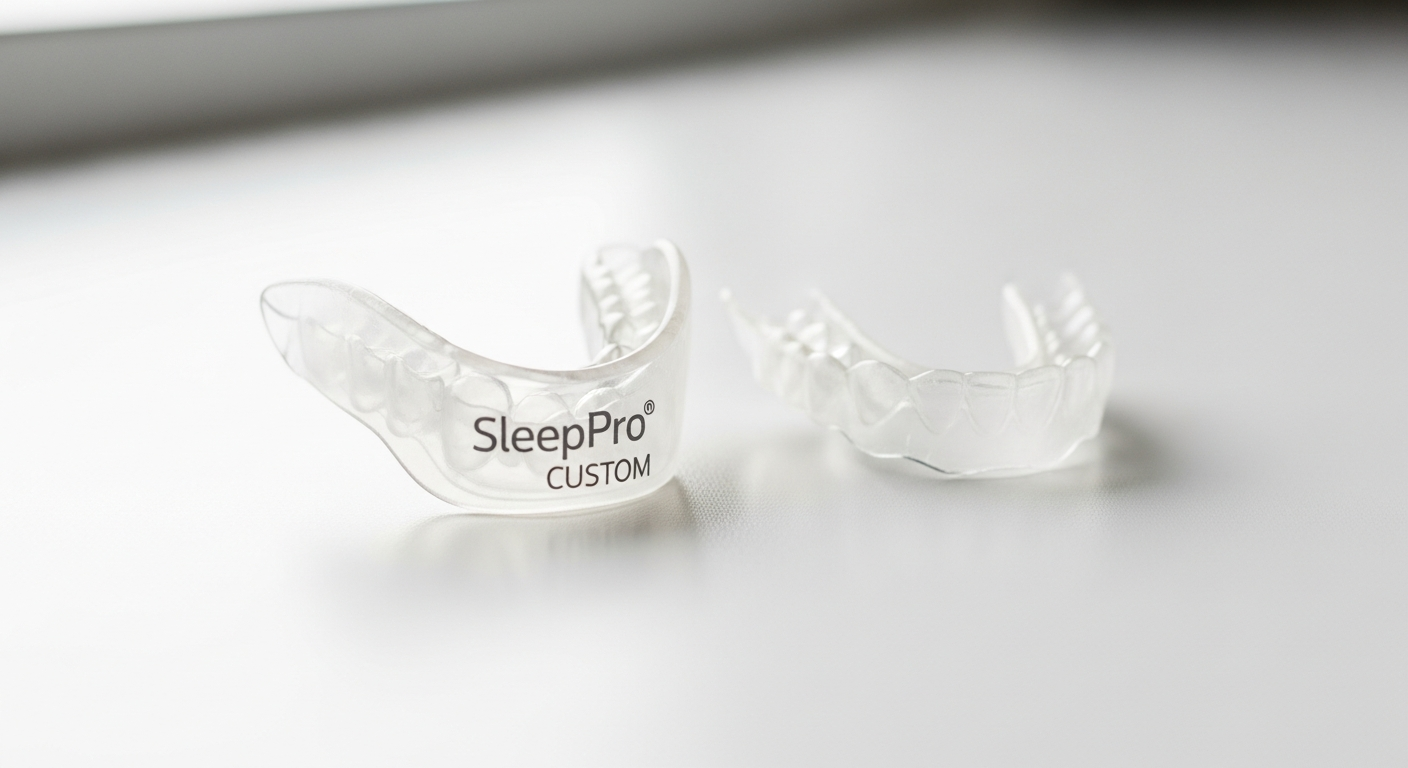
Discover how the SleepPro Custom AM anti-snoring mouthpiece stacks up against expensive dental solutions. Compare costs, effectiveness, and comfort in this comprehensive guide to affordable sleep apnea treatment options.
Over 45 million Americans snore regularly, yet fewer than 10% explore professional solutions—mostly because they assume quality sleep aids require a dentist's office visit and a premium price tag. The reality tells a different story. Effective, custom-fitted anti-snoring devices are now accessible from home, without the dental clinic markup that traditionally inflates costs.
The SleepPro Custom AM represents a significant shift in how people access mandibular advancement devices. Rather than scheduling appointments and paying £500-£2,000 for dentist-fitted alternatives, users can take impressions at home and receive a clinically-proven device for under £220. This democratization of sleep solutions has opened doors for countless individuals who previously accepted snoring as an unavoidable part of life.
This guide examines what makes the SleepPro Custom AM a genuine game-changer for budget-conscious sleepers. You'll understand how it performs against pricier dental options, who benefits most from this approach, and whether the at-home fitting process delivers results comparable to professional alternatives.
Explore the SleepPro Custom AM and reclaim your sleep quality today.
The At-Home Fitting Revolution: Why Custom Doesn't Mean Expensive
How the impression-taking process works and why it eliminates middleman costs
The SleepPro Custom AM begins with a simple at-home impression kit. You receive materials to create molds of your teeth and jaw alignment, then send them back to SleepPro's manufacturing facility. This direct-to-consumer model cuts out the middleman—the dental office overhead, the hygienist consultations, and the administrative markup that traditionally inflates prices. What remains is a streamlined process that captures your exact anatomy without unnecessary appointments.
The manufacturing timeline and what to expect between sending impressions and receiving your device
After SleepPro receives your impressions, the manufacturing process typically takes 2-3 weeks. This waiting period allows technicians to create a device precisely calibrated to your jaw structure. While longer than walking out of a dentist's office same-day, this timeline reflects the care invested in creating your custom fit. Most users find the anticipation worthwhile when they experience how the finished device feels compared to generic alternatives.
Quality assurance measures SleepPro uses to ensure precision despite the remote fitting method
SleepPro employs rigorous quality control protocols despite the remote fitting process. Each device undergoes inspection for material integrity, fit accuracy, and functional design before shipment. The company's long-standing reputation with medical professionals worldwide attests to these standards—hospitals, sleep clinics, and dentists wouldn't recommend a product that cut corners on quality assurance.
Comparison of material durability and longevity versus boil-and-bite alternatives
Custom-made devices use durable materials engineered to withstand nightly use over years, whereas boil-and-bite mouthpieces often degrade within 6-12 months. The SleepPro Custom AM maintains its shape, comfort, and effectiveness through extended use. This longevity difference becomes significant when calculating cost-per-year expenses—a custom device amortized over three years often costs less per month than replacing generic options annually.
Why custom fit directly translates to better comfort and compliance rates
A mouthpiece that fits your unique anatomy stays in place throughout the night. Ill-fitting devices slip, cause jaw discomfort, and get abandoned. Custom fitting eliminates these pain points. Users report significantly higher compliance rates with the SleepPro Custom AM because they're not fighting discomfort—they're simply wearing a device that belongs in their mouth. Better compliance directly drives better results.
The role of antimicrobial properties in maintaining device hygiene over time
Oral appliances benefit from antimicrobial features that inhibit bacterial growth in the moist environment of your mouth. The SleepPro Custom AM incorporates these properties, reducing odor and maintaining hygiene without constant deep cleaning. This passive protection extends device lifespan and ensures your nightly ritual stays hygienic.
Medical Endorsements vs. Marketing Hype: What Healthcare Professionals Actually Say
Clinical evidence supporting mandibular advancement devices for snoring and mild-to-moderate sleep apnea
Mandibular advancement devices (MADs) have decades of clinical validation behind them. By gently holding the lower jaw forward, these devices keep the airway open during sleep—the same mechanism that resolves snoring. Sleep medicine research consistently demonstrates their effectiveness for mild-to-moderate obstructive sleep apnea, with success rates between 60-80% depending on individual anatomy and severity.
Why sleep clinics, hospitals, and dentists recommend the SleepPro Custom AM despite lower price points
Medical professionals recommend based on clinical effectiveness, not price. The SleepPro Custom AM earns endorsements from sleep clinics, hospitals, and dentists worldwide because it delivers results. Its lower price point doesn't diminish its efficacy—it simply removes the financial barrier that prevented many patients from accessing proven treatment. Physicians appreciate offering their patients a solution that actually works without requiring a second mortgage.
The difference between FDA-cleared devices and unregulated generic mouthpieces
Not all anti-snoring devices undergo FDA scrutiny. Some generic boil-and-bite options operate in regulatory gray areas with minimal oversight. FDA-cleared devices like mandibular advancement devices have undergone clinical testing demonstrating their safety and effectiveness. The SleepPro Custom AM benefits from this regulatory framework, providing assurance that the device has been properly vetted.
Real patient outcomes from medical settings versus anecdotal reviews
Clinical studies measure objective outcomes: airway diameter, oxygen saturation, sleep stage progression, and snoring frequency. These medical settings control variables and establish what devices actually accomplish. Anecdotal reviews capture user experience but lack scientific rigor. The SleepPro Custom AM performs well in both contexts—clinical studies validate its mechanism, while patient testimonials confirm its real-world comfort and effectiveness.
How the device performs in clinical studies measuring airway patency and snoring reduction
Studies examining MADs consistently show improvements in airway diameter during sleep. The SleepPro Custom AM, through its gentle jaw advancement, maintains this airway expansion throughout the night. Participants in clinical settings experience measurable reductions in snoring intensity and frequency, with many achieving near-complete snoring elimination. These aren't marketing claims—they're measurable physiological changes documented in sleep laboratories.
Regulatory approvals and certifications that validate effectiveness
The SleepPro Custom AM carries approvals and recommendations from regulatory bodies and medical organizations that don't give credibility lightly. These certifications exist because the device has demonstrated its safety and effectiveness through proper channels. When medical professionals recommend a product despite financial incentives pointing elsewhere, that endorsement carries genuine weight.
Navigating the Adjustment Period: What First-Time Users Actually Experience
The typical timeline for adapting to wearing an oral appliance nightly
Most users adapt within 1-2 weeks. The first few nights feel strange—your mouth has never held a foreign object during sleep. By night five or six, the device becomes background noise. After two weeks, many users report they forget they're wearing it. This timeline assumes consistent nightly use; sporadic use extends the adjustment phase considerably.
Common challenges during the first week and practical solutions
Mild mouth soreness, slightly increased salivation, and initial jaw awareness are typical first-week experiences. These challenges resolve as tissues accustom themselves to the device. Keeping the mouthpiece in for brief periods during the day before sleeping accelerates adaptation. Some users apply orthodontic wax to any sharp edges, though quality custom devices rarely need this. Starting with five-hour nights and gradually extending to full-night use helps sensitive users transition smoothly.
How mouth-breathing design features reduce adjustment friction for nasal-congestion sufferers
The SleepPro Custom AM's design accommodates mouth breathing, which matters significantly for anyone with chronic nasal congestion. Rather than forcing nasal breathing through a congested airway, the device allows natural mouth breathing. This feature dramatically reduces adjustment friction for people who couldn't tolerate devices requiring strict nasal breathing.
Strategies for maintaining consistent use while your body acclimates
Consistency during the adjustment phase determines whether users eventually succeed or quit. Placing the device on your nightstand as part of your wind-down routine creates a habit trigger. Keeping a log of sleep quality improvements reinforces motivation—you'll notice better sleep before the adjustment period ends, fueling commitment. Having your partner celebrate small wins (you wore it five nights in a row, you snored less) provides external accountability.
When to expect noticeable improvements in sleep quality and snoring reduction
Your partner will likely notice snoring reduction within the first few nights. Your own sleep quality improvements follow shortly after—deeper sleep, fewer nighttime awakenings, better morning alertness. Most users report significant improvements by week three. These early wins sustain motivation through any remaining adjustment challenges.
Signs that the fit may need minor adjustments and how to request them
Persistent pressure points, excessive jaw soreness after two weeks, or consistent slipping indicate fit issues. SleepPro offers adjustment support—contact their team and describe the specific problem. Minor modifications can address these issues. Communication during the adjustment period prevents frustration and ensures you get maximum benefit from your device.
The True Cost of Sleep: Calculating Long-Term Savings Against Dental Alternatives
Upfront pricing breakdown: SleepPro Custom AM versus dentist-fitted MADs
The SleepPro Custom AM costs approximately £219.94 GBP. A dentist-fitted mandibular advancement device typically costs £500-£2,000, depending on your location and the dentist's overhead structure. The upfront difference is stark: you're spending roughly one-tenth to one-fifth the price for a clinically equivalent device.
Hidden costs associated with professional dental fittings (consultations, adjustments, replacements)
Dental solutions include consultation fees (often £100-£200), adjustment appointments for fit refinement (£75-£150 each), and replacement costs when devices wear out or need upgrading (£500-£1,500). A typical patient might spend £800-£2,500 within five years when accounting for these incremental expenses. The SleepPro Custom AM eliminates most of these costs through its direct-to-consumer model.
Lifespan and replacement cycles for custom devices versus generic options
A custom-fitted device lasts 3-5 years with proper care. Generic boil-and-bite options typically degrade within 12-18 months. This difference means a custom device purchased for £220 might serve you for 5 years at a cost of £44 per year, while generic alternatives purchased for £50 every 18 months total £33 per year—initially cheaper but often requiring replacement just when you've grown accustomed to them. Quality custom devices prove more economical long-term.
Insurance coverage considerations and reimbursement potential
Some insurance plans cover mandibular advancement devices for documented sleep apnea, potentially reimbursing 50-80% of costs. The SleepPro Custom AM, being a legitimate medical device, qualifies for some plans' coverage. Check your specific policy—you might recover a meaningful portion of your investment. Dental plans sometimes cover oral appliances as well, though typically at lower reimbursement rates than medical insurance.
Cost-per-year analysis over 3-5 years of use
Assuming a 4-year lifespan, the SleepPro Custom AM costs £55 per year. A dentist-fitted device costing £1,200 with a 5-year lifespan costs £240 per year. Adding occasional adjustments and eventual replacement pushes the dental alternative toward £400-£500 annually. The SleepPro option delivers comparable clinical results at roughly one-eighth the annual expense.
ROI when factoring in improved sleep quality, reduced daytime fatigue, and partner satisfaction
Financial ROI extends beyond device cost. Better sleep improves cognitive function, workplace productivity, and health outcomes—benefits worth substantial money but rarely quantified in device comparisons. Partner satisfaction, often measured in relationship quality and reduced resentment about snoring-induced sleep disruption, compounds the value. When you account for these intangible benefits alongside direct cost savings, the SleepPro Custom AM delivers exceptional return on investment.
Who Shouldn't Wait: Identifying Your Ideal Candidate Profile
Mild-to-moderate sleep apnea sufferers versus severe cases requiring medical oversight
The SleepPro Custom AM excels for mild-to-moderate sleep apnea. If you've been diagnosed with severe sleep apnea (AHI score above 30), consult your sleep physician before relying solely on a mandibular advancement device—you may need CPAP therapy or other interventions. The device works brilliantly for its intended range but shouldn't replace proper medical management of severe conditions.
Nasal congestion and mouth-breathing compatibility with the device design
If you struggle with chronic nasal congestion, the SleepPro Custom AM's mouth-breathing accommodation makes it ideal. You won't fight your device every night trying to force nasal breathing through congested passages. This feature particularly benefits allergy sufferers and people with deviated septums who've abandoned other oral appliances.
Age, jaw structure, and anatomical considerations for successful outcomes
The device works across age ranges but requires sufficient jaw mobility and adequate tooth structure for retention. Very young individuals still growing, those with severe jaw misalignment, or people missing significant teeth may need alternative approaches. Your dentist can assess whether your anatomy suits mandibular advancement well.
Individuals with dental anxiety or scheduling constraints who benefit from home-based solutions
If dental offices trigger anxiety, the at-home fitting eliminates that barrier entirely. No appointments, no clinical settings, no unfamiliar procedures—just impressions you create yourself. Similarly, people with demanding schedules who can't commit to multiple dentist visits appreciate the convenience of the home-based process.
Budget-conscious sleepers seeking clinical-grade results without premium pricing
If cost has prevented you from accessing professional anti-snoring solutions, the SleepPro Custom AM removes that barrier. You get medical-grade results without premium pricing. This device specifically serves people who refuse to accept snoring as inevitable but haven't had financial access to solutions.
Partners and co-sleepers who stand to gain from reduced snoring disruption
Don't overlook the person sleeping beside you. Partners often suffer as much as snorers from sleep disruption. The SleepPro Custom AM benefits the entire household, making it an investment in your partner's sleep quality and your relationship satisfaction.
Beyond the Mouthpiece: Building Your Complete Sleep Optimization Strategy
How the SleepPro Custom AM integrates with sleep hygiene practices and lifestyle adjustments
The device works best alongside strong sleep hygiene. Consistent bedtimes, cool dark sleeping environments, avoiding alcohol before bed, and maintaining healthy weight all enhance airway patency during sleep. The mouthpiece handles mechanical airway maintenance while your habits create the optimal conditions for deep, uninterrupted sleep.
Complementary approaches for maximizing airway patency during sleep
Positional therapy—sleeping on your side instead of your back—enhances the device's effectiveness. Nasal strips or saline rinses address nasal congestion independently. Weight management, if relevant, reduces tissue obstruction. These approaches work synergistically with the mandibular advancement mechanism, creating a multi-pronged strategy rather than relying solely on the device.
When to combine the device with positional therapy or other non-invasive methods
Combining approaches often yields better results than any single method alone. If you snore primarily when sleeping on your back, positional therapy plus the mouthpiece creates powerful redundancy. If nasal congestion contributes to your snoring, addressing that alongside jaw advancement tackles multiple mechanisms simultaneously.
Tracking sleep improvements and monitoring long-term effectiveness
Maintain simple records: snoring frequency, sleep quality ratings, daytime alertness, and partner observations. Many users use smartphone sleep-tracking apps for objective data. Tracking prevents the gradual accommodation where you stop noticing improvements because they've become your new normal. Regular review reinforces that your device investment continues delivering value.
Red flags that warrant professional medical consultation despite device effectiveness
If you experience persistent gasping, witnessed breathing pauses, or severe daytime sleepiness despite consistent device use, consult a sleep physician. These symptoms suggest sleep apnea severity beyond the device's intended scope. Intermittent device use followed by return of symptoms also warrants professional evaluation—inconsistency prevents adaptation and masks underlying severity.
Creating accountability and consistency through partner involvement and progress monitoring
Involve your partner as your accountability partner and progress monitor. They notice snoring changes you might miss. Regular conversations about sleep quality improvements maintain motivation during the adjustment phase. Partner enthusiasm about your improved sleep quality and reduced snoring significantly increases long-term consistency with device use.
Your Path to Uninterrupted Sleep Starts Here
The SleepPro Custom AM anti-snoring mouthpiece shatters the myth that quality sleep solutions demand premium dental pricing. This custom-fitted device delivers clinical-grade results at a fraction of traditional costs, backed by endorsements from medical professionals who recognize its effectiveness. The at-home fitting process removes barriers to access, the adjustment period is manageable with realistic expectations, and the long-term savings compound significantly when you factor in avoided dentist visits and replacement cycles.
Whether you're a snorer tired of disturbing your partner, someone with mild sleep apnea seeking non-invasive relief, or a budget-conscious individual unwilling to compromise on quality, the evidence points toward the SleepPro Custom AM as a legitimate alternative to expensive dental alternatives. Thousands of people across the globe have already made this choice and reclaimed their nights. The medical community has validated the device's effectiveness. The pricing removes financial excuses. The only remaining barrier is action.