
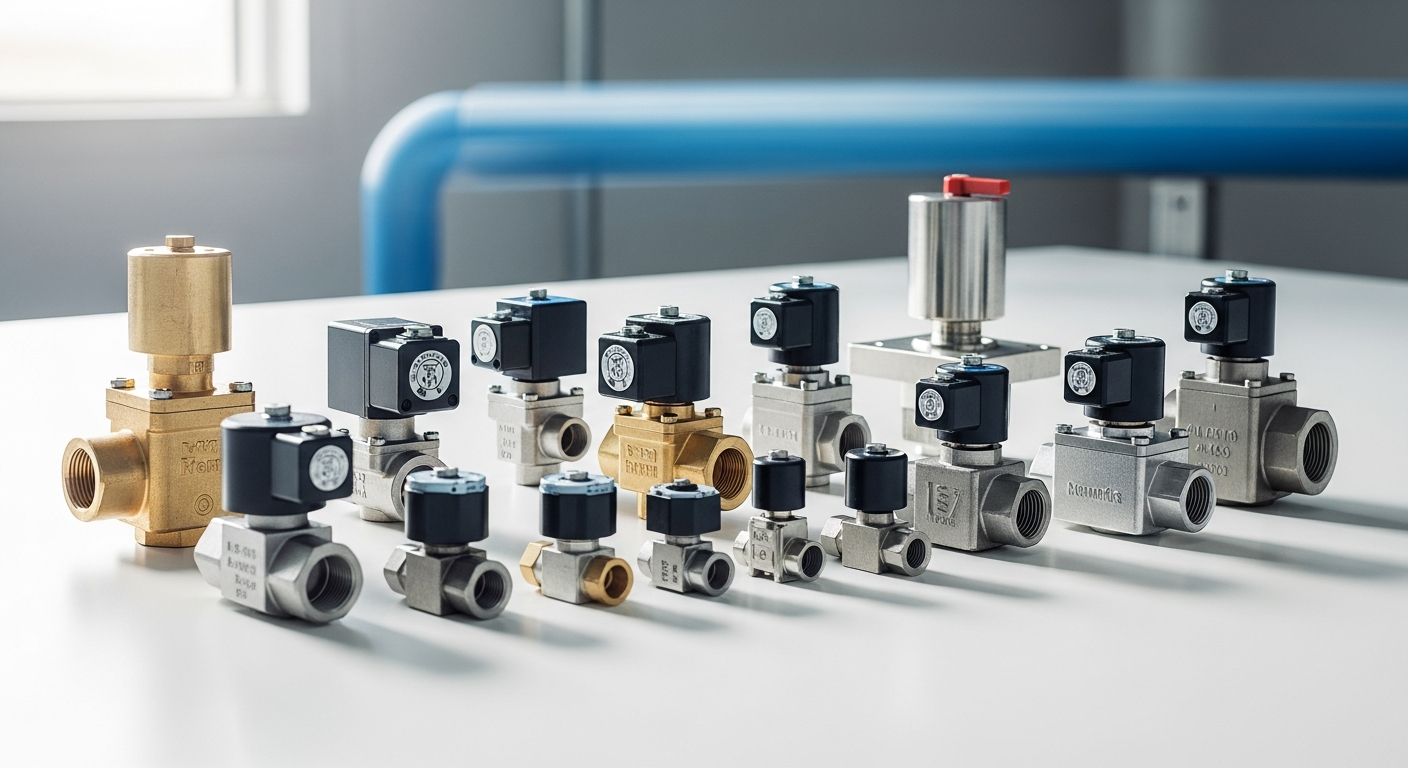
Discover how Tameson solenoid valves deliver precision fluid control for automation systems. Learn valve types, applications, and selection tips to optimize your industrial processes in 2026.
Modern manufacturing lines process thousands of products per hour—yet a single miscalibrated fluid valve can derail an entire production cycle. The margin for error in precision fluid control is razor-thin, and that's where electromechanical solutions become game-changers. Tameson built its reputation on solenoid valve expertise, starting with this single product category and expanding into a comprehensive industrial component supplier.
Their solenoid valves handle everything from millisecond-precision switching in medical devices to heavy-duty hydraulic operations in agricultural equipment. The company's foundation in solenoid valve technology gives them an edge that generalist suppliers simply cannot match. This focused expertise translates into better product selection, faster implementation, and more reliable systems for their customers.
Explore Tameson's solenoid valve collection to find the precision fluid control solution your operation needs. In this guide, you'll understand the different solenoid valve configurations Tameson offers, learn how to match valve types to real-world applications, and discover the material and connection options that ensure compatibility with your existing systems. By the end, you'll know exactly which valve architecture fits your fluid control requirements—whether you're managing air, water, fuel, or viscous industrial media.
Solenoid Valve Architecture: Understanding Tameson's Core Technology
How solenoid valves operate at the electromechanical level and why near-instantaneous switching matters
Solenoid valves represent a fundamental shift from manual fluid control to automated precision. When an electrical current flows through a solenoid coil, it generates a magnetic field strong enough to move an internal plunger. This plunger physically opens or closes a valve seat, redirecting or stopping fluid flow. The entire sequence happens in milliseconds—far faster than any manual operator could manage.
This speed matters profoundly in modern systems. An automated assembly line synchronizing multiple stations cannot tolerate delays of even hundreds of milliseconds. Medical devices demand reliability at microsecond intervals. Fuel injection systems in engines require switching precision that manual valves could never achieve. Solenoid valves make these applications possible.
The role of electromagnetic coils in rapid valve actuation and response times
The electromagnetic coil is the solenoid valve's heart. Engineers select coil specifications based on the voltage available in the control system—typically 12V DC, 24V DC, 110V AC, or 220V AC. The coil design determines the magnetic force produced and, consequently, the valve's response time and pressure-handling capability.
Tameson's solenoid valves maintain consistent response times across thousands of operational cycles. This consistency comes from careful coil engineering and quality manufacturing. Unlike mechanical wear that accumulates in manual valves, solenoid valves operate with minimal mechanical friction. The electromagnetic force refreshes with each electrical pulse, so performance remains stable whether the valve has cycled 1,000 times or 1 million times.
Why precision fluid control demands electromechanical solutions rather than manual alternatives
Manual valves require human intervention—someone must physically turn a handle, push a lever, or rotate a knob. This human element introduces variability. Response times fluctuate. Switching precision becomes impossible in rapid-cycling applications. Manual systems also demand continuous operator attention, which increases labor costs and creates safety vulnerabilities.
Electromechanical solenoid valves eliminate these limitations. Once configured correctly, they execute the same action identically every single time. Automation systems can trigger valves based on precise sensor inputs, allowing fluid control that responds to real-time conditions. A pressure sensor detecting changes triggers a solenoid valve response in milliseconds. That kind of responsiveness powers modern industrial systems.
The relationship between electrical signals and mechanical valve positioning
The electrical signal acts as a command language between your control system and the fluid valve. A pulse of current through the solenoid coil creates the magnetic force. The strength and duration of that signal determines valve behavior. In simple 2-way valves, the signal is binary—on or off. In proportional valves, the signal intensity controls the degree to which the valve opens, enabling variable flow rates.
This electrical-to-mechanical translation allows centralized control. A programmable logic controller (PLC) or automation system can manage dozens of solenoid valves simultaneously, orchestrating complex fluid sequences. Without this connection between electrical control and mechanical action, modern automation would be impossible.
How Tameson's valve designs maintain consistency across thousands of cycles
Durability across millions of cycles separates quality solenoid valves from marginal ones. Tameson's engineering focuses on minimizing mechanical wear. The plunger rides in a precision-machined bore, reducing friction. Spring materials are selected for fatigue resistance over extended cycling. Valve seats are hardened to resist wear from repeated opening and closing.
Material selection plays a critical role. Brass valves offer good corrosion resistance for standard applications. Stainless steel variants handle aggressive environments without degradation. These material choices ensure that performance specifications remain valid over the valve's operational lifespan, not just during initial testing.
2-Way, 3-Way, and Proportional Valves: Matching Configurations to Your Process
2-way solenoid valves for straightforward on/off fluid flow control
The 2-way solenoid valve represents the simplest configuration. One inlet port and one outlet port. When energized, the valve opens, allowing fluid to flow from inlet to outlet. When de-energized, the valve closes, stopping flow completely. This straightforward logic suits applications needing simple on/off control.
2-way valves excel in water dispensing systems, ink jet printers, and basic pneumatic control. They're also common in fuel injection systems where precise timing of fuel delivery matters more than flow variation. Because of their simplicity, 2-way valves typically cost less than more complex configurations, making them an economical choice for high-volume applications.
3-way valve designs that enable flow diversion, mixing, or switching between multiple pathways
The 3-way solenoid valve introduces additional complexity and capability. Three ports allow the valve to handle multiple fluid pathways. The valve can divert flow from one path to another, mix flows from multiple sources, or switch between different operational modes.
Consider an irrigation system controlling water distribution across multiple zones. A 3-way valve can receive water from a single source and direct it toward different irrigation lines based on control signals. In pneumatic systems, 3-way valves often control both the positive and exhaust sides of an actuator, enabling faster response and more precise positioning.
Proportional solenoid valves for variable flow rate adjustment based on electrical input signals
Proportional solenoid valves represent a significant leap in control sophistication. Instead of simple on/off operation, these valves modulate their opening based on the input signal strength. A variable electrical signal produces a proportionally variable valve opening, which in turn produces variable flow rates.
This capability enables systems to respond dynamically to changing conditions. An automated assembly line might slow production during maintenance cycles, so proportional valves adjust fluid flow rather than cycling pumps on and off. Medical devices requiring gradual pressure adjustment rely on proportional valve precision. Heavy equipment hydraulic systems use proportional control for smooth, responsive operation.
How to determine which configuration suits your automation requirements
Start by asking: Does my application need simple on/off control, or does it require flow variation? A water fountain needs 2-way control. A manufacturing process that adjusts output speed requires proportional capability. Next, consider the number of fluid paths. Single source to single destination? 2-way is sufficient. Multiple destinations or sources? 3-way becomes necessary.
Response time requirements also matter. Proportional valves typically respond slightly slower than simple 2-way designs due to the additional control electronics. However, for most industrial applications, the difference is negligible. The key is matching valve sophistication to actual system demands—avoid over-specifying unnecessarily complex valves.
Real-world applications where each valve type delivers optimal performance
2-way valves dominate in high-speed, high-cycle applications where simplicity matters. Inkjet printers firing thousands of droplets per second rely on 2-way solenoid valve speed. 3-way valves fill the middle ground, handling systems with multiple control states—machinery with multiple operating modes, irrigation systems with zone switching, and pneumatic automation requiring both positive and exhaust control.
Proportional valves shine in precision applications demanding flow adjustment. Automated welding equipment controlling gas flow, construction machinery with variable-speed hydraulic actuators, and medical infusion pumps all benefit from proportional valve capability. The right choice depends entirely on your specific operational demands.
Pressure ratings and flow capacity considerations for different configurations
Every valve specification includes maximum operating pressure and flow capacity. These parameters determine whether the valve can handle your system's demands. A valve rated for 64 bar cannot safely operate at 100 bar—exceeding ratings risks seal failure and fluid leakage.
Flow capacity, measured in liters per minute or gallons per minute, must match or exceed your system's normal operating flow. Undersized valves create excessive pressure drops, reducing system efficiency and generating heat. Oversized valves waste energy and cost more unnecessarily. Tameson's technical datasheets specify these parameters clearly, enabling straightforward comparison across valve options.
Specialized Valve Solutions: Pneumatic, Coaxial, and Hydraulic Options
Pneumatic solenoid valves engineered for compressed air systems and vacuum applications
Pneumatic solenoid valves control compressed air flow in countless industrial processes. Robotic arms actuated by pneumatic cylinders, automated material handling systems, and pneumatic tools all depend on pneumatic valve reliability. These valves feature designs optimized for the relatively low pressures typical in air systems—usually under 10 bar.
Pneumatic applications benefit from solenoid valve speed. Air pressure changes almost instantaneously compared to hydraulic systems. Automated assembly lines using pneumatic actuators demand valve response times measured in milliseconds. Tameson's pneumatic solenoid valves deliver that speed consistently, enabling precise synchronization across multiple stations.
Electric coaxial valves rated for high-pressure environments (up to 64 bar) and demanding media
High-pressure applications demand specialized engineering. Coaxial valve designs stack multiple valve stages concentrically, achieving high pressure handling in compact packages. These valves can safely operate at pressures up to 64 bar—suitable for demanding hydraulic applications and high-pressure pneumatic systems.
The coaxial design also handles challenging media. Some industrial fluids are corrosive, viscous, or contain abrasive particles. Standard valve designs might fail under these conditions. Coaxial valves, through careful material selection and internal geometry optimization, maintain reliability when handling these difficult fluids.
Hydraulic solenoid valves built for construction machinery, agricultural equipment, and heavy-load applications
Hydraulic systems power the heavy equipment essential to construction and agriculture. Excavators, loaders, graders, and agricultural combines all rely on hydraulic control systems. These systems operate at pressures far exceeding pneumatic systems—commonly 200+ bar—and demand reliability under the most demanding conditions.
Hydraulic solenoid valves incorporate design features addressing these extreme conditions. Seals must withstand sustained high pressure without degradation. Valve spools must move smoothly despite the viscous drag of hydraulic oil. Springs must maintain their properties when immersed in hot hydraulic fluid. Tameson's hydraulic valve designs handle these challenges through decades of engineering refinement.
Material compatibility when handling corrosive, viscous, or abrasive fluids
Fluid choice dramatically impacts valve material selection. Water-based systems can use brass or even plastic components. Oil-based systems require materials resistant to petroleum degradation. Corrosive fluids demand stainless steel or specialized coatings. Viscous fluids require larger orifice designs to prevent clogging.
Tameson offers solenoid valves in multiple material configurations. Brass provides excellent value for standard applications. Stainless steel handles aggressive environments—food processing, pharmaceutical manufacturing, marine applications, and corrosive chemical handling. Plastic components appear in lightweight applications and systems where weight matters. This material variety ensures you can match the valve to your specific fluid chemistry.
Pressure and temperature specifications for specialized industrial environments
Industrial environments rarely offer comfortable conditions. Pressure fluctuates. Temperature swings between extreme highs and lows. Outdoor irrigation systems experience temperature ranges that would destroy standard electronic components. Factory floors near furnaces expose equipment to sustained high temperatures.
Tameson's solenoid valves specify operating temperature ranges. Some valves function reliably from -20°C to +80°C. Specialized versions extend ranges further. Understanding these limits prevents failures caused by environmental stress. A valve rated only to 60°C will fail prematurely in a factory near metal fabrication processes operating at higher temperatures.
How Tameson's range eliminates the need for multiple suppliers
Historically, companies needing solenoid valves often dealt with multiple suppliers—one for pneumatic applications, another for hydraulic systems, perhaps a third for specialized coaxial designs. Managing multiple supplier relationships increased complexity, extended lead times, and complicated inventory management.
Tameson's comprehensive valve portfolio eliminates this fragmentation. A single supplier can provide 2-way and 3-way pneumatic valves, proportional hydraulic systems, high-pressure coaxial designs, and everything in between. This consolidated approach simplifies purchasing, streamlines technical support, and accelerates order fulfillment.
Materials, Connections, and Compatibility: Building Your System
Brass solenoid valves for standard applications with good corrosion resistance
Brass has served industrial applications for centuries. This copper-zinc alloy offers excellent corrosion resistance to water and many industrial fluids. Cost-effectiveness combined with reliable performance makes brass the default choice for countless standard applications.
Tameson's brass solenoid valves suit water distribution systems, general pneumatic applications, and standard hydraulic control. The material's machinability enables precise internal geometries, contributing to reliable valve performance. For applications without specialized chemical or environmental demands, brass represents the most economical option.
Stainless steel options for food processing, pharmaceutical, and marine environments
Stainless steel elevates performance where corrosion resistance matters critically. Food processing equipment comes in contact with water, cleaning chemicals, and acidic or alkaline substances. Pharmaceutical manufacturing demands materials that won't contaminate product. Marine applications expose equipment to salt water and constant moisture.
Stainless steel solenoid valves cost more than brass equivalents, but the premium is justified by extended lifespan and reliability in aggressive environments. A stainless steel valve in a marine application might last five years or more, while a brass valve might degrade significantly within two years.
Plastic valve bodies for lightweight applications and chemical compatibility
Plastic components—typically engineered polymers like polyacetal or polypropylene—enable lightweight solenoid valve designs. This matters in portable equipment, aerospace applications, or systems where weight significantly impacts performance or efficiency. Plastic also offers excellent chemical compatibility with many industrial fluids that would attack brass or steel.
Plastic solenoid valves are not universally applicable. They cannot handle the pressures of heavy-duty hydraulic systems. They're unsuitable for applications exceeding moderate temperature ranges. However, for compatible applications, they offer distinct advantages in weight, corrosion resistance, and cost.
Threaded connection standards and their role in system integration
Solenoid valves must connect to existing piping or manifolds. Threaded connections—NPT (National Pipe Thread), BSP (British Standard Pipe), or metric thread standards—enable this integration. The valve's port threads must match the thread size and standard of your system piping.
Thread size directly correlates with flow capacity. A quarter-inch threaded port handles modest flow rates. Half-inch or three-quarter-inch ports accommodate higher flows. Specifying incorrect thread sizes creates problems: too small creates excessive pressure drop, too large wastes money and space.
Flanged designs for high-flow industrial installations
High-flow applications often use flanged connections instead of threads. A flanged valve mounts directly to a matching flange on a manifold or pipe. Large bolts clamp the flanged connection, containing fluid under pressure. This design eliminates thread stripping risk and handles the highest flow rates efficiently.
Flanged designs are standard in large-scale industrial installations—water treatment plants, massive hydraulic systems, industrial process lines handling thousands of gallons per minute. The larger connection area and multiple bolt points distribute stress more effectively than threaded connections.
Push-in connector options that simplify installation and reduce downtime
Push-in connections, also called quick-disconnect or push-to-connect fittings, accelerate installation and enable rapid replacement. A pneumatic line pushes directly into the valve port without requiring wrenches or special tools. This simplicity reduces installation time and labor costs.
Push-in connectors shine in applications requiring frequent valve changes or maintenance. A broken solenoid valve can be swapped in minutes rather than hours. Maintenance technicians with minimal training can perform replacements. This accessibility reduces emergency service costs and system downtime.
Cross-compatibility considerations when retrofitting existing systems
Retrofitting systems with newer solenoid valves requires careful attention to compatibility. New valves must use the same thread standard, port size, and pressure rating as originals. Flow characteristics should match reasonably closely—significant divergence requires system re-tuning.
Tameson's extensive catalog enables like-for-like replacements with confidence. Detailed cross-reference information helps technicians identify exact replacement parts. This compatibility focus minimizes disruption when upgrading or repairing existing installations.
Accessory Ecosystem: Extending Valve Functionality
Replacement solenoid coils for maintenance and performance optimization
Solenoid coils wear gradually. Heat cycles degrade insulation. Moisture can corrode copper windings. When a coil fails, the entire valve might seem unusable. However, Tameson supplies replacement coils enabling valve restoration without replacing the entire unit.
Coil replacement is straightforward—typically involving removal of a few bolts and electrical connectors. The remaining valve body continues functioning normally. This modularity reduces maintenance costs significantly. A valve costing $150 might require only a $30-50 coil replacement to restore full functionality.
Electrical connectors and wiring solutions for reliable signal transmission
The connection between your control system and the solenoid coil must be reliable. Corroded connectors, damaged insulation, or loose connections prevent proper signal transmission. Tameson offers quality electrical connectors and wiring solutions ensuring dependable control signal delivery.
These accessories might seem minor, but poor electrical connections cause persistent control problems. A loose connector creates intermittent valve operation that's maddeningly difficult to diagnose. Quality connectors prevent these headaches, ensuring signals reach solenoid coils consistently and reliably.
Timer modules that coordinate multi-valve sequences in automated processes
Complex automation often requires multiple solenoid valves to operate in specific sequences. A fluid transfer process might require opening valve A, waiting for tank fill, opening valve B, waiting again, then closing both. Manually triggering each valve is impractical. Timer modules coordinate these sequences automatically.
Tameson's timer modules mount alongside solenoid valves, receiving inputs from sensors and generating outputs that trigger valve coils in preprogrammed sequences. This capability enables sophisticated automation without expensive programmable logic controllers, making advanced control accessible to smaller operations.
Revision sets and spare parts for extended valve lifespan
Solenoid valves can last for years or even decades with proper maintenance. Revision sets containing wear parts—seals, springs, gaskets, and other components subject to gradual degradation—extend valve lifespan economically. Instead of replacing an entire $150 valve after five years, a $20 revision kit restores it to factory specifications.
This parts availability reflects Tameson's support philosophy. They recognize that customers benefit from long-term reliability. Supporting aging equipment with affordable replacement parts builds customer loyalty and reduces total cost of ownership.
How accessories reduce total cost of ownership over the valve's operational life
Consider the lifecycle of a solenoid valve in continuous operation. Initial purchase price is just the first expense. Coil failures occur. Seals degrade. Mounting hardware corrodes. Over a decade of operation, replacement and repair costs accumulate.
By investing in quality accessories—protective covers, preventive replacement coils, better connectors, and seal revision kits—you reduce total cost of ownership. A $5 protective cover prevents water damage that would cost $150 to repair. A $40 preventive coil replacement avoids emergency service calls costing $300. This preventive mindset, supported by Tameson's accessory availability, minimizes long-term expenses.
Technical support resources and datasheets that guide accessory selection
Choosing the correct accessories requires technical knowledge. What coil voltage matches your system? Which seal material suits your fluid? Tameson provides detailed datasheets and technical documentation answering these questions clearly.
Access to expert technical support accelerates decision-making. You're not guessing about compatibility—you're making informed selections based on verified technical information. This support availability adds tremendous value beyond the physical products.
Application-Specific Performance: From Medical Devices to Agricultural Machinery
Automated assembly line synchronization and why millisecond precision matters
Manufacturing throughput depends on timing synchronization. When multiple stations must coordinate—robotic arm positioning, part clamping, fastening, inspection—delays cascade. A single station operating 50 milliseconds slower than expected reduces entire line output by that same amount, multiplied across dozens of cycles per hour.
Solenoid valves enable this synchronization through near-instantaneous response. Sensor input triggers a solenoid valve response in 2-5 milliseconds. The valve redirects pneumatic pressure to the next station's actuator. That station responds within another 5-10 milliseconds. The cumulative delay remains manageable, preserving line synchronization.
Medical device applications requiring sterile, reliable fluid switching
Medical devices demand reliability that most industrial applications don't approach. A breathing assistance device controlling oxygen flow cannot tolerate failures. An automated infusion pump delivering medication must operate flawlessly. Sterility requirements eliminate many standard industrial solenoid valve options.
Tameson's stainless steel solenoid valves meet these demands. Stainless material resists corrosion in sterile environments. Precision manufacturing ensures consistent performance. Medical device manufacturers depend on these valves as critical components enabling life-saving functionality.
Irrigation system control and water management efficiency
Irrigation systems must distribute limited water resources efficiently. Large-scale agriculture depends on controlling which fields receive water, how much, and when. Manual valve operation is impractical across hundreds of acres.
Solenoid valve systems enable automated irrigation control. Soil moisture sensors trigger solenoid valves directing water toward drier areas. Timer-based systems distribute water according to optimal schedules. This automation increases water efficiency, reduces labor, and improves crop yields.
Fuel injection systems in automotive and engine applications
Modern automotive fuel injection relies entirely on solenoid valve precision. Each cylinder requires precisely timed fuel injection—measured in fractions of a millisecond—to ensure efficient combustion and emissions control. Engines firing 20 times per second demand fuel valves capable of this switching speed.
These applications represent some of the most demanding solenoid valve requirements. The valves must survive sustained heat, vibration, and pressure cycling. They must operate identically for millions of cycles without degradation. Automotive suppliers trust Tameson solenoid valve expertise for these critical applications.
Inkjet printer technology and the role of micro-precision valves
Inkjet printers require unprecedented solenoid valve precision. Thousands of droplets per second, each one precisely positioned on paper. The valves controlling ink flow must open and close hundreds of thousands of times per second with perfect consistency. Timing variations of even microseconds affect print quality.
Tameson's solenoid valve expertise extends to these micro-precision applications. Specialized designs handle the low pressures and rapid cycling demands of inkjet systems. Consumer electronics and printing equipment manufacturers depend on this technology enabling the printing quality consumers expect.
Construction equipment hydraulic control systems
Excavators, loaders, and graders move earth requiring coordinated control of massive hydraulic forces. A backhoe bucket might weigh tons when fully loaded—hydraulic systems must control that weight with precision and safety. Multiple solenoid valves coordinate boom movement, bucket positioning, and rotation.
These systems operate continuously in harsh conditions—high ambient temperatures, dust, mud, vibration. Hydraulic solenoid valves must withstand this brutality while maintaining performance. Tameson's hydraulic valve designs meet these demands, enabling the earthmoving industry's massive productivity.
Food and beverage processing where material compatibility is critical
Food manufacturing introduces stringent material compatibility requirements. Equipment contacting food cannot shed toxic materials or harbor bacteria. Water-based cleaning solutions must not corrode valve internals. Processing often requires washing systems with water jets reaching 80-100°C.
Stainless steel solenoid valves address these challenges. Corrosion resistance prevents material migration into product. Smooth internal surfaces eliminate bacteria harboring. Material compatibility with hot water and cleaning chemicals ensures valve durability across years of operation.
Selecting the Right Valve: Technical Criteria and Decision Framework
Flow rate requirements and how to calculate your system's needs
Flow rate represents the volume of fluid passing through the valve per unit time, typically measured in liters per minute or gallons per minute. Undersizing creates excessive pressure drops and heat generation. Oversizing wastes money and energy.
Calculate your system's flow rate requirements by considering normal operating conditions. A typical irrigation zone might require 20 gallons per minute. Industrial hydraulic cylinders actuating heavy machinery might demand 50-100 gallons per minute. Pneumatic tool circuits might use 5-10 cubic feet per minute. Tameson's datasheets specify flow capacity for each valve model, enabling straightforward matching.
Pressure specifications and safety margins for your application
Every system operates at a rated maximum pressure, but temporary spikes occur. A valve rated for exactly your system's maximum pressure leaves no safety margin. Reputable practice typically recommends valves rated 25-50% above normal operating pressure.
A hydraulic system operating at 200 bar should use valves rated for 250 bar or higher. This margin prevents seal degradation from sustained pressure at the absolute limit. Exceeding pressure ratings risks sudden failures—burst seals, leaking connections, equipment damage.
Temperature operating ranges and thermal stability considerations
Industrial environments rarely maintain constant temperatures. Factory floors with nearby furnaces reach 50°C or higher. Outdoor equipment experiences temperature swings from -20°C in winter to +60°C in direct sun. Solenoid valve electronics remain functional within specified temperature ranges.
Exceeding temperature limits causes seal degradation and material brittleness. Coil insulation breaks down in extreme heat. Springs lose their properties when overheated. Tameson's datasheets specify operating temperature ranges. Selecting valves with ranges encompassing your environment's extremes ensures reliable long-term performance.
Fluid type compatibility (water, oil, air, viscous media, corrosive substances)
Different fluids demand different material selections. Rubber seals suitable for water might dissolve in petroleum oil. Brass handles water well but corrodes in some industrial chemicals. Viscous fluids require larger internal passages to flow without excessive pressure drop.
Tameson's material options address these chemistry requirements. Specify your fluid type when selecting a valve. The technical team can recommend materials and designs ensuring compatibility. This attention to chemistry prevents failures caused by fluid-material incompatibility.
Electrical voltage and power consumption for your control systems
Solenoid coils operate at specific voltages—12V DC, 24V DC, 110V AC, or 220V AC are common options. Your control system must provide the correct voltage, or the valve won't function. Mismatching voltages damages coils or provides insufficient electromagnetic force.
Power consumption matters in systems with limited electrical capacity. High-power solenoid coils might draw 10+ watts when energized. In battery-powered applications, this consumption significantly reduces runtime. Low-power variants consuming 2-3 watts extend operational duration in portable equipment.
Response time expectations and switching frequency demands
Response time—the delay between electrical signal and valve movement—varies by design. Simple 2-way valves respond in 2-5 milliseconds. Proportional valves, with their added control electronics, might need 20-50 milliseconds. Understanding your application's timing tolerance prevents over-specification or under-specification.
Switching frequency represents how rapidly the valve can cycle open and closed repeatedly. High-speed applications like inkjet printers demand responses measured in microseconds. Standard industrial applications tolerate response times in tens of milliseconds. Matching valve performance to actual requirements avoids unnecessary cost.
Using Tameson's technical datasheets to narrow down options
Tameson provides comprehensive datasheets for each valve model. These documents specify pressure ratings, flow capacity, temperature ranges, response times, electrical requirements, material composition, connection types, and dimensions. A well-organized datasheet enables quick filtering of options meeting your criteria.
Start with the selection matrix identifying valve types by application. Narrow to specific configurations based on your flow, pressure, and response needs. Cross-reference materials against your fluid type. Verify electrical compatibility. This systematic approach identifies suitable options efficiently.
When to consult with technical specialists for complex applications
Some applications demand expertise beyond standard selection criteria. A system handling corrosive fluid mixtures requires specialized material knowledge. An extremely high-cycle application might need custom designs. Multi-valve sequences in demanding environments benefit from professional optimization.
Tameson's technical team supports customers in these complex situations. Engineers review your application requirements and recommend optimized solutions. This consultation prevents costly mistakes in specialized applications and ensures system reliability.
Pricing, Availability, and Supply Chain Advantages
Competitive entry-level pricing (example: TAMESON Solenoid Valve – KPRRM at $149.00)
Solenoid valve pricing varies dramatically based on type, materials, and specifications. Basic brass 2-way pneumatic valves start around $30-50. Standard industrial designs like the TAMESON Solenoid Valve – KPRRM sell for $149.00, representing competitive pricing for quality construction. Specialized high-pressure coaxial or proportional valves might exceed $500.
This range reflects genuine value differences. Lower-cost valves serve simple applications well. Premium options provide features and durability justifying higher prices. Understanding what you actually need prevents wasteful overspending while avoiding false economy from undersized valves.
How valve type, materials, and specifications affect pricing
Proportional valves cost significantly more than simple on/off designs due to added electronics and precision manufacturing. Stainless steel variants cost more than brass equivalents—the material's cost and machining difficulty add expense. High-pressure designs engineered to withstand 64 bar cost more than standard 10 bar pneumatic valves.
These price variations reflect real engineering and material differences. A $500 proportional stainless steel coaxial valve designed for high pressure incorporates vastly more sophisticated engineering than a $35 brass 2-way valve. The price difference is justified and expected.
Volume pricing and bulk order considerations
Large-volume purchases typically receive better per-unit pricing. Buying 100 units often costs 20-30% less per valve than single-unit purchases. For operations deploying solenoid valves across multiple systems or production lines, bulk ordering reduces per-unit costs substantially.
Tameson supports volume buyers with competitive pricing and streamlined ordering. Discussing your anticipated volume upfront unlocks bulk discounts, improving economics for large-scale deployments.
Global shipping capabilities and inventory availability
Tameson maintains inventory enabling rapid order fulfillment globally. Emergency valve needs can often be shipped same-day or next-day, minimizing production line downtime. International shipping reaches most countries, making Tameson accessible to worldwide customers.
This logistics capability provides genuine competitive advantage. Competitors requiring 6-8 week lead times for custom orders lose business to Tameson's faster response. Reliable availability matters profoundly when system failures occur.
Online ordering convenience and technical support accessibility
Tameson's online catalog enables quick browsing and comparison. Customers can research options independently, accelerating purchasing decisions. Product pages include technical specifications, application recommendations, and customer reviews providing real-world perspectives.
Technical support accessibility complements the online convenience. Email, phone, and live chat support help customers navigate complex selection decisions. This human element bridges the gap between self-service online ordering and expert guidance when needed.
Comparing Tameson's value proposition against fragmented multi-supplier approaches
Historically, managing solenoid valve procurement across multiple suppliers meant juggling different technical standards, lead times, and pricing structures. A customer needing pneumatic, hydraulic, and coaxial valves might deal with three different companies. Pricing varies inconsistently. Lead times are unpredictable.
Tameson's comprehensive portfolio consolidates these needs with a single supplier. Consistent technical standards, unified ordering systems, and integrated technical support simplify procurement. This consolidation reduces administrative overhead and accelerates implementation.
Implementation Strategy: Installation, Testing, and Optimization
Pre-installation compatibility checks and system preparation
Before installing a new solenoid valve, verify compatibility with existing systems. Thread sizes must match. Pressure ratings must exceed system maximum pressure. Fluid compatibility must be confirmed. Electrical power supply voltage must match coil specifications.
Preparation includes system flushing to remove debris that might clog small valve orifices. New systems should be thoroughly cleaned before valve installation. Existing systems might require inline filters protecting sensitive valve internals.
Proper mounting orientation and vibration considerations
Solenoid valve mounting orientation affects performance and lifespan. Some designs require specific orientations—coils might need to point upward or downward to function correctly. Incorrect orientation creates pressure imbalances preventing proper operation.
Vibration accelerates wear and can cause connection loosening. Secure mounting on stable structures minimizes vibration transmission. Rubber isolation pads further dampen vibration effects, extending valve and accessory lifespan.
Electrical connection best practices and safety protocols
Safe electrical installation demands proper grounding and overcurrent protection. Solenoid coils should connect through properly rated circuit breakers or fuses. Incorrect electrical installation risks fires, electrocution, or equipment damage.
Professional electricians should handle power wiring. Control signal wiring to sensors and control systems should use shielded cables minimizing electromagnetic interference. Proper termination and strain relief prevent loose connections causing intermittent operation.
Initial testing procedures to verify valve response and flow rates
After installation, initial testing confirms proper function. Apply control signal and verify valve opens. Check fluid flows at expected rate. With signal removed, verify valve closes cleanly. Measure response times matching specifications.
Testing might reveal problems: excessive pressure drop suggesting undersizing, slow response suggesting electrical issues, leakage indicating seal problems. Identifying issues immediately prevents later failures.
Maintenance schedules that maximize valve reliability
Preventive maintenance extends valve lifespan dramatically. Inspection intervals catching problems early prevent sudden failures. Seal replacement before complete degradation prevents leakage and fluid loss. Coil inspection identifies problems before complete failure.
Annual or semi-annual inspections in normal conditions suffice for most applications. Harsh environments might require more frequent attention. Tameson's technical documentation provides specific maintenance guidance for each valve type.
Troubleshooting common issues and when to replace components
Valves occasionally malfunction. Common problems include slow response (usually electrical issues), leakage (seal degradation), or failure to close (debris in valve seat). Systematic troubleshooting identifies the problem source.