
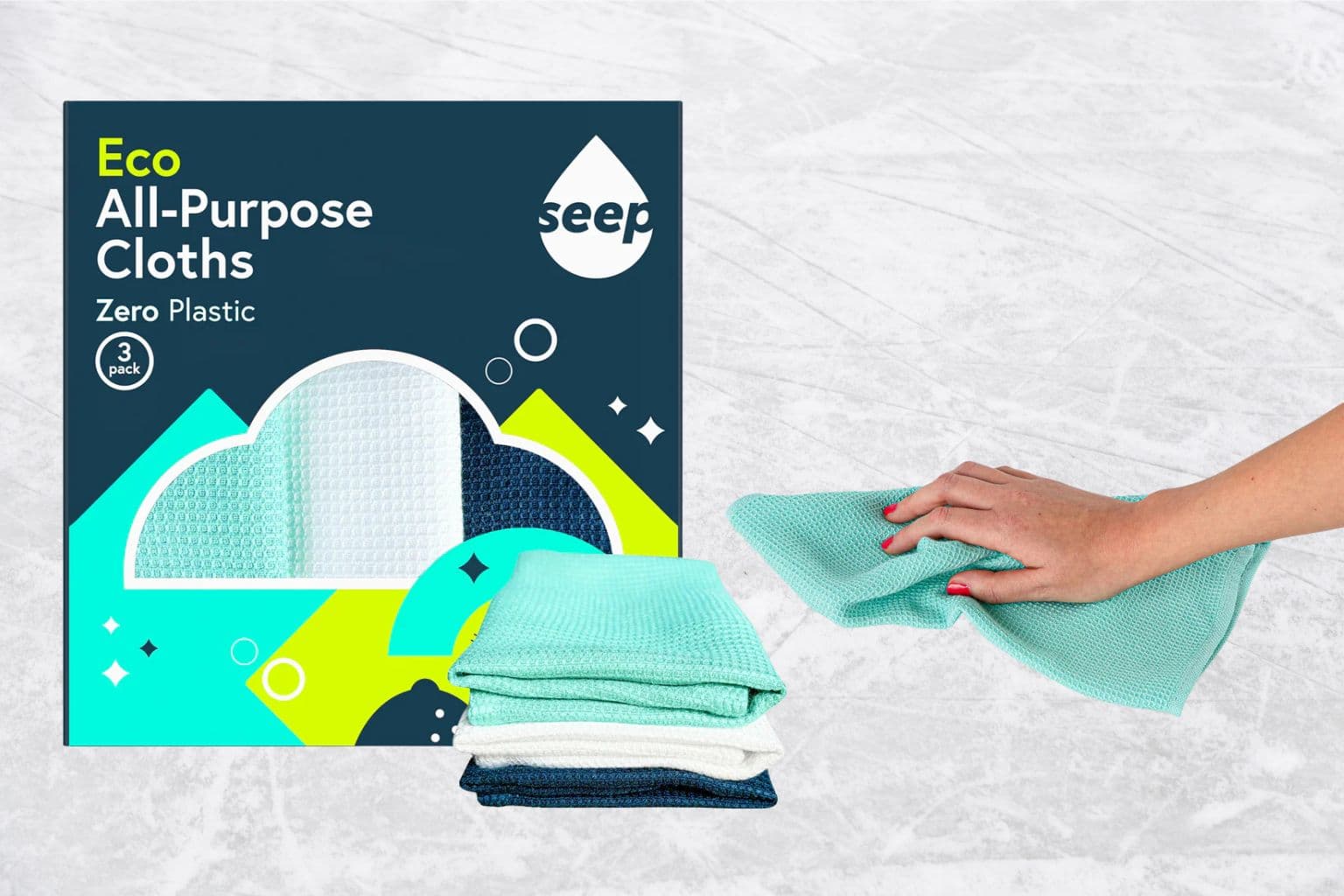
Want to cut plastic from your cleaning routine? The Seep Company’s Eco All-Purpose Cloths use plant-based lyocell viscose for durable, effective cleaning without microplastic shedding—designed for everyday surfaces.
If you rely on synthetic microfiber cloths, you may be cleaning effectively but adding to plastic waste over time. Microfiber can shed tiny plastic fibers during use and washing, and those fibers can end up in waterways.
The Seep Company’s Eco All-Purpose Cloths give you a plastic-free option that still works for daily messes. They’re made from lyocell viscose, a plant-based fiber designed to handle both dry dusting and wet cleaning. You get a cloth that feels soft, cleans well, and supports a lower-waste routine.
What Makes These Cloths Different
You’re getting a cloth made entirely from lyocell viscose, not plastic-based microfiber. That switch changes both the feel and the environmental impact.
Here’s what stands out in everyday use:
- Plastic-free fibers: You avoid the microplastic shedding linked to synthetic cloths.
- Soft, non-scratch texture: You can wipe glass, stainless steel, and polished wood without worrying about abrasion.
- Longer usable life: With proper care, you can typically use one cloth for months rather than replacing it every week or two.
- Designed for versatility: You can use the same cloth for dusting, wiping spills, and general surface cleaning.
Where You’ll Use Them Most
You don’t need separate cloths for every room. These work across common household surfaces.
Kitchen
You can wipe counters, handle greasy splashes, and clean appliance exteriors without the cloth falling apart quickly. Absorbency helps you pick up spills instead of smearing them.
Bathroom
You can use them on mirrors, sinks, and tile surfaces. They work with or without cleaning products, and they’re useful in high-moisture areas.
Furniture and delicate finishes
You can dust wood furniture and wipe finished surfaces with less risk of micro-scratching compared to rougher cloths.
Glass and windows
When paired with a suitable cleaner, you can polish away fingerprints and smudges without leaving lint behind after the first few washes.
How You Should Wash and Maintain Them
If you want the longest lifespan, your care routine matters.
- Machine wash at 30°C to clean the cloth while protecting the fibers.
- Air dry to avoid heat damage and premature wear.
- Skip bleach and tumble drying because both can weaken plant-based fibers.
You may notice slight shrinkage after early washes. That’s normal for natural textiles and doesn’t reduce cleaning performance.
What to Expect vs Microfiber
If you’re used to microfiber, you’ll notice a different feel right away. Lyocell viscose is softer and more fabric-like, which can make it more comfortable during longer cleaning sessions.
You’ll likely notice these practical differences:
- Strong absorbency for spills and wet wiping
- Gentle surface contact for sensitive finishes
- Early linting that fades after the first few washes as loose fibers rinse out
A Simple Swap That Fits Your Routine
If you want to reduce plastic at home without changing how you clean, this is an easy switch. You still get a cloth that handles daily mess, but you move away from plastic-based materials.
Each cloth is about 32 cm × 32 cm, so it fits the same jobs you already use a standard cleaning cloth for. When it’s time to replace it, you can recycle it through textile waste where available.