
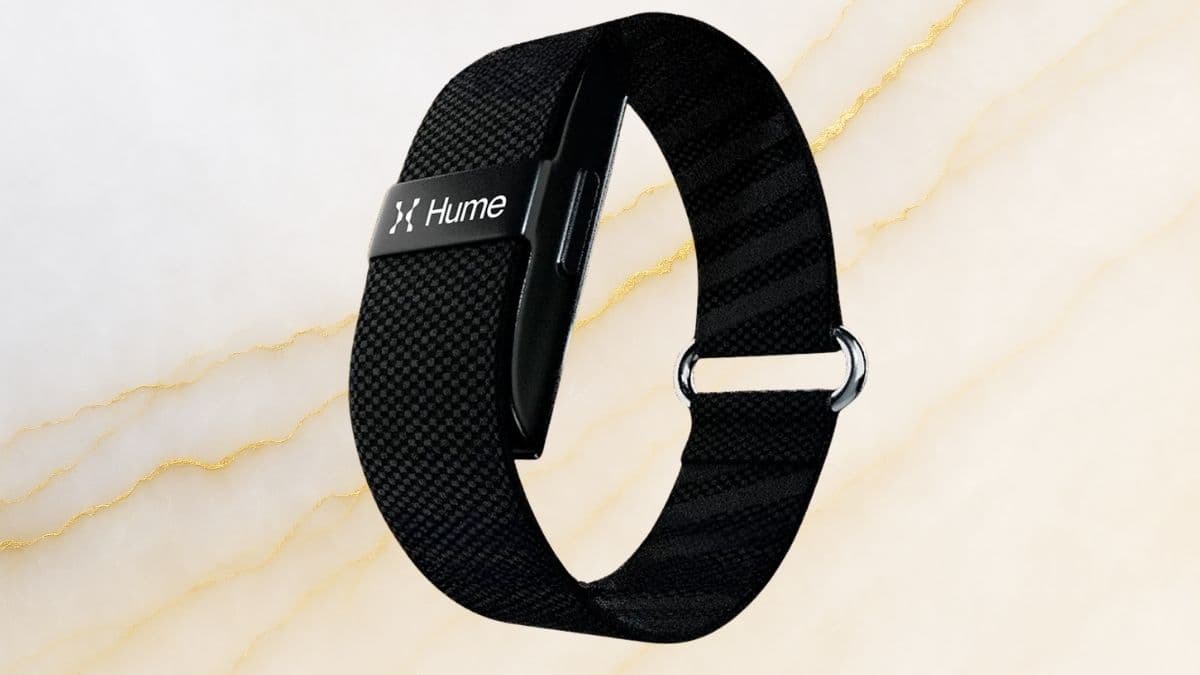
Wondering why your smartwatch data isn’t improving how you feel? See the difference between tracking and understanding, and how Hume turns metrics into practical next steps.
You can track almost everything now. Sleep duration, steps, calories, resting heart rate, HRV, stress signals, and workout load show up in neat charts every day.
But more numbers don’t automatically lead to better health. You might know you slept 6.2 hours and took 8,743 steps, yet still feel unsure what to do next. That’s the paradox: more information, less clarity.
Tracking vs. understanding: what changes when you cross the line
Tracking is passive. Your devices record what happened and present it back to you.
Understanding is interpretive. You connect those readings to your baseline, your recent choices, and your current needs. Instead of “you slept 6 hours,” you learn what that sleep likely did to your recovery, mood, and training readiness.
Here’s the distinction in plain terms:
| What you’re doing | What you get | What’s missing | What understanding adds |
| Tracking metrics | Numbers and trends | Context and priority | “What matters today” |
| Chasing targets | Motivation (sometimes) | Individual variability | Targets that fit you |
| Viewing metrics separately | Isolated dashboards | Cause-and-effect links | Patterns across signals |
| Reacting to alerts | Short-term fixes | Long-term strategy | Sustainable adjustments |
This is why two people can follow the same routine and get opposite outcomes. Your body doesn’t respond like a template.
Multiple perspectives on “better health data”
It’s worth acknowledging that people want health data for different reasons. Each perspective changes what “useful” looks like.
1) The performance perspective (training-focused)
You want data to help you push harder at the right time. The limitation is that performance tools often reward effort even when your recovery signals say “not today.”
2) The wellness perspective (energy, mood, consistency)
You want to feel better day to day. The limitation is that trackers can spotlight “missed goals” and add guilt instead of guidance, especially when life gets busy.
3) The medical-minded perspective (risk reduction)
You want early signals and trend awareness. The limitation is that consumer wearables aren’t diagnostic tools, and false alarms can increase anxiety.
4) The behavior-change perspective (habit building)
You want simple feedback loops. The limitation is that too many metrics can create decision fatigue, making it harder to stick to any plan.
A smarter approach doesn’t pick one perspective. It helps you shift between them based on your goals and season of life.
Why traditional tracking often fails in real life
Most platforms do three things well: measure, display, and notify. They struggle with interpretation.
You’ll often see step goals celebrated even if your resting heart rate is trending up. You’ll get sleep reminders that ignore the fact you trained late, had a stressful day, or changed your nutrition.
Over time, this can lead to predictable outcomes:
- You stop checking the app because it doesn’t answer “what should I do now?”
- You over-focus on a single metric that may not be the best lever for you
- You follow generic advice that clashes with your recovery needs
How Hume shifts you from data to decisions
Hume is built around “health intelligence,” not just tracking. Instead of treating metrics like independent checkboxes, it links them into a cohesive story.
At the center is personalization. Hume learns your baseline and flags changes that matter for you, not changes that look unusual compared to population averages.
This is where interpretation becomes actionable. When multiple signals move together, you get clearer direction. For example, a dip in HRV plus a rise in resting heart rate often points to accumulated stress or incomplete recovery, not “you need more steps.”
What “understanding” looks like across key areas
You don’t need dozens of metrics. You need the right connections.
Body composition (beyond weight)
Weight alone is noisy. A stable scale number can hide fat loss, muscle gain, or changes in visceral fat. Composition gives you a clearer “what’s changing” story.
HRV (your recovery and stress context)
HRV becomes useful when you compare it to your baseline and recent load. A low reading after intense training can be normal adaptation, not a red flag.
Sleep quality (not just hours)
Hours matter, but so do disruptions, timing, and recovery markers. You can sleep “enough” and still under-recover if quality is poor.
Stress load (the missing variable)
Stress isn’t just mental. It’s also physical load, late workouts, poor sleep, and insufficient recovery. When stress is quantified, your other metrics start making more sense.
Potential objections and limitations to keep in mind
A balanced view matters, especially in health tech. Here are common limitations you should consider:
- Wearables can be inconsistent. Sensor accuracy varies by device, fit, skin tone, and movement patterns.
- AI insights depend on good inputs. If your data is incomplete or irregular, recommendations may be less reliable.
- Correlation isn’t always causation. A pattern can suggest a link, but it’s not proof of a single cause.
- Not everything measurable is meaningful. Some metrics are interesting but not useful for your goal.
- Health guidance isn’t medical care. If you have symptoms or concerns, you still need a clinician.
If a platform acknowledges these limits and still helps you choose better actions, that’s usually a sign you’re getting real value.
The shift that changes your outcomes
When you move from tracking to understanding, you stop chasing numbers for their own sake. You start using data as a decision tool.
The goal isn’t perfect metrics. It’s better choices, made with your baseline in mind, and adjusted as your life changes. That’s how health data becomes health literacy, and how Hume aims to turn measurement into progress.