
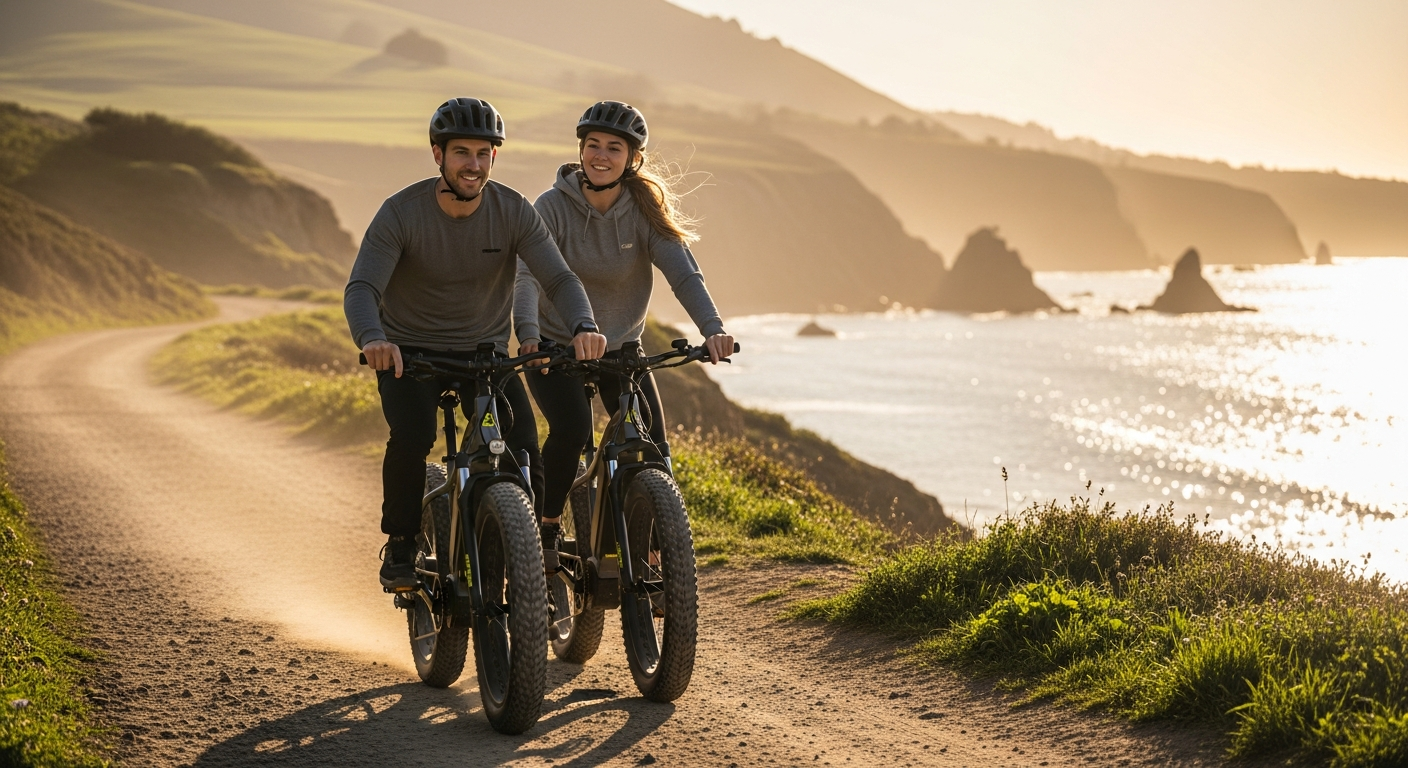
Discover how to safely carry a passenger on the V20 Pro Electric Fatbike. Learn about tandem features, weight limits, comfort tips, and legal considerations for two-person riding in the Netherlands.
The V20 Pro stands apart from standard electric fatbikes because it was designed with passenger comfort in mind. Its extended saddle, optional footrests, and robust dual suspension system create a stable platform for two riders. With a 250W motor and 48V battery system that complies with Dutch regulations, this fatbike delivers the power and range needed to handle the extra weight while keeping both riders safe and comfortable.
Explore the V20 Pro’s tandem capabilities and start your two-person cycling journey today.
Extended Saddle Design: Built for Two Riders
Overview of the Two-Person Saddle
The V20 Pro’s extended saddle represents a fundamental departure from conventional single-rider seats. Rather than retrofitting a standard bike with aftermarket tandem components, Fatbikeskopen.nl emphasizes that this fatbike features purpose-built seating from the factory. The extended design provides ample room for both a primary rider and a rear passenger without forcing either person into an uncomfortable or precarious position.
Ergonomic Weight Distribution
The saddle’s engineering prioritizes even weight distribution across its entire surface area. This design philosophy prevents pressure points that typically plague makeshift tandem setups. The broader seating surface means neither rider bears excessive pressure on sensitive areas, which becomes increasingly important during longer journeys where comfort directly impacts the overall experience.
Adjustability for Different Riders
The extended saddle accommodates various rider sizes and preferences through thoughtful design rather than complex mechanical adjustments. The seat height remains adjustable using the standard quick-release mechanism, allowing you to position both riders at an optimal height relative to the pedals and handlebars. This flexibility means the V20 Pro works equally well whether your passenger is significantly smaller or nearly your size.
Padding and Material Quality
Premium padding materials ensure that extended tandem rides remain comfortable rather than becoming endurance tests. The saddle’s covering resists weather and abrasion, maintaining its integrity through seasons of use. Quality construction means the extended saddle doesn’t sag or degrade prematurely under the combined weight of two riders.
Comparison with Aftermarket Options
Many tandem e-bike owners invest in expensive aftermarket seats that promise superior comfort. The V20 Pro’s stock saddle eliminates this added expense by delivering comfort that rivals or exceeds these premium alternatives. This integrated approach means fewer compatibility issues and a cohesive design that works seamlessly with the bike’s overall geometry.
Maintenance for Longevity
Keeping the extended saddle in optimal condition requires minimal effort. Regular cleaning with mild soap and water prevents dirt accumulation, while occasional inspection ensures the mounting hardware remains secure. Unlike complex mechanical systems, saddle maintenance represents straightforward, preventive care that any rider can manage.
Optional Footrests and Passenger Support Systems
Purpose and Strategic Placement
Optional footrests serve a critical function beyond mere comfort—they significantly enhance passenger stability and safety. Positioned on the frame near the rear wheel, these footrests provide the rear rider with a solid platform for their feet, eliminating the awkward dangling sensation that makes many passengers anxious during tandem cycling. This stability builds confidence and allows passengers to relax rather than brace themselves throughout the ride.
Stability and Fatigue Reduction
When passengers have nowhere secure to place their feet, they unconsciously tense their leg muscles to maintain balance. Footrests eliminate this constant muscular engagement, substantially reducing leg and lower back fatigue. This difference becomes particularly noticeable during longer journeys where comfort directly correlates with enjoyment and safety.
Installation and Compatibility
Installing footrests on the V20 Pro involves straightforward bolt-on assembly that most riders complete in under 15 minutes. The mounting points are pre-drilled on the frame, ensuring compatibility across different V20 Pro model years. No welding, drilling, or permanent modifications are required, making this an entirely reversible upgrade.
Alternative Support Solutions
If footrests aren’t installed, passengers can stabilize themselves by holding the primary rider’s waist or using grab handles if available. While functional, these alternatives require the passenger to maintain active engagement with the bike rather than relaxing into a supported position. Footrests represent the superior approach for regular tandem riding.
Safety Benefits of Proper Foot Positioning
Secure foot placement directly impacts the rear rider’s ability to manage weight shifts and maintain balance. Passengers with stable foot support instinctively move more naturally during starts, stops, and turns, reducing the likelihood of destabilizing movements that could affect the entire bike’s handling characteristics.
Cost-Benefit Analysis
Footrests typically cost between €50 and €100, making them a modest investment relative to the bike’s overall price. The improvement in passenger confidence and comfort justifies this expense for anyone planning regular tandem riding. Many riders consider footrests essential rather than optional after their first few tandem trips.
Weight Capacity and Load Management
Understanding Total Weight Limits
The V20 Pro accommodates a combined weight of approximately 200-210 kg, which includes both riders plus any cargo. This weight limit reflects the bike’s robust frame design, suspension system, and brake components. Exceeding this limit risks component damage and compromises safety for both riders.
Motor and Suspension Under Dual Load
The 250W motor maintains consistent power delivery even with two riders aboard, though acceleration naturally takes slightly longer compared to solo riding. The dual suspension system flexes slightly more under tandem weight, absorbing impacts that might feel harsher on lighter bikes. This additional suspension travel actually enhances comfort for both riders on rough terrain.
Battery Range with Passenger Weight
Carrying a passenger increases energy consumption, typically reducing overall range by 15-25% depending on assistance levels and riding conditions. The 48V 15Ah battery still delivers impressive range of approximately 45-65 kilometers with two riders, sufficient for most daily commutes and recreational outings. Understanding this realistic expectation prevents frustration during longer journeys.
Weight Distribution Techniques
The rear rider should sit slightly forward on the extended saddle, positioning their center of gravity closer to the bike’s main frame. This positioning distributes weight more efficiently than having the passenger sit at the very back of the saddle. Proper weight distribution improves handling characteristics and reduces strain on the rear wheel.
Real-World Range Expectations
Factors including terrain gradient, rider fitness level, assistance setting, and weather conditions all influence actual range. A tandem pair riding on flat terrain with moderate assistance can expect the full 45-65 kilometer range, while hilly routes with maximum assistance might reduce this to 35-45 kilometers. Testing your specific riding conditions helps establish realistic expectations.
Safety When Approaching Limits
Operating safely means respecting the weight capacity without question. A combined weight approaching or exceeding 210 kg creates excessive stress on the frame, wheels, and drivetrain components. More importantly, it compromises the handling and braking performance that keeps both riders safe in traffic and emergency situations.
Suspension Performance with Two Riders
Dual Suspension Adaptation to Tandem Loads
The V20 Pro’s air-sprung front fork and rear suspension were engineered with tandem riding in mind. These components automatically adapt to the additional weight of a passenger, compressing slightly to maintain proper ride height and suspension travel. This adaptive quality means the bike performs nearly identically for solo and tandem riders, though with enhanced bump absorption during two-person operation.
Tuning Adjustments for Maximum Comfort
Most V20 Pro owners never need to adjust their suspension settings between solo and tandem riding. However, riders who frequently switch between modes might consider slightly increasing air pressure in the front fork when carrying passengers regularly. This simple adjustment prevents excessive compression that could cause the bike to feel overly soft or bottom out on larger impacts.
Shock Absorption Across Both Riders
Dual suspension distributes impact forces throughout the bike’s structure rather than concentrating them in a single point. When both riders experience the same bump simultaneously, the suspension’s combined effect provides superior comfort compared to single-suspended alternatives. Rough terrain that might cause discomfort on a solo ride feels noticeably smoother with a passenger aboard.
Solo Versus Tandem Comfort Comparison
Many riders report that tandem mode actually feels smoother than solo riding, thanks to the passenger’s weight providing ballast that stabilizes the bike’s motion. The additional mass dampens oscillations, creating a more composed ride quality. This phenomenon explains why some couples prefer tandem riding over switching off as the primary rider.
Maintenance Under Increased Load
Regular suspension inspection becomes slightly more important with consistent tandem use. Check air pressure in the front fork monthly, and inspect seals for signs of leakage. The rear suspension components should be professionally serviced every 12-18 months if used regularly with a passenger. These maintenance intervals prevent premature component wear.
Performance Across Diverse Terrain
The suspension excels on asphalt and gravel, smoothing vibrations that would otherwise transmit to both riders. Sandy terrain sees improved traction as the suspension maintains consistent tire contact with the loose surface. Even snow riding benefits from the enhanced shock absorption, as the suspension prevents the bike from bouncing erratically in soft conditions.
Motor Power and Pedal Assistance for Tandem Riding
250W Motor Performance with Two Riders
The 250W motor provides adequate power for tandem riding, maintaining responsive acceleration even with two adults aboard. This power level represents the legal maximum for Netherlands e-bikes, offering a strategic balance between performance and regulatory compliance. The motor feels noticeably stronger when assisting solo riders but delivers satisfying support for tandem pairs at reasonable speeds.
Pedal Assistance Levels and Effectiveness
The V20 Pro’s pedal assist system monitors your pedaling cadence and adjusts motor contribution accordingly. This responsive assistance feels particularly valuable during tandem riding, where the added inertia of a second rider becomes apparent during acceleration and hill climbing. The motor seamlessly bridges the gap between pedal power and the bike’s total mass.
Power Delivery at the 25 km/h Speed Limit
The legal 25 km/h assisted speed applies whether riding solo or with a passenger. The motor maintains consistent power delivery up to this threshold, meaning tandem riders enjoy the same assisted velocity as solo riders despite the additional weight. This consistency creates predictable performance across all riding scenarios.
Battery Consumption in Tandem Mode
Using maximum assistance with a passenger increases battery drain by roughly 30-40% compared to solo riding with equivalent assistance levels. More moderate assistance levels consume proportionally less, with eco mode providing extended range even in tandem configuration. Battery management becomes a practical consideration for longer journeys.
Strategies for Optimizing Motor Efficiency
Maintaining momentum through gentle pedaling reduces reliance on maximum motor assistance. Anticipating hills and applying gradual pedaling power prevents sudden motor strain. Lower assistance levels prove sufficient for many riding conditions, extending range and battery lifespan while still providing meaningful support to both riders.
Tandem Motor Performance Versus Competitors
The V20 Pro’s 250W motor performs comparably to other Dutch e-fatbikes designed for tandem use. Some premium models offer slightly higher wattage, but these exceed legal limits or drain batteries more rapidly. The V20 Pro’s motor strikes an effective balance that makes it among the most practical choices for regular tandem riding.
Experience the V20 Pro’s reliable motor performance designed specifically for two-person riding.
Braking and Control with Passenger Weight
Double Hydraulic Disc Brake Capability
The dual hydraulic disc brake system was engineered to handle the combined weight and momentum of two riders reliably. These brakes provide powerful, modulated stopping force that gives confident control whether decelerating gradually or executing emergency stops. The hydraulic system’s consistency means brake performance remains uniform regardless of weather conditions or extended use.
Stopping Distance Considerations
With two riders aboard, stopping distance increases compared to solo riding due to additional kinetic energy. A tandem pair traveling at 20 km/h requires more distance to stop completely than a solo rider at the same speed. Understanding this extended stopping distance becomes critical when navigating traffic or planning emergency maneuvers. Anticipatory braking prevents situations requiring maximum stopping power.
Brake Modulation for Smooth Deceleration
Gentle, progressive brake application provides comfortable deceleration for both riders. Abrupt braking can destabilize the passenger or cause skidding in slippery conditions. Developing smooth braking technique—gradually increasing pressure rather than sudden lever application—improves passenger confidence and overall safety.
Passenger Position Effects on Stability
The rear rider’s position directly influences braking stability. A passenger positioned too far back increases rear-wheel load during braking, potentially causing the rear wheel to skid before the front wheel loses traction. Ideally, the passenger should sit slightly forward, distributing weight more evenly and improving brake balance for both wheels.
Maintenance Schedule for Tandem Use
Hydraulic brake systems require periodic fluid checks to ensure consistent performance. With two riders regularly aboard, inspect brake pads every 2-3 months for wear. The additional stopping force demands place higher wear on brake components, necessitating more frequent inspections compared to solo riding. Professional servicing annually maintains optimal brake function.
Emergency Braking Procedures
Both riders benefit from practicing emergency stops in safe environments before attempting them in traffic. The primary rider should apply brakes gradually but firmly, while the rear rider maintains position and avoids sudden movements that could affect balance. Clear communication before emergency situations helps both riders respond appropriately when quick stops become necessary.
Balance, Steering, and Handling Techniques
20×4 Inch Fat Tires and Tandem Stability
The exceptionally wide fat tires create a substantial contact patch that anchors the bike firmly to the ground, even with two riders aboard. This wide footprint provides inherent stability that makes tandem riding on the V20 Pro feel manageable even for riders new to two-person cycling. The tires’ generous grip characteristics prevent slipping during acceleration or cornering.
Steering Adjustments for Passenger Configuration
Steering feels slightly heavier with a passenger aboard, as the additional weight increases the bike’s overall inertia. Rather than being a drawback, this heavier steering provides more stability and predictability. The primary rider quickly adapts to this subtle difference, typically within the first few tandem rides. Slight steering input now produces proportional response rather than the quicker reactions of solo riding.
Center of Gravity Shifts and Handling Impact
The passenger’s position slightly raises the bike’s center of gravity compared to solo riding. This higher pivot point actually improves cornering stability by reducing the likelihood of rolling. The bike becomes less prone to tipping in hard turns, making tandem mode feel planted and secure rather than precarious.
Cornering Strategies for Confident Turns
Leaning into corners should be smoother and more gradual when carrying a passenger. Quick weight shifts or aggressive leaning can unsettle the rear rider. Experienced tandem riders develop a smooth, flowing cornering style that maintains both riders’ comfort and confidence. Practice in parking lots before attempting tight corners in traffic.
Starting and Stopping Techniques
Beginning from a complete stop requires slightly more deliberate acceleration to avoid lurching that startles the passenger. Smooth pedaling power combined with gradual motor assistance creates seamless starts. When stopping, the primary rider should announce the stop verbally, allowing the passenger time to prepare and maintain balance as the bike decelerates.
Building Confidence as a New Tandem Team
Starting with short, relaxed rides on familiar routes allows both riders to acclimate to the tandem experience. Open communication between riders—discussing comfort levels, fears, and preferences—builds trust essential for safe, enjoyable riding. As confidence grows, gradually introducing more challenging terrain and faster speeds becomes natural and rewarding.
Legal Requirements for Two-Person E-Bike Riding in the Netherlands
Dutch Regulations for Tandem E-Bike Riding
Dutch law classifies the V20 Pro as a pedal-assist e-bike (fiets met trapondersteuning) rather than a moped or motorized vehicle, even when carrying two riders. This classification means tandem riding on the V20 Pro is fully legal under existing regulations. The 250W motor and 25 km/h assisted speed limit ensure compliance across all Netherlands jurisdictions.
Passenger Age and Requirements
The Netherlands does not impose specific age restrictions for rear passengers on pedal-assist e-bikes like the V20 Pro. However, practical considerations suggest passengers should be old enough to maintain balance and follow safety instructions. Parents using the V20 Pro with younger children should ensure the child can sit securely and reach the footrests or handhold.
Insurance and Liability Considerations
Standard bicycle insurance typically covers pedal-assist e-bikes regardless of whether they’re used for solo or tandem riding. Confirm with your insurance provider that your policy explicitly covers passenger use. From a liability perspective, the primary rider bears responsibility for ensuring safe operation and passenger safety, similar to automotive situations.
Helmet Requirements Under Dutch Law
Dutch law does not mandate helmet use for e-bike riders, including those on the V20 Pro. However, many safety organizations recommend helmets for both riders regardless of legal requirements. Tandem riding arguably increases the case for protective headgear, given the added complexity of two-person operation.
Municipal Variations in Regulations
While national regulations permit tandem riding on V20 Pro electric fatbikes, individual municipalities might have specific ordinances governing e-bike use in particular areas. Checking local regulations before using tandem mode in a new city ensures compliance. Most municipalities follow national guidelines, making problems uncommon.
Documentation and Registration Needs
The V20 Pro requires no registration or licensing for tandem operation in the Netherlands. No documentation proves the extended saddle’s legitimacy or passenger authorization. This administrative simplicity contrasts sharply with motorized vehicles, making the V20 Pro exceptionally practical for couples and partners.
Passenger Comfort and Long-Distance Riding
Seating Comfort Features for Extended Rides
The extended saddle’s padding and width combine to create genuine comfort during hours of riding, not merely adequate support. The saddle’s height adjustment allows passengers to find their optimal position relative to the handlebars and pedals. Proper positioning prevents lower back strain that plagues makeshift tandem arrangements.
Clothing and Gear Recommendations
Rear passengers should wear comfortable, non-restrictive clothing that allows full leg motion. Avoid loose clothing that might catch on components. Secure footwear with adequate traction on the footrests prevents slipping during acceleration or braking. Weather-appropriate layers allow temperature regulation without dismounting.
Break Frequency and Route Planning
Multi-hour tandem rides benefit from planned rest stops every 60-90 minutes, allowing both riders to stretch and hydrate. Planning routes with scenic viewpoints or cafes creates natural stopping points. On longer journeys, alternating who serves as primary rider prevents fatigue concentration.
Communication Systems Between Riders
Clear verbal communication between primary and rear riders ensures everyone understands upcoming hazards or route changes. Establish simple signals for common situations—gentle hand squeezes to indicate stopping, verbal announcements for turns. This communication framework prevents surprises that could destabilize the passenger.
Vibration and Noise Characteristics
The V20 Pro generates minimal vibration compared to lighter bikes, thanks to its substantial frame and fat tires. The electric motor produces quieter assistance than combustion engines, creating a peaceful riding experience for both riders. Most passengers find the noise levels pleasant rather than problematic.
Fatigue Reduction Strategies
Supporting the rear rider’s weight through footrests and proper saddle positioning dramatically reduces fatigue compared to riders maintaining balance through muscular tension. Adequate padding, climate-appropriate clothing, and smooth riding technique all contribute to passenger comfort. Regular breaks prevent fatigue from accumulating into discomfort.
Real-World Tandem Riding Scenarios
Daily Commuting with a Partner
The V20 Pro excels as a commuter for couples, eliminating the need to coordinate separate bikes or travel schedules. Weather protection becomes easier when one rider manages routing while the other maintains balance and comfort. Regular commuting develops the tandem coordination that makes the experience increasingly enjoyable.
Weekend Recreational Rides and Adventures
Exploring new routes together transforms cycling from solo transportation into shared experience. Weekend tandem rides on the V20 Pro allow couples to visit destinations that might feel isolated on solo journeys. The bike’s range supports day trips covering 40-60 kilometers round-trip with moderate assistance.
Urban Navigation and Parking
The V20 Pro’s fat tires provide stability when navigating cobblestone streets and uneven pavement common in Dutch cities. Parking the bike requires the same space as any standard fatbike—its extended saddle doesn’t significantly increase length. Tandem pairs can navigate city centers as efficiently as solo riders.
Weather Adaptability in Tandem Mode
Rain riding with a passenger requires slightly more cautious braking and cornering, but the fat tires maintain grip in wet conditions. Wind affects tandem bikes slightly more than solo machines due to increased frontal area, but the added inertia provides stability. Cold and wet weather becomes more tolerable when shared with a companion.
Multi-Day Touring Experiences
Extended touring trips become feasible for couples using the V20 Pro. With careful load planning and strategic battery charging, tandem pairs can tour across multiple days. Conversely, some riders might consider battery range limitations for multi-day travel, instead using the V20 Pro for day excursions and planning return routes home.
Safety Precautions in Traffic and High Speed
Both riders should remain highly visible through lights, reflectors, and bright clothing. Primary riders should communicate continuously with rear passengers about approaching hazards. Maintaining speeds well below maximum assistance limits provides greater reaction time and braking margin in urban traffic.
Comparing V20 Pro Tandem Capability to Other E-Fatbikes
Tandem Features Versus Competitors
The V20 Pro’s extended saddle design represents genuine tandem engineering rather than an adaptation of single-rider components. Most competing e-fatbikes lack the sophisticated saddle design, requiring owners to source aftermarket solutions. This integrated approach gives the V20 Pro a decisive advantage for anyone prioritizing tandem capability.
Price-to-Value Proposition
At €999–€1199, the V20 Pro delivers exceptional value for couples seeking a legitimate tandem e-fatbike. Competitors charging significantly more offer marginal improvements in tandem-specific features. The V20 Pro’s affordability makes it accessible to broader audiences while maintaining premium build quality.
Extended Saddle Design Advantages
The stock saddle’s engineering exceeds many aftermarket alternatives in comfort and durability. Unlike bolt-on solutions, the integrated design distributes loads through the frame naturally, reducing stress on mounting points. This fundamental engineering approach creates superior long-term reliability.
Motor Power and Range in Tandem Configuration
The 250W motor provides comparable performance to other Dutch-legal e-fatbikes during tandem operation. The 48V 15Ah battery’s range remains competitive even with two riders aboard. These specifications place the V20 Pro among the top choices for practical tandem e-fatbike use.
Suspension and Comfort Comparisons
The dual suspension system—air-sprung front fork and rear suspension—delivers comfort rivaling premium-priced alternatives. Tandem riders frequently report that the V20 Pro’s suspension feels more composed than competitors’ systems, providing smooth rides even on challenging terrain.
Reasons for V20 Pro’s Tandem Popularity
The combination of thoughtful tandem-specific design, competitive pricing, and reliable performance explains why couples and partners consistently choose the V20 Pro. Positive word-of-mouth from existing tandem users drives continued popularity. The bike’s presence at Fatbikeskopen.nl and other Dutch retailers ensures widespread availability.
Maintenance and Care for Tandem Use
Component Wear Patterns with Passengers
Regular tandem use accelerates wear on certain components compared to solo riding. Tires experience moderately increased wear due to additional rolling resistance. The drivetrain components—chain, sprockets, and derailleurs—undergo slightly greater stress. Brake pads wear faster under the demands of managing two riders’ weight.
Tire Pressure and Tread Management
Maintaining appropriate tire pressure becomes more critical with tandem use. Check tire pressure monthly, as the increased weight causes slightly faster pressure loss. Inspect tread depth regularly to ensure adequate grip in wet conditions. Fat tires’ inherent traction means tread depth becomes less critical than on narrow tires, but don’t neglect inspection.
Chain and Drivetrain Care
Lubricating the chain every 200-300 kilometers maintains smooth shifting and prevents premature wear. The additional power transmission strain during tandem riding demands slightly more frequent maintenance attention. Inspect derailleur cable tension periodically, adjusting if shifting becomes imprecise.
Battery Longevity During Tandem Operation
The 48V 15Ah battery maintains longevity through normal tandem use if properly cared for. Avoid fully depleting the battery—charge when reaching 20% remaining capacity. Store the battery indoors at moderate temperature during extended periods without riding. These standard practices extend battery lifespan regardless of tandem versus solo use.
Suspension Servicing for Two-Person Riding
Annual suspension servicing becomes advisable for riders regularly using tandem mode. Professional mechanics check seal integrity, air pressure in the fork, and rear shock function. Proactive servicing prevents minor issues from developing into failures that compromise ride quality or safety.
Tandem-Specific Maintenance Checklist
Beyond standard e-fatbike maintenance, tandem riders should inspect the extended saddle’s mounting bolts monthly, ensure footrests remain secure if installed, and verify that the frame shows no stress cracks near welded joints. These checks take minutes but provide assurance that the bike remains safe for two-person operation.
Making the Most of Your V20 Pro as a Tandem Machine
Accessory Recommendations for Two-Person Riding
Rack systems designed for cargo become particularly valuable when traveling as a tandem, allowing you to carry supplies for both riders without sacrificing comfort. Integrated lights ensure visibility for extended bikes requiring increased safety attention. Quality fenders prevent road spray from affecting both riders.
Customization Options for Enhanced Comfort
Aftermarket grips with ergonomic shaping reduce hand fatigue for primary riders managing tandem steering demands. Suspension seat posts improve overall ride quality for the primary rider. Passenger-oriented customizations—enhanced footrests or grab handles—increase comfort and confidence for rear riders.
Route Planning Tools and Apps
Apps designed for tandem cycling or longer journeys help both riders plan appropriate routes. Services like Komoot and Strava allow marking intermediate rest stops and identifying terrain difficulty. Planning routes together builds excitement and ensures both riders understand the day’s experience.
Community Resources and Tandem Riding Groups
Dutch cycling communities increasingly embrace tandem riding, with local groups organizing tandem-focused events and routes. Online forums dedicated to the V20 Pro connect owners, facilitating knowledge sharing about tandem techniques and customizations. Engaging with these communities enriches the ownership experience.
Introducing New Passengers to Tandem Riding
Starting on flat, traffic-free paths allows nervous passengers to build confidence without external pressures. Explain handling characteristics and communicate about upcoming terrain changes. Celebrating completion of first tandem rides builds enthusiasm for future adventures. Patient introduction transforms anxious passengers into enthusiastic participants.
Progressive Skill Development for Tandem Teams
Tandem riding skills develop through gradual exposure to varied conditions. Mastering calm-weather riding on familiar routes provides the foundation for wind and rain experience. Introducing hill climbing and light trail riding builds competence progressively. This evolutionary approach creates capable, confident tandem teams.
Your V20 Pro: A Genuine Two-Person Adventure Platform
The V20 Pro Electric Fatbike transcends the typical single-rider e-bike category—it’s genuinely engineered for two. From its thoughtfully designed extended saddle to its robust dual suspension and powerful motor, every component works in harmony to deliver a safe, comfortable, and exhilarating tandem experience. The technical specifications, practical considerations, and real-world applications outlined throughout this guide demonstrate how tandem riding on this bike becomes both accessible and rewarding.
What truly sets the V20 Pro apart is its ability to handle the extra weight without compromising performance or comfort. The 48V 15Ah battery still delivers impressive range, the hydraulic disc brakes provide confident stopping power, and the fat tires grip confidently whether navigating city streets or exploring sandy trails—all while carrying two people. The legal compliance with Dutch regulations means you can ride freely without licensing concerns, making it an exceptionally practical choice for couples and partners seeking shared mobility.
Whether you’re planning daily commutes with a partner, weekend adventures with family, or simply want the flexibility to occasionally carry a passenger, the V20 Pro delivers on its promise. The investment of €999–€1199 becomes even more compelling when you consider you’re getting a premium two-person e-fatbike that performs reliably across diverse conditions. Start with shorter tandem rides to build your confidence, experiment with different passenger positions to find what works best, and soon you’ll discover why so many Dutch riders have made the V20 Pro their go-to choice for shared cycling experiences.