
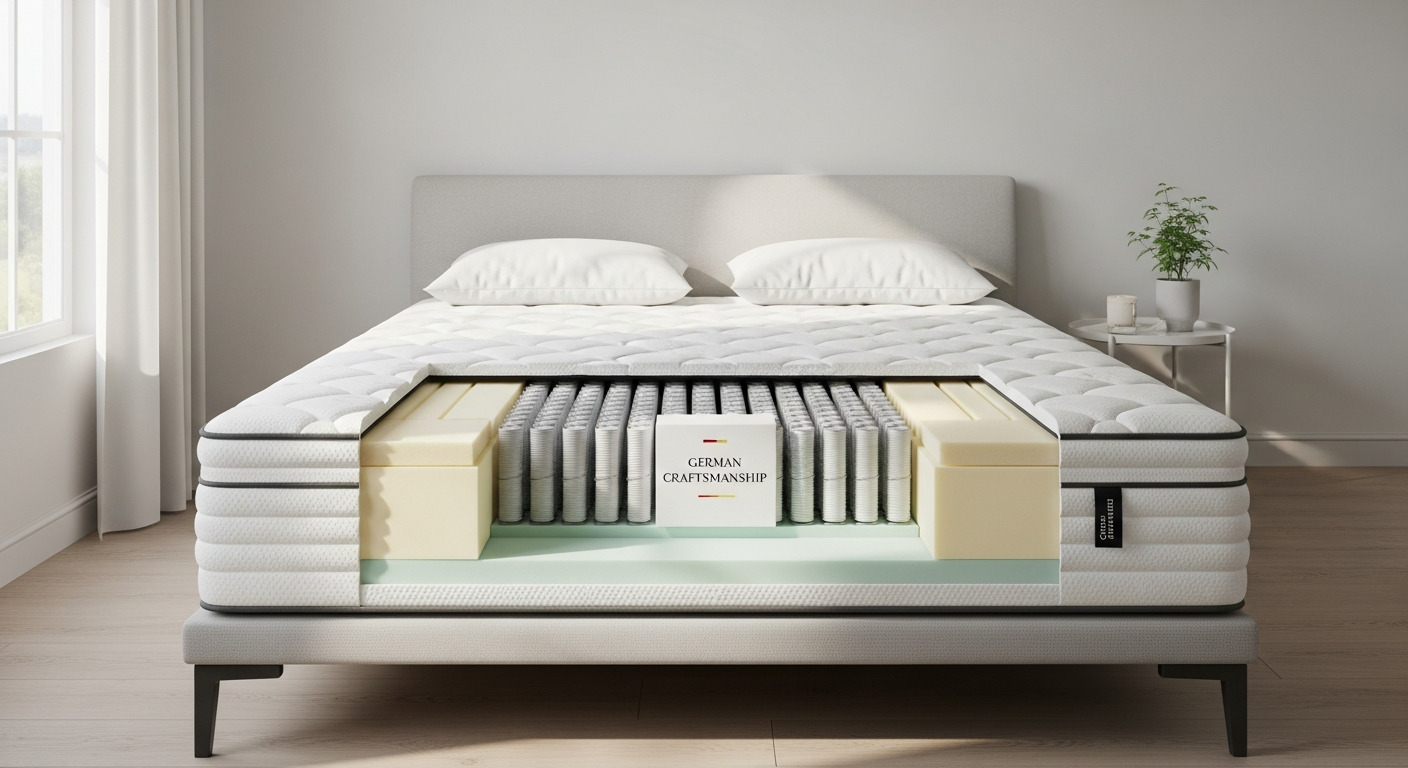
Discover what makes the Verapur Ortho Plus Pocket Spring Mattress a top-rated choice. Explore its 7-zone support system, durability, and whether it’s worth the investment for better sleep.
Back pain keeps millions of people awake at night. Whether you're tossing and turning every few hours or waking up stiff and sore, a poor mattress is often the silent culprit. The right mattress isn't just about comfort—it's about reclaiming your mornings and protecting your long-term spinal health.
The Verapur Ortho Plus Pocket Spring Mattress has earned serious recognition in the German sleep industry, including a coveted "Bestnote" rating from RTL.de. This isn't just marketing noise. The mattress combines precision-engineered pocket spring technology with a thoughtful construction philosophy that prioritizes body adaptation and durability. Made entirely in Germany under strict quality controls, it represents a different approach to mattress design—one where engineering meets comfort.
The 7-Zone Pocket Spring System: How Targeted Support Actually Works
Individual pocket springs represent a significant leap forward from traditional coil systems. Rather than one continuous wire coil that moves as a single unit, pocket springs sit independently in fabric sleeves. This independence means each spring responds separately to pressure, creating a personalized support map across your mattress surface.
The seven zones divide your body into distinct regions: head, shoulders, lumbar spine, hips, and legs each receive calibrated support levels. The head zone provides gentle support without excessive firmness. Your shoulders require a slightly softer touch to prevent pressure points during side sleeping. The lumbar zone—arguably the most critical—delivers firm support directly under your lower back, where most people experience weakness and pain. Hip and leg zones complete the system with graduated support that prevents the sagging sensation in the middle of the mattress.
Point elasticity defines how the mattress responds to your specific body weight and sleeping position. A 150-pound side sleeper creates different pressure distribution than a 220-pound back sleeper. The pocket spring system adapts in real-time, compressing where needed and providing resistance where required. This responsiveness occurs continuously throughout the night as you shift positions.
Comfort foam layering works in tandem with the spring core. Rather than springs pressing directly against your skin, foam layers cushion the contact points while the springs handle the structural support. This dual-layer approach eliminates the jarring sensation some people experience with spring-only systems.
Traditional coil systems often create a "hammocking" effect—your body sinks into the center while the edges remain elevated. The Verapur Ortho Plus avoids this through its zone-based construction, maintaining consistent support across the entire surface. You won't experience the discomfort of rolling toward the center or feeling unsupported at the edges.
Zone Support Versus Full-Surface Systems
Zone-based support outperforms uniform support systems because it acknowledges that your body requires different firmness levels in different areas. A full-surface system applies the same resistance everywhere, meaning you either compromise lumbar support to achieve shoulder comfort, or vice versa. Zone engineering solves this trade-off by delivering optimal support where you actually need it.
Spinal Alignment Across All Sleeping Positions: Back, Side, and Stomach Sleepers
Back sleepers represent approximately 35% of the population, and they benefit significantly from the Ortho Plus design. Neutral spine alignment requires lumbar support that maintains the natural curve of your lower back—typically a 2-3 inch inward curve. The mattress's lumbar zone provides precisely this support, preventing the "swayback" sensation that occurs on soft mattresses or the uncomfortable flattening that happens on overly firm surfaces.
Side sleeping dominates actual sleep positions, accounting for roughly 50% of night hours for most people. When lying on your side, your shoulders and hips create the highest pressure points. Standard mattresses often compress excessively at shoulders, allowing your spine to curve sideways—a position that causes neck strain and morning stiffness. The Ortho Plus shoulder zone resists compression strategically, keeping your spine aligned vertically even as you rest on one side. The hip zone provides similar support, preventing the downward sag that pulls your spine out of alignment.
Stomach sleeping, while less common, requires special engineering consideration. This position naturally extends your lumbar spine, so it demands extra support in the lower back to prevent excessive arching. The mattress height of 23 centimeters—approximately 9 inches—contributes meaningfully to this function. At this height, your pelvis doesn't sink too far into the mattress, which would arch your back painfully. Instead, it maintains a relatively neutral position while you sleep.
Real users report consistent improvements across all sleeping positions. Back sleepers frequently mention waking without lower back pain. Side sleepers describe reduced shoulder and hip discomfort. Even stomach sleepers, typically the most difficult group to accommodate, report fewer instances of morning neck stiffness.
Transition periods matter when switching to more ergonomic support. Your muscles and connective tissues have adapted to your previous mattress's support profile. When you introduce a mattress that maintains proper spinal alignment, you might experience mild adjustment discomfort for 1-3 weeks as your body recalibrates. This isn't a sign the mattress doesn't work—it's evidence that it's correcting previous alignment issues.
Hardness Levels Explained: Finding Your Perfect Fit
The Verapur Ortho Plus comes in four hardness grades: H1 (softest), H2 (medium-soft), H3 (medium-firm), and H4 (firmest). This variety exists because no single firmness level serves everyone equally well.
Body weight significantly influences ideal hardness selection. Lighter individuals—typically under 150 pounds—often find H1 or H2 provides adequate support without excessive firmness. Medium-weight sleepers (150-200 pounds) typically prefer H2 or H3, which offers balanced support and cushioning. Heavier individuals (200+ pounds) generally benefit from H3 or H4, as lighter options may compress excessively and reduce the zone support effectiveness.
Firmness preferences also correlate with sleep style. Side sleepers often prefer softer options to minimize pressure at shoulders and hips. Back sleepers typically want medium firmness to balance lumbar support with comfort. Stomach sleepers generally need firmer options to maintain proper spinal position.
Health conditions influence the decision significantly. Chronic back pain sufferers sometimes benefit from firmer options that provide maximum support, though some find medium firmness optimal because excessive firmness creates pressure points. Joint pain in shoulders or hips often improves with softer options that reduce pressure concentration.
The relationship between hardness and long-term durability deserves attention. Firmer options generally maintain support characteristics longer because they experience less compression over time. However, this doesn't mean softer options fail prematurely—it simply means they may soften slightly more gradually.
The 30-night trial period exists precisely to eliminate guesswork. Most retailers allow testing the mattress in your own home with return privileges. This eliminates the showroom bias where lying down for five minutes feels different than sleeping for eight hours. Your body's true response emerges only after several nights.
Hygiene Features That Matter for Allergy Sufferers
The removable cover with 4-sided zipper represents a genuine advantage over non-removable designs. You can unzip the cover completely, remove it, and wash it—typically in a standard washing machine. This matters because dust mites, their droppings, and pet dander accumulate in mattress covers regardless of how clean your home is. The ability to wash your cover eliminates this allergen source regularly.
The fabric itself is designed with hypoallergenic properties. The material resists dust mite colonization through its tight weave and treatment protocols. While no fabric is completely dust mite-proof, the Verapur cover significantly reduces the allergen load compared to standard options.
Substance testing protocols ensure harmful chemicals don't lurk inside your mattress. Verapur tests all materials for volatile organic compounds, heavy metals, and other substances that might trigger allergies or respiratory issues. These certifications appear on the product documentation and provide peace of mind that you're not introducing chemical irritants into your sleep space.
Breathability benefits emerge naturally from the pocket spring design. Unlike memory foam systems that trap heat and moisture, the spring construction allows air circulation through the mattress. This reduces the humid environment that dust mites thrive in and helps prevent mold or mildew growth in the core—common issues in mattresses in damp climates.
Regular cleaning recommendations typically involve vacuuming the cover monthly with an upholstery brush attachment and washing it every 3-6 months depending on usage. This maintenance schedule keeps allergens controlled without excessive effort.
Comparison to Non-Removable Covers
Non-removable covers trap allergens inside the mattress where you can't reach them. Surface vacuuming removes some dust but misses the material directly against your face and respiratory system. Allergy sufferers choosing standard mattresses often notice worsening symptoms over months as allergen concentration increases. The Verapur solution eliminates this problem entirely.
German Manufacturing Quality: What "Made in Germany" Actually Guarantees
Verapur operates its own production facility rather than outsourcing to third parties. This in-house approach means the company controls every stage from material selection through final packaging. When quality issues arise, responsibility flows directly to Verapur—there's no middle-man manufacturer to blame.
Quality control standards in Germany typically exceed those in other regions. Factory inspections, materials testing, and finished product evaluations follow rigorous protocols. Workers receive training in precision assembly, and production lines incorporate redundant checking systems. This infrastructure adds cost but prevents defective units from reaching customers.
Material sourcing emphasizes durability and safety. Rather than selecting the cheapest supplier, Verapur prioritizes vendors with consistent quality records. Springs undergo testing for fatigue resistance. Foams are evaluated for compression modulus—how they perform over tens of thousands of compression cycles. Covers are checked for colorfastness and resistance to pilling.
Longevity expectations for Verapur mattresses typically range from 8-12 years with proper care, significantly longer than budget alternatives that may degrade noticeably after 5 years. This extended lifespan directly reduces your cost-per-night of sleep compared to cheaper options requiring replacement every few years.
The 5-year warranty covers defects in materials and workmanship. While this doesn't protect against normal wear, it guarantees that manufacturing problems get addressed. If the foam develops premature softening or springs show signs of sagging, the warranty applies.
Brand reputation within the European sleep industry reflects decades of consistent performance. Verapur has built credibility through RTL.de recognition and consistent customer satisfaction metrics. This reputation matters because it indicates predictable quality—you're not gambling on an unknown brand.
Investment Value: Is the Price Justified?
Entry-level pricing for Verapur Ortho mattresses starts at approximately €259.99 for smaller sizes, increasing with bed dimensions. A queen-size model costs more than a twin, naturally, but the price structure remains reasonable relative to comparable quality alternatives.
Cost-per-night analysis reframes the investment meaningfully. A €600 mattress lasting 10 years costs approximately €0.16 per night of sleep. Over a typical lifespan, you'll sleep roughly 3,650 nights on that mattress. Compare this to a €300 budget mattress lasting 5 years—it costs €0.16 per night as well, but leaves you without quality sleep during deterioration periods and requires replacement sooner.
Budget alternatives exist at €150-€300, but they typically use thinner foam, lower-grade springs, and non-removable covers. Premium luxury options exceed €1,500, offering incremental improvements that may not justify double or triple the cost. The Ortho Plus sits in the strategic middle—serious quality without luxury-tier pricing.
Explore the Verapur Ortho Plus and see how quality manufacturing delivers value for your investment.
RTL.de's assessment specifically praised the workmanship-to-price ratio, noting that similar construction quality from competitors would cost considerably more. This evaluation came from journalists whose credibility depends on honest assessment, making it more reliable than manufacturer marketing.
Long-term health benefits create financial value beyond mattress cost alone. Improved sleep quality reduces doctor visits for pain management, decreases stress-related illness, and increases productivity. Better-rested people make fewer errors, call in sick less frequently, and experience better overall health. While these benefits resist precise quantification, they meaningfully impact your life quality and healthcare costs.
The 30-night trial period functions as a risk-reduction mechanism. You can test the mattress at home and request a refund if it doesn't perform as expected. This removes the financial risk of guessing whether a mid-tier mattress suits your needs.
Real Customer Experiences: What Users Actually Report
Common themes in positive feedback center on sleep quality improvements. Users describe sleeping through the night without waking, something many hadn't experienced in years. The narrative repeats frequently: better sleep means better mornings, clearer thinking, and improved mood throughout the day.
Documented reductions in morning stiffness and back pain appear consistently across customer testimonials. People report waking without the 20-minute mobility period that was previously necessary. Back pain that persisted for years diminishes or disappears within weeks of switching to the Ortho Plus.
Customer service interactions reveal a company culture that prioritizes support. When customers contacted Verapur with questions about hardness selection, delivery logistics, or warranty details, responses came quickly and helpfully. This responsiveness matters because mattress decisions involve uncertainty, and accessible customer support reduces that anxiety.
Isolated concerns about material consistency occasionally surface. A tiny percentage of customers report foam that felt slightly different than expected or springs with unexpected firmness characteristics. These reports remain uncommon but appear in comprehensive customer reviews. Delivery timeline expectations occasionally miss by a week or two, though customers report these situations received professional handling with status updates.
Testimonials from different body types show the mattress's versatility. A 130-pound woman reports resolution of shoulder pain from previous side-sleeping pressure. A 220-pound man describes improved lower back support he hadn't found elsewhere. A 160-pound person with both back and side sleeping preferences notes the medium-firm option works well for both positions.
Before-and-after transformations emerge repeatedly. Customers describe chronic sleep issues that resolved, productivity improvements from better rest, and relationship improvements as partners no longer experience sleep disruptions.
Potential Limitations and Honest Considerations
The mid-to-higher price segment positioning presents a genuine limitation for budget-conscious shoppers. If you cannot comfortably spend €300+, this mattress exceeds your financial parameters regardless of quality.
Occasional reports of minor material property variations suggest quality control occasionally slips slightly. While RTL.de and most customers experience consistent quality, acknowledging that occasional units may have minor deviations maintains honest perspective.
Delivery timeline expectations sometimes extend beyond published estimates. Some customers experienced waits longer than the stated timeframe. International shipping adds complexity that can't always be predicted.
Break-in periods can frustrate customers accustomed to immediately comfortable mattresses. The first 1-3 weeks sometimes feel slightly firmer than expected as your body adjusts. Patience during this period usually resolves the concern.
Ultra-soft preference seekers may find the Ortho Plus insufficiently cushioned. If you've always preferred sinking deeply into a mattress, the supportive design of the Ortho Plus might feel too firm. This represents a fundamental design philosophy difference rather than a defect.
Storage and setup requirements for larger bed sizes can prove challenging. A queen-size mattress requires significant space and typically needs two people to position it correctly. Apartment dwellers with narrow hallways should verify delivery logistics before ordering.
Making the Decision: Who Benefits Most From This Mattress
Ideal candidates include back pain sufferers who've struggled for years with inadequate support. The lumbar zone specifically addresses the chronic lower back pain that affects roughly 80% of adults at some point. If this describes you, the Ortho Plus targets your primary problem directly.
Side sleepers represent another ideal group. Side sleeping dominates actual sleep behavior, and this mattress excels at maintaining spinal alignment for this position. If you've experienced shoulder or hip pain from side sleeping, the specialized shoulder and hip zones address your exact issue.
Allergy-prone individuals benefit significantly from the removable, washable cover and hypoallergenic materials. If you've woken with congestion or experienced worsening allergies with previous mattresses, this design specifically removes allergen accumulation.
Best fit typically includes medium-to-higher body weights requiring firm support. Individuals under 120 pounds might find the H1 option slightly too firm, though H1 provides workable support. Heavier individuals benefit from the H3 and H4 options that maintain support characteristics under greater body weight.
Couples with different firmness preferences can choose different hardness levels—one partner might select H2 while the other chooses H3. Though couples mattresses typically come in one firmness throughout, Verapur's model range allows picking the best option for whoever experiences more sleep issues.
Age groups most likely to experience noticeable improvements include middle-aged adults (35-65) whose bodies have developed alignment issues from years of poor sleep environments. Younger people sometimes benefit as well, particularly those with previous injuries or athletes recovering from training.
Lifestyle factors that maximize mattress benefits include regular sleep schedules and proper sleep hygiene. The mattress performs optimally when you sleep roughly 7-9 hours nightly. If you sleep inconsistently or in fragmented patterns, you won't experience full benefits because your body never reaches restorative sleep stages.
Comparison to alternatives reveals the Ortho Plus advantage for specific challenges. Budget mattresses cost less upfront but deteriorate faster and lack allergy-friendly features. Memory foam alternatives offer excellent contouring but trap heat and don't provide zone-specific support. Luxury brands offer marginal improvements at significantly higher prices.
The Verdict: German Engineering Meets Everyday Sleep Comfort
After examining the Verapur Ortho Plus Pocket Spring Mattress from every angle, the evidence stacks up convincingly. The 7-zone pocket spring system genuinely delivers on its promise of adaptive, body-conforming support. Whether you're a side sleeper battling shoulder pressure or a back sleeper seeking lumbar relief, this mattress responds intelligently to your body's needs throughout the night.
The removable cover and hypoallergenic construction address real-world concerns that budget mattresses simply ignore. For allergy sufferers, this feature alone justifies serious consideration. Couple that with German manufacturing standards, a 5-year warranty, and a 30-night trial period, and you're looking at a product backed by genuine confidence.
Yes, the price sits higher than discount options—but the RTL.de "Bestnote" rating and consistent customer reports of improved sleep quality suggest you're paying for durability and engineering, not marketing hype. If you've struggled with mattress-related back pain or poor sleep quality, the Verapur Ortho Plus represents a meaningful investment in your nightly recovery.