
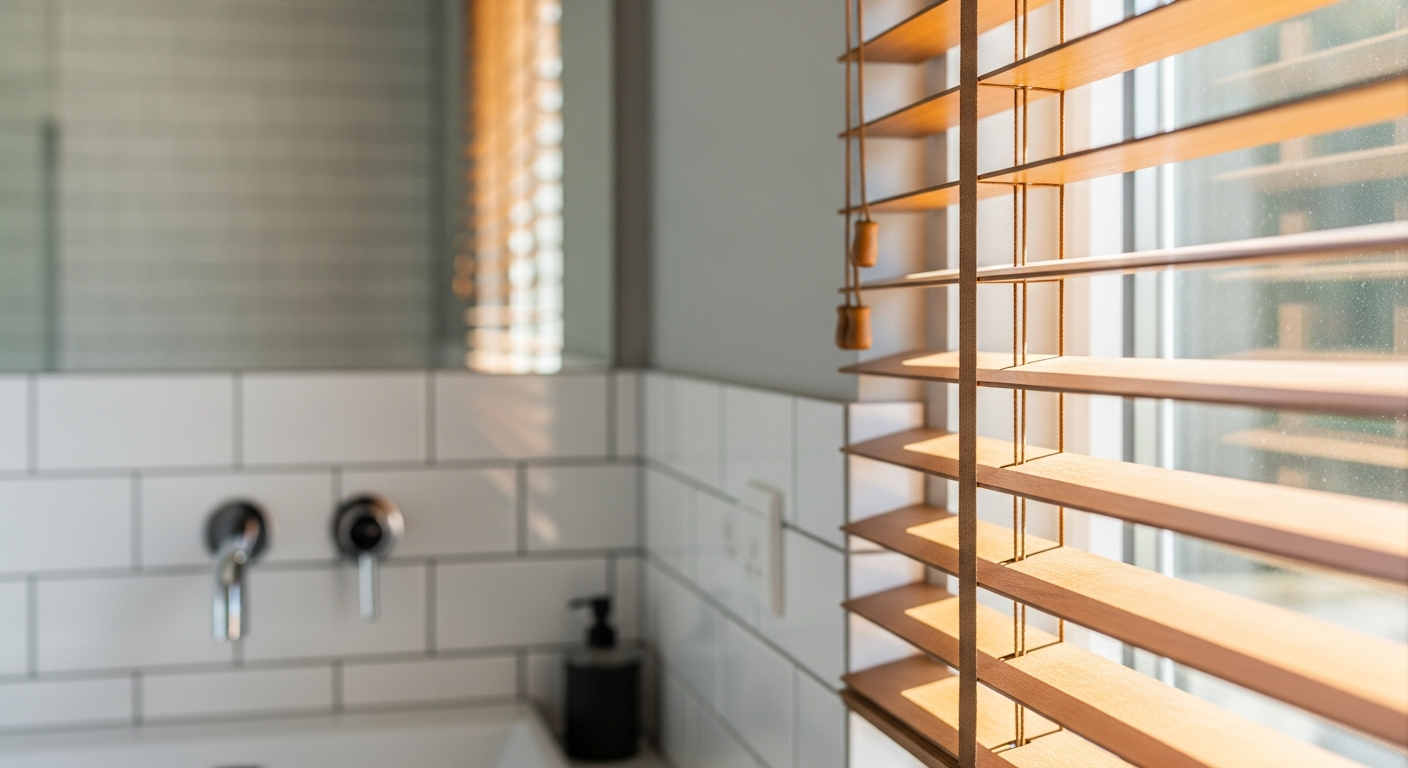
Need bathroom blinds that handle humidity without damage? Moisture-resistant wooden blinds offer durability, insulation, and flexible light control designed for long-term use.
Bathrooms create a difficult environment for window treatments. Constant humidity, condensation, and temperature changes can quickly damage standard options. Curtains trap moisture, and metal blinds often corrode over time. Moisture-resistant wooden blinds offer a more balanced solution when properly treated and installed.
They combine durability, natural insulation, and design flexibility in a way that most alternatives cannot.
How Moisture-Resistant Treatments Protect the Wood
Not all wooden blinds are suitable for humid spaces. The difference comes from how the material is treated.
Key protection features:
- Sealed or oil-treated surfaces that repel moisture
- Protective coatings that prevent warping and swelling
- Finishes that reduce mold and rot risk
- Breathable layers that avoid trapped internal moisture
These treatments allow wood to function naturally without breaking down in damp conditions.
Why Wood Performs Well in Humid Environments
Wood behaves differently from synthetic materials. It can respond to humidity instead of resisting it completely.
Natural advantages:
- Hygroscopic properties help regulate moisture levels
- Provides thermal insulation to retain heat
- Stabilizes temperature changes in the room
- Supports a more balanced indoor environment
This makes wooden blinds more than just decorative.
How They Compare to Other Bathroom Options
Each material reacts differently to moisture, and not all are built for long-term use.
Common alternatives:
- Curtains: absorb moisture and promote mold growth
- Aluminum blinds: can corrode over time
- Plastic blinds: resist water but may discolor or degrade
Moisture-resistant wooden blinds offer a balance between durability and aesthetics.
Key Specifications That Improve Performance
Choosing the right configuration makes a noticeable difference in durability.
Important factors:
- Wood type: Lindehout or Abachi for stability
- Slat width: wider slats improve moisture resistance
- Ladder bands: better sealing and privacy
- Custom sizing: ensures proper fit and coverage
These details affect how well the blinds perform over time.
Installation Tips for Moisture-Prone Spaces
Proper installation helps prevent long-term damage. Placement matters as much as material.
Best practices:
- Keep at least 60 cm away from direct water sources
- Avoid placing directly in shower spray zones
- Use sealing materials around mounting points
- Consider wall mounting to reduce moisture exposure
These steps improve durability and airflow.
Maintenance That Extends Lifespan
Consistent care keeps the protective treatments effective. Moisture control is essential.
Basic routine:
- Dust weekly with a dry cloth or brush
- Use a slightly damp cloth only when needed
- Ventilate the bathroom after use (15–20 minutes)
- Inspect yearly for signs of moisture damage
Simple maintenance can extend lifespan significantly.
When Wooden Blinds May Not Be Ideal
There are situations where other materials may perform better.
Consider alternatives if:
- The bathroom has poor ventilation
- Blinds are exposed to direct and constant water
- Humidity remains extremely high at all times
In these cases, aluminum or PVC options may offer better resistance, though they lack the same visual appeal.
A Practical Take on Bathroom Window Design
Moisture-resistant wooden blinds offer a combination of function and design that suits modern bathrooms. They provide privacy, light control, and insulation while maintaining a natural look.
They are not completely maintenance-free, and proper ventilation is essential. However, when installed correctly, they can last for years and improve both comfort and aesthetics.
If you want a bathroom upgrade that balances durability with style, moisture-resistant wooden blinds are worth trying. They provide a practical way to improve everyday use while enhancing the overall look of your space.