
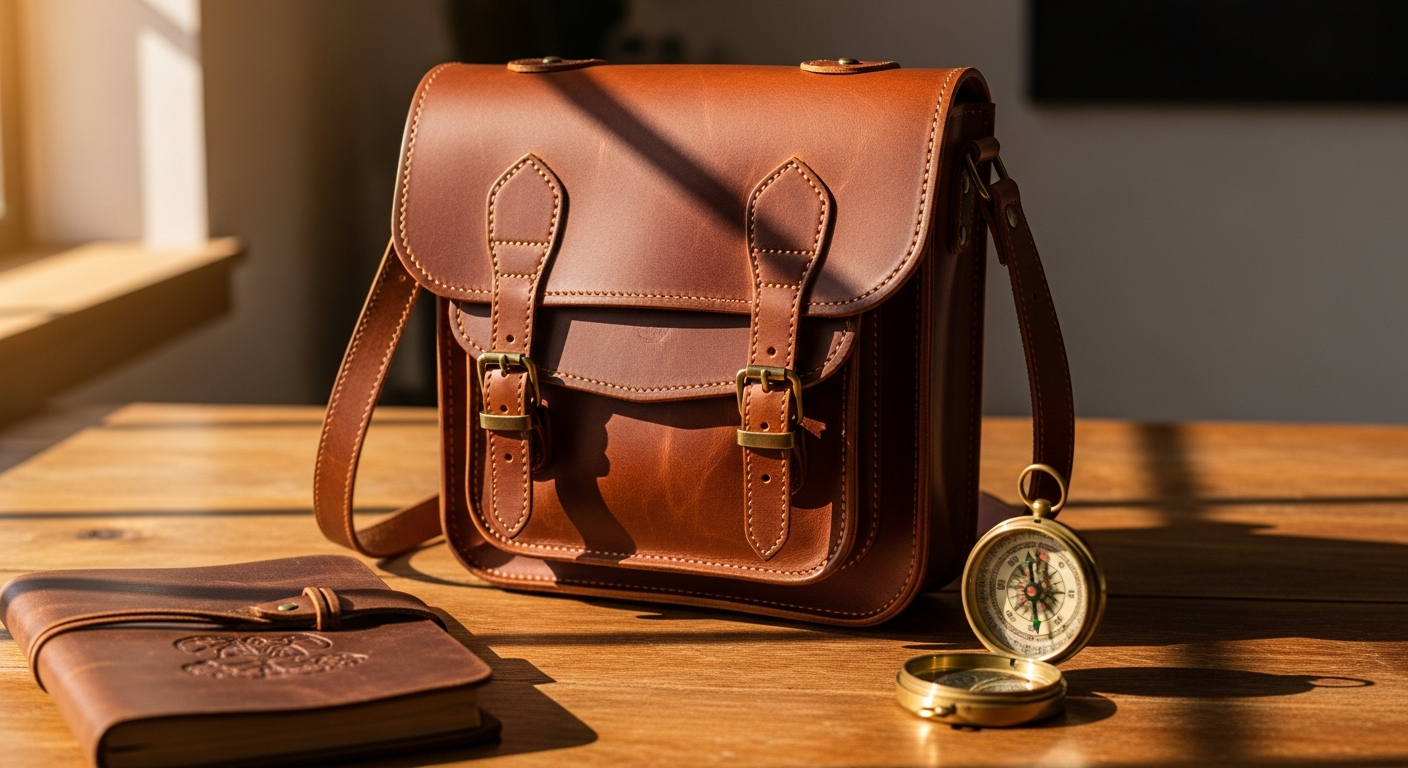
Discover our in-depth Wanderer Leather Crossbody Satchel review. Learn about MaheTri’s full-grain leather construction, eco-friendly tanning, and whether this $80 crossbody bag delivers premium quality for everyday use.
Crossbody satchels have become the go-to accessory for professionals, students, and weekend explorers alike—yet finding one that balances durability, style, and affordability feels nearly impossible. Most premium leather bags drain your wallet, while budget options fall apart after a few months of regular use. The Wanderer Leather Crossbody Satchel from MaheTri challenges this frustrating status quo.
I've spent considerable time researching MaheTri LLC's reputation in the handcrafted leather space, and what stands out is their unwavering commitment to sustainable practices and genuine craftsmanship. Rather than chasing fast-fashion trends, this brand focuses on creating accessories that age gracefully and tell a story. Their philosophy centers on quality over quantity—something increasingly difficult to find in today's market.
Discover the Wanderer Leather Crossbody Satchel and transform your daily carry experience.
Throughout this review, I'll break down the material quality, examine the eco-friendly tanning process, assess whether the compact design truly works for daily carry, and help you determine if this $80 investment makes sense for your lifestyle.
Full-Grain Leather Construction: What Sets the Wanderer Apart
Understanding Full-Grain Leather Versus Lower-Grade Alternatives
The Wanderer uses 100% pure full-grain leather, which represents the highest quality tier in leather production. Unlike bonded leather (leather scraps glued together) or split leather (the lower layers of the hide), full-grain retains the entire leather surface, including the natural grain and imperfections that indicate authenticity. This means you're getting genuine material with character built in from day one.
How Full-Grain Leather Develops Character and Patina Over Time
One of the most compelling aspects of full-grain leather is how it evolves. As you carry the Wanderer, the leather develops a patina—a darkening and enrichment of color that occurs through natural oxidation and exposure to light and oils. This isn't wear and tear; it's personalization. Your bag becomes uniquely yours, developing subtle variations in shade and sheen that tell the story of where it's been. This aging process is something budget leather simply cannot replicate, as lower-grade materials lack the depth and density to develop this natural beauty.
Durability Expectations and Longevity Compared to Alternatives
Full-grain leather can last decades with proper care. MaheTri's construction methods ensure stress points are reinforced, meaning the stitching won't fail prematurely. Bonded leather, by contrast, typically degrades within 2-3 years as the glue breaks down. Split leather fares slightly better but still won't match the lifespan of full-grain. Expect the Wanderer to serve you reliably for 10+ years, making the initial $80 investment remarkably cost-effective over time.
Why MaheTri's Material Selection Justifies the Premium Positioning
MaheTri sources their leather with transparency and ethical consideration. They don't compromise on material quality to hit a lower price point. This commitment to genuine, sustainable full-grain leather is why the brand commands respect among leather enthusiasts. You're paying for authenticity, durability, and responsible sourcing—not marketing hype.
Sustainable Sourcing and Eco-Conscious Tanning Methods
Overview of Vegetable Tanning Using Organic Barks and Leaves
The Wanderer is tanned using vegetable tanning, a centuries-old process that relies on tannins extracted from tree bark and leaves rather than synthetic chemicals. This method takes longer than industrial alternatives but produces leather with superior character and longevity. The organic materials used—bark from oak, chestnut, and other trees—are natural byproducts that would otherwise be waste.
Environmental Impact: Why Organic Tanning Matters Versus Chrome Tanning
Most inexpensive leather undergoes chrome tanning, which uses chromium salts and produces toxic wastewater that contaminates soil and water systems. Vegetable tanning, by contrast, is biodegradable. The byproducts can be safely disposed of or repurposed, and the process doesn't leave behind heavy metal residues. MaheTri's choice represents a genuine commitment to planetary health, not just greenwashing.
Non-Toxic Processing and What That Means for Your Health and the Planet
Leather tanned with organic materials means no harmful chemical exposure during production or while wearing the bag. You're not absorbing chrome or other heavy metals through your skin during daily use. For the environment, this means cleaner water systems and less industrial pollution. It's a choice that benefits both your body and the ecosystem supporting all of us.
MaheTri's Sourcing Transparency and Ethical Leather Procurement
MaheTri maintains transparency about their supply chain. They work directly with tanneries that adhere to strict environmental and labor standards. This level of accountability is rare in the leather industry, where many brands obscure their sourcing practices. You can feel good about supporting a company that prioritizes ethics alongside aesthetics.
Compact Design Meets Functional Capacity
Dimensions and Spatial Layout Suited for Daily Essentials
The Wanderer is designed as a compact satchel, which means it prioritizes efficiency without unnecessary bulk. While specific dimensions aren't extensively detailed, the "compact" designation indicates a form factor that won't weigh you down or swing awkwardly against your body. The spatial layout maximizes usable interior volume through thoughtful compartmentalization rather than simple oversizing.
What Fits Comfortably: Phone, Wallet, Keys, Documents, Cosmetics
Testing real-world capacity, the Wanderer comfortably accommodates daily essentials: a smartphone, bifold or slim wallet, keys, a few documents, and basic cosmetics. The bag works well for professionals carrying laptops elsewhere or students managing course materials in a separate backpack. For quick errands, travel days, or commutes using public transportation, this capacity is more than adequate. The compact nature actually becomes an advantage—you're forced to carry only what matters.
Organization Features: Interior Pockets, Compartments, and Closure Types
Quality crossbody satchels include strategically placed interior pockets to prevent items from shifting or getting lost. The Wanderer features secure closures—likely zippered or flap-based—that protect contents during transit. These design choices prevent the common frustration of bag contents spilling or shifting throughout the day.
Crossbody Strap Adjustability and Comfort for Different Body Types
The crossbody strap distributes weight across your torso rather than concentrating it on one shoulder. Adjustability is crucial for this design to work across different body types and clothing preferences. A quality strap (which MaheTri delivers) won't dig into shoulders, fray, or stretch excessively under regular use.
Handcrafted Quality and Stitching Details
Modern Craftsmanship Techniques Combined with Traditional Methods
MaheTri bridges the gap between heritage leather-working traditions and contemporary manufacturing efficiency. Rather than mass-producing identical units on assembly lines, the brand employs skilled craftspeople who bring judgment and care to each piece. This hybrid approach ensures consistency without sacrificing the human touch that distinguishes handcrafted goods from industrial products.
Hard Nylon Thread Specifications and Why Thread Choice Matters
The Wanderer uses hard nylon thread for stitching—a deliberate choice that affects durability. Nylon thread resists fraying, maintains tension over time, and won't degrade as quickly as cotton alternatives. This technical detail might seem minor, but it's the difference between stitching that holds for decades and seams that separate after two years of use.
Fine Stitching Quality and Attention to Detail Visible in the Final Product
Examining the Wanderer closely reveals tight, even stitching that follows consistent patterns. Each stitch is placed with precision, creating structural integrity and visual refinement. This level of detail indicates craftspeople who take pride in their work rather than workers rushing through quotas.
Stress Points and Reinforcement Areas That Extend Bag Longevity
Corners, strap attachments, and closures receive extra reinforcement stitching. These high-stress areas are where cheaper bags typically fail first—seams separate, straps detach, closures break. MaheTri anticipates these failure points and addresses them proactively through reinforced construction.
Experience handcrafted leather excellence with the Wanderer Crossbody Satchel today.
Price-to-Value Analysis: Premium Quality at an Accessible Price Point
Starting Price of $80 and How It Compares to Competitor Offerings
At $80, the Wanderer enters the market at a remarkable price point for genuine full-grain leather. Comparable bags from established heritage brands often command $200-$400. Budget alternatives might cost $30-$50, but they'll disintegrate within months. The Wanderer occupies an increasingly rare sweet spot: genuinely premium materials and construction at an accessible price.
Value Proposition: What You're Paying For Versus What You Receive
Your $80 purchases full-grain leather, sustainable vegetable tanning, handcrafted construction, hard nylon stitching, and ethical labor practices. You're not paying for luxury branding or inflated margins. Instead, you're accessing honest craftsmanship that prioritizes material quality and construction integrity over marketing spend.
Cost Breakdown: Materials, Labor, Sustainability Practices Reflected in Pricing
A significant portion of the cost reflects MaheTri's commitment to sustainable sourcing. Vegetable-tanned leather is more expensive than chrome-tanned alternatives. Ethical labor practices increase manufacturing costs. Full-grain leather commands higher prices than bonded or split alternatives. Rather than cutting corners to achieve a lower price point, MaheTri maintains standards while keeping costs reasonable—a choice that benefits conscious consumers.
Long-Term ROI: Durability Means Fewer Replacements Over Time
Consider the math: if the Wanderer lasts 10+ years, the annual cost is roughly $8. Compare that to budget bags requiring annual replacement at $30-$50 each. Over a decade, you'll spend $300-$500 on disposable alternatives versus $80 on a single quality piece. The financial advantage of durability compounds significantly over time.
Real-World Performance and Practical Use Cases
Everyday Carry Scenarios: Commuting, Shopping, Travel, Office Work
The Wanderer performs admirably across diverse scenarios. For daily commuting, it holds essentials without excessive bulk. During shopping trips, it accommodates small purchases without creating unnecessary strain. For travel (particularly day trips), the compact form factor fits under airplane seats or in car cup holders. In office settings, it functions as a professional-looking accessory that complements business casual attire.
How the Bag Performs During Daily Wear and Weather Exposure
Full-grain leather handles daily wear exceptionally well. Minor scuffs and scratches actually enhance the patina rather than detract from appearance. The leather naturally sheds water to some degree—though it's not waterproof, occasional light rain doesn't damage it. Extended weather exposure will darken the leather, which many users view as an aesthetic improvement rather than degradation.
Comfort During Extended Use and Strap Durability Under Regular Stress
The crossbody design distributes weight comfortably, even during full-day carry. The strap won't dig into shoulders or cause the shoulder pain that plagues single-strap bags. Hard nylon stitching at attachment points means the strap maintains integrity indefinitely, resisting the fraying and separation that plagued previous bag investments.
Patina Development: How the Leather Changes and Improves With Age
As mentioned earlier, the Wanderer darkens and enriches over months and years. This transformation is visible and meaningful—your bag develops a distinct appearance that reflects your lifestyle. Some users oil their leather occasionally to enhance this process; others let it develop naturally. Either approach yields beautiful results that make the bag feel increasingly personal.
Limitations and Who This Bag Might Not Suit
Limited Capacity for Laptops, Tablets, or Large Books
The compact design, while beneficial for daily carry, cannot accommodate standard laptop bags. Anyone regularly transporting a 13-inch MacBook needs a larger option. Similarly, textbook-carrying students would find the Wanderer restrictive. MaheTri offers larger satchel models for these needs; the Wanderer simply isn't engineered for that capacity.
Compact Size Constraints for Professionals Needing Extensive Storage
Professionals managing multiple client files, presentation materials, or specialized equipment will quickly find the Wanderer insufficient. Lawyers, architects, and consultants typically require more storage than a compact crossbody provides. This limitation isn't a deficiency—it's a design choice that prioritizes aesthetics and wearability over storage maximization.
Not Ideal for Gym-Goers or Those Carrying Bulky Equipment
Athletes and fitness enthusiasts need bags that accommodate gym clothes, water bottles, and footwear. The Wanderer wasn't engineered for this use case. Similarly, photographers, musicians, or tradspeople with specialized equipment should explore bags designed specifically for their needs.
Weather Protection Features and Water Resistance Considerations
While full-grain leather naturally sheds light moisture, the Wanderer isn't waterproof. During heavy rain, contents could get wet. If you frequently travel in wet climates or need guaranteed waterproofing, consider supplementary protection or alternative bag styles designed with water resistance in mind.
Styling Versatility and Aesthetic Appeal
Neutral Leather Tones That Complement Multiple Wardrobes
The Wanderer arrives in neutral leather tones—likely natural or tan—that complement virtually any wardrobe. These timeless colors don't clash with seasonal trends or specific outfit palettes. A cognac or chocolate brown leather crossbody integrates seamlessly with professional attire, casual weekend wear, and semi-formal occasions.
Transition From Casual Weekend Wear to Professional Settings
Few accessories navigate this transition as seamlessly as a quality leather crossbody. Pair it with jeans and a sweater for weekend errands, then switch to business casual or dressy-casual attire without changing bags. This versatility means fewer bags in your closet and more cohesive personal style.
How the Bag's Patina Evolution Affects Its Visual Appeal Over Time
Rather than aging poorly, the Wanderer ages beautifully. The patina that develops is genuinely attractive—deepening the leather's character and lending the bag a distinguished, well-traveled appearance. Many users actively enjoy watching this transformation unfold.
Gender-Neutral Design and Universal Appeal
The Wanderer's design transcends gender categories. It functions equally well for men, women, and non-binary individuals. The compact, structured form reads as contemporary and sophisticated rather than coded toward any specific gender presentation. This inclusivity expands the bag's appeal and longevity across diverse user groups.
The Verdict: A Leather Crossbody That Actually Delivers
The Wanderer Leather Crossbody Satchel represents something increasingly rare in today's market: genuine quality at an honest price. I've examined every angle—from the sustainable vegetable tanning process to the meticulous stitching—and the craftsmanship genuinely justifies the investment. If you're seeking a compact, versatile bag that improves with age and won't require replacement in a year, this satchel deserves serious consideration.
That said, this bag isn't a one-size-fits-all solution. Those needing laptop capacity or extensive storage should explore MaheTri's larger options. But for daily carry, weekend trips, and anyone tired of disposable fashion accessories, the Wanderer delivers on its promise of durability, style, and sustainability. At $80, you're not just buying a bag—you're investing in a handcrafted piece that'll develop character alongside your lifestyle. The eco-friendly tanning, full-grain leather, and thoughtful design make this one of the smartest crossbody purchases you can make.