
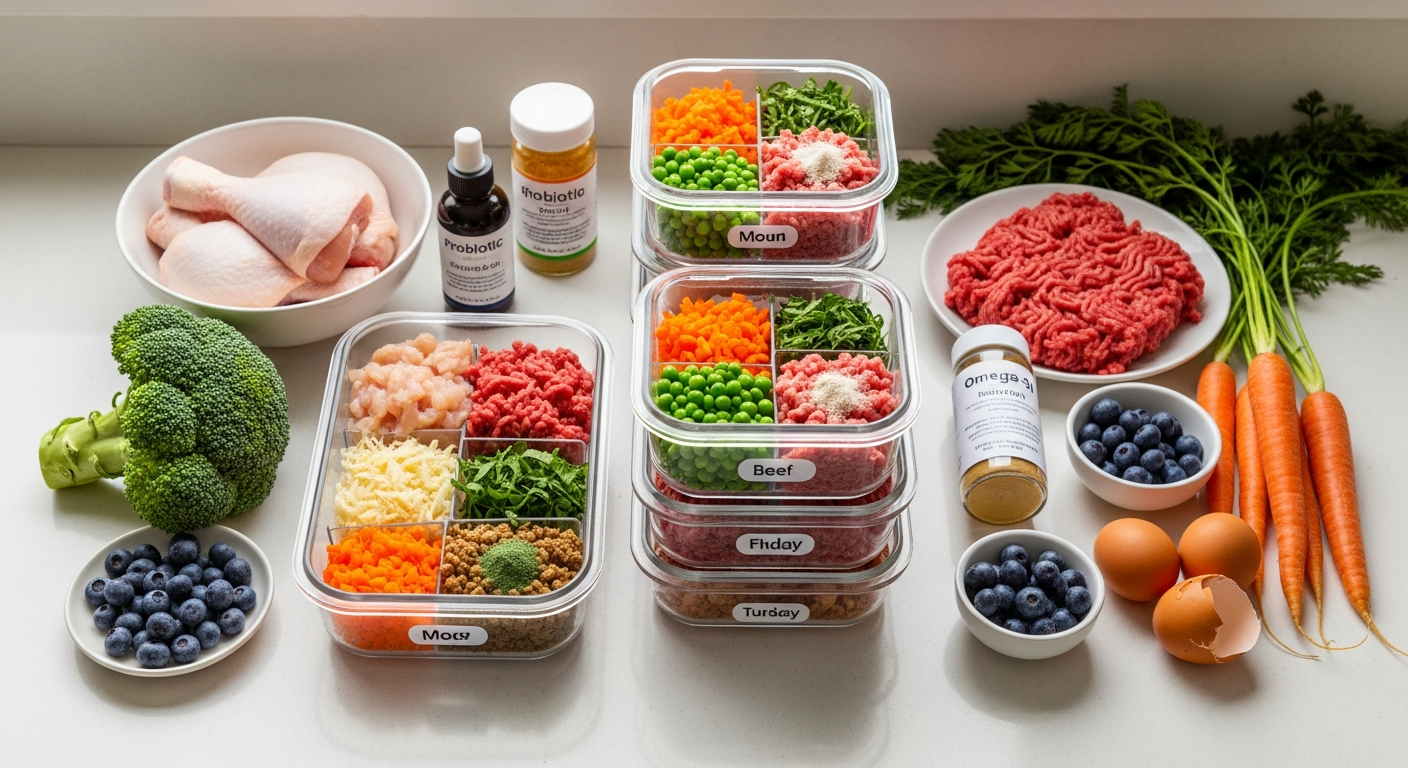
Discover how to feed multiple dogs on We Feed Raw’s frozen raw dog food. Learn cost strategies, meal planning tips, and storage solutions for busy multi-dog families in 2026.
Managing nutrition for multiple dogs creates real complexity. When you're juggling different dietary needs, preferences, and protein sensitivities across a pack, the logistics can feel overwhelming. Traditional kibble offers convenience but rarely addresses individual sensitivities or delivers the nutritional profile many owners seek for their dogs.
We Feed Raw's frozen raw dog food has emerged as a practical solution for multi-dog households looking for a nutritionally complete alternative. Their meals are formulated by a PhD animal nutritionist, meet AAFCO guidelines for all life stages, and come in pre-portioned, vacuum-sealed packets that simplify daily feeding.
This guide covers practical strategies for feeding multiple dogs on We Feed Raw's frozen meals—from cost optimization and freezer organization to customizing protein rotations for dogs with different sensitivities.
Check out We Feed Raw's frozen raw dog food options for your multi-dog household.
The Multi-Dog Cost Equation: Breaking Down We Feed Raw Pricing for Larger Households
Single-dog monthly costs start around $70 for smaller dogs and scale up to $400 or more for large, active breeds. When you multiply this across two, three, or more dogs, the financial picture shifts dramatically. A two-dog household might spend $140–$800 monthly depending on breed sizes and protein selection. A family with three large dogs could easily exceed $1,000 per month.
The cost breakdown depends on several factors. Smaller breeds consuming 20–30% of their body weight daily will cost considerably less than large or giant breeds. A 10-pound Chihuahua on beef might cost $2.25 daily, while a 90-pound German Shepherd eating the same protein could run $12–15 daily. Protein choice also matters—chicken and turkey tend to be more affordable than venison or duck.
Bulk ordering provides meaningful savings for multi-dog families. Many households report that ordering three-month supplies or signing up for subscription services reduces per-packet costs by 10–15%. Some families coordinate bulk orders with other raw-feeding families to maximize discounts while spreading storage challenges.
Comparing We Feed Raw to other raw feeding brands reveals variable pricing. Some brands charge less per pound but require owners to handle nutritional balancing themselves. Traditional kibble costs significantly less upfront—quality brands run $40–100 monthly even for large dogs—but many raw-feeding families argue that reduced veterinary visits and health improvements offset the higher food costs over time.
Hidden costs deserve attention. Dedicated chest or upright freezers cost $300–800 initially. Additional vacuum-seal containers, drawer dividers, and organization systems add $50–150. Delivery fees, though often free over certain order thresholds, can add $10–20 per month for smaller orders.
Price-per-pound analysis shows beef and chicken as the most economical options, typically running $3–4 per pound. Turkey, duck, lamb, and venison range from $4–6 per pound. For families feeding multiple dogs, rotating between less expensive proteins (beef and chicken) during tight months and incorporating premium proteins during less constrained periods balances budget and nutritional variety.
Cost-effective rotation strategies stretch budgets significantly. Some families feed their entire pack beef one month, chicken the next, then rotate through other proteins. Others stagger individual dogs across different proteins to provide variety without doubling orders across the board. This approach also benefits dogs with sensitivities by preventing overexposure to single proteins.
Explore We Feed Raw's bulk ordering options and subscription savings for multi-dog families.
Freezer Space Solutions: Organizing We Feed Raw Meals for Multiple Dogs
Capacity Requirements and Storage Assessment
A two-dog household typically needs 15–18 cubic feet of freezer space for two-week supplies. Three dogs require 20–25 cubic feet. Families with five or more dogs almost always need dedicated chest or upright freezers beyond standard refrigerator freezers. Standard refrigerator freezers max out around 5–7 cubic feet, which works for one small dog but becomes impossibly cramped for multiple dogs.
Before investing in additional freezers, measure your current space honestly. Calculate weekly consumption for each dog, multiply by desired ordering frequency (typically 4–8 weeks), and factor in 20% buffer space for air circulation and inventory rotation.
Organization Systems That Work
Vacuum-sealed packets are compact and stackable, but organization matters when you're managing multiple dogs' meals. Clear labels should include the dog's name, protein type, and date received. Some families color-code packets by dog—blue stickers for one dog, red for another, green for a third. Others use waterproof labels organized by protein type within dividers.
Upright freezers offer better organization than chest freezers. Drawer dividers, clear plastic bins, and shelving systems prevent packets from getting lost in the back. Chest freezers maximize space but require more digging to locate specific meals.
Stackable storage containers designed for vacuum-sealed meats work particularly well. These containers organize packets by dog and protein, creating a filing system within your freezer. Some families use hanging shoe organizers designed for freezers, with each compartment labeled for a different dog or protein type.
Inventory Rotation and Food Safety
Rotating inventory prevents freezer burn and ensures older meals get used before newer deliveries arrive. A first-in, first-out (FIFO) system works best—place newly arrived packets behind existing stock so older meals get used first.
Thawing schedules require planning when you're feeding multiple dogs. Many families designate one day weekly for thawing the coming week's meals. This prevents the constant opening and closing of freezer doors and allows proper planning around schedules.
Temperature monitoring is critical with bulk frozen storage. Freezers should maintain 0°F or below. Digital thermometers placed in your freezer provide alerts if temperatures rise above safe levels. We Feed Raw meals are safe at 0°F indefinitely, but temperature fluctuations accelerate degradation.
Customizing Protein Rotations for Dogs with Different Sensitivities
Understanding Single-Protein Benefits
We Feed Raw offers six single-protein recipes: beef, chicken, turkey, duck, lamb, and venison. Single-protein diets benefit dogs with allergies or digestive sensitivities by eliminating dietary triggers. If one dog reacts to chicken but another thrives on it, single-protein recipes allow customization without feeding separate meals to each dog in the house.
Creating Personalized Protein Schedules
In multi-dog households, creating individual protein schedules addresses each dog's needs without overwhelming complexity. You might feed one dog primarily beef (due to chicken sensitivity), a second dog chicken and turkey (both well-tolerated), and a third dog rotating through all six proteins for variety.
Managing food-sensitive dogs alongside less-picky eaters requires intentional meal planning. Some families feed sensitive dogs first, separately, while less-sensitive dogs wait. Others stagger feeding times to prevent mix-ups. Clear labeling and designated food bowls for each dog prevent accidental protein swaps.
Tracking Responses and Adjusting
Documenting each dog's response to different proteins reveals patterns. Create a simple tracking system noting stool quality, energy levels, coat appearance, and any digestive issues for each dog on each protein. After four weeks on a specific protein, you'll have meaningful data about what works.
Transitioning multiple dogs simultaneously versus staggering transitions depends on your household. Simultaneous transitions simplify meal planning but make it harder to identify which dog is experiencing digestive adjustment. Staggered transitions—moving one dog to raw while others continue their current diet—require managing multiple food types temporarily but provide clearer response data.
Monitoring Health Indicators
Stool quality shifts noticeably within 3–5 days of starting raw meals. Smaller, firmer stools indicate good digestion. If a dog's stools remain loose after two weeks, that particular protein might not suit them. Energy level increases typically appear within one week. Dogs that seem more vibrant, playful, and engaged during walks often indicate successful dietary transitions.
Coat improvements unfold over 4–8 weeks. Many dogs develop shinier, softer coats; some experience dramatic improvements in itching or skin inflammation. These changes look different across individual dogs and might vary by protein as well.
Health Outcomes Real Families Are Reporting Across Multiple Dogs
Digestive and Stool Quality Improvements
Families consistently report that their dogs' digestive systems settle within the first week of starting We Feed Raw. The complete absence of fillers, grains, and artificial ingredients reduces digestive stress. Smaller, firmer stools mean less cleanup, easier housetraining for young dogs, and clearer indicators of individual dog health.
In multi-dog households, these improvements create measurable quality-of-life increases. Owners no longer worry about one dog creating messes that other dogs might eat or track through the house. Digestive confidence allows dogs more freedom in the home without bathroom accidents.
Skin and Coat Transformations
Dogs on We Feed Raw often develop noticeably healthier coats within 6–8 weeks. Owners report increased shine, softer texture, and reduced shedding. Dogs with chronic itching or dry, flaky skin often see dramatic improvement. Some families report that skin issues their veterinarians attributed to allergies actually improve on raw diets, suggesting the dog was reacting to ingredients in their previous food.
Multi-dog households with mixed coat types sometimes see varying responses. Long-haired dogs might show shinier coats; short-haired dogs often develop tighter, more resilient coats. Regardless of coat type, the improved appearance becomes obvious to friends and family.
Energy and Behavioral Changes
Many owners describe their dogs as "switched on" after starting raw feeding. Dogs that seemed sluggish or disinterested in activity often become noticeably more engaged. Mealtime excitement increases dramatically—dogs that previously ate kibble with indifference often react with visible enthusiasm to raw meals.
Behavioral improvements extend beyond mealtime. Some dogs show increased focus during training, more enthusiasm for walks, and generally higher engagement with their families. While raw feeding isn't a behavioral cure-all, the increased energy often translates to better training responsiveness and more manageable household behavior.
Long-Term Health Benefits
Families feeding We Feed Raw for six months or longer report sustained benefits. Dogs maintain healthy weight more easily. Owners describe their dogs as "thriving" rather than just "doing okay." Some families report reduced veterinary visits for minor digestive or skin issues, potentially offsetting the higher food costs.
Managing Different Responses Across Dogs
Not every dog responds identically to raw feeding. One dog might show dramatic improvements while another shows modest changes. These variations require patience and individual attention. Tracking individual responses helps families understand whether a slow responder genuinely needs dietary adjustment or is simply progressing at a different pace.
Some dogs require protein adjustments mid-transition. If a dog on beef experiences loose stools after three weeks, switching to chicken might resolve the issue. These adjustments are simple with We Feed Raw's single-protein options.
Veterinary Coordination and Monitoring
Families serious about raw feeding coordinate with their veterinarians. Some vets enthusiastically support raw feeding; others express skepticism. Baseline bloodwork before transitioning to raw, then follow-up tests six months and annually provide objective data about nutritional adequacy.
Practical Feeding Routines That Actually Work for Busy Multi-Dog Families
Leveraging Pre-Portioned Convenience
The pre-portioned packets are the biggest time-saver in We Feed Raw's system. Unlike raw feeding requiring owners to measure, balance, and portion meals manually, these packets arrive ready to thaw and serve. A family feeding three dogs spends maybe five minutes daily on meal preparation—removing packets, thawing if necessary, and serving.
Establishing Feeding Schedules
Multiple dogs with different caloric needs require intentional schedules. A 20-pound dog might need one packet daily while a 80-pound dog needs three. Some families feed all dogs simultaneously but in separate areas to prevent competition. Others stagger feeding times by 15 minutes—first dog eats while others wait, then move to the next dog.
Practical Meal Prep Strategies
Batch thawing works well for multi-dog families. Designate one day weekly—typically Sunday evening—to thaw the coming week's meals. Separate all packets by dog, arrange them in labeled containers, and move them to the refrigerator. Each morning, you grab that dog's container and portion out that day's meals.
Preventing Competition and Food Aggression
When multiple dogs eat simultaneously, food aggression can emerge. Separate feeding areas—different rooms or corners of the kitchen—prevent guarding behaviors. Physical barriers like baby gates between dogs during meals work well. Some families feed dogs in separate crates or rooms to eliminate competition entirely.
Supervision and Safety Considerations
Raw feeding requires basic food safety awareness. Keep raw meals separate from human food preparation. Wash hands after handling raw packets. Clean feeding bowls immediately after meals. While HPP reduces pathogenic bacteria significantly, treating these meals like any raw protein maintains household safety.
Supervision during meals prevents dogs from fighting over spilled portions or stealing from each other's bowls. Most families supervise the first few minutes until they're confident each dog eats their own meal without incident.
Travel and Boarding Challenges
Feeding raw meals while traveling requires planning. Some families pack frozen meals in coolers with ice packs for long drives. Others research destination areas for raw-feeding veterinarians or kennels that handle raw diets. Short trips might involve freezing extra meals beforehand in portable containers.
Boarding dogs on raw diets poses challenges. Many boarding facilities lack freezer capacity and haven't handled raw meals before. Some families board one or two dogs while keeping others home, or arrange for pet-sitters who come to the home to feed dogs on their regular raw schedule.
Backup Plans for Disruptions
Delivery delays happen. Freezer breakdowns happen. Having backup plans prevents stress. Some families keep emergency kibble or canned food for situations where raw meals become unavailable. Others coordinate with raw-feeding neighbors to share freezer space if their equipment fails. Building a support network with other local raw-feeding families creates natural backup options.
Potential Drawbacks and How Multi-Dog Families Navigate Them
Financial Reality Check
The higher upfront cost and long-term commitment requires honest budget assessment. A three-dog household spending $200–400 monthly on kibble might spend $500–1,500 on raw feeding. This isn't a minor difference, and families need to determine whether their budgets accommodate this shift.
Some families implement gradual transitions, supplementing kibble with increasing amounts of raw feeding over months rather than switching immediately. This approach spreads costs but extends the adjustment period.
Freezer Space and Storage Logistics
Limited freezer space becomes genuinely frustrating for families with multiple dogs and small homes. Apartment dwellers or those without basement space for additional freezers sometimes find raw feeding logistically impossible. Others invest in dedicated freezers, viewing them as necessary home improvements.
Packaging Issues and Quality Control
Some customers report receiving packets with minor tears in vacuum seals. We Feed Raw's quality control is generally strong, but with high-volume deliveries, occasional packaging defects occur. Contact customer service immediately if you receive damaged packets—replacements are typically straightforward.
HPP Safety Debates
High-Pressure Processing eliminates pathogens while preserving most nutrients. However, limited research suggests HPP might cause minor DNA degradation in some bacteria cells. This concern remains hotly debated in raw-feeding communities. Most veterinary sources consider HPP-processed meals safe, but families should be aware of ongoing discussions.
Veterinary Skepticism
Traditional-diet-focused veterinarians sometimes express concern about raw feeding. Some worry about nutritional adequacy or food safety. Rather than avoiding these conversations, raw-feeding families benefit from seeking vets with raw feeding experience or being prepared to discuss nutritional completeness, AAFCO guidelines, and we Feed Raw's formulation by a PhD animal nutritionist.
Transition Challenges
Digestive adjustment periods vary by dog. Some experience temporary loose stools during the first 1–2 weeks. Others transition smoothly. Food-sensitive dogs might require slower transitions over 10–14 days rather than 7 days. Patience and realistic expectations about adjustment periods prevent frustration.
Commitment Level Required
Raw feeding isn't a set-it-and-forget-it diet system. It requires intentional planning, regular freezer management, tracking individual dog responses, and veterinary coordination. Busy families sometimes discover that the planning demands exceed their capacity, especially when managing multiple dogs with different needs.
Is We Feed Raw Right for Your Multi-Dog Household? Key Considerations
Honest Space Assessment
Measure your freezer space before committing. Calculate exact storage needs for your dogs' sizes and desired ordering frequency. If your total needs exceed available freezer space even with reorganization, either invest in additional freezers or consider whether raw feeding fits your household logistics.
Budget Calculation and Financial Commitment
List your dogs' weights and activity levels. Use We Feed Raw's pricing information to calculate realistic monthly costs. Compare this to your current food expenses and determine whether your household budget genuinely accommodates the increase. Don't underestimate this—financial stress from food costs creates regret and inconsistency.
Individual Dogs' Health Status
Dogs with chronic digestive issues, allergies, or other health conditions might benefit dramatically from raw feeding. Dogs with food sensitivities that haven't been identified might solve their problems through protein elimination diets. Conversely, dogs thriving on their current diet don't necessarily need switching.
Time Commitment Inventory
Consider your typical week. Can you dedicate one evening weekly to thawing meals? Do you have mental bandwidth to track individual dog responses and adjust proteins? Will managing feeding schedules for multiple dogs with different needs fit your household routine?
Lifestyle Factors and Feeding Flexibility
Frequent travelers might struggle with raw feeding logistics. Families working long hours might find pre-portioned convenience valuable enough to justify costs. Those with irregular schedules benefit from meal flexibility that We Feed Raw's variety offers.
Veterinary Consultation
Before switching any dog to raw feeding, consult your veterinarian—especially if dogs have existing health conditions or you're managing multiple dogs with different health profiles. Some conditions require supervised dietary changes; others work well with raw feeding. Your vet's input provides crucial perspective.
Trial Periods and Guarantees
We Feed Raw typically offers satisfaction guarantees or trial options. Test one or two weeks of meals before committing to large orders. If your dogs don't respond well or your household finds the logistics unmanageable, you haven't invested months of higher costs.
Making the Transition Smooth: Multi-Dog Raw Feeding Success Strategies
Timing and Approach
Deciding between staggered and simultaneous transitions depends on your situation. Simultaneous transitions mean all dogs adjust at the same pace and you simplify meal planning immediately. However, identifying which dog has digestive issues becomes harder when all dogs transition together.
Staggered transitions—moving one dog to raw while others continue their current diet—take longer but provide clearer insight into each dog's individual response. After the first dog adjusts successfully, transition the second, then the third.
Gradual Mixing Protocols
A typical seven-day transition mixes increasing amounts of We Feed Raw with the current diet. Days 1–2: 25% raw, 75% old diet. Days 3–4: 50% raw, 50% old diet. Days 5–6: 75% raw, 25% old diet. Day 7 and beyond: 100% raw.
Some dogs with sensitive digestive systems need 10–14 days. Others can transition faster without issues. Watch stool quality throughout—if stools remain firm and normal, you're proceeding appropriately. If loose stools appear, slow the transition.
Monitoring Individual Responses
Track each dog's energy, stool quality, appetite, and behavior throughout transition. Note anything unusual. Some loose stools during days 2–4 are normal. Persistent loose stools after day 5 might indicate a particular protein isn't working for that dog.
Managing Different Digestive Sensitivities
Robust-digestive-system dogs might transition in five days. Food-sensitive dogs need the full 10–14 days. In multi-dog households, managing these different paces means separate transition schedules—one dog fully transitioned while another is still mixing. This complexity is manageable with clear labeling and organization.
Handling Setbacks
If a dog develops loose stools that persist, slow the transition further or try a different protein. Sometimes a dog that didn't tolerate chicken thrives on beef or turkey. These adjustments are simple with We Feed Raw's single-protein options and don't require changing the entire meal plan.
Picky eating occasionally emerges during transitions. Some dogs resist raw meals initially, especially if they've eaten only kibble. Warming meals slightly to room temperature sometimes helps. Adding a small amount of enticing topping—bone broth or a tiny bit of human-grade meat—can increase interest.
Building Your Support Network
Raw-feeding communities provide valuable peer support. Online groups, local raw-feeding co-ops, and even neighborhood raw-feeding families offer practical advice and troubleshooting help. Connecting with other multi-dog households specifically provides insight into problems you might encounter and proven solutions.
Feeding Multiple Dogs on Raw: A Practical Path Forward
We Feed Raw's frozen meals genuinely simplify raw feeding for multi-dog households. The convenience of pre-portioned, nutritionally complete meals eliminates much of the complexity that deters families from raw feeding in the first place. Real families are reporting tangible improvements: healthier coats, better digestion, firmer stools, and dogs practically vibrating with excitement at mealtime.
The financial investment scales quickly with multiple dogs. A two-dog household might spend $140–$800 monthly, while larger packs exceed $1,200. Freezer space becomes a genuine logistical challenge requiring intentional storage solutions and meal prep routines.
If you're managing dogs with different sensitivities, protein allergies, or varying activity levels, We Feed Raw's single-protein recipes and customizable meal plans offer real flexibility. The variety prevents boredom and allows precise matching of each dog's nutritional needs.
Before committing, calculate your actual monthly costs, measure your freezer space honestly, and consult your veterinarian—especially if any dogs have existing health conditions. Raw feeding multiple dogs is absolutely achievable with We Feed Raw; it requires intentional planning and realistic expectations.
Start your multi-dog raw feeding journey with We Feed Raw's frozen meal options today.